
Terminator 3 Rise of the Machines

The year is 2018.
Judgment Day has come and gone, leveling modern civilization. An army of
Terminators roams the post-apocalyptic landscape, killing or collecting humans where
they hide in the desolate cities and deserts. But small groups of survivors have
organized into a Resistance, hiding in underground bunkers and striking when they can
against an enemy force that vastly outnumbers them.

Controlling the Terminators is the artificial intelligence network Skynet, which
became self-aware 14 years earlier and, in the blink of an eye, turned on its creators,
unleashing nuclear annihilation on an unsuspecting world.

Only one man saw Judgment Day coming. One man, whose destiny has always
been intertwined with the fate of human existence: John Connor (Christian Bale).
Now the world is on the brink of the future that Connor has been warned about all
his life. But something totally new has shaken his belief that humanity stands a chance
of winning this war: the appearance of Marcus Wright (Sam Worthington), a stranger
from the past whose last memory is of being on death row before awakening in this
strange, new world.

Connor must decide whether Marcus can be trusted. But as Skynet adapts new
strategies to end the Resistance forever, Connor and Marcus must find common ground
to take a stand against the onslaught—to infiltrate Skynet and meet the enemy head-on.
The Halcyon Company presents a Moritz Borman Production, in association with
Wonderland Sound and Vision, a McG Film, “Terminator Salvation.” McG (“Charlie’s
Angels,” “We Are Marshall”) directed the film from a screenplay by John Brancato &
Michael Ferris (“Terminator 3: Rise of the Machines”).
“Terminator Salvation” was produced by Moritz Borman, Jeffrey Silver, Victor
Kubicek and Derek Anderson. Peter D. Graves, Dan Lin, Jeanne Allgood, Joel B.
Michaels, Mario F. Kassar and Andrew G. Vajna served as executive producers.
Chantal Feghali co-produced the film and James Middleton was associate producer.
The film stars Christian Bale (“The Dark Knight”), Sam Worthington (“Avatar”),
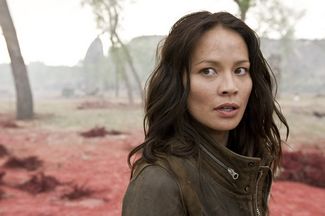
Anton Yelchin (“Star Trek”), Moon Bloodgood (“What Just Happened”), Bryce Dallas
1
Howard (“Spider-Man 3”), Common (“Wanted”), Jane Alexander (“The Unborn”) and
Helena Bonham Carter (“Harry Potter and the Half-Blood Prince”).
The behind-the-scenes creative team includes cinematographer Shane Hurlbut
(“We Are Marshall”), production designer Martin Laing (“Pearl Harbor”), Oscar®-winning
editor Conrad Buff (“Titanic”), costume designer Michael Wilkinson (“Watchmen”),
Oscar®-winning visual effects supervisor Charles Gibson (“Pirates of the Caribbean:
Dead Man’s Chest”), and animatronics supervisor John Rosengrant of Stan Winston
Studio. The music is by four-time Oscar®-nominated composer Danny Elfman (“Milk,”
“Big Fish,” “Good Will Hunting,” “Men in Black”).

“Terminator Salvation” is being distributed domestically by Warner Bros. Pictures.
Columbia Pictures is distributing the film in most international territories (excluding South
Korea and select Middle East territories).
The film has been rated PG-13 by the MPAA for intense sequences of sci-fi
violence and action, and language.
www.terminatorsalvation.com
For downloadable general press information,
please visit: http://press.warnerbros.com
2
ABOUT THE PRODUCTION
“NO FATE BUT WHAT WE MAKE”:
THE END BEGINS

The human drama at the heart of “Terminator Salvation” unfolds against a bomb-
blasted post-apocalyptic America in the aftermath of Judgment Day.
“We’re telling the story of the world after Judgment Day,” says McG. “This is the
story of the becoming of John Connor, the becoming of Kyle Reese, the strengthening of
Skynet, and where our humanity ultimately lies. This is the moment when mankind
takes a stand against the machines.”
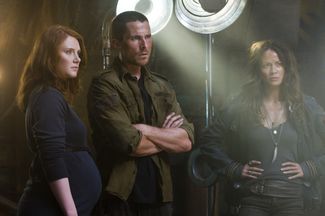
In bringing the long-promised “Terminator” future to life, McG wanted to create a
vision that was no less real. “I didn’t want to shoot actors against green screens; I
wanted them reacting to physical Terminators,” the director says. “I wanted the desolate
American West—an expanse that suggests a world of hardship, so you could taste it and
feel it. Because the bombs have gone off and damaged the ozone, the sky’s a bit of a
different color. Earth has a different quality, and you immediately realize something is
wrong.”
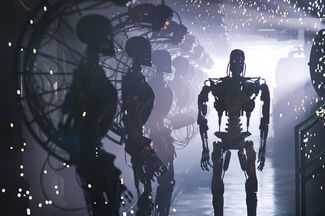
Producer Derek Anderson, who along with his partner at Halcyon Company,
Victor Kubicek, owns the “Terminator” rights, recalls “When we met with McG, his vision
was so close to what we’d seen in our minds’ eyes.”
“It was undeniable that he was the right director for this picture, with so much
ability, and enthusiasm and passion for the story,” echoes Kubicek. “We really knew that
he would bring it home.”

McG directed “Terminator Salvation” after having been a fan of the film series for
most of his life. “The Terminator,” written and directed by James Cameron, was
released in 1984 and introduced the world to the Cyberdyne Systems Model 101 T-800,
played by Arnold Schwarzenegger. The T-800 is sent back in time by its artificial
intelligence creator, Skynet, to stop the future leader of the Resistance from ever being
born. But this leader also sends back a human soldier, Kyle Reese (Michael Biehn), to
protect Sarah Connor (Linda Hamilton) and, ultimately, father a child with her—a child
who will grow up to become Skynet’s greatest foe.

“One thing you learn about the Terminator in the first film is that it’s this
unstoppable beast that just keeps coming,” says McG, “a machine that will just pursue
its prey to the end; even when it’s been blown apart, it will not stop until you are dead.”
3

Cameron’s follow-up, “Terminator 2: Judgment Day,” released in 1991, became a
global box office phenomenon. The story picks up after Sarah Connor has been
institutionalized and Sarah’s now-teenaged son, John Connor (Edward Furlong), must
defend himself against a sophisticated T-1000 Terminator (Robert Patrick), which Skynet
has sent back in time to assassinate him. But the future-Connor sends back a
reprogrammed T-800 (Schwarzenegger) to protect his younger self. Together, Sarah,
John and their new ally attempt to outrun the T-1000 and stop Judgment Day from
happening.
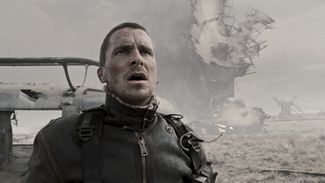
“I was 17, just arriving in the States, when ‘T2’ came out,” says Christian Bale,
who takes on the role of John Connor in “Terminator Salvation.” “Just the excitement in
the theater—I’ve never known anything like that. You couldn’t hear a thing throughout
the movie because everyone was just screaming.”
Director Jonathan Mostow closed the first trilogy in 2003 with “Terminator 3: Rise
of the Machines,” in which the terrible event Connor (Nick Stahl) and his mother spent
their lives trying to prevent—Judgment Day—rains nuclear war across the world at
Skynet’s command.

“Terminator 3” was co-written by John Brancato & Michael Ferris, who returned
to the franchise to write the screenplay for “Terminator Salvation.” Brancato offers,
“Since we ended the original ‘Terminator’ trilogy by destroying the world, we knew we
couldn’t go back to the well of time-traveling Terminators. The new film had to be about
what happens after the bombs fell.”
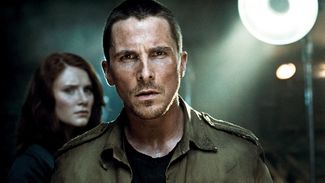
Ferris adds, “We wanted to write about the long-predicted battle between men
and machines, which also gave us an opportunity to change the overall tone of the
franchise. The earlier movies unfolded in a familiar, contemporary world; this film is a
war movie, set in a darker, post-apocalyptic future.”
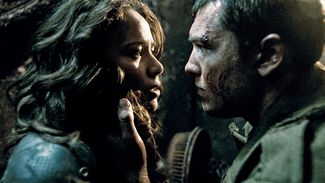
“Terminator Salvation” takes place in 2018, 14 years after the nuclear attack that
ended the previous “Terminator” trilogy. Producer Moritz Borman, who also served as
an executive producer on “Terminator 3,” remarks, “From the start, we made a
conscious decision that just as the previous films had been set in the timeframe we know
today, ‘Terminator Salvation’ would begin to reveal the future that had only been
glimpsed in the earlier movies. So we’re jumping to the time when Kyle Reese is still a
teenager and they have not yet discovered what we know comes next, mainly the time
travel that set the story in motion. In this film, we are finally in the midst of the war that
was forewarned, and we can watch Connor’s rise to become the head of the resistance.”
4

In “Terminator Salvation,” Bale says, “Skynet is dominant but still in a state of
evolution. Humans are definitely on the out. Their backs are against the wall and their
circumstances are desperate. This is the last, final effort for the survival of mankind.”
“Everything is difficult for humans now,” McG attests. “It’s difficult to get food,
difficult to get energy. Everything is depleted. And you’re always being hunted.”
Nevertheless, Borman states, “There has to be hope for humanity. There has to
be something in the way that they live that shows they believe there will be a future after
the machines, that the world might rise again out of the ashes. And their hope is, of
course, pinned to John Connor.”
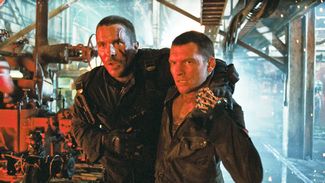
“IF YOU’RE LISTENING TO THIS, YOU ARE THE RESISTANCE”:
AN OLD ENEMY IN A NEW FUTURE
To embody the character who is the fulcrum of the vast “Terminator” saga, McG
cast Christian Bale, who became a critical component of his vision for the film.
“Christian is a wonderfully talented actor and a true collaborator,” the director says.
“Few actors bring the kind of weight and gravitas to the screen that Christian does.”
The filmmakers sought Bale out while the actor was in London filming “The Dark
Knight.” “We were able to arrange some time for McG to meet with Christian,” recounts
executive producer Jeanne Allgood. “Christian was hesitant at first because he needed
to know that it would be more than just an action picture.”

Early in their development process, a new vision for John Connor began to take
shape. “He’s so much older and he has gone through Judgment Day,” Bale says.
“Living through an event like that alters everybody, so in many ways he’s a completely
different person.”

Connor fights on the front lines of the Resistance, but is not yet its leader. New
developments by Skynet have rocked his vision of the future, as told to him throughout
his life by his mother. She believed the future was not set, and his own doubts are
growing that he may not live to initiate the events that will result in his own conception,
namely, sending Kyle Reese back in time to protect his mother.
“John Connor doesn’t know whether he can become the John Connor that his
mother talked about,” notes producer Jeffrey Silver, “because he knows there are many
possible futures. This is a character with incredible complexity and courage, and
Christian was able to deliver the kind of multi-layered portrayal that such an important
role demanded.”
5

The man John Connor has become is at once an extension of his younger
persona and someone entirely new. Bale affirms, “He’s definitely a guy with a lot of
issues, somebody who has been told the future all his life and bears the burden of that
knowledge. But his mother also told him there is no fate but what you make, so knowing
that, he can’t just go hide and think everything’s going to be fine. He’s got to be out
there fighting. And he is a fighter. I saw him very much like an Achilles-type character.
He’s somebody who loves the fray. But he’s battling with what soldiers deal with every
day—the loss of very good friends—and his fears that he is not the leader that people
are probably expecting at that point.”
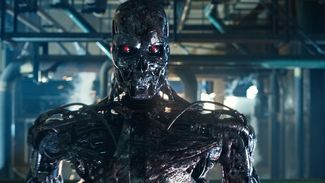
In addition to his clashes with the Resistance leaders and fears about Skynet’s
strength and innovation, a new element shatters the vision of the future Connor grew up
believing in: the emergence of a man whose existence has never been mentioned—a
human-machine hybrid named Marcus Wright. John Brancato asserts, “The key to the
story was coming up with the character of Marcus Wright, whose internal battle reflects
the larger conflict.”

To create a strong anti-hero opposite Bale’s John Connor, the filmmakers cast
Sam Worthington, fresh off his experience working with “Terminator” creator James
Cameron on his upcoming film “Avatar.” “Sam is a fundamentally tough guy, but at the
same time, he shows innate human sensitivity,” says McG. “He holds his own with
Christian, which is a tremendous feat considering how formidable an actor Christian is.
It was very clear from the beginning that Sam was our guy.”
Marcus Wright’s last memory was of being put to death for committing a crime;
he has no knowledge of how he came into this world or what his purpose is here.
“Marcus had been on death row,” says Sam Worthington. “He was put to death. But
then he wakes up in this post-apocalyptic world and has to go on a surreal adventure to
figure out why he isn’t dead.”
“Nobody really knows who Marcus is to start with,” says Bale. “He’s somebody
with a past, with an awful lot of regrets. There’s a theme throughout the film of desiring
a second chance.”
The notion of second chances is what had driven Dr. Serena Kogen to find
Marcus on death row. A scientist with the genetics division of Cyberdyne Systems,
Serena is played by Helena Bonham Carter. “Helena plays a very proficient scientist
who is working on the cutting edge of technology,” says McG. “She’s further motivated
by the fact that she has terminal cancer. She truly believes her research could give
6
people like her a second chance, but her research falls into the hands of Skynet, and the
consequences of that are quite revolutionary for the machines. But she is indeed the
one who enlists Marcus to donate his body for what she will only tell him is ‘research,’
and hers is the last human face he sees before dying.”
Adrift in this strange, new world, wearing stolen clothes and struggling to come to
grips with what happened to him after “death,” Marcus is saved from a Terminator
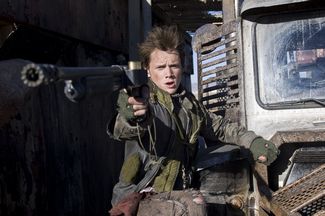
aggressor by a young man, played by Anton Yelchin, who identifies himself as Kyle
Reese. “Marcus ends up in an abandoned building where this T-600 starts firing at him,”
Yelchin describes. “And out of nowhere, a kid runs in, grabs him and saves him. And
that kid is Kyle Reese. We hear him say, as he did in the first film, ‘Come with me if you
want to live.’”
Kyle, who will eventually travel backwards through time to save Sarah Connor, is
at this point still a teenager, struggling to survive himself. “He’s scrappy; he’s a gritty
survivor,” says McG. “I needed those qualities to be evident in a younger version of
Michael Biehn, who played the adult Kyle in ‘The Terminator,’ because our story takes
place some ten-odd years before he’s sent back in time.”
Yelchin, a “Terminator” fan for as long as he can remember, was thrilled with the
prospect of portraying Kyle Reese in his teenage years. “McG and I talked about what
he is going through as a kid to then become the intense guy in the first film,” he muses.
“Why is he so tough and strong when he’s older? And you see that he already had
elements of that as a kid. Kyle has survived from one day to the next, eating whatever
he can find. He’s out there surrounded by T-600s and other human scavengers who
aren’t all friendly.”
While Kyle listens to the shortwave radio broadcasts delivered by John Connor,
dreaming of joining him in the Resistance, Connor is himself searching for Kyle.
“Connor is looking for Kyle Reese, who is his father, but is at this point still just a
teenage boy,” says Bale. “Kyle has no idea of the important role that he will play in the
future, and Connor can’t tell him. Time travel can really mess you up,” he smiles.
But Kyle is not alone in his journey. He’s accompanied by Star, a nine-year-old
girl rendered mute by the trauma of war and displacement. Played by Jadagrace Berry,
Star has the uncanny ability to sense the presence of a Terminator before it appears,
but, more importantly, her presence gives Kyle a greater sense of purpose. “She’s the
biggest point of vulnerability for Kyle because he sees Star as his main responsibility,”
7
says Yelchin. “I think if she wasn’t there, he wouldn’t try as hard, regardless of the
Resistance.”
“Star sort of embodies innocence in the picture,” says McG. “She embodies
hope. You take one look at her face and you say, ‘That’s what we’re fighting for. We
want to keep people like this alive. This is the future.’ Unlike those who remember the
world before, she has grown up in a world that’s ruled by the brutality of the machines.
It’s given her the ability to sense them coming, so she’s able to offer a critical assist
every now and again.”
Surviving from day to day, Kyle, Star and now Marcus are alternately threatened
and helped by other human refugees they meet along the way, including Virginia, played
by Jane Alexander. When the rest of her group wants to turn the trio away, Virginia
insists upon sharing what little resources they have. Worthington observes, “The irony,
of course, is that it’s only here, where living itself is a challenge, that Marcus experiences
true human kindness and compassion.”
Marcus, Kyle and Star are suddenly separated when they’re ambushed by a
Harvester—a giant insect-like machine with multiple arms and legs that seeks out its
prey and loads them into a Transporter to take back to Skynet. Pursued by an army of
Terminators—from the massive Hunter-Killers to the sleek, two-wheeled MotoTerminators—
across miles of open roads, bridges and rivers, Kyle and Star are
ultimately captured by the Harvester and deposited in a Transporter, their fate unknown.
“That is part of the heartbreak of the machine world,” comments McG. “You do
the best you could ever do as a human being, and it’s still not enough. You just can’t
knock these machines down. With everything that Kyle and Marcus throw at them, it’s
just not enough. They can’t be stopped.”
Having eluded capture himself, Marcus saves the life of a downed A-10 jet pilot
who is forced to eject after failing to rescue the humans from the Harvester. The pilot
turns out to be the stunning Blair Williams, who takes Marcus back with her to the
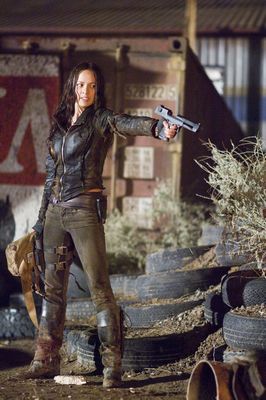
Resistance base. “Blair is a wonderful fighter pilot and a survivalist,” says McG. “She
really knows how to maneuver, destroy machines and, most importantly, stay alive. She
has her life saved by Marcus, so she feels indebted to him.”
Blair Williams is played by Moon Bloodgood, who personified the qualities the
filmmakers envisioned for this self-assured Resistance warrior, while also bringing the
kind of feminine strength that has characterized the “Terminator” films. “I mean, if a
8
nuclear bomb hit Los Angeles, I truly believe Moon would be the last woman standing,”
McG jokes. “So she got the job.”
On their way to the Resistance base, Marcus is injured by a landmine. Rushed
into the Rebellion’s outpost, he is immediately treated by John’s wife, Kate Connor,
played by Bryce Dallas Howard. “In the intervening years since Judgment Day, Kate
has become a physician, training the best she can in these circumstances,” Howard
relates. “She finds books and she’s talked to as many survivors as possible, learning
different techniques to enable her to save lives.”
Kate is also Connor’s partner in the ongoing fight. “John is a soldier and Kate is
a doctor, and to that effect they’re a very tightly bonded, formidable team,” says McG.
“They both have strong intelligence and the will to lead. It was critical to find a Kate
Connor that would be worthy of leading the resistance, and I thought Bryce had the
elegance and the intelligence to make people believe that she could indeed call the
shots if anything ever happened to John Connor. Kate and Blair both are in keeping with
the tradition of powerful female characters in the ‘Terminator’ films.”
Kate is the first to see that Marcus’s body has been modified into a new,
previously unknown model of Terminator: a hybrid with a human heart, brain, and
exterior, but the interior workings of a robot.
Completely unaware of his transformation, Marcus is overwhelmed by the
realization that his state execution was only a prelude to a new state of being. “Marcus
has metal arms and legs but he still has a human heart and brain, and therein lies the
rub,” says Worthington. “Is that enough to protect his humanity? He believes he’s
human, but everyone around him other than Blair thinks he’s the enemy, including
possibly Skynet. But I think this film explores the power of human choice and free will
through this character. Even though he is augmented with machinery, his human heart
is real.”
“As soon as they discover he’s a hybrid, there is no trust,” says Moon Bloodgood.
“But Blair sees Marcus’s courage and his struggle. She saw a part of him that they
never got a chance to see. He saved her life; he opened up to her. And Blair’s not
afraid to go up against John Connor because her values are more important to her than
he is, or even beating Skynet.”
Serving as Connor’s eyes and ears, his second-in-command, Barnes, is
assigned to watch over Marcus until he can be studied. Barnes is played by actor and
musical artist Common, whom Bale describes as “fantastic. He’s one of the coolest
9
guys I’ve ever met. He’s sort of easygoing and laid back and a good actor as well. His
character is Connor’s lieutenant and he does a great job.”
“Barnes is this spiritual warrior in many ways, fighting to the end by Connor’s side
for the future of humanity, and he sees Marcus as a threat,” says Common. “But, by the
same token, he’s been through a lot of things that force him to come to a spiritual
understanding—about their struggle, about John Connor’s destiny—and much of it is
tied into Marcus.”
As the situation on the ground changes, Connor believes his own strategies must
also dramatically change, which sets him at odds with the recognized leader of the
Resistance, General Ashdown, played by sci-fi veteran actor Michael Ironside. “Michael
Ironside, who I worked with before on ‘The Machinist,’ plays the leader of the
Resistance, and we come to be at loggerheads in this movie, but he’s somebody you
can definitely believe has become the leader of the new sort of scavenger military,” Bale
remarks.
John Connor realizes the only way to truly stand up to Skynet’s ever-evolving
combat strategies is to fight them where they live: in the heart of Skynet itself. And
Marcus may be the key to infiltrating their network. “Connor has this incredibly hopeless
task,” says Bale. “Sure, he’s got some weapons, but it’s like just throwing a few sticks
and stones at a fortress…except for this character of Marcus. So, Connor has to make
this extraordinary leap of faith and break every rule that he has established for himself.
He knows that the machines will use the best parts of humanity against us. So, how
does he put trust into somebody whom he knows to be a machine?”
Their only hope may be to trust in each other, and that trust alone could be
enough. “Where does humanity really lie?” asks the director. “Is it the strength of the
human heart? What is it that makes us want to die for one another? That’s what can’t
be measured by machines.”
“THE DEVIL’S HANDS HAVE BEEN BUSY”:
BUILDING AN ARMY OF TERMINATORS
“One of the joys of this film is you get to see all the machines in the lexicon of
Skynet,” says McG. “It’s just like a contemporary military: you’ve got machines in the
water, in the ground, in the sky... It was an amazing adventure just looking at the
different Terminators of this world because you want to see the success and failure of
everything Skynet tried on their way to the T-800, their most proficient killing machine.”
10
Created from drawings by production designer Martin Laing and his team of art
directors, the army of machines that rampage through “Terminator Salvation” came to
life under the direction of Stan Winston, the legendary creature creator who designed the
original T-800. Sadly, Winston passed away during the making of this film. “Stan
confided in me once that he created imaginary monsters as a child to keep him
company,” McG reflects. “He said he felt like the only kid in the world who did this. Little
did he know his childhood friends would come to be the heroes of millions. But most of
all, Stan was a good guy who loved what he did. It was a real honor to have had the
opportunity to work with Stan Winston. I intend to dedicate this film to his memory.”
John Rosengrant, an effects supervisor at Stan Winston Studio, led the 60member
team to create this generation of Terminators, and also oversaw all the special
effects make-up. Winston originally hired Rosengrant to work on the first “Terminator”
film and became the artist’s mentor. It was the beginning of an incredible journey, one
that has seen phenomenal advancements in animatronics and special effects over the
intervening years.
For Rosengrant, the sheer volume of work demanded by this production required
some innovations. “The challenge on ‘Terminator Salvation’ was to come up with lighter-
weight materials that still replicated metal,” says Rosengrant. “We used combinations of
urethanes and plastics, which were painted using breakthroughs in paint technology to
achieve a metal look.”
On “Terminator Salvation,” the challenge also became creating Terminators that
would be logical extensions within the world of the “Terminator” universe. “Because
we’re in a period prior to the timeframe of the first three films, we had to, in a sense,
reverse-engineer,” explains Laing. “In the same way that your laptop from ten years ago
was thick like a brick and then, over time, got thinner and thinner, the Terminators you
already know are the thin laptops and our Terminators are the bricks. They’re more
primitive in their brutality and bigger in their design.”
On top of that, McG had a specific aesthetic in mind that would color the entire
film, but especially the machines. “I didn’t want a shiny, robotic world,” McG expresses.
“I didn’t want a clean future. I really wanted a distressed future. I wanted a dirty patina
on the metal of the machines, like they’re a bunch of Soviet era tanks that haven’t been
able to go in and get painted or tuned up in a long, long time.”
Moreover, because the film takes place post-Judgment Day, a full complement of
Terminators, many of which were only hinted at in the earlier films, is revealed. “We are
11
in an interim period,” says Christian Bale, “In the flash forwards to 2029 that we’ve seen
in previous movies, Skynet has absolute dominance of all the armies of T-800s and
Hunter-Killers. But what we’re seeing here is the genesis of the T-800. In the present,
we’ve got a lot of T-600s, which are more primitive versions of the T-800, and a
phenomenal array of machines.”
Skynet’s preeminent foot soldier is the T-600, which McG describes as “bigger
and nastier” than the T-800, “a `57 Buick compared to a 2009 Mercedes Benz.”
A hulking seven-foot-three, rudimentary version of what would eventually
become the T-800, with a simplistic rubber skin pulled over the face and rag-tag clothing
to hide the endoskeleton, the T-600 “prowls the badlands looking for anything with a
heartbeat, an unrelenting machine with a singular focus of killing,” McG continues.
They carry a mini-gun, an M203 lower unit, capable of anywhere from 3,000 to
6,000 rounds per minute, and a backpack full of ammunition. The filmmakers wanted to
design the T-600s as machines that are no longer manufactured but maintain their
patrols in the field, battered and weathered, their camouflage mostly lost, damaged in
battle, or eaten away by the elements. As Kyle Reese said in “The Terminator,” “The
first ones were easy to spot.”
Created using both rigged and manned puppets in combination with CGI, the T600s
appear in the film in various states of disrepair. “It gives them a creepy, zombie-
like quality when you see, for example, the whole lower jaw exposed or areas torn out of
their faces,” says Rosengrant.
Seen in “flash-forwards” in the earlier films was the Terminator aircraft called the
Hunter-Killer. Hunter-Killers, or H-Ks, patrol the skies, scanning the ground below with
massive floodlights. Like the T-600s, the “Terminator Salvation” version of the H-Ks
represents a more rudimentary beast than what Skynet would eventually develop.
Patrolling like drones in search of human survivors are small devices called
Aerostats. These four-foot-long aerial sentries buzz about the land, hunting for any sign
of human life. Equipped with digital camera and laser-imaging technology, they send
wireless reports back to Skynet, which then sends in the Harvester.
“One of my favorite Terminators is the Harvester, which are the machines that
collect the people,” says McG. Approximately 80 feet tall, the Harvester resembles a
spider, with multiple steel arms and legs extending from a thorax-like body with jointed
claw-like appendages for capturing its prey, and multiple camera eyes on long stalks for
12
viewing the carnage. “Its job is to break into any structure where humans are hiding,
grab its prey and put them in the Transporters to be taken to Skynet.”
But failing that strategy, the Harvester unleashes Moto-Terminators. “Because
the Harvester is such a big beast, as it’s collecting humans there are always going to be
the few that escape,” Laing continues. “So, in the same way that a shepherd uses
sheepdogs, the Harvester has Moto-Terminators, which are bike-like Terminators that
race off after the humans and bring them back. They also have guns and the ability to
kill, but the goal is to retrieve escapees and return them to the Harvester so it can put
them in the Transporter.”
These slick machines are based on the Ducati motorbike, a personal favorite of
director McG. The Italian company was approached by the filmmakers and was thrilled
to be involved. They supplied four identical hyper-motored bikes for use in filming.
“We had to have credible-looking Moto-Terminators in this picture, so we went to
the designers and the whole team from Ducati,” says McG. “Ducatis are sleek, powerful,
agile machines, so that felt like a great place to start as we created the language of the
Moto-Terminators.”
The visual effects team was able to overlay the Moto-Terminator look over the
practical Ducatis. The production also had a practical Moto-Terminator made in Los
Angeles, which was used during filming.
Skynet covers the land with these machines, but for the seas, lakes and rivers, it
has developed a unique underwater Terminator called the Hydrobot. Resembling four-
foot-long segmented serpents, eyeless but with razor-sharp heads that drill into their
victims, Hydrobots respond to sound and vibrations in the waters they prowl. “The
Hydrobots turned out to be pretty fun, interesting characters,” says Rosengrant, “sort of
a cross between a psychotic crab and some sort of sea serpent. They’re wicked, vicious
things with these pincher-like claws on the front and an auger kind of drill bit. Once that
gets a hold of you, you’re definitely finished.”
These machines were especially challenging for Rosengrant and his team, “not
only because of how detailed they were but because they had to work in water, and
were going to get punished pretty hard,” he continues. “When working in water, most of
the radio control devices that you would usually use are out the window; instead you’re
working with cable or pneumatics. And the Hydrobot needed to be durable enough to be
wrestled and thrown around and chucked out of helicopters and punched through things,
but at the same time not be so unwieldy that we couldn’t puppet it.”
13
They ended up using a combination of steel structures that were kept as
lightweight as possible and lightweight urethane parts painted to look like metal. “We
ended up getting a lot of extra shots that none of us thought we would get with the
practical model,” Rosengrant states. “We thought it would have to be augmented with
CGI, but we were all amazed by how well it turned out.”
Watching the Stan Winston puppeteers working the various rigs, Bale found their
dedication inspiring. “They’d practiced for so long, and really got the movements down,”
says Bale. “With the Stan Winston team, it’s incredible to see the painstaking detail they
give all their work, their incredible patience, and their complete love for what they do. I
love seeing people who are just obsessed with what they do, and these guys are
obsessed with building models. They want to perfect what a T-600 really would look like
turning its head and attacking somebody. They take it very, very seriously, and I think
that’s wonderful.”
But by far the most innovative of Skynet’s creations isn’t entirely metal: Marcus,
the human Terminator hybrid who learns of his cyborg adaptations over the course of
the film.
Marcus’s special effects make-up and prosthetics were created by Rosengrant,
whose team developed several variations to accommodate the many different conditions
Marcus finds himself in, including a full reveal of the interior endoskeleton after his
capture by the Resistance.
A combination of large prosthetic pieces sculpted using the latest technology,
make-up, and CGI, the creation of Marcus was a complex endeavor that demanded
creativity and patience, especially on the part of Sam Worthingon, who spent as many
as six hours straight in the make-up chair being worked on by a team of three artists.
The total effect, which McG was able to accomplish with help from the creative
team of artisans from every corner of the production, was an iconic vision that truly
created a new chapter in the “Terminator” saga. “Every other picture in this series has
been present day,” the director says. “Our film is a totally new beginning. We show the
genesis of these fearful machines; we go into Skynet. We see the CPU that will
represent the rise of the machines to a place of complete dominance. It was an
incredible thrill for me to play a part in the continuation of this incredible story, which
inspired me so much throughout my life, and remains prescient and relevant today.”
For Bale, who was able to see footage during production of the Terminators in
action, the thrill was equally intense. He notes with a wry smile, “We went through
14
filming thinking we were the leads, but it ain’t so in the slightest. People aren’t coming to
see us. We’ve got to provide some kind of a story to it, because no matter how great the
Terminators and the explosions are, you’ve got to have a good story or otherwise what’s
the point? But let’s face facts: the Terminators are the rightful stars of the movie. And
they’re going to blow everyone away.”
“JUDGMENT DAY HAPPENED”:
BUILDING THE WORLD OF “TERMINATOR SALVATION”
The practical challenge for the filmmakers of “Terminator Salvation” was to bring
to life an America circa 2018 with its sun-blasted expanses, skeletal cities and both
human and Terminator occupants. From finding the ideal locations and shooting
facilities, to the fabrication of every physical element, to the type of film stock used to
capture the otherworldly vistas he sought, McG worked in close collaboration with his
team to create a unified and totally new vision for the post-apocalyptic reality of the
story.
To pervade the imagery with a post-war tone, McG and his director of
photography Shane Hurlbut shot the film using an experimental version of the “Oz
process” in film processing. “We took an old film stock from Kodak and we let it sit in the
sun too long to degrade some of its qualities,” explains McG. “Then we processed it in a
way where we added more silver than you would traditionally add to a color film stock.
And we went even further to manipulate that in the digital intermediate to give the film an
otherworldly quality that gives you the impression that something’s just off with the way
this world looks, which is in keeping with the mood of the entire picture.”
The locations would also play a major role in grounding the film in tactile reality.
“We wanted a big, vast world,” McG affirms. “To do that, we needed this incredible
diversity in our locations. In this film, we go to the sea, we go to the mountaintop, we go
to the desert, we go to the jungle. Added to that, we wanted to capture a world at war;
the entire world is involved in this conflict, and we wanted to open the film up and make
it feel like a huge cinematic experience in that respect.”
The filmmaking team was able to accomplish all of that in one place when they
chose Albuquerque, New Mexico, with its combination of sweeping deserts, mountain
landscapes and the modern stages at Albuquerque Studios.
“When you’re making a movie about an American icon, following the journey of
John Connor as he chases Terminators, you want to have that American backdrop
15
behind you,” says production designer Laing. “Judgment Day has taken place, so we
have a devastated landscape and out here, you literally open the door of the stage and
you see these amazing deserts. And Albuquerque Studios, in addition to being a multipurpose
studio, also has a huge amount of land around it where we could build sets.”
With the echo of a once-powerful military force living on in the Resistance, the
filmmakers turned for guidance and support—not to mention hardware—to the Defense
Department at nearby Kirtland Air Force Base. “‘Terminator Salvation’ is set in a world
that is post-Air Force, post-Army; it’s just the Resistance,” offers producer Jeffrey Silver.
“But we figured the Resistance would model itself after the discipline of the armed forces
today, so we went to Chuck Davis, who is the coordinator of the Department of Defense
in Los Angeles and its motion picture liaison. He introduced us to the Air Force and they
just opened the doors to us. We got all the hardware we needed; we were able to shoot
on Air Force property. We had just fantastic cooperation because they recognized that
in the future portrayed in this film, the military will still be the men and women who
protect us, no matter what may come.”
The production utilized aircraft and weaponry to reflect the kinds of supplies to
which humans could conceivably gain access within the context of the story. “The
resistance does have some hardware, so it’s not just sticks and stones against the
machines,” says McG. “They’ve got A-10 planes, and some older mechanized machines
that they use to fight back.”
A key military jet that figures into the story is the A-10 Thunderbolt Two (also
known as the Mighty Warthog, the Flying Gun, and the Tankbuster). Flown by Blair
Williams, the A-10s are one of the best forms of air support the Resistance possesses
for taking on Skynet’s massive machines. Air Force Captain Jennifer Shoeck, herself an
A-10 pilot and the woman who provided guidance to Bloodgood in her role, remarks,
“The A-10 gets down in the weeds, gets dirty—low and slow is its main mission. It’s a
close air support aircraft to aid the ground troops.”
Other aircraft utilized by the production, with the assistance of the Air Force and
its pilots, were: the CV-22 Osprey, which can fly at fixed-wing aircraft speeds but has tilt-
rotor technology that allows it also to take off and land like a helicopter; a massive C-130
Hercules transport; and the HH-60 Pave Hawk helicopter, a modified Blackhawk aircraft
with external gun mounts.
Since not all sequences required actual hardware, the production also created
mock-ups and reclaimed junked aircraft, which was put on motion simulators to recreate
16
the flight dynamics of the respective aircraft. The special effects crew, led by special
effects supervisor Mike Meinardus, rigged up a gimbal and hung a helicopter from a
crane, so the prop aircraft could be moved in a believable fashion from above, and McG
could shoot the bottom as it pulled away from the set without any whirling blades.
Because Kirtland Air Force Base shares a runway with a commercial airport,
Albuquerque’s Sunport, the Air Force offered the production an unused hangar for
staging, which ultimately was also modified to stand in as the Resistance stronghold.
In the film, this outpost is comprised of a series of ‘60s-era missile silos
connected by a large underground network of tunnels. “Everything you see in the
outpost are the layers the Resistance fighters have set up—to generate power, to grow
their own food, to build a water filtration system, to equip an infirmary—stuff these guys
would have dragged in from their reconnaissance expeditions and what, realistically,
they could have jerry-rigged together to make this a functioning facility,” Laing relates.
To research the Resistance base, Laing toured the nuclear fallout shelters
beneath Budapest, Hungary, and looked at other post-disaster quarters. “I took a whole
series of photographs and came back to create the environment in which the Resistance
lives and plans,” he says. “These men and women are not only fighting Skynet, but
they’re also fighting the environment they’re in. Every resource is completely depleted;
they’re just living with the world that they have.”
The film’s creators spoke to futurists about what would happen with the flora and
fauna, as well as manmade objects. “We wanted to get all of that detailing into our
movie,” says costume designer Michael Wilkinson. “We asked, ‘If the bombs went off
about 14 years ago and destroyed most of North America, what would be left? What
would people scrounge and cobble together to survive, to fight?’”
Obsolete but functioning weapons, recycled clothing, electronics equipment
culled from the rubble and reconfigured, ammunition found or stolen from the enemy—
these are the limited resources of the Resistance. The design team set about scouring
New Mexico, which has long had a strong military presence, for authentic pieces at
military surplus yards and from local collectors.
Wilkinson recalls, “McG didn’t want the film to look like some far-fetched,
fantastical science fiction movie. It’s set in 2018, not the distant future; it’s just around
the corner. So we did lots of research into moments in history that have had incredible
meaning in the human psyche, stories of displaced people and apocalyptic tales.”
17
In creating the wardrobe of the film’s key characters, Wilkinson collaborated with
McG, Laing, and the actors themselves to ensure that each set of clothes would reflect a
number of key requirements, first and foremost of which was authenticity. “We created a
whole stock of clothes that were from different sources—be it from different armies of
North America, tactical and police gear, technical gear, and just regular street clothes—
thinking about what clothes people would have after a nuclear war,” he explains. “What
has survived? What has the army culled together to make their uniform? We were
always treading the knife-edge of realism and accuracy on one side, and at the same
time, heightening things so we were creating appealing and innovative visuals.”
Continuity with the earlier films was another factor Wilkinson considered in
designing the costumes. For John Connor, Wilkinson worked in the tiger stripe army
pants that reflect back to the clothes worn by the younger Connor in the second
“Terminator” film. But beyond that, he kept Connor’s silhouette stark. “Less is more with
Christian,” Wilkinson observes. “The intensity of his performance and his commanding
presence tells you who John Connor is. There is a certain neutrality to his look that
helps you get to know the real John Connor.”
Another nod came in the form of the sneakers worn by Kyle Reese—an echo of
the boots he will wear as an adult, as seen in “The Terminator”—which the wardrobe
crew adapted with shearling inside and cord laces. “It was really fun, because you’re
starting with these fantastic, iconic characters and then tweaking them to fit with our
vision for this movie,” Wilkinson says.
The designer crafted the costume of Marcus, a 21st century Terminator hybrid,
utilizing leathers that reflected back to the T-800’s wardrobe of choice. “We got an old
pair of leather biker pants and essentially destroyed them, just really aged them up, so
they had this patina to them, and then we took two leather jackets and patched them
together to become one jacket,” he details.
Wilkinson also coordinated with the artists from Stan Winston Studio to ensure
continuity as his costume and skin give way and reveal his mechanical endoskeleton
over the course of his adventures. “We coordinated what would be revealed, and when
and how,” he recalls. “He has three main looks through the film and each look had to
have 10 or 20 versions of the costume in various states of clean, distressed, shredded,
matted, napalmed, shot-through, etc.”
Wilkinson adds that he also created costumes with individualized detailing for the
women in the film, including Blair’s adapted, skintight flight suit, and Star’s oversized
18
outfit. “What McG and I really liked was the idea that, as opposed to the world of
machines where all of them look the same, human beings are different because they
express who they are through their clothes,” he notes. “We looked to the Native
American people of the region to see how they integrated ornamentation into the useful
things they carried. So, on top of this military, tactical dress, you have a layer of organic,
expressive, very human handcrafted elements. In that way, Star wears a policeman’s
star-shaped badge on her hat; and Blair wears a variety of chains, lockets, feathers and
other found objects as jewelry pieces.”
Arming the characters also entailed combining creativity with practical realism.
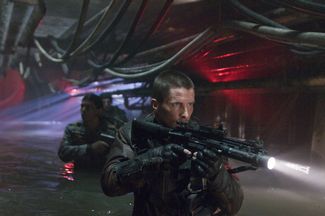
The design team outfitted John Connor with an HK 416D, the German version of a U.S.
M4. Connor’s right-hand man, Barnes, carries the mammoth Grizzly 50, while Blair is
armed with the sizable Desert Eagle 50.
With the extensive gun battles, chase sequences and explosions, the filmmaking
team had a tremendous amount of firepower to execute as practically and safely as
humanly possible. “We wanted to do everything in-camera,” says McG. “When it was
necessary to extend with CG, we did that, but we wanted to build everything, blow things
up, and really crash the car. It was extraordinary to have the concussion of the
explosion to add to the realism of the sequence. You see exhilaration in everyone’s
eyes. You can feel their adrenaline rising. We aimed to keep it as safe as possible, but
we definitely wanted to push things every step of the way, to create a movie that, at its
core, is a war movie and captures the reality of that intense pressure.”
Photorealism was the mandate for the practical effects and visual effects teams
alike. Visual effects supervisor (and second unit director) Charles Gibson asserts, “McG
wanted real pyro events, explosions and actions at a one-to-one scale, not as miniatures
or computer-generated. This is actually more of an action movie in that sense. So, we
chose to deploy the visual effects as intelligently as we could, to not overdo it, and
always used a real-world proxy where we could.” Gibson also worked in partnership
with eight facilities, including Industrial Light & Magic, Asylum, Kerner Studios, Whiskey
Tree and Rising Sun Studios.
One of the most potent special effects challenges was the destruction of the gas
station during Marcus and Kyle’s battle with the Harvester, in which Marcus spies a
tanker truck and blows it up beneath the Harvester in an attempt to thwart further
attacks. Shot using a tanker filled with roughly 250 gallons of gasoline, the ensuing
fireball was about 160 feet in diameter and 200 feet high. That explosion enveloped the
19
gas station itself, followed by another explosion at the gas pump island. The effect
required 12 weeks of preparation and thorough safety measures on the day of the event.
It also meant the production had only one shot at getting it right and capturing it
on film. McG took no chances, filming the scene from multiple angles using cameras on
remote switches; cameras up close, protected in crash housings; cameras manned by
operators behind bunkers; and even cameras on helicopters, using very long lenses.
Even more spectacular, perhaps, was the napalm drop and the crash of Connor’s
helicopter into the river. To accomplish this sequence, the crew constructed a 200-foot
length of river in the middle of the desert, consisting of an 18-foot-deep tank that housed
a scissor lift that moved the helicopter up and down and was rigged so the helicopter
could crash in the water and ratchet over. Along the “riverbank” was a mix of real and
concrete trees, the latter rigged with gas lines to generate a controlled burn, and beyond
that a protective fire ring, with a cadre of local firefighters standing by.
The “napalm” was dropped in a series of explosions along a 300-foot length of
river, each blast using 100 gallons of gasoline, with the flames climbing several hundred
feet into the air. Lasting about seven seconds, the effect was like a machine gun strafe
of fireballs, generating a big heat blast, “and luckily nothing more than that,” recalls
Gibson.
“It just got your adrenaline going,” Moon Bloodgood attests. “There were some
crazy stunts—we’d start running and then it would be dust and things exploding and I
had no idea what was going to hit me. And we would be laughing because we were so
scared. But I loved it.”
“My character goes through the wringer,” says Worthington. “He gets strung up,
cut up, and blown up, which meant I also spent many a day getting strung up, cut up,
and blown up,” he laughs. “So, yeah, we got our bumps and bruises, but it’s
‘Terminator,’ it’s not ‘Pride and Prejudice.’”
With hundreds of people on set on any given day, all working in 80,000 square
feet of stage space, as well as a good portion of the desert surrounding Albuquerque
Film Studios, “Terminator Salvation” was, Jeffrey Silver states, “an incredibly huge
operation. It involved every different trick in the book—animatronics, special effects,
visual effects, stunts… You name it, this film had it.”
McG sums up simply, “It was intense…but an incredible amount of fun.”
# # #
20
ABOUT THE CAST
CHRISTIAN BALE (John Connor) was born in Wales and grew up in England
and the USA. He made his film debut in Steven Spielberg’s World War II epic “Empire of
the Sun.”
Bale most recently starred in the blockbuster “The Dark Knight,” reprising his role
from “Batman Begins.” His film work to date also includes “Henry V,” “The Portrait of a
Lady,” “The Secret Agent,” “Metroland,” “Velvet Goldmine,” “All the Little Animals,”
“American Psycho,” “Shaft,” “Captain Corelli’s Mandolin,” “Reign of Fire,” “Laurel
Canyon,” “The Machinist,” “The New World,” “The Prestige,” “Harsh Times,” “Rescue
Dawn,” “3:10 to Yuma” and “I’m Not There.”
Bale next stars in Michael Mann’s “Public Enemies,” set for release in July 2009.
SAM WORTHINGTON (Marcus Wright) follows “Terminator Salvation” with a
starring role in James Cameron’s 3D science fiction actioner “Avatar,” slated for release
on December 18, 2009. Worthington was handpicked for the film by Cameron, who,
coincidentally, also directed the first two “Terminator” films. In addition, Worthington
stars in two very different upcoming independent features: the romantic drama “Last
Night,” opposite Keira Knightley and Eva Mendes; and the post-World War II dramatic
thriller “The Debt,” directed by John Madden and also starring Helen Mirren. He is
currently filming the action-adventure fantasy epic “Clash of the Titans,” playing the lead
role of Perseus under the direction of Louis Leterrier.
A native of Australia, Worthington graduated from Sydney’s prestigious National
Institute of Dramatic Art (NIDA) in 1998. Upon graduation, he continued to act on the
stage, appearing in a production of “Judas Kiss,” directed by Neil Armfield for Company
B at the Belvoir Street Theatre.
In 2000, Worthington made his feature film debut with a starring role in the
Australian film “Bootmen,” in the role of Adam Garcia’s brooding older brother. His
performance garnered him an Australian Film Institute (AFI) Award nomination for Best
Performance by an Actor in a Leading Role. His subsequent Australian film credits
include “Dirty Deeds,” with John Goodman, Toni Collette and Sam Neill, for which he
earned a Film Critics Circle of Australia (FCCA) Award nomination for Best Supporting
21
Actor; and “Gettin’ Square,” with David Wenham. He also had a small role in the World
War II drama “Hart’s War,” starring Bruce Willis.
However, it was his layered performance in Cate Shortland’s critically acclaimed
and commercially successful 2004 film “Somersault” that brought Worthington
international attention. He won an AFI Award for Best Actor in a Leading Role and
earned his second FCCA Award nomination. In addition, the film made a clean sweep of
the year’s AFI Awards, winning in all 13 film categories—a first in the awards’ history.
Worthington went on to star in the title role of Geoffrey Wright’s 2006
contemporary adaptation of Shakespeare’s “Macbeth.” He has also been seen in John
Dahl’s “The Great Raid” and the horror thriller “Rogue.”
Worthington’s Australian television credits include starring roles in two award-
winning projects: “Love My Way,” which has won three AFI Awards for Best Television
Drama Series; and “The Surgeon,” which was nominated for an AFI Award for Best
Telefeature or Miniseries. He also starred in the “Delivery Man” episode of “Two
Twisted,” a “Twilight Zone”-like anthology series produced by Bryan Brown.
ANTON YELCHIN (Kyle Reese) is one of Hollywood’s hottest rising young stars.
Yelchin will next be seen as Pavel Chekov in the much-anticipated feature “Star Trek,”
with Chris Pine and Zachary Quinto. Directed by J.J. Abrams, the film chronicles the
early days of the crew of the USS Enterprise. He recently completed filming the
independent feature “Memoirs of a Teenage Amnesiac.”
Yelchin also appears in two films that premiered at the 2008 Toronto Film
Festival: the independent release “New York, I Love You,” a collection of short films from
12 different filmmakers, which is set for a limited release in Spring 2009; and the indie
film “Middle of Nowhere,” in which he co-stars with Susan Sarandon. He also recently
starred as the title character in the critically acclaimed dark comedy “Charlie Bartlett,”
opposite Robert Downey Jr. and Kat Dennings.
Earlier in his career, Yelchin won a Young Artist Award for Best Performance by
a Leading Young Actor in a Feature Film for his performance in “Hearts in Atlantis,”
opposite Anthony Hopkins. He also received the Explosive Talent Award at the 2002
Giffoni Film Festival in Italy. Yelchin’s other film credits include “House of D,” with Robin
Williams; “Fierce People,” opposite Diane Lane and Donald Sutherland; Nick
Cassavetes’ “Alpha Dog,” with Emile Hirsch and Bruce Willis; and Roland Joffe’s “You
and I,” with Mischa Barton.
22
On television, Yelchin starred for two seasons on the critically acclaimed
Showtime series “Huff,” with Hank Azaria. He has also had guest-starring roles on a
number of hit drama series, most recently including “Criminal Minds” and “Law & Order:
Criminal Intent.”
MOON BLOODGOOD (Blair Williams) was seen last year as an ambitious
development executive in Barry Levinson’s comedy “What Just Happened,” starring
Robert De Niro. In 2007, she starred as a Native American warrior princess in the
action-adventure fantasy “Pathfinder,” directed by Marcus Nispel. She previously
starred in Frank Marshall’s hit adventure film “Eight Below,” opposite Paul Walker and
Jason Biggs. Her additional credits include the independent feature “Moonlight
Serenade,” with Amy Adams; “A Lot Like Love,” opposite Ashton Kutcher; and “Win a
Date with Tad Hamilton!,” in which she made her feature film debut.
On television, she has had starring roles on two series: NBC’s “Journeyman,”
opposite Kevin McKidd; and “Day Break,” with Taye Diggs. In April 2009, Bloodgood
was offered a three-episode arc on Fox TV’s “Burn Notice,” which stars Jeffrey Donovan.
Bloodgood started her career as a professional dancer, eventually earning a
coveted spot on The Los Angeles Laker Girls. She later toured with such noted artists
as Prince, Brandy and the rock band Offspring. Her striking beauty, a blend of Korean,
Dutch and Irish roots, caught the eye of photographers, who encouraged her to pursue
modeling. Bloodgood went to New York, where she was soon modeling for cosmetic
giants Revlon, L’Oreal and Avon. David LaChapelle photographed her for a Diesel
campaign, as well as a fashion spread in Face magazine. She also graced the cover of
Town and Country, and appeared in campaigns for Adidas and Nike Woman.
Upon her return to Los Angeles, Bloodgood made her acting debut on an
episode of NBC’s “Just Shoot Me.” Her subsequent television credits include guest roles
on “CSI” and “Monk,” as well as pilots directed by James Foley and John Stockwell.
In 2006, Bloodgood was named one of People magazine’s “Most Beautiful
People.”
BRYCE DALLAS HOWARD (Kate Connor) earned a Golden Globe Award
nomination in 2008 for her performance as Rosalind in Kenneth Branagh’s adaptation of
Shakespeare’s classic “As You Like It,” opposite Kevin Kline and Alfred Molina. She
23
more recently starred in the film adaptation of the Tennessee Williams play “The Loss of
a Teardrop Diamond,” with Chris Evans, Will Patton and Mamie Gummer.
Howard’s additional film credits include Sam Raimi’s “Spider-Man 3,” in the role
of Gwen Stacy; the M. Night Shyamalan film “Lady in the Water,” opposite Paul Giamatti;
and “Manderlay,” under the direction of Lars von Trier. Howard had made her major
feature film debut starring in Shyamalan’s “The Village,” with Adrien Brody, Joaquin
Phoenix and Sigourney Weaver.
Behind the camera, Howard made her directorial debut in 2006 with the short film
“Orchids,” a project she took on as part of Glamour magazine’s “Reel Moments”
program.
Howard studied at New York University’s Tisch School of the Arts before
beginning her career on the New York stage. Her theatre credits include the role of
Marianne in the Roundabout Theatre Company’s Broadway production of “Tartuffe”; the
Public Theatre’s production of “As You Like It,” as Rosalind; the Manhattan Theatre
Club’s presentation of Alan Ayckbourn’s “House/Garden,” playing Sally Platt; and the
part of Emily in the Bay Street Theatre Festival production of “Our Town.”
HELENA BONHAM CARTER (Dr. Serena Kogan) has starred in a wide range of
film, television and stage projects both in the United States and in her native England. In
July, she will be seen in “Harry Potter and the Half-Blood Prince,” reprising the role of
the evil Bellatrix Lestrange, which she first played in 2007’s “Harry Potter and the Order
of the Phoenix.” Bonham Carter is also set to return as Bellatrix Lestrange in the two-
part film that completes the blockbuster hit franchise, “Harry Potter and the Deathly
Hallows.” Her upcoming films also include “Alice in Wonderland,” in which she stars as
the Red Queen under the direction of Tim Burton.
Last year, Bonham Carter earned a Golden Globe nomination and won an
Evening Standard British Film Award for Best Actress for her performance as Mrs. Lovett
in Tim Burton’s screen adaptation of the Stephen Sondheim musical “Sweeney Todd:
The Demon Barber of Fleet Street,” starring Johnny Depp in the title role.
Bonham Carter was previously honored with Oscar®, Golden Globe, BAFTA and
Screen Actors Guild Award® nominations for her work in the 1997 romantic period drama
“The Wings of the Dove,” based on the novel by Henry James. Her performance in that
film also brought her Best Actress Awards from a number of critics organizations,
24
including the Los Angeles Film Critics, Broadcast Film Critics, National Board of Review
and London Film Critics Circle.
She had made her feature film debut in 1986 in the title role of Trevor Nunn’s
historical biopic “Lady Jane.” She had barely wrapped production on that film when
director James Ivory offered her the lead in “A Room with a View,” based on the book by
E.M. Forster. She went on to receive acclaim in two more screen adaptations of Forster
novels: Charles Sturridge’s “Where Angels Fear to Tread” and James Ivory’s “Howard’s
End,” for which she earned her first BAFTA Award nomination.
Bonham Carter’s early film work also includes Franco Zeffirelli’s “Hamlet,”
opposite Mel Gibson; “Mary Shelley’s Frankenstein,” directed by and starring Kenneth
Branagh; Woody Allen’s “Mighty Aphrodite”; and “Twelfth Night,” which reunited her with
Trevor Nunn. She went on to star in David Fincher’s “Fight Club,” with Brad Pitt and
Edward Norton, as well as the Tim Burton-directed films “Big Fish,” “Planet of the Apes”
and “Charlie and the Chocolate Factory.” In addition, she has starred in such
independent features as “Carnivale,” “Novocaine,” “The Heart of Me,” “Till Human Voices
Wake Us” and “Conversations with Other Women.”
In 2005, Bonham Carter lent her voice to two animated features: Tim Burton’s
“Corpse Bride,” in which she played the title role; and the Oscar®-winning “Wallace &
Gromit in The Curse of the Were-Rabbit.”
On the small screen, Bonham Carter earned Emmy and Golden Globe Award
nominations for her performances in the telefilm “Live From Baghdad” and the miniseries
“Merlin,” and a Golden Globe nomination for her portrayal of Marina Oswald in the
miniseries “Fatal Deception: Mrs. Lee Harvey Oswald.” She also starred as Anne
Boleyn in the British miniseries “Henry VIII,” and as the mother of seven children,
including four autistic sons, in the BBC telefilm “Magnificent 7.”
Bonham Carter’s stage credits include productions of “The Woman in White,”
“The Chalk Garden,” “The House of Bernarda Alba” and “Trelawny of the Wells,” to
name a few.
COMMON (Barnes) is a Grammy-winning music artist who is now becoming well-
known as a film actor. He most recently co-starred in last summer’s actioner “Wanted,”
with Angelina Jolie, James McAvoy and Morgan Freeman. He was previously seen in
David Ayer’s “Street Kings,” starring Keanu Reeves and Forest Whitaker; Ridley Scott’s
acclaimed true-life drama “American Gangster,” with Denzel Washington and Russell
25
Crowe. He had made his acting debut as part of the ensemble cast of “Smokin’ Aces,”
under the director of Joe Carnahan. He first appeared on the big screen as a musical
performer in the 2006 release “Dave Chappelle’s Block Party.” Currently, Common is
filming the comedy “Date Night,” with Steve Carell, Tina Fey, Mark Wahlberg and James
Franco, under the direction of Shawn Levy.
Prior to starting his acting career, Common rose to prominence as one of hip
hop’s most poetic and respected lyricists. He released his first album, Can I Borrow a
Dollar?, in 1992, followed by Resurrection, One Day It’ll All Make Sense, Like Water For
Chocolate, and Electric Circus. In 2004, he partnered with rap music mega-star Kanye
West to produce BE, which went on to garner four Grammy Award nominations. In
2006, his video for the single “Testify” was nominated for two MTV Video Music Awards,
including Best Hip Hop Video.
In 2007, Common released his critically acclaimed seventh album, Finding
Forever, which debuted at #1 on the Billboard 200 Album Chart and went on to win a
Grammy Award. His eighth album, Universal Mind Control, was released in 2008.
Utilizing the cultural relevance of hip hop, Common has also written children’s
books that offer the younger generation an understanding of self-respect and love. The
first one, entitled The Mirror and Me, teaches lessons of life, the human spirit, and
human nature. Common’s next book, I Like You But I Love Me, was nominated for an
NAACP Image Award. His third book is entitled M.E. (Mixed Emotions).
In addition to his music, film, and literary pursuits, Common was announced as
the face of the new Diesel men’s fragrance, Only the Brave. In addition to starting his
own hat line, called Soji, he is also partnered with Microsoft on their Softwear clothing
line and AMP Energy Drink. In 2007, he launched the Common Ground Foundation, an
organization dedicated to the empowerment and development of urban youth in the
United States.
JANE ALEXANDER (Virginia) is an award-winning actress who has been
honored for her work on the stage, screen and television. She is currently starring off-
Broadway in Tina Howe’s play “Chasing Manet,” at Primary Stages.
A four-time Academy Award® nominee, she gained her first Oscar® nomination,
for Best Actress, for her performance in 1970’s “The Great White Hope.” She received
Best Supporting Actress Award nominations for her work in Alan J. Pakula’s “All the
President’s Men” and Robert Benton’s “Kramer vs. Kramer.” Alexander garnered her
26
fourth nomination, for Best Actress, for her role in “Testament.” She has also earned
acclaim for her work in such diverse films as “Brubaker,” “Night Crossing,” “City Heat”
and “The Cider House Rules.” Her more recent film credits include John Sayles’
“Sunshine State”; Gore Verbinski’s horror hit “The Ring”; “Fur,” with Nicole Kidman;
“Feast of Love,” which reunited her with director Robert Benton; the indie film “Gigantic”;
and David S. Goyer’s horror film “The Unborn.”
Her distinguished stage career includes her Tony Award-winning performance in
“The Great White Hope,” for which she also won Drama Desk and Theatre World
Awards. The play was directed by Ed Sherin, who later became Alexander’s husband.
Her work on Broadway also includes Tony-nominated performances in “Honour”; “The
Sisters Rosensweig,” for which she also won an Obie Award; “The Visit”; “First Monday
in October”; “Find Your Way Home”; and “6 Rms Riv Vu.” Additionally, she starred in
“Shadowlands,” both on Broadway and in London’s West End.
Alexander has also performed on the stages of many noted regional theatres,
including the Arena Stage and the Kennedy Center in Washington D.C.; Los Angeles’
Mark Taper Forum; the Alliance Theatre in Atlanta; Princeton’s McCarter Theatre; and
the American Shakespeare Theatre in Stratford, Connecticut. In all, she has appeared
in more than 100 stage roles, including her portrayal of Djuna Barnes in her one-woman
show, “What of the Night.” In 2009, Alexander starred in the original theatrical
production of Thom Thomas’ “A Moon to Dance By,” under the direction of Ed Sherin.
On television, Alexander recently won her second Emmy Award for the role of
Sara Delano Roosevelt in the HBO movie “Warm Springs.” She had won her first Emmy
for her performance in the telefilm “Playing for Time.” Alexander has earned five more
Emmy nominations, including two for her portrayal of Eleanor Roosevelt in the acclaimed
miniseries “Eleanor and Franklin” and “Eleanor and Franklin: The White House Years.”
She was also Emmy-nominated for her starring roles in the television movies “Calamity
Jane” and “Malice in Wonderland,” and her guest role on “Law & Order.” In addition, she
received a Daytime Emmy nomination for her performance in the Showtime movie
“Carry Me Home,” directed by her son, Jace Alexander. She had previously worked with
Jace when he directed her in the CBS telefilm “Jenifer.” In 2007, Alexander starred in
her first television series, HBO’s “Tell Me You Love Me.”
Alexander is the author of “Command Performance: An Actress in the Theater of
Politics,” documenting her tenure as chairman of the National Endowment for the Arts
27
from 1993-1997. She continues her political career as a Commissioner of Parks, the
Taconic Region, for New York State.
JADAGRACE BERRY (Star) makes her feature film debut in “Terminator
Salvation.”
The nine-year-old performer, who has been singing ever since she could talk,
recently completed her first single, an uplifting song called “Express Yourself,” for which
she also co-wrote the lyrics with producer/writer Jehrone McGregor.
Jadagrace is a star student at Debbie Allen’s Dance Academy and also attends
the Gary Spatz Acting Conservatory.
The daughter of a Japanese American mother and African American father,
Jadagrace loves art, piano and soccer. Her latest hobby is silk rope climbing, which
combines her athletic skill with acrobatics. Nearest and dearest to her heart are the six
dogs and six cats she rescued and takes care of daily.
# # #
28
ABOUT THE FILMMAKERS
McG (Director) made his feature film directorial debut with the actioner “Charlie’s
Angels,” starring Drew Barrymore, Cameron Diaz and Lucy Liu. Released in November
2000, the film topped the box office in its opening weekend with more than $40 million
domestically, making it the largest opening weekend ever for a first-time director. It went
on to open at number one in 31 territories internationally, ultimately grossing more than
$260 million worldwide. McG also directed the 2003 sequel “Charlie’s Angels: Full
Throttle,” which reunited Barrymore, Diaz and Liu and added Demi Moore to the cast.
Following his success at the box office, McG formed Wonderland Sound and
Vision, a production company that has film and television deals with Warner Bros.
Under McG’s leadership, Wonderland Sound and Vision has grown from a production
company into a multifaceted media entity that has set trends in the way in which content
is produced and delivered.
In 2006, McG directed the true-life drama “We Are Marshall,” starring Matthew
McConaughey, Matthew Fox and David Strathairn. The film tells the tragic but inspiring
story of the aftermath of a horrific plane crash that claimed the lives of the Marshall
University football team and the coach who was able to motivate his new team not only
to play but to win.
McG is next set to direct “20,000 Leagues Under the Sea: Captain Nemo,” a
remake of Jules Verne’s classic science fiction adventure. He is also currently
developing the film version of the Tony Award-winning musical “Spring Awakening.”
Under his Wonderland Sound and Vision banner, McG has several other projects in
various stages of development, including “Fantasyland,” about the obsession of fantasy
sports players, to be directed by Stephen Palgon; “Dead Spy Running,” a spy thriller
based on the book by Jon Stock, adapted by Stephen Gaghan; “Maintenance,” an action
comedy based on the comic book about two janitors who must clean up the mess left by
their megalomaniac bosses to save the world; and “I Am a Genius of Unspeakable Evil,”
a comedy about a 12-year-old boy genius who can control the world but has more
trouble trying to win his class presidency.
McG has previously produced both films and television shows, including the hit
series “The O.C,” for Fox; “Chuck,” for NBC; and “Supernatural” and “Pussycat Dolls
Present: The Search for the Next Doll” for the CW. Additionally, Wonderland released
29
the soundtracks “Music from The O.C.,” which have gone on to sell over one million
copies.
Born in Kalamazoo, Michigan, McG grew up in Newport Beach, California. He
began his career directing immensely popular campaigns for The Gap and Coca Cola.
McG also directed more than 50 music videos for such diverse artists as Sublime and
Wyclef Jean. These music videos have contributed to the sale of over 100 million
albums worldwide.
JOHN BRANCATO & MICHAEL FERRIS (Screenplay and Story) have cowritten
more than a dozen feature films, including “Terminator 3: Rise of the Machines,”
starring Arnold Schwarzenegger.
Their other credits include the thriller “The Net,” directed by Irwin Winkler and
starring Sandra Bullock, and David Fincher’s “The Game,” starring Michael Douglas and
Sean Penn, which Brancato and Ferris also co-produced. Brancato and Ferris also
created and served as executive producers on the 2000 NBC sci-fi series “The Others.”
Upcoming projects for Brancato and Ferris include the sci-fi thriller “Surrogates,”
starring Bruce Willis and directed by Jonathan Mostow, set for a September release, and
“xXx: The Return of Xander Cage,” starring Vin Diesel, to be directed by Rob Cohen.
Brancato and Ferris met while attending Harvard, where both were editors and
vice presidents of the famed Harvard Lampoon. Brancato worked as an editor, writer
and cartoonist for newspapers and magazines before segueing to screenwriting in 1985.
Ferris started out as a magazine editor and was also a staff writer for the animated
series “Rugrats” before beginning his full-time creative collaboration with Brancato.
MORITZ BORMAN (Producer) has produced or executive produced films
ranging from major studio releases to smaller independent films. His recent credits
include the Oliver Stone-directed features “Alexander,” “World Trade Center” and “W.”
Borman’s other producing credits include “Terminator 3: Rise of the Machines,” “Basic,”
“Dark Blue,” “The Quiet American,” “K-19: The Widowmaker,” “The Wedding Planner”
and “Nurse Betty.”
Previously, Borman was Chairman and CEO of Intermedia, one of the largest
independent production and financing companies in the motion picture industry. Prior to
joining Intermedia, he founded and ran Pacifica Film, an entertainment financing
company backed by the German production fund IMF. In 2000, Borman merged
30
Pacifica with Intermedia and took the combined entity public on the German stock
exchange.
In the `80s and early `90s, Borman produced a number of features, including
John Huston’s “Under the Volcano,” which received two Academy Award® nominations;
“The Lightship,” starring Robert Duvall and Klaus-Maria Brandauer; “Homer and Eddie,”
starring Whoopi Goldberg and Jim Belushi; and “Seven Minutes,” starring Brian
Dennehy and Klaus-Maria Brandauer, which was voted outstanding film of the year at
the London Film Festival.
Borman began his career in the 1970s in German television production, working
as a producer and director. In 1977, he moved to Los Angeles and became a Directing
Fellow at the American Film Institute. He later produced and directed numerous
programs for European television, as well as commercials for American and European
ad agencies.
JEFFREY SILVER (Producer) has produced a wide range of feature films
through his production company, Biscayne Pictures, and his partnership with Outlaw
Productions.
Silver is currently producing the sequel to “Tron,” directed by Joseph Kosinski
and starring Jeff Bridges. Slated for 2010, the film will be shot and released in 3D.
Silver recently produced Zack Snyder’s epic war drama “300,” based on the graphic
novel by Frank Miller, which grossed more than $450 million worldwide.
Outlaw Productions’ recent releases include the sports comedy “Leatherheads,”
directed by and starring George Clooney, and the spy thriller “Breach,” directed by Billy
Ray and starring Chris Cooper, Ryan Phillippe and Laura Linney. Outlaw is presently in
development on the refugee saga “The Lost Boys of the Sudan,” based on the Dave
Eggers novel What is the What.
Biscayne Pictures recently produced the remake of the John Carpenter film
“Assault on Precinct 13,” starring Ethan Hawke and Laurence Fishburne and directed by
Jean-Francois Richet. Currently in development at Biscayne is the Cold War romance
“Sadness at Leaving.”
In the course of his career, Silver has produced both studio and independent
pictures, including the cop drama “Training Day,” starring Denzel Washington and Ethan
Hawke; the Christmas classics “The Santa Clause” and its two sequels, all starring Tim
31
Allen; and the twisted romantic comedy “Addicted to Love,” with Meg Ryan and Matthew
Broderick, among many others.
For television, Silver produced the pilot and first two seasons of the hit ABC
series “The Wonder Years,” for which he won an Emmy Award for Best Comedy Series.
Silver grew up in Miami and graduated with a degree in Theater from Brandeis
University in Massachusetts. He began his career as an assistant to renowned
producer-director Otto Preminger in New York City.
In 1999, Silver co-founded FilmAid (www.filmaid.org), a non-profit organization
dedicated to bringing movies to refugee camps around the world and raising awareness
of the global refugee crisis. Drawing nightly crowds in the thousands, FilmAid has
shown hundreds of movies to more than a million refugees at outdoor mobile cinemas
set up in Macedonia, Afghanistan, Tanzania, and Kenya.
VICTOR KUBICEK (Producer) is co-CEO and co-Chairman of The Halcyon
Company and co-Chairman of Halcyon Games, alongside business partner Derek
Anderson. Together with Anderson, Kubicek supervises all aspects of the company’s
development, production, acquisition, and management of culturally relevant intellectual
property with the goal to leverage these properties across a wide array of media
platforms.
At Halcyon, Kubicek has both executive produced and produced the company’s
highly acclaimed feature film “Cook Off,” which won the coveted HBO Aspen Comedy
Award in 2007 for Best Comedy Performance.
Prior to joining The Halcyon Company, Kubicek was an independent film and
television writer. He created and wrote “Ivy,” a scripted television drama, which is now in
development.
A Columbia University graduate, Kubicek currently resides in Los Angeles and
New York City. His philanthropic activities include supporting the Pen American Centre
and New Yorkers for Children; co-founding the Halcyon Pen Scholarship, a program to
support young writers in New York City; and co-founding The Edmont Society.
In 2004, Kubicek was one of the youngest members to hold a seat on the
American Stock exchange.
DEREK ANDERSON (Producer) is co-CEO of The Halcyon Company and co-
Chairman of Halcyon Games, partnered with Victor Kubicek. Anderson is known as a
32
leading expert in marketing, trend analysis, consumer insight, and communications.
Along with Kubicek, he supervises all aspects of the company’s development,
production, acquisition, and management of culturally relevant intellectual property with
the goal to leverage these properties across a wide array of media platforms.
Anderson is the creator and/or marketer of some of the world’s most successful
brands. Prior to the formation of Halcyon, he served as the owner of In the Mix, a highly
successful marketing and advertising firm. Anderson also owned Epiphany, a marketing
and communications agency. At In the Mix and Epiphany, he spearheaded strategic
campaigns for some of the world’s leading luxury brands, including LVMH, Alexander
McQueen, Guerlain, Conde Nast, Unilever, Playboy Enterprises, Diesel, MAC
Cosmetics, Aveda, Dove, Michele Weston, and the successful launch of Mode
magazine.
For the apparel market, Anderson was also instrumental in the repositioning of
BCBG Max Azria, where he was responsible for growing the company as well as
development and roll-out for both BCBG and Aveda. In addition, he is credited with
developing innovative marketing and communications solutions for such distilled spirits
companies as Absolut, Tanqueray, and Johnny Walker. Most recently, he conceived
and executed Svedka Vodka's Adult Entertainment campaign, which grew the business
by 65%, catapulting it to the fastest-growing vodka in America. Anderson also added
publishing to his resume, having worked with Details and Buzz Magazines. He
spearheaded the creative development of a new direct-to-consumer business concept
for Unilever that culminated in the Unilever-iVillage joint venture.
His philanthropic activities include supporting the Pen American Centre as a
founding member of The Edmont Society, Pen’s organization to support young readers
and writers. Additionally, he established The Halcyon/Pen Scholarship, a mentoring and
sponsoring program that provides educational and financial support to underprivileged
high school students in New York City. Anderson is also a longstanding supporter of
amfAR and New Yorkers for Children.
MARIO F. KASSAR (Executive Producer) previously worked on two of the
“Terminator” films: as a producer on “Terminator 2: Judgment Day” and as an executive
producer on “Terminator 3: Rise of the Machines.” Kassar is also an executive producer
on the television series “Terminator: The Sarah Connor Chronicles.”
33
In 1976, Kassar co-founded Carolco, which became a major force among
independent production companies. One of the company’s earliest production ventures
introduced audiences to a new American hero, John Rambo, in the 1982 Sylvester
Stallone action hit “First Blood.” Three years later, the blockbuster sequel “Rambo: First
Blood Part II” grossed more than $300 million worldwide.
With Carolco partner Andrew Vajna, Kassar also executive produced such films
as “Angel Heart,” “Extreme Prejudice,” “Rambo III,” “Red Heat,” “Johnny Handsome,”
“Mountains of the Moon,” “Total Recall,” “Air America,” “Narrow Margin” and “Jacob’s
Ladder.”
In late 1989, Kassar became the sole chairman of Carolco. Under the Carolco
banner, he served as an executive producer on such films as “L.A. Story,” starring Steve
Martin; Oliver Stone’s “The Doors”; “Terminator 2: Judgment Day,” which grossed over
$500 million worldwide and won four Academy Awards®; the critically acclaimed
“Rambling Rose”; Paul Verhoeven’s hit thriller “Basic Instinct”; Roland Emmerich’s
“Universal Soldier”; and “Cliffhanger,” starring Stallone.
In 1992, with Sir Richard Attenborough, Kassar produced “Chaplin,” which
garnered three Academy Award® nominations, including one for Robert Downey Jr. for
Best Actor. Kassar went on to executive produce Oliver Stone’s “Heaven & Earth”; the
sci-fi action hit “StarGate,” which won the Saturn Award for Best Science Fiction Movie;
Paul Verhoeven’s “Showgirls”; and Adrian Lyne’s controversial remake of “Lolita,”
starring Jeremy Irons.
After completing a multi-year agreement to develop and produce films for
Paramount Pictures, Kassar re-teamed in 1998 with former partner Andrew Vajna to
form C2 Pictures. Their 2003 sci-fi thriller “Terminator 3: Rise of the Machines,” directed
by Jonathan Mostow and starring Arnold Schwarzenegger, earned more than $418
million at the worldwide box office.
Kassar is currently producing the independent horror thriller “Negative Space,”
which is slated for release later this year. He also has a number of projects in various
stages of development, including the historical epic “The Wall,” about the discovery of
the Great Wall of China by centurions of the Roman Empire; a remake of Takashi
Miike’s Japanse cult hit “Audition”; a remake of Fritz Lang’s silent movie masterpiece
“Metropolis,” in collaboration with producer Thomas Schühly; and an epic movie about
the ancient ruler Saladin, which reunites him with Paul Verhoeven.
34
ANDREW G. VAJNA (Executive Producer) most recently produced the historical
sports drama “Children of Glory.” He is also an executive producer on the television
series “Terminator: The Sarah Connor Chronicles.”
Vajna launched his entertainment industry career with his purchase of motion
picture theaters in the Far East and negotiated the sale of Panasia to Raymond Chow’s
Golden Harvest Company. In 1976, he and Mario Kassar formed Carolco, specializing
in sales, financing and distribution of films worldwide. In less than four years, Carolco
became one of the top three foreign sales organizations in motion pictures.
In 1982, Vajna was a founder and then president of the American Film Marketing
Association. That same year, he and Kassar released the hit “First Blood,” starring
Sylvester Stallone as a new action hero, John Rambo. The 1985 sequel, “Rambo: First
Blood Part II,” generated more than $300 million at the worldwide box office.
With Kassar, Vajna also executive produced such films as “Angel Heart,” “Red
Heat,” “Rambo III,” “Johnny Handsome,” “Mountains of the Moon,” “Air America,”
“Narrow Margin” and “Jacob’s Ladder.”
In December 1989, Vajna sold his interest in Carolco and founded Cinergi
Productions, Inc. The 1992 release “Medicine Man,” directed by John McTiernan and
starring Sean Connery, was Cinergi’s first production. The company followed with such
diverse films as the Western “Tombstone,” starring Kurt Russell and Val Kilmer; Penny
Marshall’s “Renaissance Man,” starring Danny DeVito; and “Color of Night,” directed by
Richard Rush and starring Bruce Willis. Cinergi’s 1995 release “Die Hard: With a
Vengeance,” which marked the third installment of the highly successful “Die Hard”
franchise, grossed more than $365 million worldwide.
Under the Cinergi banner, Vajna went on to produce such films as Roland Joffe’s
“The Scarlet Letter”; the Oscar®-nominated biopic “Nixon,” directed by Oliver Stone and
starring Anthony Hopkins as the disgraced president; and the big-screen adaptation of
the musical “Evita,” starring Madonna and Antonio Banderas. The film was nominated
for five Oscars®, winning for Best Song, and won three Golden Globe Awards, including
Best Picture – Musical or Comedy.
In 1998, Vajna re-teamed with his former partner, Mario Kassar, to form C2
Pictures. Their 2003 sci-fi thriller “Terminator 3: Rise of the Machines,” directed by
Jonathan Mostow and starring Arnold Schwarzenegger, earned more than $418 million
worldwide.
35
PETER D. GRAVES (Executive Producer) is currently serving as an executive
producer on the upcoming animated adventure comedy “Planet 51” and the thriller
“Dead of Night,” starring Brandon Routh. He was executive producer on Oliver Stone’s
2008 release “W.,” and brings to his projects more than 20 years of diverse experience
in the feature film business, including four years as President of Marketing at PolyGram
Films from 1996 to 2000.
Graves has been involved in delivering feature film campaigns for over 250 films,
both domestically and internationally, representing more than $4 billion in worldwide box
office gross. Over the past six years, he has served as executive marketing consultant
on such diverse films as “The Bank Job,” “Defiance,” “The Producers,” “Terminator 3:
Rise of the Machines,” “Resident Evil,” “Love Actually,” “The Perfect Storm,” “I .
Huckabees,” “K-19: The Widowmaker,” “Kinsey,” “Alexander,” “The Score,” “Enemy at
the Gates,” “Crossroads,” “National Lampoon’s Van Wilder,” “Nurse Betty” and “The
Wedding Planner,” as well as the upcoming 2009 release “The Messenger.”
Prior to his PolyGram marketing post, Graves provided marketing consulting
services for numerous clients on such films as “Braveheart,” “Four Weddings and a
Funeral,” “Fargo,” “French Kiss,” “Maverick,” “When We Were Kings,” “Nell,” “Star Trek
VI: The Undiscovered Country,” “The Man Without a Face,” “The Usual Suspects,”
“Forever Young,” “The Adventures of Priscilla, Queen of the Desert,” “Sleepers,” “Mr.
Holland’s Opus,” “Dead Man Walking,” “Candyman,” “The Ghost and the Darkness,”
“G.I. Jane,” “Wild at Heart” and Franco Zeffirelli’s “Hamlet.”
Graves also served as a corporate Vice President at MGM/UA and Executive
Director at Warner Communications, where he managed corporate communications and
investor relations. He was educated at Dartmouth College and is a member of the
Academy of Motion Picture Arts and Sciences.
DAN LIN (Executive Producer) is the CEO of Lin Pictures, which is based at
Warner Bros., where it has an exclusive deal with Warner Bros. Pictures and New Line
Cinema. Lin is currently producing three films due out later this year: “Sherlock Holmes,”
directed by Guy Ritchie and starring Robert Downey Jr.; “The Invention of Lying,”
directed by Ricky Gervais and Matthew Robinson and starring Gervais and Jennifer
Garner; and “The Box,” directed by Richard Kelly and starring Cameron Diaz. He also
serves as an executive producer on Robert Rodriguez’s family comedy “Shorts,” coming
36
out this summer. In addition, Lin has a number of projects in development, including
“Justice League,” “Tomb Raider,” “Jonny Quest” and “The Karma Coalition.”
Prior to forming Lin Pictures in January 2008, Lin served as Senior Vice
President of Production for Warner Bros. Pictures. During his eight-year tenure at the
studio, from 1999 to 2007, he oversaw the development and production of such films as
Martin Scorsese’s Academy Award®-winning drama “The Departed”; “10,000 BC,”
directed by Roland Emmerich; “The Aviator,” directed by Scorsese; “TMNT”; “Invasion”;
“Unaccompanied Minors”; “Alexander”; “Scooby-Doo 2”; and “Torque.”
In September 2008, Lin was named one of Variety’s “10 Producers to Watch.”
He had been profiled on The Hollywood Reporter’s “Next Generation List” in 2005.
Lin received his undergraduate degree from the Wharton School at the University
of Pennsylvania before earning his MBA from Harvard Business School in 1999.
JEANNE ALLGOOD (Executive Producer) is currently producing the fantasy
sports documentary “Fantasyland,” directed by award-winning documentary filmmaker
Stephen Palgon. In 2005, Allgood joined McG’s production company Wonderland
Sound and Vision as Executive VP of Production. She subsequently served as an
executive producer on the director’s dramatic feature “We Are Marshall,” starring
Matthew McConaughey, Matthew Fox, David Strathairn, Ian McShane and Anthony
Mackie.
Prior to joining the Wonderland ranks, Allgood had a two-year stint as a
production executive at DreamWorks. During her tenure, she oversaw such films as
Wes Craven’s “Red Eye,” starring Rachel McAdams and Cillian Murphy; “She’s the
Man,” starring Amanda Bynes and Channing Tatum; “Dreamer,” starring Dakota Fanning
and Kurt Russell; and Jane Anderson’s “The Prize Winner of Defiance, Ohio,” starring
Julianne Moore.
Allgood also spent four years as an executive for Cathy Konrad and Jim
Mangold’s Sony-based company. She set up and oversaw Mangold’s film “Identity,” in
addition to working on the Cameron Diaz starrer “The Sweetest Thing”; Mangold’s “Kate
& Leopold,” starring Meg Ryan and Hugh Jackman; and “Lift,” an independent film
starring Kerry Washington.
JOEL B. MICHAELS (Executive Producer) has been producing films for more
than 30 years. In the early 1980s, he produced such features as “The Silent Partner,”
37
starring Elliot Gould, Christopher Plummer and Susannah York; “The Changeling,”
starring George C. Scott; “Tribute,” for which Jack Lemmon was Oscar®-nominated; and
“The Amateur,” starring John Savage, Martha Keller, and Christopher Plummer.
Michaels went on to serve as President of Production and Distribution at
Cineplex Odeon Films from 1986 through 1990. During this period, he initiated the
production of such films as Oliver Stone’s “Talk Radio”; John Schlesinger’s “Madame
Sousatzka,” starring Shirley MacLaine; Stephen Frears’ “The Grifters,” starring Anjelica
Huston, Annette Bening and John Cusack, which received four Academy Award®
nominations; “The Glass Menagerie,” directed by Paul Newman and starring Joanne
Woodward and John Malkovich; the Merchant/Ivory film “Mr. and Mrs. Bridge,” starring
Newman and Woodward; and Martin Scorsese’s controversial “The Last Temptation of
Christ.”
Following his tenure with Cineplex Odeon, Michaels joined Mario Kassar at
Carolco Pictures, where he produced such films as Adrian Lyne’s “Lolita”; Renny Harlin’s
“Cutthroat Island”; “Last of the Dogmen,” starring Tom Berenger and Barbara Hershey;
Roland Emmerich’s “StarGate,” starring Kurt Russell and James Spader; and
Emmerich’s “Universal Soldier,” starring Jean-Claude Van Damme.
In 2003, Michaels teamed with Kassar and Andrew Vajna to produce “Terminator
3: Rise of the Machines,” directed by Jonathan Mostow and starring Arnold
Schwarzenegger. The film earned more than $418 million at the worldwide box office.
Michaels’ additional producing credits include “Half Light,” starring Demi Moore;
“Three of Hearts”; “Black Moon Rising,” starring Tommy Lee Jones and Linda Hamilton;
“The Philadelphia Experiment”; and “Losin’ It,” directed by Curtis Hanson and starring a
young Tom Cruise.
Michaels began his entertainment career as an actor as a member of the
Stratford Shakespeare Festival Theatre in Ontario, Canada, and performed on television
with the CBC in Canada and on British television.
SHANE HURLBUT (Director of Photography) previously collaborated with
director McG as the cinematographer on the 2006 true-life football drama “We Are
Marshall.” Hurlbut has also lensed a number of other sports-themed features, including
Kent Alterman’s basketball comedy “Semi-Pro,” starring Will Ferrell; Bill Paxton’s “The
Greatest Game Ever Played,” starring Shia LaBeouf as the caddie who qualified for and
38
won the 1913 U.S. Open; and the baseball comedy “Mr. 3000,” directed by Charles
Stone III and starring Bernie Mac and Angela Bassett.
Hurlbut’s additional feature credits also include the recent comedy “Swing Vote,”
starring Kevin Costner; the thriller “Waist Deep,” directed by Vondie Curtis Hall; John
Stockwell’s action thriller “Into the Blue,” which is set largely underwater; Greg Marcks’
dramatic thriller “11:14”; “Drumline,” which marked his first collaboration with Charles
Stone III; Stockwell’s critically acclaimed “Crazy/Beautiful”; and the 2000 thriller “The
Skulls,” for director Rob Cohen.
On the small screen, Hurlbut received an American Society of Cinematographers
Award nomination for Outstanding Cinematography in Movies of the Week/Miniseries for
his work on HBO’s award-winning 1998 movie “The Rat Pack,” directed by Rob Cohen
and starring Ray Liotta, Joe Mantegna and Don Cheadle.
Hurlbut grew up on a 250-acre farm in Aurora, New York, and graduated from
Emerson College in Boston. He began his film industry career as a gaffer on
commercials and music videos, collaborating with cinematographers Daniel Pearl and
Joseph Yacoe. In 1995, he shot music videos for the Rolling Stones, Nirvana, and
Smashing Pumpkins. Commercials were the next step, after which he segued to feature
films.
MARTIN LAING (Production Designer) is currently on location in England,
serving as production designer for director Louis Leterrier’s fantasy action film “Clash of
the Titans,” set for release in 2010.
As production designer, his previous credits include two projects with filmmaker
James Cameron: the acclaimed documentary short “Ghosts of the Abyss” and the
upcoming sci-fi thriller “Battle Angel.” Laing was also the production designer on Gil
Kenan’s fantasy adventure film “City of Ember,” for which he won the 2008 Hamilton
Behind the Camera Award.
As an art director, Laing has worked with some of the film industry’s top directors
on such films as “Pearl Harbor,” directed by Michael Bay; Jan de Bont’s “The Haunting”;
Neil Jordan’s “In Dreams”; and Cameron’s top-grossing blockbuster “Titanic,” which won
the Oscar® for Best Art Direction.
Laing’s additional art department feature credits include Cameron’s “True Lies,”
Tim Burton’s “Batman” and George Miller’s “The NeverEnding Story II: The Next
Chapter.”
39
MICHAEL WILKINSON (Costume Designer) most recently designed the
costumes for Zack Snyder’s widely praised sci-fi thriller “Watchmen.” He was previously
nominated for a Costume Designers Guild (CDG) Award and a Saturn Award for his
work on Snyder’s 2007 worldwide hit “300.” He had received his first CDG Award
nomination for his contemporary designs seen in the international ensemble drama
“Babel.”
Wilkinson’s work will next be seen in two highly anticipated projects: the Civil
War-era film “Jonah Hex,” and the futuristic sci-fi thriller “Tron 2.0.”
His additional film credits include “Rendition,” “The Nanny Diaries,” “Friends with
Money,” “Sky High,” “Dark Water,” “Imaginary Heroes,” “Party Monster,” “American
Splendor,” “Garden State” and “Milwaukee, Minnesota.”
Earlier in his career, Wilkinson worked as a design assistant for such films as
The Wachowski Brothers’ “The Matrix,” and the Baz Luhrmann-directed films “Moulin
Rouge!” and “Romeo + Juliet.”
Beyond film, Wilkinson’s theater work includes award-winning costume designs
for the Sydney Theater Company, Opera Australia, the Australian Dance Theater, Radio
City Hall and the Ensemble Theater. He also works in special events, having created
hundreds of designs for the Opening and Closing Ceremonies of the 2000 Olympic
Games in Sydney.
Wilkinson has a degree in Dramatic Arts (Design) from the National Institute of
the Dramatic Arts in his hometown of Sydney, Australia.
CONRAD BUFF (Editor) won an Academy Award® for his editing work on James
Cameron’s record-breaking blockbuster “Titanic,” for which he also won an American
Cinema Editors Eddie Award and earned a BAFTA Award nomination. Buff also
received a Best Editing Oscar® nomination for his work on Cameron’s “Terminator 2:
Judgment Day.” He has also teamed with Cameron on the hit action comedy “True Lies”
and the groundbreaking sci-fi thriller “The Abyss.”
Buff has also repeatedly collaborated with several other noted directors. He has
collaborated with Antoine Fuqua on four features: the action thriller “Shooter”; the period
epic “King Arthur”; the war drama “Tears of the Sun”; and the acclaimed crime drama
“Training Day,” starring Denzel Washington. For director Roger Donaldson, Buff edited
40
the Cuban missile crisis drama “Thirteen Days,” the disaster thriller “Dante’s Peak,” the
sci-fi horror hit “Species,” and the romantic thriller “The Getaway.”
Buff’s additional film credits include M. Night Shyamalan’s “The Happening”; “Get
Rich or Die Tryin’,” directed by Jim Sheridan; “Antwone Fisher,” which marked Denzel
Washington’s directorial debut; “Mystery Men”; “Arlington Road”; “Short Circuit 2”; Mel
Brooks’ “Spaceballs”; and Richard Marquand’s hit thriller “Jagged Edge.”
A Los Angeles native, Buff began his film career as visual effects editorial
supervisor on such blockbusters as “The Empire Strikes Back,” “Raiders of the Lost Ark,”
“E.T.: The Extra-Terrestrial” and “Poltergeist.” He also served as assistant film editor on
“Return of the Jedi” and as visual effects editor on “Ghostbusters.”
DANNY ELFMAN (Composer), one of Hollywood’s leading film composers, has
earned numerous honors, including a Grammy Award, an Emmy Award and four
Academy Award® nominations. In 1998, he was honored with dual Oscar® nominations
for Best Original Score for his work on Barry Sonnenfeld’s “Men in Black” and Gus Van
Sant’s “Good Will Hunting.” He received his third Oscar® nomination for the score for
Tim Burton’s acclaimed fantasy “Big Fish.” Elfman earned his most recent Oscar® nod
earlier this year for his score for the acclaimed biopic “Milk,” directed by Gus Van Sant.
Elfman has worked extensively with director Tim Burton, most recently on the
live-action “Charlie and the Chocolate Factory” and the stop-motion animated film
“Corpse Bride.” Their previous collaborations include “Planet of the Apes,” “Sleepy
Hollow,” “Mars Attacks!,” “The Nightmare Before Christmas,” “Edward Scissorhands,”
“Beetlejuice,” “Pee Wee’s Big Adventure,” and both “Batman” and “Batman Returns.”
In all, Elfman has composed more than 60 motion picture scores, working on
films of every genre, as well as documentaries. His recent film credits include all three
“Spider-Man” blockbusters, for director Sam Raimi, as well as “Hellboy II: The Golden
Army,” “Wanted,” “The Kingdom,” “Meet the Robinsons,” “Charlotte’s Web,” “Hulk,” and
the Oscar®-winning Best Picture “Chicago.”
Elfman’s additional film work includes the music for “Spy Kids,” “The Family
Man,” “Proof of Life,” “Instinct,” “A Civil Action,” “A Simple Plan,” “Mission: Impossible,”
“To Die For,” “Dolores Claiborne” and “Sommersby.”
For television, Elfman won an Emmy Award for his theme for the hit series
“Desperate Housewives,” and was also Emmy-nominated for his theme for “The
Simpsons,” which is the longest-running primetime comedy series ever.
41
A Los Angeles native, Elfman got his first experience in performing and
composing at the age of 18 for the French theatrical troupe “Le Grand Magic Circus.”
The following year, he collaborated with his brother Richard performing musical theatre
on the streets of California. Elfman then worked with a “surrealistic musical cabaret” for
six years, using this outlet to explore multifarious musical genres. For 17 years he wrote
and performed with rock band Oingo Boingo, producing such hits as “Weird Science”
and “Dead Man’s Party.”
Elfman’s first composition for ballet, entitled “Rabbit and Rogue,” had its
American Ballet Theatre (ABT) World Premiere at The Metropolitan Opera House at
New York’s Lincoln Center in June of 2008. The ballet was choreographed by Twyla
Tharp and commissioned by ABT.
Following “Terminator Salvation,” Elfman’s music will be heard in several
upcoming films, including the comedy “Taking Woodstock,” directed by Ang Lee, and the
horror thriller “The Wolfman,” for director Joe Johnston.
CHARLES GIBSON (Visual Effects Supervisor / Second Unit Director) is a visual
effects pioneer and the co-founder of Los Angeles’ largest visual effects studio, Rhythm
& Hues. A two-time Academy Award® winner in the category of Best Achievement in
Visual Effects, he won his first Oscar® for the 1995 family adventure “Babe,” which also
brought him a BAFTA Award nomination. He won his second Oscar® for the 2006 action
adventure hit “Pirates of the Caribbean: Dead Man’s Chest,” for which he also won a
BAFTA Award, a Visual Effects Society Award, and a Saturn Award from the Academy
of Science Fiction, Fantasy & Horror Films.
Gibson also earned an Academy Award® nomination for his work on the 2003
“Pirates of the Caribbean: The Curse of the Black Pearl,” in addition to BAFTA Award
and Saturn Award nominations. For the most recent film in the blockbuster franchise,
2007’s “Pirates of the Caribbean: At World’s End,” Gibson again received Oscar®,
BAFTA Award and Saturn Award nominations.
In addition to their collaboration on all three “Pirates of the Caribbean” films,
Gibson has worked with director Gore Verbinski as the visual effects supervisor on “The
Weather Man,” “The Ring” and “Mouse Hunt.” Gibson’s additional film credits include
Steven Spielberg’s “The Terminal”; Barbet Schroeder’s “Murder by Numbers”; “Dr. T and
the Women,” for director Robert Altman; the Frank Darabont films “The Majestic” and
“The Green Mile”; and Rob Reiner’s “The Story of Us.”
42
JOHN ROSENGRANT (Animatronics Supervisor) brought experience as a
sculptor, makeup artist, painter and mold-maker when he first took on his role as a key
artistic supervisor at Stan Winston Studio. In his first 10 years there, Rosengrant
contributed his talents to more than 15 major motion pictures, including special effects in
“The Terminator”; groundbreaking effects in James Cameron’s “Terminator 2: Judgment
Day”; Academy Award®-nominated makeup for Tim Burton’s “Batman Returns”; and
prehistoric creature creation for Steven Spielberg’s “Jurassic Park.”
Years later, shortly after completing work on Michael Bay’s World War II epic
“Pearl Harbor,” Rosengrant was given sole effects supervisory duties for “Jurassic Park
III.” He next served as makeup effects supervisor for 2003’s “Terminator 3: Rise of the
Machines,” combining traditional makeup and practical effects with CGI.
Rosengrant most recently served as effects supervisor on “Indiana Jones and the
Kingdom of the Crystal Skull.” He is currently at work on the highly anticipated sci-fi
thriller “Avatar,” due December 2009.
Stan Winston’s untimely death, in 2008, prompted Rosengrant and esteemed
colleagues Alan Scott, Lindsay MacGowan and Shane Mahan to lead the studio into the
next generation. Following the Best Visual Effects Academy Award® nomination the
studio received for “Iron Man,” the foursome honored the memory of Stan Winston by
creating Legacy Effects, where his legendary work can live forever.
# # #
43
Es el año 2018.
El Día del Juicio Final vino y se fue, nivelando la civilización moderna. Un
ejército de Terminators ronda el paisaje post-apocalíptico, matando y llevándose a los
humanos de los lugares en donde se esconden, en ciudades desoladas y desiertos. Los
pequeños grupos de sobrevivientes han organizado una Resistencia, y sus miembros se
ocultan en refugios subterráneos, y salen en batidas cuando pueden, tratando de vencer
a una fuerza enemiga que los supera varias veces en número.
La red de inteligencia artificial Skynet, controla a los Terminators. La red cobró
inteligencia propia 14 años atrás, y al hacerlo, en un abrir y cerrar de ojos se puso en
contra de sus creadores, y desató una exterminación nuclear en un mundo que ni se lo
esperaba.
Sólo un hombre pudo darse cuenta que venía el Día del Juicio Final. Un hombre,
cuyo destino siempre había estado ligado al destino de la existencia humana: John
Connor (Christian Bale).
Ahora, el futuro sobre el cual le habían advertido a Connor durante toda su vida,
está por llegar al mundo. Pero algo totalmente nuevo, hace que él ya no esté tan seguro
de que los humanos tengan alguna posibilidad de ganar esta guerra: ha llegado Marcus
Wright (Sam Worthington), un forastero del pasado que lo último que recuerda es la
ejecución de su pena de muerte, para luego despertarse en este extraño y desconocido
mundo.
Connor no sabe si puede confiar en Marcus. Skynet está implementando nuevas
estrategias para terminar con la Resistencia de una vez por todas, y Connor y Marcus
deben tratar de encontrar una manera de luchar juntos ante ese nuevo ataque, y tratar
de infiltrar Skynet, para encarar a su enemigo frente a frente.
Halcyon Company presenta una producción de Moritz Borman, en sociedad con
Wonderland Sound and Vision: la película de McG “Terminator Salvation”. McG
(“Charlie’s Angels”, “We Are Marshall”) dirigió el filme a partir del guión de John
Brancato y Michael Ferris (“Terminator 3: Rise of the Machines”).
“Terminator Salvation” fue producida por Moritz Borman, Jeffrey Silver, Victor
Kubicek y Derek Anderson. Peter D. Graves, Dan Lin, Jeanne Allgood, Joel B. Michaels,
Mario F. Kassar y Andrew G. Vajna fueron los productores ejecutivos.
Chantal Feghali co-produjo la película, y James Middleton fue productor
asociado.
En la película actúan: Christian Bale (“The Dark Knight”), Sam Worthington
(“Avatar”), Anton Yelchin (“Star Trek”), Moon Bloodgood (“What Just Happened”), Bryce
Dallas Howard (“Spider-Man 3”), Common (“Wanted”), Jane Alexander (“The Unborn”) y
Helena Bonham Carter (“Harry Potter and the Half-Blood Prince”).
Tras las imágenes, el equipo creativo estuvo formado por: el camarógrafo Shane
Hurlbut (“We Are Marshall”), el diseñador de producción Martin Laing (“Pearl Harbor”), el
montador ganador del Oscar® Conrad Buff (“Titanic”), Michael Wilkinson (“Watchmen”)
en el vestuario, Charles Gibson (“Pirates of the Caribbean: Dead Man’s Chest”)
supervisor de efectos visuales ganador del Oscar®, y el supervisor de marionetas
animatronics John Rosengrant, del estudio Stan Winston. Música del compositor
postulado cuatro veces al Oscar® Danny Elfman (“Milk”, “Big Fish”, “Good Will Hunting”,
“Men in Black”).
Warner Bros. Pictures distribuye “Terminator Salvation” nacionalmente, y
Columbia Pictures distribuye el filme en la mayoría de los territorios internacionales (a
excepción de Corea del Sur y territorios selectos del Medio Oriente).
Esta película ha sido clasificada PG-13 por la asociación MPAA (Motion Picture
Association of America) - Parents Strongly Cautioned= Advertencia Especial para
Padres. Parte del material puede ser poco adecuado para menores de 13 años, dada la
intensidad de algunas escenas de acción, la violencia de ciencia-ficción y por su
lenguaje.
www.terminatorsalvation.com
Para descargar información general de prensa
del Internet, por favor visite: http://press.warnerbros.com
SOBRE LA PRODUCCIÓN
“NO HAY OTRO DESTINO MÁS QUE EL QUE NOS HACEMOS”
EL COMIENZO DEL FIN
El drama humano central en “Terminator Salvation” sucede en una América
post –apocalíptica, bombardeada por todos lados, como consecuencia del Juicio Final. “
Estamos contando la historia del mundo tras el Día del Juicio Final” – dice McG. - “Esta
es la historia de cómo llegó a ser Kyle Reese, de cómo llegó a ser John Connor, de
cómo sucedió el fortalecimiento de Skynet, y de dónde reside en última instancia
nuestra humanidad. Es el momento en que los seres humanos se levantan contra las
máquinas”.
Al dar vida al futuro “Terminator” por mucho tiempo prometido, McG quería crear
una imagen no menos real. -“No quería filmar a los actores contra una pantalla verde.
Quería que reaccionaran físicamente a los Terminators” – dice el director - “Quería el
desolado Oeste norteamericano, una extensión que sugiere un mundo de dificultades,
para que la gente pudiera saborearlo y sentirlo. Como las bombas habían explotado y
habían dañado las capas de ozono, el color del cielo es un poco distinto. La Tierra es
distinta ahora, y uno inmediatamente se da cuenta que algo está mal”.
El productor Derek Anderson, junto con su socio Victor Kubicek, de la compañía
Halcyon, tienen los derechos de “Terminator”. Anderson dice recordando: -“Cuando nos
reunimos con McG, su visión de la película era igual a lo que nosotros nos habíamos
imaginado”.
-“Era innegable que él era el director indicado para esta película. Tenía la
habilidad, el entusiasmo, y la pasión necesaria para dar vida a esta historia” - dice
Kubicek haciéndole eco -. “Sabíamos que él haría algo muy bueno con el material”.
McG dirigió “Terminator Salvation” tras haber sido un fanático de la serie de
estas películas casi toda su vida. “The Terminator”, escrita y dirigida por James
Cameron, se estrenó en 1984, y presentaba al mundo la máquina Sistema Cyberdyne
Modelo 101 T-800, interpretada por Arnold Schwarzenegger. El Terminator T-800 es
enviado al pasado por la inteligencia artificial que lo creó, Skynet, para impedir que el
futuro líder de la Resistencia nazca jamás. Pero ese líder por su lado y a la vez, envía al
pasado a un soldado humano, Kyle Reese (Michael Biehn), para proteger a Sarah
Connor (Linda Hamilton). Eventualmente Kyle Reese tiene un hijo con ella, quien al
crecer se convertirá en el enemigo más grande de Skynet.
-“En la primera película uno se da cuenta que el Terminator es una bestia
imparable, que viene y sigue viniendo” - dice McG -“es una máquina que persigue a su
presa hasta el final, inclusive si lo hacen explotar. El Terminator no para hasta que su
presa esté muerta”.
Cameron luego realizó la secuela “Terminator 2: Judgment Day”, estrenada en
1991. Fue un éxito de taquilla mundial. Su argumento comienza cuando Sarah Connor
está internada en un hospital, y su hijo John Connor (Edward Furlong), es ahora
adolescente. El deberá defenderla contra el sofisticado Terminator T-1000 (Robert
Patrick), que Skynet envió al pasado para asesinarlo. El Connor del futuro envía a su
vez al pasado al Terminator T-800 re-programado (Schwarzenegger), para protegerse a
sí mismo. Los tres juntos, Sarah, John y su nuevo aliado deberán ganarle al T-1000
para impedir que el Día del Juicio Final llegue.
-“Cuando salió el “Terminator 2” yo tenía 17 años, y recién había llegado a los
Estados Unidos”.- dice Christian Bale, quien interpreta a John Connor en “Terminator
Salvation - “Nunca ví tanta emoción en una sala del cine. No se podía escuchar lo que
decían en la película de tanto que gritaba la gente”.
El director Jonathan Mostow terminó la primera trilogía en el año 2003, con
“Terminator 3: Rise of the Machines”. En ese filme, el terrible día que Connor (Nick
Stahl) y su madre pasaron toda su vida tratando de evitar que llegue – el Día del Juicio
Final –sucede en forma de una guerra nuclear mundial, con Skynet a la cabeza.
“Terminator 3” fue co-escrita por John Brancato y Michael Ferris, quienes
volvieron a la franquicia para escribir el guión de “Terminator Salvation”. Brancato
comenta al respecto: -“Como terminamos la trilogía “Terminator” destruyendo el mundo,
sabíamos que no podíamos volver a utilizar Terminators que viajaran en el tiempo. El
nuevo filme debía tratar sobre lo que sucede después del bombardeo”.
Ferris agrega: -“Queríamos escribir sobre las largamente predichas guerras
entre los hombres y las máquinas, lo cual también nos daba la oportunidad de cambiar
el tono general de la franquicia. La acción de los filmes anteriores sucedía en un mundo
familiar y contemporáneo. Esta es una película de guerra, que sucede en un futuro post-
apocalíptico más negro”.
“Terminator Salvation” sucede en el 2018, 14 años después del ataque
nuclear, en el que había terminado previamente la trilogía “Terminator”. El productor
Moritz Borman, ya había sido productor ejecutivo en “Terminator 3”, y comenta: -“Desde
el principio, tomamos la consciente decisión de que de la misma forma que los filmes
anteriores sucedían en un tiempo que hoy conocemos, “Terminator Salvation”
comenzaría a revelar el futuro que sólo se había vislumbrado en las películas
anteriores. Entonces saltamos en el tiempo al momento en el que Kyle Reese todavía
es un adolescente, y todavía nadie había descubierto lo que nosotros ya sabemos que
va a suceder, principalmente el viaje a través del tiempo a partir del cual sucede la
acción en la película. En este filme finalmente estamos entre las tinieblas de la guerra
que tanto se anunciaba. Connor ha llegado a convertirse en la cabeza de la resistencia”.
-“En “Terminator Salvation” – dice Bale - “Skynet domina, pero aún está
evolucionando. Los humanos están perdiendo. Están contra la pared y las
circunstancias son desesperantes. Este es el último y final intento por sobrevivir de la
especie humana”.
-“Las cosas están difíciles para los humanos ahora”- afirma McG -“No es fácil
conseguir comida o energía. Las provisiones están agotadas, y la gente está siempre
perseguida”.
Sin embargo, dice Borman: -“Debe haber esperanza para la humanidad. Tiene
que haber algo en la manera en que ellos viven, que les muestre que existe un futuro
tras las máquinas, que el mundo podría levantarse de entre sus propias cenizas. Y
claro, esa esperanza está ligada a John Connor”.
“SI USTED ESTÁ ESCUCHANDO ESTO, USTED ES PARTE DE LA RESISTENCIA”:
UN VIEJO ENEMIGO EN UN NUEVO FUTURO
Para encarnar al personaje en el que se apoya la gran saga de “Terminator”,
McG eligió a Christian Bale, quien se convirtió en un componente fundamental de su
visión del filme. -“Christian es un actor maravillosamente talentoso, y un verdadero
colaborador”- dice el director -“Muy pocos actores dan el peso y la gravedad en pantalla
que tiene Christian”.
Los realizadores buscaron a Bale cuando el actor estaba en Londres filmando
“The Dark Knight”. -“Pudimos arreglar un encuentro para McG y Christian”- cuenta
recordando la productora ejecutiva Jeanne Allgood -“Christian dudaba al principio,
porque quería saber que esta iba a ser mucho más que una película de acción”.
Al principio, durante la etapa de desarrollo, una nueva visión John Connor
comenzó a cobrar forma. -“Él es ahora mayor, y el Día del Juicio Final ha sucedido”-
dice Bale -“Vivir algo semejante altera a cualquiera, así que John ahora es distinto de
muchas maneras”.
Connor lucha en la primera línea de la Resistencia, pero aún no es su líder. Los
nuevos desarrollos de Skynet han cambiado su visión del futuro, que ya no es la misma
que le había enseñado su madre a lo largo de toda su vida. Ella creía que el futuro no
estaba determinado. Connor duda poder vivir para dar inicio a los eventos que
resultarían en su propia concepción: enviar al pasado a Kyle Reese para proteger a su
madre.
-“John Connor no sabe si puede convertirse en el John Connor del que hablaba
su madre”- dice el productor Jeffrey Silver –“y eso es porque sabe que hay muchos
futuros posibles. Este es un personaje de increíble complejidad y coraje, y Christian
pudo lograr reflejar la personalidad de múltiples facetas que tan importante personaje
requería”.
El hombre en el que John Connor se convirtió, es a la vez una extensión de sí
mismo más joven y alguien completamente nuevo. Bale afirma: -“Sin duda que es un
tipo con varios problemas. A él le predijeron el futuro a lo largo de toda su vida, y lleva el
peso de ese conocimiento consigo. Pero su madre también le dijo que uno es arquitecto
de su propio destino, y sabiendo eso, él no puede esconderse y pensar que todo va a
estar bien. Necesita salir y luchar. El es un guerrero. Yo lo veo como si fuera un
personaje como Aquiles. A él le gusta luchar, pero debe enfrentarse a lo que los
soldados se enfrentan todos los días: perder buenos amigos. El teme no ser el líder que
la gente espera en ese punto”.
Al margen de sus constantes enfrentamientos con los líderes de la Resistencia,
y sus miedos de la fuerza e innovación de Skynet, existe otro elemento que nubla la
visión de futuro en la que creía Connor mientras crecía: la aparición de un hombre cuya
existencia antes nunca había sido mencionada, un humano–máquina híbrido llamado
Marcus Wright. John Brancato comenta al respecto: -“La clave de la historia llega con el
personaje de Marcus Wright, cuya lucha interna refleja el conflicto más grande exterior.
Para crear al fuerte anti-héroe, enemigo del John Connor de Bale, los
realizadores eligieron a Sam Worthington, quien recién había terminado de filmar la
venidera “Avatar” con el creador de “Terminator”, James Cameron. -“Sam es
básicamente un duro, y al mismo tiempo muestra una sensibilidad humana innata”- dice
McG -“Es un buen par para Christian, lo cual es un gran logro si se considera qué buen
actor es Christian. Desde el principio estaba claro que Sam era nuestro actor”.
Lo último que Marcus Wright puede recordar es ser matado por haber cometido
un crimen. No tiene idea cómo llegó a este mundo ni para qué propósito. -“Marcus había
sido condenado a muerte”- dice Sam Worthington -“Y lo mataron. Pero de pronto se
despierta en un mundo post-apocalíptico, y está metido en una aventura surrealista. El
debe descubrir porqué no está muerto”.
-“Nadie sabe quién es Marcus en realidad” - comenta Bale -“Es alguien que tiene
un pasado y muchos arrepentimientos. A lo largo de la película prevalece el tema de
desear tener una segunda oportunidad”.
La idea de segundas oportunidades es lo que llevó a la doctora Serena Kogen a
encontrar a Marcus en la celda donde esperaba su pena de muerte. Ella es una
científica que trabaja para la división de genética de la compañía Cyberdyne Systems.
Helena Bonham Carter interpreta a Selena. -“Helena interpreta el papel de una
prominente científica que trabaja con la tecnología más avanzada” – dice McG - “El
motivo principal de lo que hace, es que ella misma tiene cáncer terminal. Ella cree que
su investigación puede darle a la gente una segunda oportunidad de vida. Pero su
descubrimiento cae en poder de Skynet, y la consecuencia es revolucionaria para las
máquinas. Selena es quien convence a Marcus para que done su cuerpo, y solo le dice
que es para fines de “investigación”. La cara de Selena es lo ultimo que Marcus vé
antes de morir”.
Ahora Marcus deambula por este nuevo y extraño mundo, usando ropa robada,
y luchando por saber qué le pasó luego que se “murió”. Un muchacho, interpretado por
Anton Yelchin, salva a Marcus de un Terminator que lo ataca, y se identifica como Kyle
Reese. -“Marcus se encuentra en un edificio vacío en donde uno de los Terminators T600
empieza a dispararle”- relata Yelchin -“y de repente de la nada, sale un muchacho
que agarra a Marcus y lo arrastra para salvarlo. Ese joven es Kyle Reese. Al igual que
en la primera película, se lo puede escuchar decir “Ven conmigo si quieres vivir”.
Kyle, eventualmente va a viajar al pasado a través del tiempo para salvar a
Sarah Connor, pero en este momento todavía es un adolescente que lucha para
sobrevivir. “El es un sobreviviente valiente y pelea” – dice McG -“Yo quería que esas
cualidades fueran evidentes, en una versión más joven de Michael Biehn, que es el
actor que interpretó al Kyle adulto en “The Terminator”. Porque nuestra historia sucede
unos diez años antes de que fuera enviado al pasado”.
Yelchin, ha sido siempre un fanático de los filmes “Terminator”, y estaba muy
entusiasmado de poder interpretar a Kyle Reese en sus años adolescentes. -“McG y yo
hablamos de las cosas por las que Kyle pasa siendo un chico, que son las que luego le
hacen volverse el tipo intenso de la primera película” – dice pensativo el actor que
interpreta al personaje joven -“¿Por qué él es tan duro y fuerte al ser mayor? Uno puede
ver entonces que ya tenía esas características cuando era un muchacho. Kyle tuvo que
sobrevivir día a día, comiendo cualquier cosa que encontrara. Lo rodeaban los
Terminators T-600, y humanos que sobrevivían de la rapiña, que no eran amistosos en
absoluto”.
Kyle escucha en una radio de onda corta los mensajes que envía John Connor,
y sueña con poder luchar con él en la Resistencia. Connor por su lado busca a Kyle. “
Connor busca a Kyle Reese, su padre, pero en esta etapa todavía es un adolescente” –
dice Bale -“Kyle no tiene idea del importante papel que él mismo va a tener en el futuro,
y Connor no se lo puede decir. Viajar a través del tiempo tiene sus problemas” – dice
sonriendo.
Kyle no está solo en esta odisea. Lo acompaña Star, una niña de nueve años
que quedó muda por los traumas y desplazamiento de la guerra. Jadagrace Berry en el
papel de Star, tiene la extraña habilidad de poder presentir la presencia de los
Terminators antes de que aparezcan. Su presencia da mayor sentido al propósito de
Kyle. -“Star es el punto más vulnerable de Kyle, porque para él ella es su
responsabilidad” – dice Yelchin -“Pienso que si ella no estuviera, él no lucharía tanto,
con Resistencia y todo”.
-“Star es de alguna forma la representación de la inocencia en este filme” – dice
McG - “Ella representa la esperanza. Uno mira su cara y dice: Esto es por lo que
luchamos. Queremos que la gente como ella siga viva. Este es el futuro. La gente
recuerda cómo había sido el mundo antes, pero Star creció en un mundo regido por la
brutalidad de las máquinas. Eso le dio la habilidad de sentir cuando las máquinas se
aproximan, y de esa manera su ayuda es fundamental de tanto en tanto”.
Kyle, Star y ahora también Marcus sobreviven día a día, y otros humanos
refugiados que van encontrando, a veces los ayudan y otras los amenazan. Entre ellos
está Virginia, interpretada por Jane Alexander. Cuando un grupo de humanos quiere
echar al trío, Virginia insiste en que compartan con ellos los pocos recursos que tienen.
Worthington, actor que da vida a Marcus Wright, comenta: -“Es una ironía que Marcus
pueda sentir la verdadera bondad humana y la compasión, justamente aquí, un lugar en
el cual vivir es todo un desafío”.
Marcus, Kyle y Star de pronto quedan separados en una emboscada de una
Cosechadora – una máquina con forma de insecto gigante, que tiene muchos brazos y
patas. El bicho busca a sus presas y las carga en un transportador, para llevarlas a
Skynet. Kyle y Star son perseguidos por un ejército de Terminators: enormes
cazadores-asesinos, o brillantes Moto-Terminators, a través de rutas, puentes, y ríos.
Finalmente los captura una Cosechadora, que los deposita en un transportador, para un
destino incierto.
-“Esa es parte de la angustia de este mundo de máquinas” – comenta McG “
Uno hace todo lo que puede como ser humano. Y aún así no es suficiente. Esas
máquinas no son fáciles de vencer. Kyle y Marcus les arrojan todo tipo de cosas, pero
las máquinas siguen avanzando, imparables”.
Marcus evitar ser atrapado, y le salva la vida a una mujer piloto cuyo avión A-10
fue abatido, y se salvó eyaculando su asiento del avión. Ella no pudo rescatar a los
humanos de la amenaza de una Cosechadora. La piloto es el impresionante personaje
Blair Williams. Ella lleva a Marcus a la base de la Resistencia. -“Blair es una maravillosa
piloto de avión de guerra, y una sobreviviente” – dice McG -“Sabe maniobrar muy bien y
destruir a las máquinas. Pero lo más importante de todo es que sabe mantenerse viva.
Esta vez sin embargo Marcus le salvó la vida, y ella se siente en deuda con él”.
Moon Bloodgood, da vida a Blair Williams. La actriz tiene todas las cualidades
que los cineastas querían que tuviera esta dura guerrera de la Resistencia. Moon tiene
también el toque de fuerza femenina característico en todas las películas anteriores de
“Terminator”. -“Por ejemplo, si una bomba nuclear explotara en Los Ángeles, estoy
seguro que Moon sería la última mujer sobreviviente” – dice McG bromeando -“Por eso
obtuvo el papel”.
Pero yendo camino a la base de la Resistencia, explota una mina y Marcus
queda gravemente herido. Lo llevan urgentemente al lugar de los rebeldes en donde la
esposa de John, Kate Connor – interpretada por Bryce Dallas Howard - lo atiende
inmediatamente. -“En los años que transcurrieron desde el Día del Juicio Final, Kate se
convirtió en médica, entrenándose lo mejor posible dentro de las circunstancias” – dice
Howard sobre su personaje – Con libros que encuentra, y hablando con los
sobrevivientes, aprendió distintas técnicas, lo que le permite salvar vidas”.
Kate también lucha con Connor en la interminable batalla. “John es un soldado,
y Kate es doctora, están muy unidos en sus propósitos y luchan juntos formando un
formidable equipo” – dice McG -“Ambos son muy inteligentes y tienen espíritu para
liderar. Era fundamental encontrar una Kate Connor capaz de liderar la Resistencia. A
mi me pareció que Bryce tenía la elegancia y la inteligencia suficientes como para que
la gente creyera que ella en realidad podía liderar la acción, si algo le ocurría a John
Connor. Tanto Kate como Blair continúan la tradición de los poderosos personajes
femeninos de los filmes de “Terminator’””.
Kate es la primera que vé que el cuerpo de Marcus fue cambiado por uno nuevo,
el previamente desconocido modelo de Terminator: un híbrido con corazón, cerebro y
exterior humano. Pero por dentro es un robot.
Marcus no tiene idea de su transformación, y queda azorado cuando se da
cuenta que el haber sido ejecutado, había sido un preludio a una nueva forma de vida. “
Marcus tiene piernas y brazos de metal, pero aún tiene el cerebro y el corazón
humanos, y ahí radica el problema” – dice Worthington - “porque ¿acaso es eso
suficiente como para proteger su humanidad? El cree que es humano, pero todos a su
alrededor – menos Blair - piensan que él es un enemigo, incluso posiblemente Skynet.
Pienso que esta película da una mirada al poder de la elección humana, y las
decisiones personales a través de este personaje. Aunque Marcus ahora es en mucho
una máquina, su corazón es real”.
-“Ni bien que la gente descubre que es un híbrido, dejan de tenerle confianza” detalla
Moon Bloodgood -“Pero Blair puede ver la valentía y el debatirse de Marcus.
Ella pudo ver un costado de él que no todos tuvieron la oportunidad de ver. Marcus le
salvó la vida, y se abrió a ella. Blair no tiene miedo de enfrentarse a John Connor,
porque sus propios valores son más importantes para ella que lo que es Connor, o
vencer a Skynet”.
Luego está Barnes, los ojos y oídos de Connor. Es el segundo en el mando, y
debe observar a Marcus hasta que pudiera ser estudiado. El actor y artista musical
Common interpreta a Barnes. De él dice Bale: -“Es fantástico. Es una de las personas
más divertidas que conozco. Es simpático, tranquilo y muy buen actor. Su personaje es
el teniente de Connor, y como tal hace muy buen trabajo”.
-“Barnes es un guerrero espiritual de muchas maneras. Pelea junto a Connor
hasta el final por el futuro de la humanidad, y vé a Marcus como una amenaza” - dice
Common -“De la misma forma él también ha pasado por muchas cosas que lo fuerzan a
tener un entendimiento espiritual- sobre su lucha, sobre el destino de John Connor – y
mucho de ello está ligado a Marcus”.
Cuando la situación en el campo cambia, Connor piensa que sus propias
estrategias también deben cambiar radicalmente, lo cual lo pone en una situación
enfrentada con el líder de la Resistencia, el General Ashdown, interpretado por el actor
veterano en películas de ciencia-ficción, Michael Ironside. -“Yo ya había trabajado con
Michael Ironside en “The Machinist”, y es él quien interpreta al líder de la Resistencia.
En esta película estamos enfrentados. Su personaje es alguien que definitivamente uno
puede creer que se ha convertido en líder del nuevo tipo de gente que sobrevive de la
rapiña”- comenta Bale.
John Connor se da cuenta que la única manera de hacerle frente a las siempre
cambiantes estrategias de combate de Skynet, es combatirlas en donde están, y ese
lugar es el corazón mismo de Skynet. Tal vez Marcus sea la clave para infiltrar la red. “
Connor tiene que realizar esta misión que no tiene muchas esperanzas de salir bien”-
cuenta Bale -“El tiene armas, pero es como tirarle palitos y piedras a una fortaleza…
pero no para Marcus. Por eso, Connor toma el riesgo de confiar en su intuición y romper
las reglas que él mismo estableció. El sabe que las máquinas van a utilizar las mejores
partes de los humanos contra ellos mismos. Por eso, ¿es sabio poner su confianza en
alguien que él bien sabe que es una máquina?”
La única esperanza es que se tengan confianza mutuamente, y esa confianza
tiene que bastar. “¿En dónde está realmente el sentido humano?” – pregunta el director
– “¿Acaso está en el corazón humano? ¿Qué es lo que hace que uno quiera morir por
otra persona? Eso es lo que las máquinas no pueden medir”.
“EL DIABLO TUVO LAS MANOS MUY OCUPADAS”:
FORMANDO UN EJÉRCITO DE TERMINATORS
-“Una de las cosas que me gustan de esta película, es poder ver todas las
máquinas en la lista de Skynet”- dice McG -“Es como un ejército contemporáneo: hay
máquinas en el agua, en la tierra y en el cielo. Fue una gran aventura ver a todos los
distintos Terminators de este mundo, porque uno quiere ver el éxito y la falla de todo
cuanto Skynet intentó hasta llegar al T-800, su máquina de matar más eficiente”.
El ejército de máquinas que atacan a lo largo de “Terminator Salvation”,
nacieron bajo la dirección de Stan Winston, el legendario creador de criaturas que
diseñó el T-800 original, creados a partir de dibujos que hizo el diseñador de producción
Martin Laing y su equipo de directores de arte. Lamentablemente, Winston murió
durante la realización de este filme. -“Una vez Stan me contó que cuando él era niño
creaba monstruos imaginarios para que le hicieran compañía”- dice McG recordando “
Dijo que pensaba que él era el único niño que hacía eso. Entonces no sabía que esos
amigos suyos de la infancia se convertirían en los héroes de millones de personas. Lo
más importante de todo esto, es que Stan era un buen tipo que amaba lo que hacía.
Para mí fue un gran honor haber trabajado con Stan Winston. Pienso dedicar esta
película a su memoria”.
John Rosengrant, un supervisor de efectos visuales del estudio de Stan Winston,
dirigió el equipo de 60 personas que crearon esta generación de Terminators, y también
supervisó el maquillaje para efectos especiales. Winston había contratado a Rosengrant
originalmente para el primer filme de “Terminator”, y luego se convirtió en mentor del
artista. Ese fue el comienzo de una increíble carrera, que vio increíbles avances en
marionetas tipo animatronics y en los efectos especiales a través de los años”.
Para Rosengrant, el simple volumen de trabajo que implicó esta producción
requirió que hiciera innovaciones. -“Para “Terminator Salvation” necesitábamos
conseguir materiales que pesaran menos pero que tuvieran el aspecto de metal”-
explica Rosengrant -“Utilizamos combinaciones de uretano y plásticos, que luego
pintamos con pinturas de novedosa tecnología, y conseguimos que parecieran de
metal”.
Otro requisito en “Terminator Salvation”, era crear Terminators que fueran la
progresión lógica dentro del universo de los “Terminator”. -“Como estamos en un
período anterior al tiempo de los primeros tres filmes, tuvimos que pensar en cómo
revertir la ingeniería de los mismos” – explica Laing -“Un laptop de 10 años atrás era
grueso como un ladrillo, pero a través del tiempo se volvió más y más finito. De la
misma manera, los Terminators que la gente ya conoce son como los laptops finitos, y
nuestros Terminators son los gruesos ladrillos. Son más primitivos en su brutalidad y
más grandes en su diseño”.
Además de eso, McG tenía en mente una idea estética que daría color a todo el
filme, pero específicamente a las máquinas. -“Yo no quería un mundo de robots
brillantes” - cuenta McG -“No quería un futuro limpio. Más bien quería un futuro
angustiado. Quería una pátina sucia en el metal de las máquinas, como si fueran
antiguos tanques soviéticos que no hubieran podido ser pintados ni sus motores
afinados por mucho, mucho tiempo”.
Además, como la película sucede una vez que ya pasó el Día del Juicio Final, se
descubre toda una dotación de Terminators, que apenas habían sido mencionados en
las primeras películas. -“Estamos en un período intermedio” – dice Christian Bale -“En
los años adelantados del futuro que se vieron en las películas previas, en el año 2029,
Skynet domina absolutamente todos los ejércitos de Terminators T-800 y los
Cazadores- Asesinos. Pero aquí se muestra cómo se generaron los T-800. En el
presente existen un montón de T-600, que son la versión más primitiva del Terminator
T-800, y de otra cantidad fenomenal de máquinas”.
En su mayoría, los soldados de a pie de Skynet son T-600, a los cuales McG
describe como “más grandes y malos” que el T-800. – “Es como comparar un auto
Buick del ‘57 y compararlo con un Mercedes Benz del 2009”.
Una enorme versión rústica de 2.30 metros, fue lo que en el futuro sería el T800,
y tenía simplemente goma, a modo de piel, expandida sobre la cara, y bajo la ropa
que escondía el esqueleto interior. –“El T-600 merodea las malas tierras buscando
cualquier cosa que tenga el latido de un corazón. Es una máquina implacable y su
objetivo es matar”- continúa describiendo McG.
El T-600 lleva una mini pistola, una baja unidad M203 capaz de disparar entre
3000 y 6000 balas por minuto, y también lleva una mochila llena de munición. Los
realizadores querían presentar a los Terminators T-600s como máquinas que ya no se
fabrican, pero que siguen teniendo unidades en el campo, casi sin camuflaje, dañadas
en batalla, maltratadas y arruinadas o corroídas por los elementos. Como bien dice Kyle
Reese en “The Terminator”, -“Es fácil darse cuenta cuáles eran las primeras máquinas”.
El T-600 aparece en varias escenas de la película en distintos estados de
deterioro. Fueron creados utilizando marionetas movidas tanto por grúas como a mano,
en combinación con imágenes creadas por ordenador. -“Les dimos un aspecto
escalofriante, como si fueran zombies que tenían por ejemplo, toda la mandíbula inferior
arrancada y partes rotas expuestas en su cara”- detalla Rosengrant.
Las máquinas aéreas Terminator, llamadas Cazadores–Asesinos, se habían
visto en “flashes de adelanto” en las películas anteriores. Los Cazadores–Asesinos,
llamados H-K (Hunter-Killers), patrullan el cielo, inspeccionando el terreno con
poderosas luces. Al igual que el Terminator T-600s, la versión de los H-K en
“Terminator Salvation” es una versión antigua y rústica de lo que más tarde crearía
Skynet.
Luego están las máquinas teledirigidas llamadas Aerostats, que patrullan los
alrededores en busca de humanos sobrevivientes. Estos aparatos aéreos de un metro y
medio de largo, van zumbando por sobre la tierra, buscando cualquier signo de vida
humana. Están equipados con cámaras digitales y tecnología de imágenes láser. Y
envían mensajes inalámbricos a Skynet, quien entonces envía a los Cosechadores.
-“Uno de mis Terminators favoritos es el Cosechadora, que son máquinas que
recogen gente”- relata McG –“Las Cosechadoras miden unos 25 metros, y se parecen a
una araña con varios brazos y piernas de acero, que salen de un cuerpo que parece un
tórax. Tienen apéndices como garras que le permiten capturar a sus presas, y múltiples
ojos- cámaras ubicados como en ramas, que le permiten ver la carnicería. -“Su función
es romper cualquier estructura en donde haya humanos escondidos, atraparlos y
ponerlos en los Transportadores que los llevarán a Skynet”.
Si esa estrategia fallara, la Cosechadora suelta a los Moto-Terminators. -“Como
la Cosechadora es una bestia gigante, al cosechar humanos seguramente que alguno
se la va a escapar” – continúa diciendo Laing - “Por eso, a la manera que un pastor usa
perros pastores, la Cosechadora utiliza los Moto-Terminators. Son máquinas
Terminators que parecen motocicletas, que persiguen a los hombres para traerlos de
vuelta. Tienen pistolas y la habilidad de matar, pero su meta es buscar a los que se
escapan para devolverlos a la Cosechadora, para poder ponerlos en el Transportador”.
Estas veloces máquinas se basan en las motocicletas Ducati, preferidas
personalmente por el director McG. Los cineastas se comunicaron la fábrica de motos y
ellos estuvieron fascinados de poder participar en la película. Proveyeron cuatro súper
motocicletas idénticas para que fueran utilizadas en la filmación.
-“Teníamos que tener unos Moto-Terminators muy creíbles para esta película,
por eso es que fuimos a los diseñadores y todo el equipo de Ducati” - dice McG - “Las
Ducati son máquinas rápidas, poderosas, y ágiles, y ese era un buen punto para
empezar mientras que creábamos el lenguaje de los Moto-Terminators”.
El equipo de efectos visuales pudo dar el aspecto de los Moto-Terminator a las
verdaderas motos Ducati. Había otro Moto-Terminator hecho en Los Ángeles, que se
utilizó para filmar.
Skynet tiene la tierra cubierta con estas máquinas, pero para el mar, los lagos y
los ríos tiene otras máquinas Terminators submarinos llamados Hydrobot. Los Hydrobot
parecen serpientes segmentadas que miden aproximadamente un metro y medio, que
no tienen ojos pero tienen cabezas afiladas como navajas para agujerear a sus
víctimas. Los Hydrobots responden a los sonidos y las vibraciones de las aguas que
merodean. -“Los Hydrobots terminaron siendo personajes divertidos e interesantes”dice
Rosengrant -“son una mezcla de cangrejo psicótico y serpiente marina. Son unas
cosas malvadas y viciosas, con garras en el frente y una especie de taladro. Si una de
esas máquinas agarra a una persona, definitivamente es su fin”.
Estas máquinas fueron un verdadero desafío para Rosengrant y su equipo, -“no
sólo por todos los detalles que tienen, sino también porque además debían funcionar
bajo el agua y eso nos iba a resultar bien difícil. Cuando uno trabaja bajo el agua, la
mayoría de los controles que se utilizan están fuera del cuadro. En cambio aquí
estábamos trabajando con cable o neumática. El Hydrobot necesitaba ser lo suficiente
duradero como para que pudiera luchar, ser arrojado por doquier y salir de los
helicópteros golpeando cosas. A la vez debía ser lo suficientemente simple como para
que pudiéramos manejarlo como una marioneta”.
Terminaron utilizando una combinación de estructuras de acero, tan livianas
como fue posible, y partes de poliuretano pintadas como metal. -“Hicimos un montón de
tomas extras que ninguno de nosotros pensó que se podía hacer con el modelo
práctico” – relata Rosengrant -“Pensamos que podría aumentarse con imágenes
creadas por ordenador, por eso nos quedamos sorprendidos de lo bueno que resultó”.
Al ver a los titiriteros de Stan Winston trabajar con varias grúas, Bale pensó que
su dedicación era inspiradora. -“Practicaron por mucho tiempo, y lograron hacer los
movimientos que querían”- dice Bale -“Es increíble ver con qué cuidadoso detalle
trabaja todo el equipo de Stan Winston. Tienen increíble paciencia y un amor profundo
por lo que hacen. Me encanta ver gente obsesionada por lo que hace, y estos tipos
estaban obsesionados al construir los modelos. Querían perfeccionar el aspecto del T600
al girar la cabeza al atacar a alguien. Se toman su trabajo muy, pero muy en serio,
y eso es fantástico”.
Sin embargo, por lejos la creación más innovadora entre todas las de Skynet, no
es toda de metal: Marcus, el Terminator humano híbrido, que se entera que tiene partes
cibernéticas en el curso de la película.
Las prótesis y el maquillaje para efectos especiales de Marcus, fueron creados
por Rosengrant y su equipo de gente. Ellos crearon muchas variantes que se
acomodaran a las distintas condiciones en las que se encuentra Marcus a lo largo del
filme. Una de ellas, muestra el esqueleto en el interior de su cuerpo cuando es
capturado por la Resistencia.
Se utilizaron grandes prótesis realizadas con la más alta tecnología, maquillaje e
imágenes creadas por ordenador. La creación de Marcus fue compleja, y necesitó de
mucha creatividad y paciencia, especialmente de parte de Sam Worthingon, quien
interpretaba el personaje. Cada día debía pasar hasta seis horas en la silla de
maquillaje en manos de un equipo de tres artistas que lo transformaban.
El resultado final – que McG pudo lograr gracias a la ayuda de un equipo de
creativos artesanos de cada sector de la producción – fueron imágenes icónicas que en
verdad crean un nuevo capítulo en la saga de los filmes de “Terminator”. -“Las otras
películas de esta serie sucedían en el presente”- dice el director – “Nuestra película es
un nuevo empezar. Mostramos el origen de estas máquinas tenebrosas, llegamos a
Skynet. Vemos la computadora que va a representar la subida de las máquinas al
poder. Para mí fue emocionante ser parte de la continuación de esta increíble historia
que me inspiró tanto a través de mi vida, y que sigue presente y relevante en el día de
hoy.
Bale, pudo ver parte del resultado de la filmación mientras que rodaban a los
Terminators en acción, y para él el sentimiento fue igual de intenso. El actor comenta
con una sonrisa irónica: -“A través de toda la filmación, nosotros pensábamos que
teníamos los papeles principales, pero eso no era cierto. La gente no viene a vernos a
nosotros. Debíamos tener una buena historia, porque no importa qué buenos sean los
Terminators y las explosiones, la historia debía ser buena, sino ¿de qué sirve todo? Uno
debe aceptar los hechos: los Terminators son las verdaderas estrellas de esta
película…. Y en verdad la gente se va a quedar fascinada con lo que van a ver aquí”.
“EL DÍA DEL JUICIO FINAL SUCEDIO”:
CONSTRUYENDO EL MUNDO DE “TERMINATOR SALVATION”
Uno de los grandes desafíos que tuvieron que enfrentar los realizadores de
“Terminator Salvation”, fue dar vida a Norteamérica del año 2018, con grandes
panoramas devastados, ciudades que son restos esqueléticos y ocupantes humanos y
Terminators. Debieron encontrar los lugares exteriores y los galpones de filmación
ideales, fabricar cada uno de los elementos físicos, seleccionar el filme indicado para
poder capturar las vistas de otro mundo que McG deseaba. Para ello el director trabajó
con su equipo y crearon una imagen unificada y totalmente nueva de la realidad post-
Apocalipsis de la historia.
Para darle a las imágenes un tono de post-guerra, McG y su director de
fotografía Shane Hurlbut, filmaron utilizando una versión experimental del “Proceso Oz”
del procesamiento del film. -“Comenzamos con una vieja película Kodak y la dejamos
estar en el sol lo suficiente como para degradar algunas de sus cualidades”- explica
McG –“Luego la procesamos y agregamos más plata de lo que tradicionalmente se
añade a una película de color virgen. Hicimos aún más cosas para manipular el filme,
de manera que en el intermedio digital el filme tuviera una calidad como de otro mundo,
y es así como da la impresión de que hay algo raro en la manera que se vé este mundo,
lo cual está en consonancia con el matiz de toda la película”.
Los lugares en que se filmó tuvieron un papel importante para darle una realidad
casi táctil al filme. -“Queríamos un mundo grande, muy grande” – dice McG - “Para eso
necesitábamos una increíble variedad de lugares. En este filme vamos al mar, a la cima
de la montaña, al desierto, a la jungla. Además, queríamos mostrar el mundo en guerra.
El mundo entero está dentro del conflicto, y queríamos hacer sentir eso al abrir la
película, a través de una enorme experiencia cinematográfica”.
Los cineastas pudieron lograr todo eso en un solo lugar: Albuquerque, Nuevo
México, pues tiene combinación de desiertos, paisajes de montañas y los modernos
escenarios de los Estudios de Filmación Albuquerque.
-“Cuando uno hace una película sobre un ícono norteamericano, tras todo un
viaje en el que John Connor persigue a los Terminators, se necesita tener un fondo
norteamericano”- dice el diseñador de producción Laing- “El Día del Juicio Final
sucedió, así que el panorama está desolado, y aquí, literalmente, uno abre la puerta de
un galpón de filmación y están estos maravillosos desiertos. Los Estudios Albuquerque,
además de servir para varios propósitos, tienen una gran cantidad de terreno alrededor
en los que se pueden construir escenarios”.
Con el eco de lo que alguna vez había sido una fuerza militar poderosa que vivía
en la Resistencia, los cineastas pidieron ayuda y apoyo - y además algunos elementos
– al Departamento de Defensa cerca de la base aérea Kirtland. El productor Jeffrey
Silver explica: -“”Terminator Salvation” sucede en una época después de la Fuerza
Aérea, después el Ejército, ahora es solamente la Resistencia. Imaginamos que dicha
Resistencia tomaría como modelo para sí a las fuerzas armadas de hoy. Entonces
buscamos a Chuck Davis, que es el coordinador del Departamento de Defensa en Los
Ángeles, y su contacto para la realización de películas. Nos presentó ante la Fuerza
Aérea y ellos nos abrieron sus puertas. Nos proveyeron todas las cosas que
necesitábamos, y hasta pudimos filmar dentro de la propiedad de la Fuerza Aérea. Nos
ayudaron mucho, porque reconocieron que en el futuro pintado por esta película, los
militares sigue siendo los hombres y mujeres que nos protegen, no importa lo que
venga”.
Durante el rodaje se utilizaron aviones y armas que reflejaran el tipo suministros
a los que los humanos podían acceder dentro del contexto de la historia.
-“La Resistencia tiene algunos armamentos, así que no son sólo palitos y
piedras contra las máquinas” – dice McG -“Tienen aviones A-10, y algunas otras
máquinas viejas que utilizan para pelear y defenderse”.
Uno de los Jet claves que figura dentro de la historia es un A-10 Thunderbolt
Two (también conocido como Mighty Warthog, la Pistola Voladora, y el Reventador de
Tanques Tankbuster). El personaje Blair Williams pilotea los aviones A-10, una de las
mejores defensas aéreas que tiene la Resistencia, para enfrentar a Skynet y sus
enormes máquinas. La Capitana de la Fuerza Aérea Jennifer Shoeck, que en verdad
pilotea aviones A-10, es la mujer que guió a Bloodgood para desempeñar su papel. Ella
comenta: -“El A-10 baja entre los pastos altos, y realmente se ensucia, vuela bajo y
despacio. Esa es su misión principal. Es un avión que da apoyo aéreo muy de cerca a
las tropas que están en tierra.
Otros aviones utilizados durante el rodaje – con la ayuda de las Fuerza Aéreas y
sus pilotos – fueron: el CV-22 Osprey, que puede volar a velocidades de aviones de ala
fija, pero que sin embargo tiene una tecnología de rotor basculante que le permite
despegar y aterrizar como un helicóptero; un enorme avión Hércules C-130 de
transporte; y el helicóptero HH-60 Pave Hawk, que en realidad es una nave Blackhawk
modificada, con armas montadas en el exterior.
Como no todas las escenas necesitaban hacerse con naves verdaderas, la
gente del equipo de producción creo aviones de utilería, algunos hechos con naves
desarmadas, y luego se ponían en simuladores de movimiento para recrear la dinámica
de vuelo de cada avión. El equipo de gente de efectos especiales, dirigido por el
supervisor de efectos especiales Mike Meinardus, colocó una plataforma y de ella colgó
un helicóptero con una grúa, para que la nave de utilería se pudiera mover de manera
creíble desde arriba. McG filmó las partes de debajo de las naves mientras que
despegaban –siendo levantadas- del escenario, sin aspas que hagan ruido.
La base comparte una pista con un aeropuerto comercial, SunPort de
Albuquerque. La Fuerza Aérea ofreció a los cineastas un hangar que no estaba
ocupado para hacer escenarios. Arreglaron el lugar de manera que hiciera las veces del
centro de la Resistencia.
En la película, el puesto tiene una serie de silos con misiles de los años ‘60,
conectados por una gran red de túneles subterráneos. -“Todo lo que se vé en la central
fue instalado por los luchadores de la Resistencia para distintos propósitos, como
generar energía, sembrar su propia comida, un sistema de filtración del agua, una
enfermería. Ellos encuentran las cosas en sus expediciones de reconocimiento y las
llevan al refugio. Llevan todo lo que puedan amañar, para hacer funcionar el lugar”-
explica Laing.
Para informarse cómo debía verse la base de la Resistencia, Laing visitó los
refugios subterráneos contra la lluvia radioactiva nuclear que aún existen en Budapest,
Hungría, y otras centrales posteriores al desastre. -“Tomé toda una serie de fotografías,
y volví para crear el ambiente en el que vive y hace planes la Resistencia” – dice el
diseñador - “Estos hombres y mujeres no solo luchan contra Skynet, sino también con el
medioambiente en que viven. Todos los recursos están agotados, viven en el mundo
que tienen”.
Los creadores de la película hablaron con futuristas sobre cuál sería en ese caso
la situación de la fauna y la flora., y también de los objetos hechos por el hombre. “
Queríamos mostrar todos esos detalles en nuestra película” – comenta el diseñador de
vestuario Michael Wilkinson -“Les preguntamos Si las bombas hubieran explotado hace
14 años, y hubieran destruido la mayoría de Norteamérica, ¿Qué cosas seguirían
existiendo? ¿Qué rapiñaría y buscaría la gente para poder sobrevivir o para luchar?”.
Armas obsoletas que aún funcionan, ropa reciclada, equipos electrónicos
recuperados entre los destrozos y luego reconfigurados, municiones que encuentran o
que roban al enemigo. Todos esos fueron los limitados recursos de la Resistencia. El
equipo de diseño comenzó a rastrear Nuevo México, que durante mucho tiempo ha
tenido una gran presencia militar, en búsqueda de piezas militares, en tiendas de
excedentes militares y pidiéndoselas a coleccionistas.
Wilkinson cuenta recordando: -“McG no quería que la película se viera como un
filme exagerado o fantasía de ciencia- ficción. La acción sucede en el año 2018, no tan
lejos del día de hoy, un tiempo cercano al presente. Por eso buscamos momentos de la
historia que hubieran tenido mucho significado en la psicología humana, historias de
gente y cuentos del Apocalipsis”.
Para crear el vestuario de los personajes principales, Wilkinson trabajó con McG,
Laing, y los actores mismos, para asegurarse que cada conjunto reflejaría varios
requisitos claves. El primero de todos, la autenticidad. -“Creamos una fuente de ropa
que provenía de distintos lugares: algunos de distintas fuerzas militares de
Norteamérica, objetos de tácticas que usa la policía, equipo técnico, y ropa de calle
común, siempre teniendo en cuenta cuál sería la ropa de la gente tras una guerra
nuclear”- sigue explicando Wilkinson - ¿Qué cosas siguen existiendo? ¿Qué eligieron
los militares para que fuera su uniforme? Para elegir todas estas cosas caminábamos
por el fino límite del realismo y precisión por un lado, y la exageración de las cosas para
crear imágenes atractivas e innovadoras”.
Otro aspecto que Wilkinson debía tener en cuenta, era la continuidad de los
diseños de vestuario con las películas anteriores. Para John Connor, Wilkinson trabajó
con fatigas militares con rayas de tigre, que reflejan la ropa que usaba el joven Connor
en la segunda película de “Terminator”. Pero más allá de eso, mantuvo la imagen de
Connor austera. -“Menos es más en Christian” – dice Wilkinson -“La intensidad de su
actuación y su fuerte presencia ya cuentan quién es John Connor. Su aspecto es
neutral para ayudar al espectador a conocer al verdadero John Connor”.
Otro de los detalles son las zapatillas tenis de Kyle Reese, cosas que volverá a
usar como adulto, como se vé en “The Terminator”. Los vestuaristas adaptaron sus
ropas con piel de oveja por adentro y con lazos.-“Fue muy divertido, porque uno
comienza con estos personajes fantásticos e icónicos y luego los va cambiando para
que se adapten a la visión de esta historia”- dice Wilkinson.
El diseñador creó el vestuario de Marcus- un Terminator híbrido del siglo XXI-
utilizando cuero, que semeja el vestuario del T-800. -“Conseguimos un viejo par de
pantalones de motociclista de cuero, y prácticamente casi lo destruimos para
avejentarlo, para darle una pátina. Luego conseguimos dos chaquetas de cuero, y
fuimos haciendo parches hasta que fuera una sola chaqueta”- detalla él.
Wilkinson trabajó en coordinación con la gente del estudio de Stan Winston, para
dar continuidad a su ropa y a su piel según se van destruyendo y comienza a revelarse
su esqueleto mecánico, a medida que van sucediendo sus aventuras. -“Coordinamos
qué iba a verse, cuándo y cómo”- dice recordando- “Marcus tiene tres imágenes
principales a lo largo de la película, y para cada una de ellas debíamos tener entre 10 y
20 trajes en distintos niveles de limpieza, rotura, con quemaduras de NAPALM, con
agujeros de bala, etc.”.
Wilkinson agrega que creó vestuarios con detalles individuales para las mujeres
de la película, entre ellos el traje adaptado pegado al cuerpo de Blair, y la ropa súper
grande de Star. -“A McG y a mí nos gustaba la idea de que los humanos fueran
distintos, en oposición al aspecto de las máquinas que son todas iguales. Porque es
una manera de expresar quiénes son a través de su ropa”- detalla el diseñador –“Nos
fijamos en los indios de la zona para ver cómo habían integrado los adornos en las
cosas útiles que llevaban consigo. Así, encima de todo el atuendo táctico militar, tienen
capas de ropa orgánica, muy expresiva, realizada con elementos hechos a mano por los
humanos. Star tiene un escudo de policía en forma de estrella en su sombrero, y Blair
usa cadenas diferentes, relicarios, plumas y otros objetos que encuentra a modo de
joyas”.
Para darles armamento a los personajes también se necesitó creatividad y un
sentido de realismo práctico. El equipo de diseñadores dotó a John Connor con una
ametralladora HK 416D, versión alemana de la U.S. M4 norteamericana. Barnes, la
mano derecha de Connor, lleva un gigantesco rifle Grizzly 50, y Blair va armada con una
pistola Desert Eagle 50, de tamaño más adecuado para ella.
En la película habrían grandes tiroteos, escenas de persecución y explosiones, y
para los cineastas eso significaba tener que ejecutar todas esas escenas con tanta
seguridad como fuera humanamente posible. -“Queríamos hacer todo delante de las
cámaras”- confiesa McG - “si era necesario mejorar las imágenes con imágenes
generadas por ordenador, pues lo hacíamos, pero en lo posible queríamos construir
todo, hacer explotar las cosas y en verdad chocar los autos. Fue extraordinario tener el
ruido de la explosión para añadir realismo a las escenas. Uno puede ver el regocijo en
los ojos de todos. Uno puede sentir cómo les corre la adrenalina. Quisimos crear una
película que en esencia fuera un filme de guerra, y captara en imágenes la realidad de
la intensa presión del momento. Tratamos de hacer las cosas con el mayor margen de
seguridad posible, y al mismo tiempo las llevamos a su máximo límite”.
En cuanto a los efectos de utilería prácticos y los efectos especiales, el foto
realismo era la divisa. El supervisor de efectos visuales (y director de la segunda unidad
de filmación) Charles Gibson, comenta: -“McG quería verdaderas escenas con fuego,
explosiones y acción en escala uno a uno. No quería trucaje con miniaturas ni imágenes
creadas por ordenador. En ese sentido, esta es una película de acción. Por lo tanto
decidimos implementar los efectos visuales con toda la inteligencia posible sin pasarnos
de mano, y siempre que pudimos usamos elementos del mundo real”. Gibson trabajó en
sociedad con ocho empresas, entre ellas: Light & Magic, Asylum, Kerner Studios,
Whiskey Tree y Rising Sun Studios.
Uno de los desafíos más grandes para efectos especiales, fue la destrucción de
una estación de servicio gasolinera, mientras que Marcus y Kyle peleaban contra la
Cosechadora. En la misma, Marcus que estaba espiando un camión cisterna, lo hace
explotar debajo de la Cosechadora, con el fin de impedir más ataques. Se filmó
utilizando un camión que llevaba unos 950 litros de gasolina. La bola de fuego que se
formó medía casi 50 metros de diámetro, y como 60 metros de altura. La explosión
envolvió toda la estación de gasolina por completo, a lo que siguió otra explosión en las
islas donde estaban los surtidores. La realización de ese trucaje y la preparación de
todas las medidas de seguridad para el día del evento, llevó 12 semanas de tiempo.
Eso también significaba que sólo habría una oportunidad para filmar y obtener
una buena toma para la película. McG no permitió margen de error. Filmó la escena
desde múltiples ángulos utilizando cámaras con control remoto y cámaras de primeros
planos, dentro de cajas anti bombas para protegerlas. Las cámaras que sí tenían
operadores, estaban escondidas en búnkers, o filmaban con cámaras montadas en
helicópteros utilizando teleobjetivos.
El disparo de NAPALM, y la caída del helicóptero de Connor al río, quizá hayan
sido aún más espectaculares. Para lograr la escena, el equipo de filmación construyó un
río de unos 60 metros de largo en medio del desierto. Para ello utilizaron un tanque de
unos 6 metros de profundidad, que adentro tenía un elevador tipo tijera, que movía el
helicóptero hacia arriba y hacia abajo. El helicóptero estaba agarrado a la plataforma de
manera que pudiera chocar contra el agua y darse vuelta. A lo largo de la falsa ribera se
instalaron árboles reales mezclados con árboles de concreto. Estos últimos tenían
instaladas cañerías de gas, que generaban un incendio controlado. Un poco más lejos
había un anillo protector de fuego, y toda una escuadra de bomberos locales listos para
la acción.
El “NAPALM” se lanzó en una serie de explosiones a lo largo de 90 metros de
ribera. Para cada explosión se utilizaban unos 380 litros de gasolina, y las llamas se
elevaban varios metros en el aire. El efecto duraba casi siete segundos, y era como una
ametralladora disparando bolas de fuego, que generaban una gran explosión de calor, “
y con un poco de suerte tan solo eso”- dice recordando Gibson.
-“A uno le corría la adrenalina”- cuenta Moon Bloodgood -“Hubo trucos muy
locos. Comenzábamos a correr y de pronto todo era tierra y cosas explotando. Yo ni
sabía si alguna cosa me iba a pegar. Creo que todos nos reíamos de miedo nomás.
Pero me encantó”.
-“Mi personaje pasa a través del anillo de fuego”- dice Worthington -“Lo
encadenan, lo cortan, lo hacen explotar, lo que significó que me pasé muchos días
siendo encadenado, cortado, explotado”- dice riendo - “Si, tuvimos nuestra parte de
moretones y golpes, pero esto es “Terminator”, no “Orgullo y Prejuicio””.
En un día común de filmación, cientos de personas trabajaban en los 7.500
metros cuadrados del espacio del escenario, y en parte del desierto que rodea a los
Estudios de Filmación Albuquerque. Jeffrey Silver dice: -““Terminator Salvation” fue
una operación de increíble tamaño. Se utilizaron todos los trucajes que se pueda
pensar: marionetas animatronics, efectos especiales, efectos visuales, trucos con
dobles…Todo lo que existe aquí está”.
McG lo resume de manera simple: “Fue intenso…pero increíblemente divertido”.
# # #
SOBRE EL REPARTO
CHRISTIAN BALE (John Connor) nació en Gales y se crió entre Inglaterra y los
Estados Unidos. Debutó en el cine con la película de Steven Spielberg “Empire of the
Sun”, épica de la Segunda Guerra Mundial.
Bale actuó hace poco en la película que arrasó taquillas, “The Dark Knight”, en la
cual retomó su papel protagónico, que ya había tenido en “Batman Begins”. Entre los
trabajos de Bale hasta el día de la fecha, están las películas: “Henry V”, “The Portrait of
a Lady”, “The Secret Agent”, “Metroland”, “Velvet Goldmine”, “All the Little Animals”,
“American Psycho”, “Shaft”, “Captain Corelli’s Mandolin”, “Reign of Fire”, “Laurel
Canyon”, “The Machinist”, “The New World”, “The Prestige”, “Harsh Times”, “Rescue
Dawn 3:10 to Yuma” y “I’m Not There”.
Próximamente de podrá ver al actor en “Public Enemies”, del director Michael
Mann, programada para estrenarse en Julio del 2009.
SAM WORTHINGTON (Marcus Wright) tras “Terminator Salvation” se lo verá
en un rol protagónico en la película de acción de ciencia-ficción en tridimensional de
James Cameron, “Avatar”. La misma está programada para estrenarse el 18 de
Diciembre del 2009. Cameron eligió él mismo a Worthington para el filme. El director ya
había dirigido anteriormente las dos películas anteriores de “Terminator”. Worthington
actúa también en dos nuevas películas independientes muy diferentes, de inminente
estreno: el drama romántico “Last Night”, junto a Keira Knightley y Eva Mendes; y la
película de postguerra de la Segunda Guerra Mundial, el drama de suspenso “The
Debt”, dirigido por John Madden. En el filme también actúa Helen Mirren. En este
momento se encuentra filmando la aventura épica de acción y fantasía, “Clash of the
Titans”. En ella interpreta el papel protagónico de Perseo, bajo la dirección de Louis
Leterrier.
Worthington nació en Australia, y se graduó en el año 1998 del prestigioso
Instituto Nacional de Artes Dramáticas de Sydney (NIDA). Tras ello, continuó actuando
en teatro, y se lo pudo ver en la producción de “Judas Kiss”, dirigida por Neil Armfield,
para “Company B” en el teatro de la Calle Belvoir.
En el año 2000, Worthington debutó en cine, con un papel principal en el filme
australiano, “Bootmen”. En él hacía las veces del siniestro hermano mayor de Adam
Garcia. Por ello fue candidato al premio del Instituto de Cine Australiano a la Mejor
Actuación de un Actor en un Papel Principal. Entre las siguientes películas australianas
que siguieron a eso, se destacan: “Dirty Deeds”, con John Goodman, Toni Collette y
Sam Neill, con cuyo papel fue candidato al premio del Círculo de Críticos de Cine de
Australia (FCCA) al Mejor Actor Secundario; y “Gettin’ Square”, con David Wenham.
Asimismo tuvo un pequeño papel en el drama sobre la Segunda Guerra Mundial, “Hart’s
War”, protagonizada por Bruce Willis.
Worthington comenzó a ser notorio internacionalmente, por su actuación en el
filme del año 2004, “Somersault” de Cate Shortland, aclamado por la crítica y
comercialmente exitoso. Por su trabajo en el mismo, el Instituto de Cine Australiano lo
premió como Mejor Actor en un Papel Principal, y fue nuevamente postulado al premio
de Círculo de Críticos de Cine de Australia. Ese año, a película arrasó con los premios
otorgados por el Instituto de Cine Australiano al ganar en 13 categorías, el primer filme
en lograrlo en la historia del cine. Tras ello, en el año 2006, Worthington interpretó el
papel principal de la versión contemporánea de la obra de Shakespeare “Macbeth”, de
Geoffrey Wright. Asimismo se lo pudo ver en “The Great Raid” de John Dahl, y en la
película de terror y suspenso “Rogue”.
Entre los trabajos que Worthington realizó en televisión se encuentran: papeles
protagónicos en dos películas premiadas: “Love My Way”, que ganó tres premios del
Instituto de Cine Australiano al Mejor Drama Televisivo; y en “The Surgeon”, que fue
postulada al premio del Instituto de Cine Australiano a la Mejor Miniserie de Televisión.
Worthington también actuó en: el episodio “Delivery Man” de “Two Twisted”, y en una
antología tipo la serie “Twilight Zone”, producida por Bryan Brown.
ANTON YELCHIN (Kyle Reese) es una de las nuevas estrellas de Hollywood
que va cobrando fama. Pronto se lo podrá ver a Yelchin en el papel de Pavel Chekov,
en la muy esperada “Star Trek”, junto a Chris Pine y Zachary Quinto. El filme está
dirigido por J.J. Abrams, y trata de los primeros días del equipo de USS Enterprise.
Recientemente terminó de rodar la película independiente “Memoirs of a Teenage
Amnesiac”, en la cual actúa junto a Emma Roberts.
Yelchin también aparece en dos películas que tuvieron su première en el
Festival de Cine de Toronto 2008: el filme independiente “New York, I Love You”, que es
una colección de 12 cortometrajes de distintos realizadores, y que tendrá un estreno
limitado en la Primavera del 2009; y la película independiente “Middle of Nowhere”, la
cual co-protagoniza junto a Susan Sarandon. También actuó hace poco en el papel
principal de la comedia negra aclamada por la crítica “Charlie Bartlett”, junto a Robert
Downey Jr. y a Kat Dennings.
Al principio de su carrera, Yelchin ganó el Premio al Joven Artista a la Mejor
Actuación Principal de un Joven Actor en una Película de Cine, por su actuación “Hearts
in Atlantis”, donde actuó junto a Anthony Hopkins. Otras películas en las que se pudo
ver a Yelchin, fueron: “House of D”, con Robin Williams; “Fierce People”, junto a Diane
Lane y Donald Sutherland; “Alpha Dog” dirigida por Nick Cassavetes, donde actuó junto
a Emile Hirsch y Bruce Willis; y “You and I” de Roland Joffe, con Mischa Barton.
En televisión, Yelchin durante dos temporadas actuó en la serie aclamada por
los críticos del canal Showtime, “Huff”, con Hank Azaria. El actor también ha realizado
papeles como artista invitado en varias exitosas series dramáticas, dos de las más
recientes fueron “Criminal Minds” y “Law & Order: Criminal Intent”.
MOON BLOODGOOD (Blair Williams) hace poco actuó en la película de acción
de Andrzej Bartkowiak “Street Fighter: The Legend of Chun-Li”, en el papel de Maya,
una dura detective tailandesa que tiene como misión terminar con un demoníaco
imperio.
El año pasado, se la pudo ver a Bloodgood como una ambigua ejecutiva de
desarrollo, en la comedia de Barry Levinson, “What Just Happened”, protagonizada por
Robert De Niro. En el año 2007, actuó como una guerrera india, en la fantasía de
aventura y acción “Pathfinder”, dirigida por Marcus Nispel. Antes de ello actuó en el
filme de aventuras de Frank Marshall “Eight Below”, junto a Paul Walker y a Jason
Biggs. Otras películas independientes en las que actuó fueron: “Moonlight Serenade”,
con Amy Adams; “A Lot Like Love”, con Ashton Kutcher; y “Win a Date with Tad
Hamilton”, película con la que debutó en cine.
En televisión, tuvo papeles principales en dos series: “Journeyman” del canal
NBC, junto a Kevin McKidd; y “Day Break”, con Taye Diggs.
Bloodgood comenzó su carrera como bailarina profesional, hasta que llegó a
estar en el deseado puesto de porrista en el grupo Laker Girls de Los Ángeles. También
realizó giras con notables artistas como Prince, Brandi y la banda de rock Offspring. Su
impresionante belleza, mezcla de coreana, holandesa e irlandesa, ha llamado la
atención de fotógrafos, quienes la animaron a ser modelo. Bloodgood fue entonces a
Nueva York, donde pronto comenzó a ser modelo para firmas como Revlon, L’Oreal y
Avon. David LaChapelle la fotografió para una campaña de la firma Diesel, y para una
nota de modas en la revista “Face”. También apareció en la tapa de la revista “Town
and Country”, y en campañas publicitarias de las firmas Adidas y Nike Woman.
Al volver a Los Ángeles, Bloodgood debutó en televisión por el canal NBC, en un
episodio de la serie “Just Shoot Me”. Otros trabajos que realizó en televisión fueron:
papeles como artista invitada en las series “CSI” y “Monk”, y programas piloto dirigidos
por James Foley y John Stockwell.
En el año 2006, la revista “People” listó a Bloodgood como una de las “Personas
Más Hermosas”.
BRYCE DALLAS HOWARD (Kate Connor) fue postulada al premio Globo de
Oro en el año 2008, por su actuación en el papel de Rosalind, en la adaptación para
cine de Kenneth Branagh, de la obra clásica de Shakespeare “As You Like It”. En ella
actuaban Kevin Kline y Alfred Molina. Más recientemente la actriz actuó en el filme
adaptación de la obra “The Loss of a Teardrop Diamond” de Tennessee Williams, junto
a Chris Evans, Will Patton y Mamie Gummer.
Otras películas en las que Howard aparece son: “Spider-Man 3” de Sam Raimi,
en el papel de Gwen Stacy; en el filme de M. Night Shyamalan “Lady in the Water”, junto
a Paul Giamatti; y en “Manderlay”, bajo la dirección de Lars von Trier. Howard debutó en
un filme de un gran estudio con “The Village” de Shyamalan, donde también actuaban
Adrien Brody, Joaquin Phoenix y Sigourney Weaver.
Tras las cámaras, Howard debutó como directora en el año 2006, con el
cortometraje “Orchids”, trabajo que realizó para el programa “Reel Moments” de la
revista “Glamour”.
Antes de comenzar a trabajar en teatro, Howard estudió en la Escuela de Artes
Tisch de la Universidad de Nueva York. Entre las obras en las que actuó se encuentran:
la producción de “Tartuffe” de la compañía teatral Roundabout de Broadway, donde
hacía el papel de Marianne; en “As You Like It” que se ofreció en el Public Theatre, y en
donde actuaba como Rosalind; en la presentación de “House/Garden” de Alan
Ayckbourn, en el teatro Club Manhattan, encarnado a Sally Platt; y el papel de Emily en
la obra “Our Town”, ofrecida en el Festival de Teatro de Bay Street.
HELENA BONHAM CARTER (Dra. Serena Kogan) ha prestado su talento a una
gran cantidad de largometrajes de todo tipo, y también en televisión y obras de teatro,
tanto en los Estados Unidos como en su nativa Inglaterra. El próximo Julio, se la podrá
volver a ver en “Harry Potter and the Half-Blood Prince”, nuevamente en el papel de la
malvada Bellatrix Lestrange, papel que ya había interpretado en el año 2007, en “Harry
Potter and the Order of the Phoenix”. Bonham Carter también interpretará a Bellatrix
Lestrange en las dos partes del filme que completa la taquillera franquicia, “Harry Potter
and the Deathly Hallows”. Asimismo próximamente también se la verá en “Alice in
Wonderland”, en el papel de la Reina roja, bajo la dirección de Tim Burton.
El año pasado, Bonham Carter fue postulada para el premio Globo de Oro, y
ganó el Premio de Cine Británico de la publicación Evening Standard, por su
interpretación de Mrs. Lovett, en la adaptación para cine del musical de Stephen
Sondheim “Sweeney Todd: The Demon Barber of Fleet Street”, dirigido por Tim Burton.
Su co-protagonista era Johnny Depp en el papel del personaje del título.
Antes de ello, por su actuación en la película de drama y romance “The Wings of
the Dove”, Bonham Carter recibió nominaciones a los premios Oscar, a los Globos de
Oro, al de la Academia Británica de Artes de Cine y Televisión (BAFTA) y al que otorga
el Gremio de Actores de Cine. Dicho filme se basaba en la novela de Henry James. Su
actuación en él también le valió premios a La Mejor Actriz por parte de varias
organizaciones de críticos de cine, entre ellas la de los Críticos de Cine de Los Ángeles,
la Broadcast Film Critics, la Junta Nacional de Críticos y el Círculo de Críticos de Cine
de Londres.
Bonham Carter debutó prometedoramente en cine en 1986, con el papel
principal en la película biográfica/histórica de Trevor Nunn, “Lady Jane”. Ni bien terminó
de filmarla, el director James Ivory le ofreció el papel principal en “A Room With a View”,
la cual se basa en el libro de E.M. Forster. Tras ello, recibió loas con la actuación de
otras dos adaptaciones de novelas de Forster: “Where Angels Fear to Tread” del
director Charles Sturridge y “Howard’s End” de James Ivory, con la cual fue postulada
por primera vez para el premio de la BAFTA.
Entre las primeras películas que interpretó la actriz, se encuentran: “Hamlet” de
Franco Zeffirelli, junto a Mel Gibson; “Mary Shelley’s Frankenstein”, dirigida y actuada
por Kenneth Branagh; “Mighty Aphrodite” de Woody Allen; y “Twelfth Night”, en la que
volvió a actuar con Trevor Nunn. Más tarde actuó en la película de David Fincher, “Fight
Club”, junto a Brad Pitt y a Edward Norton; en el drama “Big Fish”, “Planet of the Apes”,
y “Charlie and the Chocolate Factory”, todas dirigidas por Tim Burton. También actuó en
películas independientes como “Carnivale”, “Novocaine”, “The Heart of Me”, “Till Human
Voices Wake Us”, y “Conversations with Other Women”.
En el año 2005, Bonham Carter prestó su voz a dos películas animadas: la de
Tim Burton “Corpse Bride”, en el papel principal; y la ganadora del Oscar “Wallace &
Gromit in The Curse of the Were-Rabbit”.
El trabajo de Bonham Carter en televisión, le valió nominaciones al Emmy y al
Globo de Oro, por su actuación en el telefilme “Live From Baghdad” y la miniserie
“Merlin”, y otra candidatura al Globo de Oro, por su interpretación de Marina Oswald, en
la miniserie “Fatal Deception: Mrs. Lee Harvey Oswald”. La actriz también encarnó a
Anna Bolena en la miniserie británica “Henry VIII”, y a la madre de siete niños – cuatro
de ellos autistas- en el telefilme del canal BBC, “Magnificent 7”.
Entre las obras teatrales en las que actuó Bonham Carter, cabe mencionar “The
Woman in White”, “The Chalk Garden”, “The House of Bernarda Alba” y “Trelawny of the
Wells”, entre muchas otras.
COMMON (Barnes) es un artista musical ganador del Premio Grammy que
ahora está convirtiéndose en un actor de cine conocido. El verano pasado, fue coprotagonista
en la película de acción “Wanted”, junto a Angelina Jolie, James McAvoy y
Morgan Freeman. Antes de ello, se lo pudo ven en “Street Kings” de David Ayer,
protagonizada por Keanu Reeves y Forest Whitaker; y también en el aclamado drama
de la vida real de Ridley Scott, “American Gangster”, con Denzel Washington y Russell
Crowe. Common debutó como parte del reparto de “Smokin’ Aces”, dirigida por Joe
Carnahan. Había aparecido por primera vez en la pantalla grande como artista musical,
en la película del 2006 “Dave Chappelle’s Block Party”. En este momento Common está
filmando la comedia “Date Night” con Steve Carell, Tina Fey, Mark Wahlberg y James
Franco, bajo la dirección de Shawn Levy.
Antes de comenzar su carrera como actor, Common había sido un prominente
artista de hip-hop, respetado poeta y letrista. Su primer álbum “Can I Borrow a Dollar?”,
salió a la venta en el año 1992. Luego vendrían “Resurrection”, “One Day It’ll All Make
Sense”, “Like Water For Chocolate”, y “Electric Circus”. En el año 2004, se asoció con la
súper estrella de música rap Kanye West, para producir “BE”, disco que recibió cuatro
postulaciones a los premios Grammy. En el año 2006, su video del simple “Testify” fue
candidato al premio MTV de Videos Musicales, incluyendo al Mejor Video de Hip Hop.
En el 2007, Common sacó su séptimo álbum, muy aclamado por la crítica,
“Finding Forever”, el cual debutó en el puesto número 1 en las tablas de los 200
álbumes de la publicación Billboard, y luego ganó el Premio Grammy. En el año 2008,
sacó su octavo álbum, “Universal Mind Control”.
Utilizando su relevada posición cultural de hip hop, Common escribió libros para
niños que ofrecen a los jóvenes lectores una visión sobre la autoestima y el amor. El
primero, se llama “The Mirror and Me”, y enseña lecciones de vida y sobre el espíritu
humano y la naturaleza humana. El segundo libro de Common, “I Like You But I Love
Me”, fue postulado para el premio Image otorgado por la Asociación Nacional para el
Avence de la Gente de Color (NAACP). Su tercer libro se titula “M.E. (Mixed
Emotions)”.
Al margen de sus trabajos en música, cine y en literatura, Common fue
anunciado como la nueva cara de los perfumes Diesel, para su fragancia “Only the
Brave”. Asimismo se asoció con Microsoft para su línea de ropa “Softwear”. El también
inició una línea propia de sombreros llamada “Soji”. En el año 2007, Common lanzó su
Fundación Common Ground, la cual se dedica al fortalecimiento y desarrollo de la
juventud urbana en los Estados Unidos.
JANE ALEXANDER (Virginia) es una actriz premiada por su trabajo en teatro,
en cine y televisión. En este momento se la puede ver en la obra Tina Howe “Chasing
Manet”, en el teatro Primary Stages.
Cuatro veces fue postulada al premio de la Academia®. La primera vez, en 1970,
fue candidata al Oscar® a la Mejor Actriz por su actuación en “The Great White Hope”.
Luego dos veces fue listada para los premios a la Mejor Actriz Secundaria, por su
trabajo en “All the President’s Men” de Alan J. Pakula, y en “Kramer vs. Kramer” de
Robert Benton. Alexander fue nuevamente propuesta como Mejor Actriz por su papel en
“Testament”. Sus artes dramáticas recibieron loas por su trabajo en películas tan
diversas como: “Brubaker”, “Night Crossing”, “City Heat” y “The Cider House Rules”.
Entre sus trabajos más recientes cabe mencionar: “Sunshine State” de John Sayles; la
exitosa película de terror de Gore Verbinski “The Ring”; “Fur”, con Nicole Kidman; “Feast
of Love”, en la cual volvió a trabajar con el director Robert Benton; el filme
independiente “Gigantic”; y la película de terror de David S. Goyer, “The Unborn”.
En su distinguida carrera en teatro se destacan sus actuaciones en las obras:
“The Great White Hope”, con la cual ganó los Premios Tony, Drama Desk y Theatre
World. La obra estaba dirigida por Ed Sherin, quien más tarde se convertiría en el
marido de Alexander. Entre los trabajos en teatro con los que actuó en Broadway se
destacan: sus papeles postulados al premio Tony en “Honour”; “The Sisters
Rosensweig” – por el cual ganó el Premio Obie; “The Visit”; “First Monday in October”;
“Find Your Way Home”; y “6 Rms Riv Vu”. También actuó en “Shadowlands”, en las
producciones de Broadway y en el West End de Londres.
Alexander ha actuado en los escenarios de varios teatros regionales
destacados, entre ellos: en el Arena Stage y en el Kennedy Center de Washington D.C.;
en Mark Taper Forum de Los Ángeles; en el teatro Alliance de Atlanta; en el teatro
McCarter de Princeton; y en el teatro American Shakespeare de Stratford, Connecticut.
En conjunto ha actuado más de 100 personajes, entre ellos Djuna Barnes, en su show
unipersonal “What of the Night”. En este año 2009, Alexander trabajó en la obra teatral
original de Thom Thomas “A Moon to Dance By”, dirigida por Ed Sherin.
En televisión, Alexander recientemente ganó su segundo Premio Emmy, por su
papel de Sara Delano Roosevelt en la película del canal HBO, “Warm Springs”. Su
primer Emmy le llegó con su actuación el telefilme “Playing for Time”. Alexander fue
postulada otras cinco veces al premio Emmy, dos por su interpretación de Eleanor
Roosevelt en las aclamadas miniseries “Eleanor and Franklin” y “Eleanor and Franklin:
The White House Years”. Nuevamente fue candidata al Emmy-por actuación en las
películas televisivas “Calamity Jane” y “Malice in Wonderland”, y por su papel de artista
invitada en “Law & Order”. Fue también postulada al premio Daytime Emmy por su
papel en el filme de Showtime “Carry Me Home”, dirigido por su hijo Jace Alexander. La
actriz ya había trabajado con Jace cuando él la dirigió en el telefilme del canal CBS,
“Jenifer”. En el año 2007, Alexander actuó en su primera serie de televisión, en “Tell Me
You Love Me” del canal HBO.
Alexander es la autora de “Command Performance: An Actress in the Theater of
Politics”, obra que documenta su trabajo desde 1993 a 1997, como Directora de la
organización National Endowment for the Arts. Ella continúa su carrera política como
Comisionada de Parques, de la Región Taconic, del estado de Nueva York.
JADAGRACE BERRY (Star) debuta en cine con “Terminator Salvation”.
La artista de nueve años de edad, ha estado cantando desde el momento que
pudo hablar. Recientemente grabó su primer disco simple, una canción muy alegre
llamada “Express Yourself”. Ella co-escribió la letra de la canción junto con el productor/
escritor Jehrone McGregor. La joven artista es una alumna destacada en la academia
de danzas de Debbie Allen, y también estudia en el conservatorio de actuación de Gary
Spatz.
Jadagrace es hija de madre japonesa/ americana y padre afro-americano. A ella
la gusta el arte, piano y el fútbol. Su hobby más nuevo es trepar soga de seda, actividad
que le permite practicar sus dotes atléticas y de acróbata. La artista confiesa que
algunos de los seres que más ama son los seis perros y seis gatos que ella rescató y a
los que cuida diariamente.
SOBRE LOS REALIZADORES
McG (Director/ Productor) debutó como director con la película de acción
“Charlie’s Angels”, protagonizada por Drew Barrymore, Cameron Diaz y Lucy Liu. El
filme se estrenó en Noviembre del 2.000, La película debutó en el puesto N°1 en su
semana de apertura en los Estados Unidos, con ventas en taquillas de más de $40
millones de dólares, con lo cual pudo alardear de ser la más taquillera primera película
jamás de un nuevo director. También se estrenó siendo N°1 en ventas en 31 territorios
internacionales, recaudando más de $260 millones mundialmente. McG también dirigió
su secuela, “Charlie’s Angels: Full Throttle”, del año 2003, la cual volvió a reunir en
pantalla a Barrymore, Diaz y Liu, esta vez agregando a Demi Moore en el reparto.
Tras su gran éxito en taquilla, McG formó su compañía productora, Wonderland
Sound and Vision, que tiene un contrato de primera opción con Columbia Pictures, y
contratos para televisión y cine con Warner Bros.
Con el liderazgo de McG, Wonderland Sound and Vision pasó de ser una
compañía productora y se convirtió en una entidad de medios multifacética, que ha
creado tendencias en la manera en la cual el contenido se produce y se entrega.
En el año 2006, McG dirigió el drama de la vida real “We Are Marshall”,
protagonizado por Matthew McConaughey, Matthew Fox y David Strathairn. El film
cuenta la trágica pero inspiradora historia derivada del horrible accidente aéreo que
cobró las vidas de todo el equipo de fútbol norteamericano de la Universidad Marshall, y
de cómo el entrenador pudo motivar al nuevo equipo no sólo a jugar sino también a
ganar.
Próximamente McG dirigirá “20,000 Leagues Under the Sea: Captain Nemo”,
una nueva versión de la aventura clásica de ciencia-ficción de Julio Verne. Asimismo el
director también está desarrollando la versión en película del musical ganador del
Premio Tony, “Spring Awakening”. McG tiene varios otros proyectos en distintas etapas
de desarrollo, para ser producidos bajo el sello Wonderland Sound and Vision, entre
ellos: “Fantasyland”, sobre la obsesión de los jugadores de deportes fantasía, la cual
estará dirigida por Stephen Palgon; “Dead Spy Running”, un film de suspenso y
espionaje, basado en el libro de Jon Stock, adaptado por Stephen Gaghan;
“Maintenance”, una comedia de acción basada en el libro de historietas sobre dos
porteros que deben limpiar el lío dejado por sus megalómanos jefes, para salvar el
mundo; y “I Am a Genius of Unspeakable Evil”, comedia sobre un muchacho de 12 años
de edad que es un genio que puede controlar el mundo, pero tiene problemas para
ganar el puesto de presidente de su clase en la escuela.
McG ya había producido con anterioridad películas y espectáculos televisivos,
entre ellos: la exitosas series “The O.C”, para el canal Fox; “Chuck”, para el canal NBC;
y “Supernatural” y “Pussycat Dolls Present: The Search for the Next Doll” para el canal
CW. Asimismo, Wonderland lanzó la banda sonora “Music from The O.C” que ya ha
vendido más de un millón de unidades.
McG nació en Kalamazoo, Michigan, y se crió en Newport Beach, California.
McG Comenzó su carrera dirigiendo los inmensamente populares comerciales para The
Gap y Coca Cola. También dirigió más de 50 videos musicales para una gran variedad
de artistas, entre ellos Sublime y Wyclef Jean. Los videos contribuyeron a que las
ventas llegaran a 100 millones de álbumes mundialmente.
JOHN BRANCATO & MICHAEL FERRIS (Guión e Historia) ya han co-escrito
más de una docena de películas, entre ellas “Terminator 3: Rise of the Machines”,
protagonizada por Arnold Schwarzenegger.
Otros de sus trabajos fueron: el policial “The Net”, dirigido por Irwin Winkler y
protagonizado por Sandra Bullock; y “The Game” de David Fincher, con la actuación de
Michael Douglas y Sean Penn, filme que Brancato y Ferris también co-produjeron. En el
año 2.000, Brancato y Ferris también crearon y fueron productores ejecutivos de la serie
de ciencia-ficción “The Others”, del canal NBC.
Entre los futuros trabajos de Brancato y Ferris se encuentran: la película de
suspenso de ciencia- ficción “Surrogates”, protagonizada por Bruce Willis y dirigida por
Jonathan Mostow, programada para estrenarse en Septiembre; y Xx: The Return of
Xander Cage”, con el primer actor Vin Diesel, filme que estará dirigido por Rob Cohen.
Brancato y Ferris se conocieron cuando estudiaban en la Universidad de
Harvard, en donde ambos eran editores y vicepresidentes del famoso “Harvard
Lampoon”. Antes de comenzar su carrera como guionista en el año 1985, Brancato fue
editor, escritor y dibujante de historietas para diarios y revistas. Por su lado, antes de
comenzar a escribir a tiempo completo junto con Brancato, Ferris comenzó como a
trabajar como editor de una revista, y también era escritor de plantel para la serie
animada “Rugrats”.
MORITZ BORMAN (Productor) ha sido productor o productor ejecutivo de
películas tanto de grandes estudios como de casas productoras independientes
pequeñas. Entre las películas más recientes que produjo están “Alexander”, “World
Trade Center” y “W”, todas dirigidas por Oliver Stone. Otros trabajos de producción de
Borman fueron: “Terminator 3: Rise of the Machines”, “Basic”, “Dark Blue”, “The Quiet
American”, “K-19: The Widowmaker”, “The Wedding Planner” y “Nurse Betty”.
Antes de ello, Borman era Presidente y Director Ejecutivo de Intermedia, una de
las mayores compañías independientes de producción y financiación de la industria del
cine. Antes de unirse a Intermedia, Borman fundó y puso en marcha Pacifica Film
Development, Inc., una empresa de financiación de espectáculos, respaldada por los
fondos alemanes del IMF, para su producción. En el año 2.000, Borman fusionó Pacifica
con Intermedia, y la convirtió en una entidad pública en el mercado de bolsa alemán.
Entre las décadas de 1980 y 1990, Borman produjo numerosos largometrajes,
entre ellos: “Under the Volcano”, de John Huston, merecedora de dos nominaciones a
los Premios de la Academia®; “The Lightship” protagonizada por Robert Duvall y Klaus-
Maria Brandauer, “Homer and Eddie”, con Whoopie Goldberg y Jim Belushi, y “Seven
Minutes”, interpretada por Brian Dennehy y Klaus-Maria Brandauer, la cual fue votada
como Película Extranjera del Año en el Festival de Cine de Londres de ese año.
Borman comenzó su carrera en 1970, como productor y director en programas
para la televisión alemana. En 1977, se trasladó a Los Ángeles donde se convirtió en
Miembro Directivo del Instituto de Cine Americano y, en los años posteriores, produjo y
dirigió numerosos programas para la televisión europea, así como comerciales de
televisión para agencias de publicidad de América y Europa.
JEFFREY SILVER (Productor) produjo una variedad de películas a través de su
propia empresa Biscayne Pictures, y a través de su sociedad con Outlaw Productions.
Silver ahora está produciendo la secuela de “Tron 2.0”, dirigida por Joseph
Kosinski y protagonizada por Jeff Bridges. El filme, programado para estrenarse en el
año 2010, será filmado y proyectado en formato tridimensional. Hace poco Silver
produjo el drama épico de Guerra de Zack Snyder, “300”, basado en la novela gráfica
de Frank Miller. El filme recaudó más de $450 millones de dólares mundialmente.
Entre los estrenos recientes producidos por Outlaw están: la comedia sobre
deportes “Leatherheads”, dirigida y protagonizada por George Clooney, la película de
suspenso y espionaje “Breach”, dirigida por Billy Ray, y en la cual actúan Chris Cooper,
Ryan Phillippe y Laura Linney. Outlaw ahora está también desarrollando la saga sobre
refugiados The Lost Boys of the Sudan”, basada en la novela de Dave Eggers, “What is
the What”.
Biscayne Pictures recientemente produjo la nueva versión del filme de John
Carpenter, “Assault on Precinct 13”, con las primeras figuras Ethan Hawke y Laurence
Fishburne, dirigida por Jean-Francois Richet. Ahora, Biscayne está desarrollando el
romance de la Guerra Fría “Sadness at Leaving”.
A lo largo de su carrera, Silver produjo películas de grandes estudios y de casas
independientes. Entre ellas están: el drama policial “Training Day”, protagonizada por
Denzel Washington y Ethan Hawke; los clásicos de Navidad “The Santa Clause” y sus
dos secuelas, todas protagonizadas por Tim Allen; y la torcida comedia romántica
“Addicted to Love”, con Meg Ryan y Matthew Broderick entre muchas otras.
Silver también produjo el programa piloto y dos temporadas de la exitosa serie
de televisión “The Wonder Years”, con la cual recibió un Premio Emmy a la Mejor Serie
de Comedia.
Silver se crió en Miami, y estudió teatro en la Universidad Brandeis, en
Massachusetts. Comenzó su carrera en filmación en la ciudad de Nueva York,
trabajando como asistente del conocido productor-director Otto Preminger.
En 1999, Silver co-fundó FilmAid (www.filmaid.org), una organización sin fines
de lucro, que ofrece películas en campos de refugiados en todo el mundo, llamando la
atención del público sobre la crisis global de los refugiados. Las películas atraían
multitudes de miles de personas en las noches en que se ofrecían. FilmAid ha mostrado
cientos de películas para millones de refugiados en cines móviles para exteriores en
Macedonia, Afganistán, Tanzania, y Kenya.
VICTOR KUBICEK (Productor) es co-Ejecutivo de la compañía Halcyon y co-
Presidente de Halcyon Games, junto con su socio en negocios Derek Anderson. Junto
con Anderson, ambos supervisan todos los aspectos del desarrollo, producción,
adquisiciones, y administración de propiedad intelectual culturalmente relevante de la
compañía, con el fin de dar impulso a esas propiedades a través de una diversidad de
medios.
En Halcyon, Kubicek fue productor ejecutivo o productor de la muy aclamada
película de la compañía “Cook Off”, con la cual ganaron el muy codiciado Premio de
Comedia Aspen 2007, del canal HBO a la Mejor Actuación en una Comedia.
Antes de unirse a la compañía Halcyon, Kubicek era un escritor independiente
para cine y televisión. El creó y escribió “Ivy”, un drama de televisión con guión que
ahora se encuentra en pleno desarrollo.
Kubicek se graduó de la Universidad de Columbia y vive entre Los Ángeles y la
ciudad de Nueva York. Entre sus actividades filantrópicas, ayuda a las entidades Pen
American Centre y New Yorkers para niños; co-fundó la beca Halcyon Pen, un
programa que apoya a los jóvenes escritores en la ciudad de Nueva York, y además cofundó
la sociedad The Edmont.
En el año 2004, Kubicek fue uno de los miembros más jóvenes en la sede de la
Bolsa norteamericana.
DEREK ANDERSON (Productor) es co-Ejecutivo de la compañía Halcyon y co-
Presidente de Halcyon Games, junto con su socio en negocios Victor Kubicek.
Anderson es conocido como un líder experto en marketing, análisis de tendencias,
opinión pública y comunicaciones. Ambos supervisan todos los aspectos del desarrollo,
producción, adquisiciones, y administración de propiedad intelectual culturalmente
relevante de la compañía, con el fin de dar impulso a esas propiedades a través de una
diversidad de medios.
Anderson fue el creador y/o realizó el mercadeo de algunas de las más exitosas
marcas del mundo. Antes de formar Halcyon, era dueño de “In the Mix”, una firma de
marketing y publicidad grandemente exitosa. Anderson también era dueño de
“Epiphany”, una agencia de marketing y comunicaciones. Tanto en “In the Mix” como en
“Epiphany”, lideró las estrategias de campañas para algunas de las marcas más lujosas
del mundo, entre ellas: LVMH, Alexander McQueen, Guerlain, Conde Nast, Unilever, las
empresas Playboy, Diesel, MAC Cosmetics, Aveda, Dove, Michele Weston, y el exitoso
lanzamiento de la revista Mode.
En el mercado de la moda, Anderson fue quien dio un nuevo lugar a la firma
BCBG Max Azria, donde era responsable del crecimiento de la compañía, y del
desarrollo y funcionamiento de las marcas BCBG y Aveda. Además, desarrolló nuevas
soluciones innovadoras de marketing y comunicaciones para las marcas de bebidas
alcohólicas como: Absolut, Tanqueray y Johnny Walker. Más recientemente, ideó y
ejecutó la campaña de entretenimiento para adultos Svedka Vodka, con lo cual hizo
crecer a la compañía en un 65%, y la marca de vodka fue la de crecimiento más rápido
en América. Anderson también agregó publicaciones en su currículum, dado que trabajó
en las revistas “Details” y “Buzz”. Asimismo, fue el creativo líder del desarrollo de un
nuevo concepto de negocios directo al consumidor, de la firma Unilever, que terminó en
una nueva iniciativa conjunta entre Unilever e iVillage.
Entre las actividades filantrópicas de Anderson, cabe mencionar: su apoyo al
Centro Pen American como miembro fundador de la sociedad The Edmont, una
organización de Edmont para dar apoyo a los jóvenes lectores y escritores. Asimismo,
Anderson estableció la beca Halcyon/ Pen, un programa que patrocina y sostiene
fondos con fines educativos y financieros, que asisten a jóvenes estudiantes de escuela
superior y escuelas poco pudientes de la ciudad de Nueva York. Anderson por mucho
tiempo ya, da fondos para amfAR, New Yorkers para Children, co-fundó la beca
Halcyon Pen; un programa que apoya a jóvenes escritores de la ciudad de Nueva York,
y es co-fundador de la sociedad The Edmont.
MARIO F. KASSAR (Productor Ejecutivo) había trabajado previamente en dos
películas “Terminator”: como productor en “Terminator 2: Judgment Day”, y como
productor ejecutivo en “Terminator 3: Rise of the Machines”. Kassar es también
productor ejecutivo de la serie de televisión “Terminator: The Sarah Connor Chronicles”.
En 1976, Kassar co-fundó Carolco, compañía que llegó a ser de mayor
importancia entre las productoras independientes. En una de las primera producciones
que llevaron a cabo, la compañía presentó al público un nuevo héroe americano: John
Rambo, en el filme de acción de 1982 “First Blood”, el primer exitoso filme de acción de
Sylvester Stallone. Tres años más tarde, la exitosa secuela “Rambo: First Blood Part II”
recaudó más de $300 millones de dólares mundialmente.
Kassar y su socio en Carolco, Andrew Vajna, fueron productores ejecutivos de
películas como: “Angel Heart”, “Extreme Prejudice”, “Rambo III”, “Red Heat”, “Johnny
Handsome”, “Mountains of the Moon”, “Total Recall”, “Air America”, “Narrow Margin” y
“Jacob’s Ladder”.
A fines de 1989, Kassar pasó a ser Presidente único en Carolco. Bajo la marca
Carolco, fue productor ejecutivo de las películas: “L.A. Story”, protagonizada por Steve
Martin; “The Doors” de Oliver Stone; “Terminator 2: Judgment Day”, que recaudó más
de $500 millones de dólares mundialmente, y ganó cuatro Premios de la Academia®;
“Rambling Rose” alabada por la crítica; la exitosa película de suspenso de Paul
Verhoeven “Basic Instinct”; “Universal Soldier” de Roland Emmerich; y “Cliffhanger”,
protagonizada por Stallone.
En 1992, junto con Sir Richard Attenborough, Kassar produjo “Chaplin”, la cual
fue postulada a tres premios de la Academia®, entre ellas en la categoría Mejor Actor
por Robert Downey Jr. Kassar luego fue productor ejecutivo de “Heaven & Earth” de
Oliver Stone; el exitoso filme de ciencia-ficción “StarGate”, el cual ganó el Premio Saturn
a la Mejor Película de Ciencia- Ficción; “Showgirls” de Paul Verhoeven; y la
controvertida nueva versión de “Lolita” de Adrian Lyne, protagonizada por Jeremy Irons.
Tras completar un acuerdo de varios años para desarrollar y producir películas
para Paramount Pictures, en 1998 Kassar volvió a formar equipo con Andrew Vajna, su
ex socio, para crear C2 Pictures. En el año 2003, el filme de ciencia- ficción “Terminator
3: Rise of the Machines”, dirigido por Jonathan Mostow, y protagonizado por Arnold
Schwarzenegger, recaudó más de $418 millones en taquillas mundiales.
Kassar ahora está produciendo el filme independiente de terror y suspenso
“Negative Space”, que se estrenará a fin de este año. También tiene varios otros
proyectos en distinto estado de desarrollo, entre ellos la historia épica “The Wall”, sobre
el descubrimiento de los centuriones del Imperio Romano de la Gran Muralla China; una
nueva versión del éxito japonés de culto de Takashi Miike, “Audition”; una nueva versión
de la película muda, obra maestra de Fritz Lang, “Metropolis”, en colaboración con el
productor Thomas Schühly; y la película épica sobre el antiguo rey Saladin, en la que
vuelve a trabajar con Paul Verhoeven.
ANDREW G. VAJNA (Productor Ejecutivo) hace poco produjo el drama histórico
de deportes “Children of Glory”. También es productor ejecutivo para la serie de
televisión “Terminator: The Sarah Connor Chronicles”.
Vajna se lanzó a una carrera en el mundo de entretenimiento al comprar varios
cines en el Lejano Oriente. Negoció la venta de Panasia a la compañía Golden Harvest
de Raymond Chow. En el año 1976, Vajna y Mario Kassar fundaron Carolco, compañía
que se dedicaba a la venta, financiamiento y distribución de películas alrededor del
mundo. En menos de cuatro años Carolco se convirtió en una de las tres
organizaciones de ventas al extranjero de la industria del cine.
En 1982, Vajna fundó y fue presidente de American Film Marketing Association.
Ese mismo año, él y Kassar estrenaron la muy exitosa “First Blood”, protagonizada por
Sylvester Stallone, como el nuevo héroe de acción, John Rambo. En1985 realizaron la
segunda parte, “Rambo: First Blood Part II”, la cual recaudó más de $300 millones de
dólares en taquillas mundiales.
Kassar y Vajna fueron productores ejecutivos de películas tales como: “Angel
Heart”, “Red Heat”, “Rambo III”, “Johnny Handsome”, “Mountains of the Moon”, “Air
America”, “Narrow Margin” y “Jacob’s Ladder”.
En Diciembre de 1989, Vajna vendió su parte en Carolco y fundó Cinergi
Productions, Inc. Su primera producción con el nombre de la compañía, en 1992 fue
“Medicine Man”, dirigida por John McTiernan y protagonizada por Sean Connery. Tras
ello la compañía produjo diversos filmes, como: la película de “Tombstone”, con la
actuación de Kurt Russell y Val Kilmer; “Renaissance Man” de Penny Marshall,
protagonizada por Danny DeVito; y “Color of Night”, dirigida por Richard Rush con Bruce
Willis en el papel principal. En 1995 Cinergi lanzó “Die Hard: With a Vengeance”, la cual
era la tercera entrega de la muy exitosa franquicia “Die Hard”, y recaudó más de $365
millones de dólares en el mundo entero.
Con el nombre Cinergi, Vajna produjo entre muchas otras, las películas: “The
Scarlet Letter” de Roland Joffe; el filme biográfico postulado al premio Oscar®- “Nixon”,
dirigido por Oliver Stone y protagonizado por Anthony Hopkins en el papel del
malhadado presidente; y la adaptación para la pantalla grande del musical “Evita”, con
los primeros actores Madonna y Antonio Banderas. La película fue postulada a cinco
Oscar®, entre ellos en la categoría Mejor Canción, y ganó tres Globos de Oro, entre
ellos el de a la Mejor Película Musical o Comedia.
En el año 1998, Vajna volvió a formar equipo con su ex socio Mario Kassar, y
formaron C2 Pictures. Así produjeron en 2003 la película de suspenso de cienciaficción
“Terminator 3: Rise of the Machines”, dirigida por Jonathan Mostow y
protagonizada por Arnold Schwarzenegger. El filme recaudó más de $418 millones de
dólares mundialmente.
PETER D. GRAVES (Productor Ejecutivo) en este momento es productor
ejecutivo de la venidera comedia de aventuras animada “Planet 51”, y de la película de
suspenso “Dead of Night”, protagonizada por Brandon Routh. Graves fue productor
ejecutivo de la película del 2008, “W” de Oliver Stone. El productor ofrece a sus trabajos
más de 20 años de experiencias diversas en el mundo del cine, entre los cuales 4 de
ellos fueron como Presidente de Mercadeo en PolyGram Films, desde 1996 al año
2000.
Graves estuvo envuelto en las campañas de lanzamiento de más de 250 filmes,
nacional e internacionalmente, películas que representan una ganancia bruta mundial
en taquillas de más de $ 4 mil millones de dólares. En los últimos seis años, fue
consultor ejecutivo de marketing para filmes tan diversos como: “The Bank Job”,
“Defiance”, “The Producers”, “Terminator 3: Rise of the Machines”, “Resident Evil”,
“Love Actually”, “The Perfect Storm”, “I .
Huckabees”, “K-19: The Widowmaker”,
“Kinsey”, “Alexander”, “The Score”, “Enemy at the Gates”, “Crossroads”, “National
Lampoon’s Van Wilder”, “Nurse Betty” y “The Wedding Planner”, y también de “The
Messenger” cuyo inminente estreno será en el 2009.
Antes de trabajar en mercadeo en PolyGram, Graves era asesor de marketing
para muchos clientes, para sus películas: “Braveheart”, “Four Weddings and a Funeral”,
“Fargo”, “French Kiss”, “Maverick”, “When We Were Kings”, “Nell”, “Star Trek VI: The
Undiscovered Country”, “The Man Without a Face”, “The Usual Suspects”, “Forever
Young”, “The Adventures of Priscilla, Queen of the Desert”, “Sleepers”, “Mr. Holland’s
Opus”, “Dead Man Walking”, “Candyman”, “The Ghost and the Darkness”, “G.I. Jane”,
“Wild at Heart” y “Hamlet” de Franco Zeffirelli.
Graves fue Vicepresidente corporativo en MGM/UA y Director Ejecutivo en
Warner Communications, en donde estuvo a cargo de las comunicaciones y relaciones
de inversionistas. Estudió en el Dartmouth College, y es miembro de la Academia de
Artes y Ciencias de Cine.
DAN LIN (Productor Ejecutivo) es el Director Ejecutivo de Lin Pictures, con base
en Warner Bros., compañía que tiene un contrato exclusivo con Warner Bros. Pictures y
New Line Cinema. Lin está ahora produciendo tres películas que se estrenarán este
año: “Sherlock Holmes”, dirigida por Guy Ritchie y protagonizada por Robert Downey
Jr.; “The Invention of Lying”, dirigida por Ricky Gervais y Matthew Robinson, con la
actuación de Gervais y Jennifer Garner; y “The Box”, dirigida por Richard Kelly, con la
primera actriz Cameron Diaz. Lin es también productor ejecutivo de “Shorts”, comedia
para la familia de Robert Rodríguez, que podrá verse este verano. Además, Lin tiene
varios proyectos en distintas etapas de desarrollo, entre ellos las películas “Justice
League”, “Tomb Raider”, “Jonny Quest” y “The Karma Coalition”.
Antes de fundar Lin Pictures en Febrero del 2008, Lin era Vicepresidente de
Warner Bros. Pictures. Durante los 8 años que trabajó como tal en el estudio, desde
1999 al 2007, supervisó el desarrollo de películas como: el drama ganador del Premio
de la Academia® de Martin Scorsese, “The Departed”; “10,000 BC”, dirigida por Roland
Emmerich; “The Aviator”, dirigida por Scorsese; “TMNT”; “Invasion”; “Unaccompanied
Minors”; “Alexander”; “Scooby-Doo 2”; y “Torque”.
En Septiembre del 2008, la publicación “Variety” listó a Lin entre los “10
Productores a Observar”, mientras que “The Hollywood Reporter” lo puso en la lista de
la “Próxima Generación” en el año 2005.
Lin estudió en la Escuela Wharton de la Universidad de Pennsylvania y luego,
recibió su maestría de la Universidad de Negocios Harvard, en 1999.
JEANNE ALLGOOD (Productora Ejecutiva) en este momento está produciendo
el documental de deportes fantasía “Fantasyland”, dirigido por el premiado realizador de
documentales Stephen Palgon. En el año 2005, Allgood comenzó a trabajar en la
compañía productora del director McG, Wonderland Sound & Vision, como
Vicepresidente Ejecutiva de Producción. Luego fue productora ejecutiva en la dramática
película del director, “We Are Marshall”, en la cual actuaban Matthew McConaughey,
Matthew Fox, David Strathairn, Ian McShane y Anthony Mackie.
Antes de trabajar en Wonderland, Allgood durante dos años fue productora
ejecutiva en Dreamworks.
Durante ese tiempo, supervisó las películas: “Red Eye” de Wes Craven,
protagonizada por Rachel McAdams y Cillian Murphy; “She’s the Man”, con Amanda
Bynes y Channing Tatum; “Dreamer”, con las estrellas Dakota Fanning y Kurt Russell; y
“The Prize Winner of Defiance, Ohio” de Jane Anderson, con la actuación de Julianne
Moore
Allwood trabajó cuatro años como ejecutiva con Cathy Konrad y Jim Mangold, en
su compañía productora con base en Sony. Allí Allgood preparó y supervisó el filme de
Mangold: “Identity”, además de “The Sweetest Thing”, protagonizada por Cameron Diaz,
“Kate and Leopold” de Mangold, con Meg Ryan y Hugh Jackman; y el filme
independiente “Lift”, protagonizado por Kerry Washington.
JOEL B. MICHAELS (Productor Ejecutivo) produce películas desde hace más
de 30 años. Al principio de la década de 1980, produjo: “The Silent Partner”,
protagonizada por Elliot Gould, Christopher Plummer y Susannah York; “The
Changeling con George C. Scott; “Tribute”, filme con el cual Jack Lemmon fue postulado
para el Oscar®; y “The Amateur”, con la actuación de John Savage, Martha Keller, y
Christopher Plummer.
Michaels fue Presidente de Producción y Distribución de las películas Cineplex
Odeon, desde 1986 hasta 1990. Durante ese tiempo, él inició la producción de películas
como “Talk Radio” de Oliver Stone; “Madame Sousatzka” de John Schlesinger,
protagonizada por Shirley MacLaine; “The Grifters” de Stephen Frears, con Anjelica
Huston, Annette Bening y John Cusack, filme que recibió cuatro Premios de la
Academia®; “The Glass Menagerie”, dirigida por Paul Newman y protagonizada por
Joanne Woodward y John Malkovich; la película de Merchant/Ivory “Mr. and Mrs.
Bridge”, con Newman y Woodward en los papeles principales; y la controvertida “The
Last Temptation of Christ” de Martin Scorsese.
Tras varios años en Cineplex Odeon, Michaels pasó a trabajar con Mario Kassar
en Carolco Pictures, y entre los filmes que produjo cabe destacar: “Lolita” de Adrian
Lyne; “Cutthroat Island” de Renny Harlin; “Last of the Dogmen”, protagonizada por Tom
Berenger y Barbara Hershey; “StarGate” de Roland Emmerich, con la actuación de Kurt
Russell y James Spader; y “Universal Soldier”, de Emmerich, protagonizada por Jean-
Claude Van Damme.
En el año 2003, Michaels formó equipo con Kassar y Andrew Vajna, para
producir “Terminator 3: Rise of the Machines”, dirigida por Jonathan Mostow y
protagonizada por Arnold Schwarzenegger. El filme recaudó $418 millones de dólares
en taquillas mundiales.
Otras películas producidas por Michaels fueron: “Half Light”, con la actriz Demi
Moore; “Three of Hearts”; “Black Moon Rising”, protagonizada por Tommy Lee Jones y
Linda Hamilton; “The Philadelphia Experiment”; y “Losin’ It”, dirigida por Curtis Hanson y
el joven Tom Cruise en el papel principal.
Michaels comenzó en el mundo de entretenimiento como actor, y como miembro
del Festival de Stratford Shakespeare en Ontario, Canadá. Actuó en televisión en el
canal CBC de Canadá y en la televisión británica.
SHANE HURLBUT (Director de Fotografía) ya había trabajado con el director
McG, como camarógrafo en “We Are Marshall”, el filme dramático del 2006, sobre un
hecho de la vida real que sucedió a un equipo de fútbol americano. Hurlbut dio lente a
varias películas con temas deportivos, entre ellas: la comedia sobre basketball de Kent
Alterman, “Semi-Pro”, protagonizada por Will Ferrell; “The Greatest Game Ever Played”
de Bill Paxton, con el primer actor Shia LaBeouf en el papel de un caddie que calificó
para jugar, y ganó la competencia abierta “US Open” de 1913; y la comedia sobre
béisbol “Mr. 3000” dirigida por Charles Stone III, y protagonizada por Bernie Mac y
Angela Bassett.
Otras películas recientes que Hurlbut filmó fueron: “Swing Vote”, con Kevin
Costner como estrella; el filme de suspenso “Waist Deep” dirigido por Vondie Curtis
Hall; la película de acción y suspenso, de John Stockwell “Into the Blue”, que sucede
bajo el agua en su gran mayoría; el drama de suspenso de Greg Marcks, “11:14”;
“Drumline”, filme que fue su primer trabajo con Charles Stone III; el muy aclamado
drama romántico de Stockwell “Crazy/Beautiful”; y la película de suspenso del año 2000,
“The Skulls”, para el director Rob Cohen.
Entre sus trabajos para la pantalla chica, por su primera película de 1998, “The
Rat Pack” para el canal HBO, dirigida por Rob Cohen, y en donde actuaban Ray Liotta,
Joe Mantegna y Don Cheadle – fue candidato al premio de la Sociedad Americana de
Camarógrafos (A.S.C.) a la Fotografía Distinguida en una Película de la Semana o Mini
Serie.
Hurlbut creció en una granja de 250 acres en Aurora, Nueva York, y se graduó
del Emerson College en Boston. Comenzó su carrera en la industria del cine como
electricista en la filmación de cortos comerciales y videos musicales, trabajando para
cineastas como Daniel Pearl y Joseph Yacoe. En 1995, filmó videos musicales para
artistas como los Rolling Stones, Nirvana, y Smashing Pumpkins
A eso siguieron cortos comerciales, a lo que siguió la filmación de películas.
MARTIN LAING (Diseñador de Producción) ahora se encuentra en Inglaterra,
realizando trabajos como diseñador de producción para el director Louis Leterrier, y su
película fantasía de acción “Clash of the Titans”, que se estrenará en el año 2010.
Entre sus trabajos previos como diseñador de producción, cabe mencionar dos
películas con el cineasta James Cameron: el aclamado cortometraje documental
“Ghosts of the Abyss”, y el la venidera “Battle Angel” de suspenso y ciencia ficción.
Laing fue también el diseñador de producción en la aventura de fantasía de Gil Kenan,
“City of Ember”, película con la cual ganó el Premio Tras La Cámara -Hamilton 2008.
Laing trabajó como director de arte para algunos de los director topes de la industria del
cine, para películas como “Pearl Harbor”, dirigida por Michael Bay; “The Haunting” de
Jan de Bont; “In Dreams” de Neil Jordan; y la rompe taquillas “Titanic”, de Cameron, la
cual ganó el Oscar® a la Mejor Dirección de Arte.
Otras películas en las que Laing trabajó en el departamento de arte fueron: “True
Lies” de Cameron, “Batman” de Tim Burton y “The NeverEnding Story II: The Next
Chapter” de George Miller.
MICHAEL WILKINSON (Diseñador de Vestuario) recientemente diseñó el
vestuario de la muy halagada película “Watchmen” de Zack Snyder. Previamente fue
postulado al premio otorgado por el Gremio de Diseñadores de Vestuario (CDG),
además de la premio Saturn, por su trabajo en la mundialmente exitosa película de
Snyder del 2007, “300”. Ya había sido postulado al premio del CDG la primera vez, por
sus diseños contemporáneos para el drama internacional "Babel”.
Próximamente se podrá volver a ver el trabajo de Wilkinson, en las muy
esperadas películas: “Jonah Hex”, sobre la era de la guerra civil, y el filme de suspenso
y ciencia- ficción del futuro, “Tron 2.0”.
Otras películas que mostraron sus habilidades fueron: “Rendition”, “The Nanny
Diaries”; "Friends with Money”, "Sky High”, "Dark Water”, "Imaginary Heroes”, "Party
Monster”, "American Splendor”, "Garden State”, y "Milwaukee, Minnesota”.
Al principio de su carrera, Wilkinson fue asistente del diseñador de vestuario en
las películas "The Matrix” de los hermanos Wachowski, y los filmes de Baz Luhrmann
"Moulin Rouge!" y "Romeo + Juliet”.
Wilkinson no sólo hace vestuarios para películas, sino también para teatro. Entre
ellos cabe mencionar sus vestuarios premiados que se vieron en: la compañía teatral
Sydney, Opera Australia, el Australian Dance Theater, Radio City Hall y el teatro
Ensemble. El diseñador también trabaja en eventos especiales. Creó por ejemplo el
vestuario de las ceremonias de gran apertura y de cierre de los Juegos Olímpicos en
Sydney, en el año 2000.
Wilkinson estudió diseño en el Instituto Nacional de Arte Dramático en su nativa
ciudad de Sydney, Australia.
CONRAD BUFF (Editor) ganó el Premio de la Academia® por el montaje que
realizó para el filme de James Cameron que batió todos los récords de taquilla, “Titanic”,
por el cual también ganó el Premio Eddie, de la organización de los Editores de Cine
Americano. Además fue nominado para el premio de la Academia Británica de Artes de
Cine y Televisión (BAFTA). Buff fue también postulado al Oscar® al Mejor Montaje por
su trabajo en “Terminator 2: Judgment Day” de Cameron. Volvió a formar equipo con
Cameron en la comedia de acción “True Lies”, y en el innovador filme de suspenso de
ciencia ficción “The Abyss”.
Buff trabajó repetidamente con otros notables directores. Con Antoine Fuqua
trabajó en cuatro películas: el policial de suspenso “Shooter”; el filme épico de era “King
Arthur”; el drama de guerra “Tears of the Sun”; y el aclamado drama policial “Training
Day”, protagonizado por Denzel Washington. Para el director Roger Donaldson, Buff
editó el drama sobre misiles Cubanos “Thirteen Days”, el film de suspenso “Dante’s
Peak”, la exitosa película de terror “Species”, y el filme de suspenso y romance “The
Getaway”.
Otras películas en las que Buff’ trabajó fueron: “The Happening” de M. Night
Shyamalan; “Get Rich or Die Tryin’”, dirigida por Jim Sheridan; “Antwone Fisher”, filme
que fue el debut como director de Denzel Washington; “Mystery Men”; “Arlington Road”;
“Short Circuit 2”; “Spaceballs” de Mel Brooks; y el exitoso policial de Richard Marquand
“Jagged Edge”.
Buff nació en Los Ángeles, y comenzó su carrera en cine como supervisor de
edición de efectos especiales, en exitosas películas, como: “The Empire Strikes Back”,
“Raiders of the Lost Ark”, “E.T.: The Extra-Terrestrial” y “Poltergeist”. Asimismo fue
asistente de montaje en “Return of the Jedi” y editor de efectos visuales en
“Ghostbusters”.
DANNY ELFMAN (Compositor) es uno de los compositores de música de
películas líderes de Hollywood, y fue galardonado con muchos premios, entre ellos el
Grammy y el Emmy, y fue también postulado cuatro veces al de la Academia®. En 1998,
fue honrado con dos candidaturas al Oscar® a la Mejor Música Original, por su trabajo
en el filme “Men in Black” de Barry Sonnenfeld, y por “Good Will Hunting” de Gus Van
Sant. La tercera postulación al Oscar® fue por su trabajo en la aclamada película de
fantasía de Tim Burton, “Big Fish”. Su más reciente nominación al Oscar® fue al
principio de este año, por la música del aclamado filme biográfico “Milk”, dirigido por
Gus Van Sant.
Elfman ha trabajado mucho con el director Tim Burton. Lo más reciente fue en la
película de acción en vivo “Charlie and the Chocolate Factory”, y el filme animado en
sistema cuadro a cuadro (stop-motion) “Corpse Bride”. Otras películas anteriores en las
que trabajaron juntos fueron “Planet of the Apes”, “Sleepy Hollow”, “Mars Attacks!”, “The
Nightmare Before Christmas”, “Edward Scissorhands”, “Beetlejuice”, “Pee Wee’s Big
Adventure”, “Batman” y “Batman Returns”.
En total, Elfman compuso la música para más de 50 películas de cine, de todos
los géneros, y para documentales. Entre sus trabajos más recientes están: las tres
exitosas películas de “Spider-Man”, del director Sam Raimi; y además “Hellboy II: The
Golden Army”, “Wanted”, “The Kingdom”, “The Simpsons Movie”, “Meet the Robinsons”,
“Charlotte’s Web”, “Hulk”, y la musical “Chicago” ganadora del Oscar® a la Mejor
Película.
Entre otros de sus trabajos, compuso la música para las películas “Spy Kids”,
“The Family Man”, “Proof of Life”, “Instinct”, “A Civil Action”, “A Simple Plan”, “Mission:
Impossible”, “To Die For”, “Dolores Claiborne” y “Sommersby”.
En televisión, Elfman recibió el Premio Emmy por el tema musical para la
popular serie “Desperate Housewives”, y fue nuevamente candidato al Emmy-por su
tema para “The Simpsons”, programa cómico de más larga duración jamás en horario
de mayor audiencia.
Elfman nació en Los Ángeles, y su primera experiencia como compositor y
músico actuante fue a los 18 años de edad, con la troupe teatral francesa de “Le Grand
Magic Circus”. Al año siguiente, junto con su hermano Richard tocaron en musicales
teatrales en las calles de California. Elfman trabajó con un” cabaret musical surrealista”
durante seis años, y utilizó este medio para explorar distintos géneros musicales.
Durante 17 años, escribió y tocó con la banda de rock Oingo Boingo, produciendo
grandes éxitos, como “Weird Science” y “Dead Man’s Party”.
La primera composición que Elfman escribió para ballet, se lllamó “Rabbit and
Rogue”, y tuvo su première mundial en el teatro Metropolitan Opera House en el Lincoln
Center de Nueva York, en Junio del 2008, con la actuación de los bailarines del
American Ballet Theatre (ABT). Las danzas estaban coreografiadas por Twyla Tharp por
comisión del ABT.
Tras “Terminator Salvation”, la música de Elfman se escuchará en varias
películas aún por estrenarse, entre ellas: la comedia “Taking Woodstock”, dirigida por
Ang Lee, y el filme de terror “The Wolfman”, del director Joe Johnston.
CHARLES GIBSON (Supervisor de Efectos Visuales / Director de Segunda
Unidad) es un pionero de los efectos visuales y co-fundador de uno de los estudios de
efectos visuales más grandes de Los Ángeles “Rhythm & Hues”. Dos veces ganó el
Premio de la Academia®, en la categoría Mejores Logros en Efectos Visuales. En 1995,
ganó el primer Oscar® por la aventura para la familia “Babe”, película con la cual
también fue postulado al premio de la Academia Británica de Artes de Cine y Televisión
(BAFTA). El segundo Oscar® le llegó en el año 2006, con la aventura de acción “Pirates
of the Caribbean: Dead Man’s Chest”, filme con el cual también ganó el Premio de la
BAFTA, el Premio de la Sociedad de Efectos Visuales, y el Premio Saturn otorgado por
la Academia de Películas de Ciencia Ficción, Fantasía y Terror.
En el año 2003, Gibson fue nuevamente postulado al premio de la Academia®,
por su trabajo en “Pirates of the Caribbean: The Curse of the Black Pearl”. Con el mismo
filme también fue candidato a los premios de la BAFTA y nuevamente al Saturn. En el
año 2007, la película más reciente de la súper exitosa franquicia, “Pirates of the
Caribbean: At World’s End”, le valió a Gibson nuevamente la candidatura al Oscar®, y a
los premios de la BAFTA y el Saturn.
Además de haber trabajado en las tres películas de “Pirates of the Caribbean”,
Gibson trabajó con el director Gore Verbinski como supervisor de efectos visuales en
“The Weather Man”, “The Ring” y “Mouse Hunt”. Otras películas que mostraron el
trabajo de Gibson fueron: “The Terminal” de Steven Spielberg; “Murder by Numbers” de
Barbet Schroeder; “Dr. T and the Women”, del director Robert Altman; las películas de
Frank Darabont “The Majestic” y “The Green Mile”; y “The Story of Us” de Rob Reiner.
JOHN ROSENGRANT (Supervisor de marionetas animatronics) al tomar el
cargo de supervisor artístico en los estudios de Stan Winston, brindó al estudio su
experiencia como escultor, maquillador, pintor y en la realización de moldes. En sus
primeros 10 años de trabajo allí, Rosengrant aportó su talento a más de 15 películas
para cine: en los efectos especiales de “The Terminator”; en los muy innovadores
efectos de “Terminator 2: Judgment Day” de James Cameron; fue postulado al premio
de la Academia®-por el maquillaje de “Batman Returns” de Burton; y en la creación de
las criaturas prehistóricas de “Jurassic Park” de Steven Spielberg.
Años más tarde, tras terminar su trabajo en la película épica de la Segunda
Guerra Mundial, “Pearl Harbor” de Michael Bay, Rosengrant fue supervisor único a
cargo de los efectos especiales de “Jurassic Park III”. Más tarde, fue supervisor de
maquillaje para efectos especiales en “Terminator 3: Rise of the Machines” del 2003, los
cuales combinaban maquillaje tradicional y efectos prácticos con imágenes creadas por
ordenador (CGI).
Hace poco, Rosengrant fue supervisor de efectos visuales en “Indiana Jones
and the Kingdom of the Crystal Skull”. Ahora se encuentra trabajando en la muy
esperada película de suspenso de ciencia- ficción “Avatar”, que se estrenará en
Diciembre del 2009.
La repentina muerte de Stan Winston en el 2008, llevó a Rosengrant y sus
estimados colegas Alan Scott, Lindsay MacGowan y Shane Mahan a liderar su estudio
hacia la próxima generación. Tras la postulación del estudio al premio de la Academia®
a los Mejores Efectos Visuales por “Iron Man”, los cuatro artistas honraron la memoria
de Stan Winston creando Legacy Effects, donde su trabajo legendario puede vivir para
siempre.
VICTOR KUBICEK and DEREK ANDERSON Present
A MORITZ BORMAN Production
A McG Film
CAST
John Connor...............................................................................CHRISTIAN BALE
Marcus Wright......................................................................SAM WORTHINGTON
Blair Williams ........................................................................MOON BLOODGOOD
Dr. Serena Kogan.....................................................HELENA BONHAM CARTER
Kyle Reese ................................................................................. ANTON YELCHIN
Star ........................................................................................... JADAGRACE berry
Kate Connor.................................................................BRYCE DALLAS HOWARD
Barnes .....................................................................................................COMMON
Virginia..................................................................................... JANE ALEXANDER
General Ashdown .................................................................MICHAEL IRONSIDE
General Losenko ............................................................................... IVAN GVERA
Morrison...................................................................................CHRIS BROWNING
David............................................................................................ DORIAN NKONO
Lisa ................................................................................................... BETH BAILEY
Mark..................................................................................................... VICTOR HO
Tunney.......................................................................................BUSTER REEVES
General Olsen ..............................................................................KEVIN WIGGINS
Hideki.............................................................................................GREG SERANO
Naima ...................................................................................................... PO CHAN
Malik ................................................................................................. BABAK TAFTI
Priest........................................................................................ BRUCE McINTOSH
Len...............................................................................................TREVA ETIENNE
Turnbull............................................................................................ DYLAN KENIN
Carnahan.............................................................................MICHAEL PAPAJOHN
Richter .................................................................................... CHRIS ASHWORTH
Soldier.............................................................................................. DIEGO LOPEZ
Hybrid Male......................................................................................... GREG PLITT
Guard #2..............................................................................OMAR PAZ TRUJILLO
Captain Jericho..............................................................................TERRY CREWS
Soldier on Osprey.......................................................................ZACH McGOWAN
Barbarosa .........................................................................................ISAAC KAPPY
Warden ............................................................................BOOTS SOUTHERLAND
Soldier #1............................................................................. DAVID MIDTHUNDER
Mexican Husband....................................................................RAFAEL HERRERA
Mexican Wife .................................................................................MARIA BETHKE
French Fighter ....................................................................MARC MAURIN-ADAM
Rahul ............................................................................................... ANJUL NIGAM
First Soldier............................................................................EMERSON BROOKS
Comms Officer................................................................. LORENZO CALLENDER
Technician ..................................................................................DAVID DOUGLAS
Radar Operator....................................................................................JOE BASILE
Transmitter Technician..................................... ESODIE GEIGER-MAVESTRAND
T-800 ....................................................................................ROLAND KICKINGER
T-600 Suit Performer ......................................................................BRIAN STEELE
Stunt Coordinator ..................................................................... TOM STRUTHERS
Assistant Stunt Coordinator............................................................ SY HOLLANDS
Fight Coordinator.......................................................................BUSTER REEVES
Stunt Players
MARK BROOKS MARK HICKS ANDY OWEN
MARK CHAPMAN LOGAN HOLLADAY MICHAEL SEAL
LAURENCE CHAVEZ TERRY JACKSON TRINA SIOPY
MATT CHRISTMAS SHAWN KAUTZ SHELBY SWATEK
GEORGE COTTLE ADAM KIRLEY JERMAINE WASHINGTON
ED DURAN GABRIEL MERENDON CHRISSY WEATHERSBY
ADAM HART RICK MILLER MICHAEL H. WEIS
DANA HEE MATTHEW MONTOYA LUKE KEARNEY
Puppeteers
JASON MATTHEWS MIKE MANZELL TREVOR HENSLEY
ROB RAMSDELL RICHARD LANDON BRIAN NAMANNY
FILMMAKERS
Directed by........................................................................................................McG
Written by................................................JOHN BRANCATO & MICHAEL FERRIS
Produced by...............................................................................MORITZ BORMAN
Produced by................................................................................JEFFREY SILVER
Produced by...............................................................................VICTOR KUBICEK
Produced by............................................................................DEREK ANDERSON
Executive Produced by.............................................................MARIO F. KASSAR
ANDREW G. VAJNA
Executive Producer .................................................................PETER D. GRAVES
Executive Producer ................................................................................... DAN LIN
Executive Producer .................................................................JEANNE ALLGOOD
Executive Producer .................................................................JOEL B. MICHAELS
Co-Producer ........................................................................... CHANTAL FEGHALI
Director of Photography..................................................SHANE HURLBUT, A.S.C.
Production Designer.......................................................................MARTIN LAING
Film Editor...........................................................................CONRAD BUFF, A.C.E.
Costume Designer..............................................................MICHAEL WILKINSON
Music by....................................................................................... DANNY ELFMAN
Visual Effects Supervisor......................................................... CHARLES GIBSON
Terminator Make-up and Animatronic Effects by ................ JOHN ROSENGRANT
Associate Producers.............................................................. JAMES MIDDLETON
RANDOLPH M. PAUL
Casting by............................................................................. JUSTINE BADDELEY
and KIM DAVIS WAGNER
Unit Production Manager...................................................................DON ZEPFEL
First Assistant Director .............................................................BRUCE FRANKLIN
Second Assistant Director .......................................................JEFF OKABAYASHI
Second Unit Director ............................................................... CHARLES GIBSON
VFX Producer ......................................................................... CHANTAL FEGHALI
ILM Visual Effects Supervisor...............................................................BEN SNOW
ILM Visual Effects Producer ................................................. SUSAN GREENHOW
ILM Animation Supervisor ....................................................................MARC CHU
Sound Design and Supervision.........................................CAMERON FRANKLEY
Re-Recording Mixers....................................................................RON BARTLETT
D.M. HEMPHILL
Associate Producers.................................................................BRUCE FRANKLIN
STEVE GAUB
APRIL JANOW
ANJALIKA MATHUR NIGAM
DON ZEPFEL
Production Supervisor .......................................................................NADIA PAINE
Supervising Art Director..............................................................TROY SIZEMORE
Set Decorator.................................................................................VICTOR ZOLFO
“A” Camera Operator..................................................................CHRIS MOSELEY
“A” Camera First Assistant Photographer .................................... GLENN BROWN
“A” Camera Second Assistant Photographer ......................... MATT STENERSON
“B” Camera / Steadicam Operator........................................GEORGE BILLINGER
“B” Camera First Assistant Photographer ...............................DAVID GALBRAITH
“B” Camera Second Assistant Photographer ..........................THOMAS BARRIOS
Film Loader.....................................................................................GARY BEVANS
Script Supervisor........................................................................TRUDY RAMIREZ
Script Supervisor Trainee.........................................................AIMEE SCHAEFER
Sound Mixer......................................................................................MARK ULANO
Boom Operator..................................................................................TOM HARTIG
Cable Person............................................................................RODNEY GURULE
Video Assist........................................................................... MICHAEL J. HOGAN
Video Assistants..........................................DALE WASETA, DALE J.B. WASETA
Chief Lighting Technician..............................................................TODD HIGGINS
Assistant Chief Lighting Technician ........................................... DAVID GAZZANA
Chief Rigging Electrician ............................................................. SCOTT GRAVES
Assistant Chief Lighting Technician .......................................MORTY PETERSEN
Rigging Electric Gangboss ................................................................. MARK MELE
Electricians
JOE BACHARKA JERRY BECKERBAUER MARK O’FLAHAVAN
JON CARADIES JOHN GORMAN ERIC STILLIONS
CARL VIGIL
Rigging Electrics
PHILLIP ABEYTA BRENDAN CLARK NIKKI LEBLANC
NICK BEHRMANN FRANK GARCIA
Dimmer Board Operator ................................................................ BRYAN BOOTH
First Company Grip ................................................................... DAVID KNUDSON
Second Company Grip ....................................................................... MATT SIESS
First Company Rigging Grip ..............................................................KENT BAKER
Second Company Rigging Grip............................................STEVEN FROHARDT
Rigging Grip Foreman ............................................................ MICHAEL WARREN
“A” Camera Dolly Grip Operator................................................ JAMES H. PAIR III
“B” Camera Dolly Grip Operator................................................RALPH SCHERER
Grips
CHARLIE ARNOLD MARK PEARCE RONALD ROMERO
MATT HALBERT JOHN SNEESBY DAVID WILLIAMSON
TERRY SANCHEZ
Rigging Grips
JEFF BETTIS GEORGE ESTILL BEN LOBATO
DAVID CUMMINGS ERIC JARAMILLO JASON PRENTICE
ANTHONY BARTRA DYLAN KELLING
Technocrane Operator .................................................................RICK KANGRGA
Scorpio Head Technician ........................................................... SHAWN FOSSEN
Property Master ........................................................................MICHAEL SEXTON
Assistant Property Master ......................................................SCOTT ANDERSON
Property Assistant ........................................................................JOHN HORNING
Special Effects Coordinator...............................................MICHAEL MEINARDUS
Key Powder Foreman.......................................................ANTHONY SIMONAITIS
Shop Foreman.................................................................DONALD E. MYERS, JR.
Powder Gangboss .............................................................BRUCE Y. KUROYAMA
Motion Control Technician.................................................................... DON GRAY
Special Effects Foreman / Buyer.....................................................MIKE SASGEN
1st Unit Set Foreman.........................................................CHRIS BRENCZEWSKI
Special Effects Powdermen
ROBERT S. HENDERSON DOUG PASSARELLI RON ZARRO
Special Effects Technicians
BLUMES TRACY MICHAEL R. KAY DANIEL YATES
ALAN KIRIU STEVE KLINE RIC ZARRO
BRET BARRETT ROGER LIFSEY LARRY ZELENAY
CURTIS DECKER JOSE A. PARAMO DOUGLAS ZIEGLER
LAWRENCE DECKER ALAN RIFKIN CLIFF CROUCH
ANTE DUGANDZIC MIKE RIFKIN DEREK HOPP
WAYNE EATON MICHAEL D. ROUNDY DUSTIN PHILLIPS
CAYLEN JOHNSON MICHAEL SHORR MIKE STULL
Location Manager MICHAEL J. BURMEISTER
Assistant Location Managers
CHRISTIAN DIAZ DE BEDOYA JUSTIN WILLIAMS JOE LANE
REBECCA STAIR MINDY JONES
Lead Person .................................................................................. FREDDY WAFF
On Set Dressers ....................... BART HUBENTHAL, SAGE EMMETT CONNELL
Buyers........................................................ ROBERTA MARQUEZ, BILLY W. RAY
Set Dressers
CHRISTOPHER ELLEDGE RAYMOND WAFF GENESIS PURCE
CHRIS HAYES LANCE CHEATHAM GARRETT RAY
ERNEST SANCHEZ ORLANDO MONTOYA DAVID SERVOSS
JOE VIAU JEFF STROM
Set Dec Painters
CHRIS HARRINGTON ANTHONY PALAZZO KIMBERLY MURAK
Assistant Costume Designer ............................................................... ANN FOLEY
Costume Supervisor..............................................................ROBERT MATHEWS
Key Costumer..................................................................................KENN SMILEY
On Set Costumers
PATRICK CAULFIELD TOM CUMMINS EMILY EGGE
Costumers
CAROL HYBL BLANCA GARCIA JOSE HERNANDEZ
TRACY COLLINS
Head Ager/Dyer............................................................................JACK TAGGART
Ager/Dyers
IVORY STANTON WYNEMA CHAVEZ BREN COOK
Head Seamstress............................................................................PILAR AGOYO
Seamstress......................................................................... BARBARA LEE BRICE
BLANCA GARCIA
Makeup Department Head ....................................................KIMBERLY GREENE
Key Makeup Artist .................................................................ERIN WOOLDRIDGE
Hairstylist Department Head.................................................KATHRINE GORDON
Key Hairstylist..................................................................... BETTY LOU SKINNER
Makeup Effects Department Head ..............................................MIKE SMITHSON
Makeup Effects Key................................................................. RICHARD ALONZO
Makeup Effects Artist........................................................................... BRIAN SIPE
Makeup Artists.................................................................................... ED FRENCH
ROLF KEPPLER
Tattoo Transfers ......................................................................... RICK STRATTON
VFX Associate Producer ...............................................................DAVID CONLEY
VFX Coordinator..........................................................................BILL STURGEON
VFX Assistant Coordinator ........................................................... VICTOR MEDEL
VFX Data Wrangler ................................................................... CHRIS F. MOORE
VFX Motion Control Operator......................................................MICHAEL LEBEN
VFX Motion Control Tech ............................................................. ADAM FRANCIS
Post Production Producer....................................................... CHANTAL FEGHALI
Post Production Supervisor.................................................HEATHER P. WOODS
1st Assistant Editor............................................................. CAROLE KENNEALLY
Assistant Editors........................................................................DANIEL BOCCOLI
JENNIFER CALBI
VFX Editors.........................................................................................JOHN BERRI
JOSE MARRA
Apprentice Editor...............................................................................DAVID SOOC
Editorial Production Assistant................................................... SAMANTHA ZAITZ
Production Coordinator..................................................................... ELONA TSOU
Assistant Production Coordinator............................................ SARAH SPEARING
Travel Coordinator...............................................................KYNDALL HOLSTEAD
Production Secretary......................................................DUSTIN DELLAVECCHIA
Second Second Assistant Directors..........................................CYNTHIA MARTIN
BRYAN SNODGRASS
Casting Associate.........................................................JACQUELYN PALMQUIST
Casting Assistant......................................................................FREYA KRASNOW
New Mexico Casting.................................................................. JO EDNA BOLDIN
Casting Associate – NM .................................................................... MARIE KOHL
Casting Assistant – NM ................................................. HANNAH MACPHERSON
Background Casting................................................................ELIZABETH GABEL
Studio Teacher .....................................................KATHLEEN BRETON-COLLIER
Lead Storyboard Artist..............................................ADOLFO MARTINEZ-PEREZ
Storyboard Artist...........................................................................TED SLAMPYAK
Assistant Art Directors
GREG HOOPER PATRICIO FARRELL DESMA MURPHY
Art/Set Decorating Coordinator .....................................................CAROL KIEFER
Art Department Coordinator ............................................................JASON BEALE
Wonderland Creative Executive ................................................... ANDY SHAPIRO
Assistants to McG..........................................MEGAN ZAITZ, NATHAN STADLER
Assistants to Moritz Borman............................KATHRYN MOELLER, ED PIERSA
Assistant to Jeff Silver ........................................................... LISA JOY HAMELEN
Assistants to Derek Anderson & Victor Kubicek.............................DANA BARNEY
CHRISTINA ORTEGA
Assistant to Joel B. Michaels.................................................... JANE LEE AKAIKE
Assistant to Jeanne Allgood.................................................CHRISTINE GREENE
Assistant to Dan Lin................................. SEANNE WINSLOW WEHRENFENNIG
Assistant to Shane Hurlbut............................................................PO KING CHAN
Production Controller.......................................................................APRIL JANOW
First Assistant Auditor..................................................................JOANIE SELDEN
Second Assistant Auditors
ERNST LAUREL CANDICE LECLAIRE CONOR HAYES
MICHAEL MILLER TARA GREY TILU KHALAYI
LAUREN POPP
Accounting Clerks......................................... MIRIAH SALAS, RUFUS ROSENDO
Payroll Accountants............................PAMELA C. DES VIGNE, PILAR SALAZAR
Payroll Clerk .............................................................................. PHILLIP OROZCO
Production Assistants
ROBERT PENNINGTON SANTINO JIMENEZ STEVIE STERMAN
SHAWN FIELDS TAD DAVIS ARMANDO M. CRUZ III
AYLA WILDER LAURA O’KEEFE WALT MYAL
STERLING WIGGINS CHRISTINA WALLACE KEVIN BLACK
TONY GRIFFIN RACHEL BALLARD
Post Production Accounting by............................ R.C. BARAL & COMPANY, INC.
JOEL BARAL, MARGARET GOMOLLON
International Consultant.........................................................DENNIS DAVIDSON:
DDA PUBLIC RELATIONS, LTD.
Branded Integration .......................................................JAFFE ENTERTAINMENT
Unit Publicist.......................................................................LEE ANNE MULDOON
Still Photographer.................................................................RICHARD FOREMAN
Medics
JENNIFER DICKEY CAROL B. THORNTON JOSEPH BARBOA
First Assistant Sound Editor..........................................................JON MICHAELS
Sound Designers..........................................AI-LING LEE, JASON W. JENNINGS
Sound Effects Editors ............................................LEE GILMORE, ROLAND THAI
Supervising Dialogue Editor......................................................DAVID V. BUTLER
Supervising ADR Editor.................................................................... PETRA BACH
Foley Editor......................................................................................... BOB BEHER
Sound Effects Recording.........................................................JOHN PAUL FASAL
Assistant Re-Recording Mixer..................................................ERIC FLICKINGER
Sound Engineer.......................................................................TONY PILKINGTON
ADR Mixers......................................................................THOMAS J. O’CONNELL
TROY PORTER
ADR Recordists...............................................................................RICK CANELLI
JASON OLIVER
ADR Voice Casting...................................................................BARBARA HARRIS
Foley Artists
JOHN ROESCH ALYSON MOORE DAVID FEIN
Foley Mixer ....................................................................................MARY JO LANG
Sound Editorial and Re-Recording by......WARNER BROS. STUDIO FACILITIES
Score Produced by ...................................................................... DANNY ELFMAN
Orchestrations by ....................................... STEVE BARTEK, DAVID SLONAKER
EDGARDO SIMONE, JEFF ATMAJIAN
Orchestration Preparation by............................................................. MARC MANN
Orchestra Leader........................................................................THOMAS BOWES
Conductor ...............................................................................RICK WENTWORTH
Score Recorded by........................................................................PETER COBBIN
Score Mixed by............................................................................. DENNIS SANDS
Music Editor.......................................................................................BILL ABBOTT
Assistant Music Editor ...........................................................ERICH STRATMANN
Temp Music Editor.............................................................................JOE E. RAND
Temp Assistant Music Editor...........................................STEVEN R. GALLOWAY
Pre-Record Engineer.....................................................................NOAH SNYDER
Orchestra Contractor ............................................................... ISOBEL GRIFFTHS
Assistant Orchestra Contractor ....................................CHARLOTTE MATTHEWS
Music Preparation......................................................DAKOTA MUSIC SERVICES
Auricle Control Systems ............................................................... CHRIS COZENS
Guitars ........................................................... JOHN PARRICELLI, HUGH BURNS
Celtic & Paraguayan Harp.............................................................SKALIA KANGA
Score Recorded at....................................... AIR STUDIOS, LONDON, ENGLAND
Assistant Engineers..........................................CHRIS BARRETT, ADAM MILLER
Clearances................................................................................ NOW CLEAR THIS
Stock Footage Researcher..................................................DEBORAH RICKETTS
Lead Concept Artist.............................................ADOLFO M. MARTINEZ-PEREZ
Concept Artists
MATT CODD JAMES HEGEDUS DAVID LOWERY
TIM FLATTERY GEORGE HULL
Graphics ......................................................................................JASON SWEERS
Illustrators
VICTOR MARTINEZ ROBERT MCKINNON MILES TEVES
Set Designers
TIMOTHY EARLS AMY HEINZ MARISA FRANTZ
TOM FROHLING LAWRENCE HUBBS JAMES OBERLANDER
MARK HITCHLER ANSHUMAN PRASAD
Model Makers
TONY BOHORQUEZ AMAHL H. LOVATO SMOKEY STOVER
Researcher ..................................................................................... OANA MARIAN
Construction Coordinator................................................................ GREG CALLAS
Construction Forepersons .................................. PETER ALVAREZ, TEDD KEITH
Welding Forepersons ........................................ ARTHUR CLEVER, TOM LIFSEY
Location Foreperson........................................................................... DAVE ROZO
Labor Foreperson....................................................................ROBERT ALVAREZ
Lead Plaster Foreperson...................................................................MICKY CRUZ
Lead Paint Foreperson.........................................................GIOVANNI FERRARA
Paint Forepersons .......................................JOHN BUGARCIC, ADRIAN VALDES
Greens Foreperson ...................................................................... MATT ROBBINS
Construction Auditor..............................................................LISA M. KITTREDGE
Assistant Construction Auditor ...................................................JEREMY WILCOX
Construction Clerk.................................................................MICHAEL J. REGINA
Scenic Artist.................................................................................... ANDY FLORES
Transportation Coordinator..............................................................BILL BALLARD
Transportation Captains ................ RUSS OVERSTREET, CESAR ANGOBALDO
Dispatcher..........................................................................MARK DOMETROVICH
Picture Vehicle Coordinator.................................................TYLER W. GAISFORD
Picture Vehicle Assistant...............................................................MARIO MEDINA
D.O.T Compliance Clerk.................................................................... MARY BORG
Drivers
MIKE BELT RICK BOWEN JOE LANZL
STEVE BUTLER PABLO CHAVIRA PATRICK BAKER
GARY SHEPHARD LARRY SHEPHARD ROB CAIN
GARY DEVOE BILLY L. FRANK FELIX DELGADO
JIM LUNDIN MIKE GREGORIO TONY DROSIS
MARGARET HICKMAN JAMES FOLEY MIKEL EVANS
CATHY ADRIAN WILLIAM RAY JOE GONZALES
DAN BERRYMAN JASON KAPUSCINSKI WILSON HAYES
KELLY CARTER WALTER RUSSELL JEFF LAFOUNTAIN
LORI DILLEN WILLY WRAY JESSE ESQUIBEL
Fire Safety Coordinator ....................................................................GQ SANCHEZ
Security and Integrity Consultant ............................................... GREG MAXWELL
Caterer...........................................................................REEL CHEFS CATERING
Craft Service................................................................................. SHE’S CRAFTY!
Military Advisors Provided by:
GLOBAL OPERATIONAL RESOURCES GROUP, INC.
Visual Effects and Animation
by
INDUSTRIAL LIGHT & MAGIC
A Lucasfilm Ltd. Company
Digital Production Supervisor ............................................... PHILIPPE REBOURS
Digital Compositing Supervisor ............................................. JEFF SUTHERLAND
CG Supervisor..................................................................................PAT CONRAN
Visual Effects Art Director...................................................CHRISTIAN ALZMANN
Layout Supervisor............................................................................ JASON SNELL
Digital Model Supervisor...........................................................BRUCE HOLCOMB
Viewpaint Supervisor.................................................................... RON WOODALL
Creature & Simulations Supervisor .................................................... ERIC WONG
Roto & Paint Supervisor ............................................................. PATRICK JARVIS
Digital ArtistGroup Supervisor.....................................................NIGEL SUMNER
Digital Matte Painting Supervisor ...............................................GILES HANCOCK
Lead Digital Artists
JILL BERGER KATRIN KLAIBER BRUCE POWELL
MATHIEU BOUCHER MARSHALL KRASSER GREG SALTER
PATRICK BRENNAN KELVIN LAU DOUG SMYTHE
BRIAN CONNOR CHRISTOPHER MITCHELL CHAD TAYLOR
CONNY FAUSER PATRICK MYERS
CHRISTIAN FOUCHER GIOVANNI NAKPIL
BRYANT GRIFFIN
JEN HOWARD
PEDRO POZO ACOSTA
FRANCOIS ANTOINE
DANIEL BAYONA
CHRIS BAYZ
MATTHEW BLACKWELL
JEREMY BLOCH
AMANDA RONAI
CHANTELL BROWN
MATTHEW BRUMIT
TAMI CARTERLANNY CERMAK
HENRY CHAN
KIEN GEAY CHAN
CAN CHANG
CHIN CHEE CHEAHLING CHEN
LEILA CHESLOFF
JEREMY CHOI
JAY COOPERFRANK D’LORIO
STEPHEN DELUCA
NATASHA DEVAUD
ERAN DINOUR
JEFF DORAN
KALENE DUNSMOOR
SELWYN EDDY III
SEBASTIAN FELDMAN
SIMON FILLAT
JOHN FITZNER
CHRIS FOREMAN
MARK NETTLETON
SCOTT PARRISH
JAKUB PISTECKY
Digital Artists
BRANKO GRUJCIC
INDIRA GUERRIERI
DAVE HANKS
JEFF HATCHEL
DAVID HIRSCHFIELD
PAUL HUSTON
ERICH IPPEN
JIRI JACKNOWITZ
MICHAEL JAMIESON
MOHINDER S KARTIK
MICHAEL KENNEN
KIBUM KIM
SHILPA KIRPALANI
SUSAN KLAUSNER
JUSTIN KOSNIKOWSKI
FRANKIE KWAK
PATLUN LAM
JEAN LAPOINTE
KIMBERLY LASHBROOK
JAEWOOK LEE
ERIC LEVEN
JOHN LEVIN
MICHAEL LOGAN
DEV MANNEMELA
PATRIK MAREK
TIA MARSHALL
MARCEL MARTINEZ
KEVIN MAY
DAVID MENY
JOSEPH METTEN
TIMOTHY GIBBONS CHRISTOPHER JAMES MILLER
NATHALIE GIRARD MICHELLE MOTTA
MARIA GOODALE MYLES MURPHY
JUSTIN GRAHAM
LEE UREN
JOHN WALKER
ANDY WONG
JOHN ZDANKIEWICZ
YOON SEE NG
BRETT NORTHCUTT
SARO ORFALI
KEVIN PAGE
ZOLTAN POGONYI
JASON PORTER
RICARDO RAMOS
SATISH RATAKONDA
SHANE ROBERTS
LOREN ROBINSON
ELSA RODRIGUEZ
JASON ROSSON
KODEESWARAN SHENBAGARAM
TAY CHIN SIONG
SAM STEWART
FLORIAN STROBL
MASAHIKO TANI
CHENG CHAN TEY
ALAN TRAVIS
STEFANO TRIVELLI
ADRIAN TSAO
DOUG TUBACH
GRAEME TUNG
KATE TURNER
NOAH VICE
KELLY WALSH
DAVID WASHBURN
ROBERT WEAVER
BARRY WILLIAMS
RONNIE WILLIAMS, JR.
ANDRE SURYA WIYONO
EDDY WONG
TEH-WEI YEH
MARK YOUNGREN
Animators
PATRICK BONNEAU MAKOTO KOYAMA MARLA NEWALL
MAIA KAYSER WESLEY MANDELL KEVIN QUAID
PETER KELLY PHILIP MORRIS ANTHONY SPARAPANI
Digital Models & Simulations
BRIAN CLARK GRZEGORZ JONKAJTYS NIKITA PATEL
BARBARA ELLISON PAUL JORDAN MARK SIEGEL
PATRICK GAGNE SEUNGHUN LEE CAN TUNCER
JOHN GOODSON GREG MAGUIRE JAMES VAN ALLEN
FRANCIS HSU MARTIN MURPHY GREG WEINER
Concept Artists
WARREN FU CARLOS HUANTE DAVID YEE
Visual Effects Editor ............................................................................ JIM MILTON
Additional Plate Photography
Visual Effects Supervisor........................................................................ ED HIRSH
Plate and Visual Effects
Production Coordinator.................................................................. DANIEL CAVEY
Visual Effects Production Coordinators
RYAN WIEDERKEHR STEVE FAIT CHENG PEI SHAN
JOSEPH BELL
Visual Effects Production Assistants ....................................STEVEN ANDERSON
WINSTON NG
Research & Development
MATT DAVIDSON CHARLIE KILPATRICK SIMON PREMOZE
CHRISTOPHE HERY LUCAS KOVAR BARNABY ROBSON
Technical Support
WES ANDERSON DANIEL ENSTROM KENN MOYNIHAN
RAYMOND CHOU DAN LARGE JESSICA RIEWE
TIM FOGERTY PAUL MATWIY JULIAN SALVADOR
Production Support
CATHLEEN CARDEN DEVON CUTLER STEPHEN KENNEALLY
JOY CARMECI AMIR EPSTEIN DAVID OWEN
BENJAMIN CHUA JOHN GIANG MIKE VAN EPS
ILM Executive Producer ...................................................................JANET LEWIN
ILM Senior Staff
LYNWEN BRENNAN KHUYEN DANG GRETCHEN LIBBY
Additional Visual Effects Provided by
RODEO FX TATA ELXSI LTD.
VIRTUOS HOLDINGS LTD. FX3X
Visual Effects by
ASYLUM
Visual Effects Supervisors.......................................................JOHN FRAGOMENI
PHIL BRENNAN
NATHAN MCGUINNESS
Visual Effects Producer ......................................................... KIMBERLY COVATE
Executive Producers............................................................KATHY CHASEN-HAY
EMMA MCGUINNESS
Visual Effects Coordinator.................................................... CHRISTINE FELMAN
Compositors
JOE KEN MAX HARRIS ALI LAVENTHOL
JOHN STEWART ROB BLUE STEFAN SMITH
MARK RENTON TONY DIEP PATRICK FERGUSSON
STEVE MUANGMAN HILARY SPERLING CAITLIN CONTENT
TIM BIRD JOHNNY HICKS BRAD SCOTT
ROB TRENT
CG Supervisor .................................................................................. SEAN FADEN
CG Coordinator .............................................................................. DAVID SAMIJA
Lighting Lead.............................................................................DENIS GAUTHIER
Lighters
AARON VEST BRIAN BELL MICHAEL SEAN FOLEY
MATTHEW MAUDE KATE CHOI
Lead Modeler.................................................................................... GREG STUHL
Modelers
JULIAN SARMINENTO TOSHIHIRO SAKAMAKI NICK LOIZIDES
JOSH ROBINSON
Terminator Rigging ..................................... JEFF WILLETTE, ANDY COCHRANE
Rigging................................................... KEVIN CULHANE, OMAR MCCLENDON
Effects TDs
GUNTHER SCHATZ JOHN COURTE ZACH TUCKER
RACHAEL CAMPBELL
Animation.....................................................SAMIR LYONS, MICHAEL SHELTON
Match Movers
LAUREN VAN HOUTEN SCOTT KREHBIEL RYAN REEB
APIRAK KAMJAN MICHAEL MAKER TOM STANTON
FABIO ZAPATA
Lead 3D Tracker.............................................................................MICHAEL LORI
Trackers...................................................EDDIE OFFERMANN, DANIEL GARCIA
On-Set 3D Tracker .....................................................................MARION SPATES
Rotoscope/Paint Supervisor...........................................................ELISSA BELLO
Rotoscope/Paint/Matte Paint Coordinator......................................BLAKE NICKLE
Lead Paint Artist ..........................................................................JASON BIDWELL
Paint Artists
JUNKO SCHUGARDT HUGO DOMINGUEZ CHRISTOPHER OLIVAS
BETHANY PEDERSON PATRICIO FERNANDEZ HUEY CARROLL
Rotoscope Artists
STEPHANIE IDE DANIEL LINGER MARVIN LEE
LAURA MURILLO KENNETH LUI MARK DUCKWORTH
CHRIS CORTESE ZAC CHOWDHURY SCOTT BAXTER
LEA LAMBERT MIDORI OTSUBO
Matte Painting/Texture Supervisor ....................................................... TIM CLARK
Matte Painters
ROBERT BROWN SHANNAN BURKLEY SHAHEN JORDAN
ERIC CARTER ROGER KUPELIAN SUZANNE MITUS-URIBE
BROGAN ROSS
Lead Texture Artist..............................................................................JOHN HART
Texture Artists.............................. JAMES DOYOUNG LEE, ALEXI STEINHAUER
Avid Editor ....................................................................................... KOSTA SARIC
Effects Color Timer.................................................................... TOMMY HOOPER
Dust Removal .................................................................................... ALEX PEKAR
I/O
BRIAN CUSCINO CHRIS SPEARS STEVEN HAWKINS
Smoke Operator ............................................................................... ALEX GOMEZ
Machine Room Operators ..............................ROB SALVAGE, JASON GIAMARA
Chief Engineer.................................................................................BILL LAVERTY
Engineer ...................................................................................... ALEX HEGADUS
Senior Systems Administrator ................................................... BRIAN KNUDSON
Systems Administrator..................................................................... DEREK OSAKI
Serena’s Lab Design Team
Executive Producer ..................................................................MICHAEL PARDEE
Vfx Producer................................................................................... DIANA CHENG
Lead Compositor ................................................................................. TIM DAVIES
Lead Designer ..........................................................................JUSTIN BLAMPIED
Designers...................................................... TONY MEISTER, JAKE SARGEANT
Visual Effects by .............................................................. RISING SUN PICTURES
Visual Effects Supervisor.................................................................... JOHN DIETZ
Visual Effects Executive Producer .............................................JAMES WHITLAM
Supervisors
SEAN MATHIESEN ADAM PASCHKE BEN PASCHKE
GREGORY YEPES BEN WARNER DAN BETHELL
CAM LANGS
Production
RICHARD THWAITES JENNIE ZEIHER SARAH MCLAUCHLAN
BECKY ROBERTS NICK MURPHY BILL COLLIS
3D Department
ALVIN YAP BEN CAMPBELL DANIEL THOMPSON
CAMPBELL MCGROUTHER DAN WILLS SAM HODGE
FRED CHAPMAN JAMES FURLONG MARC PURNELL
JESSE BALODIS LES TURNER NATHAN JONES
MALCOLM HUMPHREYS MARTIN TARDIFF RANGI SUTTON
NICK PITT-OWEN PREMAMURTI PAETSCH SAM HANCOCK
ROBERT EAST SIMEON BASSETT VICTOR GLUSHCHENKO
JAYANDERA DANAPPAL TIM QUARRY BEN DICKSON
Compositors
ALEX FRY WILLIAM GAMMON BEN ROBERTS
DENNIS JONES EMILY PROBERT ERIC PONTON
JÖRG BAIER KEITH HERFT LAURA INGRAM
MATTHEW SHAW MICHAELA DANBY NORAH MULRONEY
ROB DORRIS SAM NORMAN TIMOTHY JONES
Art Department .......................................................GERHARD MOZSI, NICK PILL
Matchmove Artists
CHRIS HARDMAN LEIGH RUSSELL OLIVER HEARSEY
Render Department
PARIS DOWNES WES CILLDHAIRE GABE ROCCISANO
Visual Effects By PACIFIC TITLE AND ART STUDIO
Visual Effects Supervisor.............................................................DAVID SOSALLA
Executive Producer .................................................................... CRYSTAL DOWD
Visual Effects Producer ........................................................... PHILLIP HOFFMAN
Visual Effects Coordinator......................................................JOHN CAMPUZANO
Compositors
MICHAEL DEGTJAREWSKY BRIAN HANABLE DAVID GEOGHEGAN
JIM O’HAGAN CRISTIAN A. KONG BILL COFFIN
BRAD GAYO ALAN DE CASTRO MATT SECKMAN
PALLAVI DEVABHAKTUNI MATTHEW MELIS MICHAEL BOGEN
DANNY MUDGETT BOB WIATR
Animation and 3D Artists
JOSH MOSSOTTI ERIC PENDER MILES LAURIDSEN
MARIOS KOURASIS BEKAH BAIK
Rotoscope Artists
DOLORES POPE ANDREA HERNANDEZ JENNA MATEO
I/O
CAMERON WEAVER JOHN MORCOS DAVID M. SANTOYO
PIXEL LIBERATION FRONT
Creative Supervisor...................................................................STEPHEN LAWES
Executive Producer ......................................................................SEAN CUSHING
VFX Producer...................................................................TANISSA POTROVITZA
VFX Coordinator...........................................................................DUSTIN GOULD
Designers.............................................................DAN BLANK, VENTI HRISTOVA
Compositors
DIANA HINEK SARAH BLANK CHRIS BARISCHOFF
LUKE WEYANDT
SONY IMAGEWORKS INDIA
General Manager................................................................................JOE GARERI
DFX Supervisor ...............................................................KRISHNAKANT MISHRA
CG Supervisor ............................................................................... SHOBAN BABU
Production Manager ...............................................................NAVIN VENKATESH
Compositors
A. PANNER SELVAM PAVAN KUMAR POTLURI V. SAMUNDESWARI
T. KARTHIK
R. SANDESH J. JEYARUBAN
K. H. KAREEM
H. JAIKISHAN VYAS K. BALAJI
Digital Painters
S. KUMAR
D. PRASANNA A. DINESH
G. SELVARAJ
E. SHYAM SUNDAR S. SIVANATRAJ
R. RAJAPPA
N. SURESH M. SAKTHIVEL
G. SELVARAJ
A.A. ELANCHEZHIYAN P. RAJESWARI
FX Artist.................................................................................................. G. BARAN
Machine Vision Sequences, Opening and Main Titles by
IMAGINARY FORCES
Creative Supervisor / Designer.......................................................... KARIN FONG
Lead Animator / Designer.................................................................JEREMY COX
Titles Lead Animator / Designer.............................................CHARLES KHOURY
Machine Vision Animation ................. CHASE MASSENGILL, JOSH VAN PRAAG
Title Animation
KO MARUYAMA PHILIP SHTOLL BRIAN MCGEE
Title Concept Art................................................................................ ROB BOLICK
Inferno Artist .................................................................................... ROD BASHAM
Editor ......................................................................................... DANIELLE WHITE
Producers .................................................CARA MCKENNEY, KATHY KELEHAN
Project Manager ...............................................................STEVEN GIANGRASSO
Coordinators ....................................................... HEATHER DENNIS, KIM DATES
Digital Environment and Concept Design Work by
WHISKYTREE
Visual Effects Supervisor...........................................................JONATHAN HARB
Matte Painting Supervisor ....................................................SUSUMU YUKUHIRO
Art Director.................................................................................... JOE CEBALLOS
Digital Matte Painters
SAM CUTTRISS TOSHIYUKI MAEDA JUAN PABLO MONROY
JOSHUA ONG
Compositor ...................................................................................ROSCOE DAVID
Associate Production Manager .................................................SUMRITI BHOGAL
Visual Effects by
MATTE WORLD DIGITAL
Visual Effects Supervisor..............................................................CRAIG BARRON
Visual Effects Producer..............................................................KEN ROGERSON
Digital Matte Painters
CHRISTOPHER EVANS ERIC HAMEL GEETA BASANTANI
CG Artists
MORGAN TROTTER LUIS HERNANDEZ GLENN COTTER
Compositors
TODD R. SMITH DAPHNE APELLANES-ACKERSON JAYMIE LAM
Production Coordinator..................................................................DONNA SOUSA
KERNER STUDIOS MINIATURE PHOTOGRAPHY UNIT
Creative Supervisor ................................................................... BRIAN GERNAND
Model Supervisor.................................................................................NICK D’ABO
Chief Modelmaker ...................................................................... MICHAEL LYNCH
Modelmakers
PIERRE MAURER NEAL HALTER MICHAEL JOBE
LAUREN ABRAMS
Practical Effects Supervisor........................................................... GEOFF HERON
Effects Foremen ..................................................JOHN MCLEOD, ROBBIE CLOT
Effects
JASON BRACKETT CHUCK RAY FRANK TARANTINO
Directors of Photography................PATRICK SWEENEY, MARTY ROSENBERG
First Assistant Cameramen.............................DENNIS ROGERS, VANCE PIPER
Gaffers................................................ROD JANUSCH, FRANK STRZALKOWSKI
Key Grips......................................................... THOMAS CLOUTIER, MIKE BEST
Producer .................................................................................. P. ROSE DUIGNAN
Production Manager ........................................................................... CHRIS HALL
Production Coordinator..................................................................... AYSE ARKALI
In Memory of....................................................................................... MARK BUCK
Elements & Effects by
NEW DEAL STUDIOS, INC.
Visual Effects Supervisor................................................................... IAN HUNTER
Visual Effects Producer ................................................................ DAVID SANGER
Director of Photography.......................................................TIMOTHY E. ANGULO
Mechanical Effects Supervisor ...................................................SCOTT BEVERLY
Pyrotechnician .................................................................... RICHARD O. HELMER
Mechanical Effects Technicians
ARTHUR D. LINDFIELD JON M. WARREN MARIO ORDAZ
Carpenter / Model Makers
BRANDEN W. SEIFERT RAUL MARTINEZ RICHARD SLIFKA
RAYMOND MOORE
Painter .............................................................................................MIKE HRUSKA
Gaffer..........................................................................................VICTOR ABBENE
Key Grip................................................................................OTTO BETANCOURT
1st Camera AC ............................................... MARC A. BROWN, JOHN ABBENE
2nd Camera AC.....................................................................GISELLE BREWTON
VTR Operator ................................................................................... BRIAN MARIS
VFX Production Manager ................................................................. E. M. BOWEN
Purchasing Coordinator..............................................................PAULA D. LOPEZ
3D Scanning and Light Modeling by.............................GENTLE GIANT STUDIOS
Digital Scans Provided by............................................................... REALSCAN 3D
2nd Unit
Line Producer 2nd Unit....................................................................TOM HAYSLIP
Director of Photography......................................................PATRICK LOUNGWAY
1st Assistant Director.....................................................................GARY MARCUS
2nd Assistant Director .........................................................................ZACH HUNT
2nd 2nd Assistant Director .............................................................. KATIE PRUITT
“A” Camera Operator...................................................................GARY HATFIELD
“A” Camera First Assistant Photographer ................................... ERIC LAUDADIO
“A” Camera Second Assistant Photographer ......................... MATTHEW C. BLEA
“B” Camera Operators ...................................... CRAIG COCKERILL, KIM MARKS
“B” Camera First Assistant Photographer ............................................CHIP BYRD
“B” Camera Second Assistant Photographer.................................ROB SACKETT
Film Loader.................................................................................. COLE KOEHLER
Video Assist Operator.............................................................. MAURY JACKS JR.
Script Supervisors ......................................KATHY MCHUGH, JUDI TOWNSEND
Key Costumer..........................................................................MARIA BENTFIELD
Costumer....................................................................................JENNA GINGERY
Chief Lighting Technician........................................................STEPHEN MULLEN
Assistant Chief Lighting Technician .......................................... DAVID MELHORN
Electrician .................................................................................... DIEGO ARROYO
First Company Grip ...................................................................... JOHN JANUSEK
Second Company Grip ...................................................................RYAN NELSON
“A” Camera Dolly Grip Operator......................................................SEAN DEVINE
“B” Camera Dolly Grip Operator.....................................................SEAN WRIGHT
Grips
BRETT HECKER TORR MADSEN DAVID ULVARRI
Lev Head Technician..................................................................LEV YEVSTATOV
Sparrowhead Tech ...............................................................SANTIAGO YNIGUEZ
Makeup Department Head ......................................................TAYLOR ROBERTS
Hairstylist Department Head.....................................................MELISSA YONKEY
Property Master ............................................................................. JEFFRI WELSH
Assistant Property Master ........................................................... FRITZ BUCKLEY
Armourer...........................................................................................GARY TUERS
On Set Dresser...................................................................................BEN WALSH
Production Coordinator.........................................................ANDREA VESTRAND
Production Assistants
BRADY KEPHART IAN SIMON JULIAN DURAN
CHRISTOPHER COOK NIKI HOSSACK GABE ELDER
GIOVANNI CARRANZA JONATHAN BARAN MARCUS TAYLOR
JOANN CONNOLLY
Special Effects Coordinators.........................ERIC RYLANDER, MARK HAWKER
Aerial Coordinator..............................................................................DAVID PARIS
Aerial Director of Photography ............................................DAVID NOWELL, ASC
Aerial Operator .............................................................................STEVE KOSTER
Pilot............................................................................................ROBERT ZAJONC
Space Cam Tech..........................................................................CARLOS CIBILS
RF Technician ......................................................................... WILLIAM DICENSO
Underwater Director of Photography.......................................PETER ZUCCARINI
Underwater First Assistant Photographer ..................................... SEAN GILBERT
Underwater Second Assistant Photographer ....................................ERIK CURTIS
Marine Coordinator...........................................................................DAN MALONE
Dive Master.......................................................................................BRUCE ROSS
Divers
ALLISTER MATHESON MATTHEW O’CONNOR CARLOS APEY
Ultimate Arm Camera Operators.............................GREG BALDI, MIKE NELSON
Ultimate Arm Technician ..............................................................ALEX SPECTOR
Ultimate Arm Drivers
DEAN BAILEY GEORGE REDDRICK STEVE HASSENPFLUG
Transportation Captain....................................................................BILLY RAY JR.
Dispatcher...............................................................................NATALIE CASADOS
Additional Unit Director.............................................ADOLFO MARTINEZ-PEREZ
Terminator Makeup and Animatronic Effects by
STAN WINSTON STUDIO
Shop Coordinators................................ LINDSAY MACGOWAN, SHANE MAHAN
Key Design and Digital Sculpture.................................................SCOTT PATTON
Key Artists
JASON MATTHEWS CHRISTOPHER SWIFT ROB RAMSDELL
TREVOR HENNSLEY MICHAEL ORNELAZ JAREMY AIELLO
MIKE MANZELL JIM CHARMATZ ARJEN TUITEN
AKIHITO IKEDA JOHN CHEREVKA SCOTT STODDARD
PAUL MEJIAS
Model Shop Supervisor .................................................................DAVE MERRITT
Key Model Makers
KENNETH CORNETT JOHN ERIC TRUCKER GREG APRAHAMIAN
NICK SELDON NATHAN LENZ JAMES SPRINGHAM
JEFFRY PYLE EDWARD LAWTON BRIAN CLAUS
ALAN GARBER
Key Mechanical
RICHARD LANDON MATT HEIMLICH DAVE COVARRUBIUS
BRIAN NAMANNY RICH HAUGEN RODERICK KHACHATOORIAN
SETH HAYS
Fabrication
JEFF HIMMEL TED HAINES AMY WHETSEL
TONY ACOSTA BRUCE MITCHELL CARI FINKEN
AMY MACABEO
Model Shop Technicians
CORY CZEKAJ DAMIEN FISHER ALLAN HOLT
GARY YEE IAN STEVENSON RYAN BANFIELD
LOUIS DIAZ CHRIS CHEATHAM ROB RAMOS
CHRIS ZEGA JEFF DEIST CHRIS BAER
DARNELL ISOM KEN CULVER ANTHONY JULIO
JAVIER CONTRERAS CHRISTOPHER BURKE KEITH MARBORY
LAURA ELLIOTT DAVID MONZINGO FRANK RYDBERG
Previsualization by PROOF, INC.
Previs Supervisor ...........................................................................RON FRANKEL
Previs Designers .........................................NATHAN WARNER, DARRIN BUTTS
Previs Animator ......................................................................................JON TEER
Previsualization by PLF
Previs Supervisor .............................................................................CHRIS BATTY
Lead Previs Artist .......................................................................KYLE ROBINSON
Previs Artists.............................. RAFFAEL DICKREUTER, MAHITO MIZOBUCHI
Previsualization by HALON
Previs Supervisors................................... JUSTIN DENTON, GREGG LUKOMSKI
Previs Artists....................................................... BRIAN MAGNER, DAN TINDELL
RYAN MCCOY, BASEL BAZLAMIT
Digital Intermediate Provided by COMPANY 3
Executive Producer / Colorist ...........................................STEFAN SONNENFELD
Digital Intermediate Supervisor ...........................................................DES CAREY
On-Line Editor................................................................................ ALEX ROMANO
DI Assists
JERIMIAH MOREY DAN GOSLEE JAMES CODY BAKER
CO3 Producer.....................................................................MISSY PAPAGEORGE
DI Technologist.................................................................................MIKE CHIADO
Color Timer..........................................................................................LEE WIMER
Film Data Management......................................SOMMERWARE SYSTEMS INC.
MARILYN SOMMER
Negative Preparation for DI........................................ US COMPUTAMATCH INC.
Dolby Sound Consultant..................................................................ANDY POTVIN
End Titles by................................................................................... PACIFIC TITLE
SOUNDTRACK ALBUM AVAILABLE ON REPRISE RECORDS
Soundtrack Executive Producers
McG, DEREK ANDERSON, VICTOR KUBICEK
JOEL B. MICHAELS, TOM WHALLEY
Soundtrack Album Producers
CARTER ARMSTRONG, DIARMUID QUINN, MARC CIMINO
“MAIN TITLE” FROM TERMINATOR 2: JUDGMENT DAY
Written by BRAD FIEDEL
MAIN TITLE THEME FROM
TERMINATOR 2: JUDGMENT DAY
Used Courtesy of STUDIOCANAL
“ROOSTER”
Written by Jerry Cantrell
Performed by Alice in Chains
Courtesy of Columbia Records
by Arrangement with Sony Music Entertainment
“YOU COULD BE MINE”
Written by
W. Axl Rose, Slash, Duff McKagan and Izzy Stradlin
Performed by Guns N’ Roses
Courtesy of Geffen Records
Under License from Universal Music Enterprises
We Gratefully Acknowledge the Cooperation of
THE DEPARTMENT OF DEFENSE and THE DEPARTMENT OF THE AIR FORCE;
specifically
DEPARTMENT OF DEFENSE
VICENTE C. OGILVIE
DOD PROJECT OFFICER CHARLES E. DAVIS
SECRETARY OF THE AIR FORCE OFFICE OF PUBLIC AFFAIRS
AIR FORCE MATERIAL COMMAND, 377ABW,
CONNIE RANKIN PROJECT OFFICER - KIRTLAND
AFB, NM, 309AMARG, TERRY VANDEN-HEUVEL
PROJECT OFFICER - DAVIS-MONTHAN AFB, AZ
AIR COMBAT COMMAND, 355FW, DAVIS-MONTHAN AFB, AZ
CAPTAIN JENNIFER SCHOECK, A-10 AERIAL TECHNICAL ADVISOR, DAVISMONTHAN
AFB, AZ
AIR EDUCATION AND TRAINING COMMAND,
MAJOR BRIAN REECE, AERIAL COORDINATOR, 58SOW, KIRTLAND AFB, NM0
The Producers Wish to Thank the Following:
ZOË SHEPHERD SHERRAN CALL JOSEPH R. KUBICEK SR.
SUZANAH LOR GALLAND COS LAZOURAS JOSEPH AND EVA KUBICEK
OSCAR JT HOLM MIC ROGERS LADY PATRICIA LOWE
MARTINE BERREITTER SETH RENOV ORLANDO WOOD
CHRISTINA NEWHALL ERIC GRABOIS KEN ZIFFREN
KARA GIGLIOTTI BEATRICE SMITH CANDACE CORNELL MICHAELS
SUSAN GUINN ERIC ACCIME JAMES ANDERSON
CARTER ARMSTRONG MICHAEL HARKER LAURA ENGEL
MICHAEL LEVINE
DUCATI NORTH AMERICA
CHRYSLER LLC
SONY ELECTRONICS INC.
NIKE
GRIN AB
BELSTAFF
ALPINE STARS
Stock Footage Provided by
GETTY IMAGES
CORBIS
Still from The Terminator Courtesy of MGM CLIP + STILL
THE TERMINATOR
© 1984 Cinema ‘84, A Greenberg Brothers Partnership
All Rights Reserved
Filmed at ALBUQUERQUE STUDIOS
Financing Provided by UNION BANK OF CALIFORNIA N.A.
BRYAN LACOUR
ALEX CHO
Completion Guaranty Provided by INTERNATIONAL FILM GUARANTORS
Insurance Provided by
GALLAGHER ENTERTAINMENT,
A DIVISION OF ARTHUR J. GALLAGHER RISK MANAGEMENT SERVICES
Collection Account Management by FINTAGE HOUSE
AMERICAN HUMANE ASSOCIATION Monitored this Production.
KODAK ® Motion Picture Film
Processing & Dailies by TECHNICOLOR ®
Camera & Lenses by PANAVISION ®
COPYRIGHT ©2009 T ASSET ACQUISITION COMPANY, LLC
ALL RIGHTS RESERVED
# 45308
(C) MBN 2009