
Dark Knight

The follow-up to the action hit “Batman Begins,” “The Dark Knight”
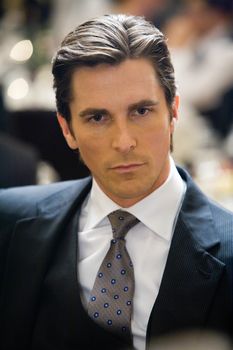
reunites director Christopher Nolan and star Christian Bale, who reprises the role
of Bruce Wayne/Batman.

With the help of Lieutenant Jim Gordon and the committed new District
Attorney, Harvey Dent, Batman sets out to destroy organized crime in Gotham
City for good. The triumvirate initially proves to be effective, but they soon find
themselves prey to a rising criminal mastermind known as The Joker, who
thrusts Gotham into anarchy and forces The Dark Knight ever closer to crossing
the fine line between hero and vigilante.
Academy Award nominee Heath Ledger (“Brokeback Mountain”) portrays
arch-villain The Joker, and Aaron Eckhart plays District Attorney Harvey Dent.
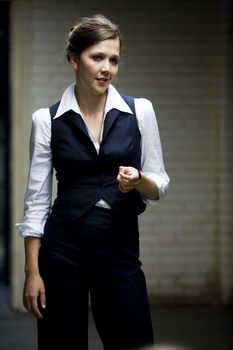
Maggie Gyllenhaal joins the cast in the role of Rachel Dawes. Returning from
“Batman Begins” are Gary Oldman as Lieutenant Jim Gordon; Oscar winner
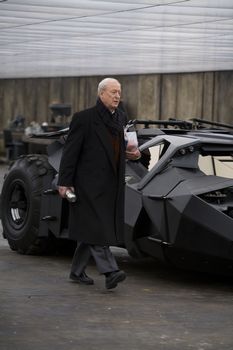
Michael Caine (“The Cider House Rules”) as Alfred; and Oscar winner Morgan
Freeman (“Million Dollar Baby”) as Lucius Fox.
Warner Bros. Pictures presents, in association with Legendary Pictures, a
Syncopy Production, a Christopher Nolan film, “The Dark Knight.” Nolan directed
the film from a screenplay written by Jonathan Nolan and Christopher Nolan,
story by Christopher Nolan & David S. Goyer. Charles Roven, Emma Thomas
and Christopher Nolan are the producers, with Benjamin Melniker, Michael E.
Uslan, Kevin De La Noy and Thomas Tull serving as executive producers. “The
Dark Knight” is based upon characters appearing in comic books published by
DC Comics. Batman was created by Bob Kane.

The behind-the-scenes creative team includes two-time Oscar-nominated
director of photography Wally Pfister (“The Prestige,” “Batman Begins”), Oscar-
nominated production designer Nathan Crowley (“The Prestige”), Oscar
1
nominated editor Lee Smith (“Master and Commander: The Far Side of the
World”) and Oscar-winning costume designer Lindy Hemming (“Topsy-Turvy”).
The music is by Oscar winner and multiple Oscar nominee Hans Zimmer (“The
Lion King,” “Gladiator”) and seven-time Oscar nominee James Newton Howard
(“Michael Clayton,” “The Fugitive”), who previously collaborated on the score for
“Batman Begins.”
Six sequences of “The Dark Knight” were filmed with IMAX® cameras,
including the opening six minutes. This marks the first time ever that a major
feature film has been even partially shot using IMAX cameras, marking a
revolutionary integration of the two film formats. The IMAX Experience® will
appear in IMAX DMR (letterbox), while scenes shot with IMAX cameras on
15/70mm film will expand vertically to fill the entire IMAX screen, which can be up
to eight stories tall, for an all-encompassing moviegoing experience.
“The Dark Knight” will be distributed worldwide in theatres and IMAX by
Warner Bros. Pictures, a Warner Bros. Entertainment Company.
“The Dark Knight” has been rated PG-13 for “intense sequences of
violence and some menace.”

www.thedarkknight.com
For downloadable information and photos from
“The Dark Knight,” please visit press.warnerbros.com.
2
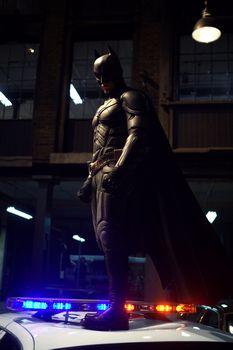
ABOUT THE PRODUCTION
“Some men aren’t looking for anything logical, like money.
They can’t be bought, bullied, reasoned or negotiated with.
Some men just want to watch the world burn.”
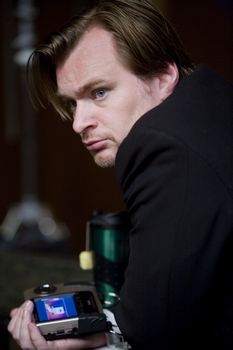
With “Batman Begins,” writer/director Christopher Nolan opened a new chapter in
the Batman film franchise by taking the legendary character back to his origins, re-
imagining why and how the billionaire industrialist Bruce Wayne became the enigmatic
crime fighter known to the world as Batman. In “The Dark Knight” Nolan returns to the
Batman saga with the character now, in the director’s words, “fully formed.”
Nolan continues, “I thought we left the world of Batman at an interesting place in
the first film, and the end suggested an intriguing direction in which the story could
continue.” Nolan developed the story with David S. Goyer, with whom he had
collaborated on the screenplay for “Batman Begins.” Nolan and his brother, Jonathan,
then partnered on the screenplay for “The Dark Knight.”
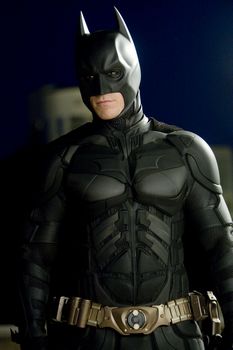
In “The Dark Knight,” Nolan says he focused more on how Batman’s very
existence has changed Gotham City…and not, at least initially, for the better. “At the
end of ‘Batman Begins,’ we hinted at the threat of escalation—that in going after the
city’s crime cartels and attacking their interests, Batman could provoke an even greater
response from the criminal community and now that has come to pass. There are some
very negative consequences of his crusade brewing in Gotham City.”

Producer Charles Roven offers that the issue extends beyond Gotham’s resident
criminals. “On the one hand, Batman has begun to rid Gotham of the crime and
corruption that has plagued the city, but, ironically, the vacuum he created draws in an
even more powerful criminal element, who see it as their chance to take over the city.”
Producer Emma Thomas notes, “In ‘Batman Begins’ we largely concentrated on
the origins of the character—how Batman evolved out of Bruce Wayne’s own early
trauma, his fears, his anger and, finally, his resolve to fight crime and corruption. In ‘The
Dark Knight,’ Batman has become well-known to the police and citizens of Gotham City,
but while some consider him a hero, others wonder if he is doing more harm than good.
And the arrival of a new kind of criminal raises the stakes on that debate.
“What’s intriguing,” Thomas adds, “is that the billionaire playboy Bruce Wayne—
with his fabulous cars, a beautiful woman on each arm and not a care in the world—is
3
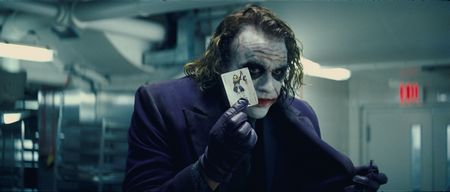
not at all who this man really is. So while Bruce Wayne wears a mask to hide his identity
as Batman, it is actually Batman who defines Bruce’s true identity, and the public
persona of Bruce Wayne is the ‘mask’ he wears to co-exist in this world.”
It didn’t start out that way. Returning to the dual role of Bruce Wayne/Batman,
Christian Bale asserts, “I believe Bruce thought it would be a finite thing, that Batman
would serve as an inspiration to Gotham City and that he would eventually be able to
leave this character he conceived behind. But he is coming to understand, more and
more, that this is not something he can easily walk away from now…or possibly ever.
There are new enemies to protect the city from.”

The most dangerous of these enemies is Batman’s most infamous nemesis—a
maniacal, remorseless fiend known as The Joker. “The Joker is the ultimate screen
arch-villain,” Nolan attests. “In his own way, The Joker is as much an icon as The Dark
Knight is, and that presented us with both an opportunity and a challenge in terms of
exploring the character’s distorted point of view. But we also wanted to create a villain
who, as colorful and outrageous as he is, is still coming from a place of reality. In
keeping with the tone we established in ‘Batman Begins,’ we determined he is a pretty
serious guy, despite being called The Joker. So we began with the notion of The Joker
as the most extreme form of anarchist—a force of chaos, a purposeless criminal who is
not out for anything and, so, can’t be understood. He is not only a massively destructive
force, but he also takes great delight in his murderous nature, which is a pretty terrifying
spectacle.

“As the screenplay developed,” Nolan continues, “we started to explore the effect
one guy could have on an entire population—the ways in which he could upset the
balance for people, the ways in which he could take their rules for living, their ethics,
their beliefs, their humanity and turn them on themselves. You could say we’ve seen
echoes of that in our own world, which has led me to believe that anarchy and chaos—
even the threat of anarchy and chaos—are among the most frightening things society
faces, especially in this day and age.”
“The Joker is somebody without any rules whatsoever,” Bale states. “How do
you fight somebody who is bent on destruction, even if it means self-destruction? That’s
a formidable foe.” The actor goes on to say that The Joker’s total lack of morality is one
of his most potent weapons in his war with Batman because, conversely, “Batman has a
very strict moral code for what he will and won’t do, and The Joker can use that to his
advantage. Batman still has this huge reserve of anger and pain and knows he could
4
easily go too far, so he must not cross that line. He has to be sure that in chasing a
monster, he doesn’t become a monster himself. Chris Nolan has raised interesting
ethical questions in this movie about the complications of having power versus aspiring
to power.”
Bale, who counts “The Dark Knight” as his third collaboration with Nolan, adds, “I
think Chris has a great talent for satisfying the need for a rollercoaster ride, for just being
purely entertained, without forgoing moments of great personal conflict and the duality
within the characters. He manages to do both without compromising either.”
While The Joker wreaks chaos and fear, the crusading District Attorney Harvey
Dent is the new face of law and order in Gotham City. “Harvey is a man of the people.
He’s an all-American hero in a very different way from Batman,” says Nolan. “So now
you have the triumvirate of Batman, Harvey Dent and Lieutenant Gordon—the justice
system, the police and a vigilante—forming an alliance to bring down crime. Using
Batman gives them an edge over the criminals, but it is still the police who will arrest
them, and then they will be tried through the justice system. But what comes up is the
question of whether you can bend the rules without breaking them. And that becomes
the underlying theme of the story.”
The dynamic between the three crime fighters changes abruptly when an
unforeseeable turn of events destroys the steadfast DA Harvey Dent and gives rise to
the vengeful villain Two-Face. Nolan comments, “The hope that Harvey represents to
Gotham City and then the tragedy of what happens to him and his transformation into
Two-Face…it’s a remarkable story.”
The director observes, “The Joker is the more flamboyant villain, so he
commands attention. But in some ways Harvey Dent/Two Face is the more compelling
character because he has such an amazing arc. Our Joker has no arc, per se; he’s just
hell-bent throughout. The Joker and Harvey Dent—these are two of the most fascinating
characters from the Batman comic books. They have an almost mythic quality and it
was exciting to view them through the prism of the world we created.”
In a groundbreaking move, Nolan broadened the scope of that world with a
filmmaking first. Nolan shot six major action sequences with IMAX cameras, becoming
the first director to use the large-format cameras to film even a portion of a traditional
feature film. “In continuing Batman’s story, the challenge was to make things bigger and
better—to expand the world we established in the first film, both through the story and in
the way we presented it,” he states. “I was thrilled with the way the IMAX photography
5
turned out. It throws the audience right into the action in a way no other film format
could. It takes me back to when I was a kid going to the movies and experiencing the
scope, the scale and the grandeur that great cinema can offer. As a filmmaker, I think
you’re always trying to get back to that, and expanding the canvas of our story with
IMAX seemed a great way to do it.”
The filmmakers have also made several changes to the world of Batman: Bruce
Wayne’s familial home, Wayne Manor, burned to the ground at the end of “Batman
Begins,” so Bruce now resides in a modern penthouse overlooking the city. Batman also
has a newly designed Batsuit, which gives him more range of motion and a greater field
of vision—“I can turn my head,” Bale smiles. And the agile and powerful Bat-Pod makes
its much-anticipated debut as The Dark Knight weaves through Gotham City traffic in a
pulse-pounding chase sequence filmed on the streets of Chicago.
Batman’s pursuit of justice also takes him on an odyssey halfway across the
world to Hong Kong, marking the first time The Caped Crusader has left the confines of
Gotham City on screen.
“Chris had a wonderful overall vision of what he wanted to achieve with this film,
and he was able to accomplish that and more,” says Roven. “He’s one of those rare
directors who, when he tells you what he’s trying to do, no matter how ambitious, you
can rely on the fact that he will do it, usually even better than you imagined.”
“You either die a hero…
or live long enough to see yourself become the villain.”
“The Dark Knight” reunites several members of the ensemble cast from “Batman
Begins,” leading with Christian Bale in the title role. Bale says he welcomed the
opportunity to once again inhabit the solitary figure, who has had to relinquish much of
his personal identity for the greater good. He offers, “Bruce is certainly sacrificing, both
mentally and physically, as a consequence of this character of Batman whom he has
unleashed and now is unable to rein in anymore. More than a persona, he has created
a symbol, and that symbol can’t have limits. He can’t show weakness ever. So you
have the conflict between what is good for Bruce Wayne and what is the right thing for
Batman to do, because the two of them are not always compatible.”
“Working with Christian is a joy and just a lot of fun. He is a very engaging
presence to have on the set,” says Nolan. “He also has an intensity about him; he is
6
incredibly focused on tapping into the psychological reality of whatever character he’s
playing. He applies the same disciplined approach to finding the truth of that character
and sticks to it. That is a great help to me as a filmmaker because I know he is prepared
and has a handle on how his character is going to move through the story. In fact, he
has a lot of the same qualities that Bruce Wayne brings to bear in changing himself from
an ordinary man into this extraordinary crime-fighting figure.”
“Christian brought everything to his performance that you could want for the
character—the stature, the emotional resonance, the complexity,” Roven states. “It was
amazing to be on the set watching him. He took his role to another level in this film.”
Nolan adds that although Bale portrays the same character in “The Dark Knight”
that he did in “Batman Begins,” the two films presented the actor with very different
challenges. “On ‘Batman Begins,’ it was a lot of physical effort—he had to get himself in
terrific shape and learn all kinds of skills in terms of the way Batman fights, the way he
moves. On this film, I would say it required more of an internal process because Bruce
is realizing the personal toll of living this double life and is questioning the choices he’s
made. Christian conveys that emotional struggle very convincingly, often without saying
a word.”
Nevertheless, the role of Batman has an inherent physicality, so Bale immersed
himself in a refresher course on the Keysi Fighting Method (KFM) that Batman employs
against his enemies. A relatively young martial arts discipline, KFM is an intuitive
fighting method with a strong emphasis on mental focus, but Bale also had to be in peak
physical condition. He trained with Keysi fight coordinators Andy Norman and Justo
Dieguez for two to three hours every day. “In KFM, you learn to develop every part of
your body as a weapon, and it’s not easy,” Norman relates. “We worked Christian
extremely hard, and it was fantastic how quickly he absorbed everything. There was a
definite progression in his training since the first film. He understands KFM a lot better,
so he was more powerful and his movement was incredible.”
“It’s a fascinating fighting method,” says Bale, “because it uses the adrenaline
that everyone feels entering into a threatening or violent situation. It really comes from
the gut. Rather than the kind of Zen calm that some martial arts call on, KFM is based
on animal instinct and honing those instincts to be lethal, so it’s perfect for Batman.”
But The Dark Knight is about to confront a singular criminal called The Joker,
who has little regard for Keysi or any other fighting method. In a fair fight, “Batman
would obliterate him,” Bale asserts, “but The Joker doesn’t fight fair. He has other tricks
7
up his sleeve, so it’s more of a mind game. But he finds in Batman a very worthy
opponent, and I think he enjoys that.”
Heath Ledger plays the role of The Joker, the malevolent clown who is arguably
the most recognizable of Batman’s arch-nemeses. In casting the part, Nolan says that
the defining quality he was looking for “was fearlessness. I needed a phenomenal actor,
but he also had to be someone unafraid of taking on such an iconic role. Heath created
something entirely original. It’s stunning, it’s captivating…it’s going to blow people
away.”
The director recalls that he first met with Ledger about the role even before there
was a script. “We talked about how we saw this character and we both had exactly the
same concept—that The Joker was about the threat of anarchy and revels in creating
chaos and fear on a grand scale. Heath seemed to instinctively understand how to
make this character different from anything that had ever been done before.”
Roven elaborates, “The Joker is one of the great villains in comic book lore—
psychopathic, enigmatic, clever, diabolical, charming, funny and completely enjoyable to
watch. We knew it would take an extraordinary actor to play him and Heath delivered on
every front. From every physical nuance to each vocal turn of phrase, it’s just an
unforgettable performance.”
In “The Dark Knight,” The Joker arrives on the scene without warning and climbs
ruthlessly to the top of Gotham City’s criminal food chain. “We never wanted to do an
origin story for The Joker in this film, but we wanted to show the rise of The Joker,”
Nolan maintains. “In a sense, The Joker is the logical response to Batman, who has
instigated this kind of extremity of behavior in Gotham.”
Bale adds, “The Joker wants to break Batman, to prove that everybody has a
price and even Batman can be leveraged in such a way that he would compromise his
principles. I actually think he’s delighted to find that Batman won’t do that, and it creates
for The Joker an even better opponent in this game he’s playing. He’s a fascinating
character, and Heath did an extraordinary job with it. I don’t think the movie would have
worked as well if we hadn’t had an actor of the caliber of Heath Ledger, who was able to
really up the ante, much as The Joker does in Gotham.”
“We wanted The Joker to represent pure, unadulterated evil, in the sense that he
has no logical motivation for his actions. That is what we wanted to unleash on the city
of Gotham. He is an absolute,” Nolan sums up simply.
8
Yet, Emma Thomas is quick to note, “He is very funny. I know it sounds
somewhat bizarre, because how could someone so deplorable be funny? Heath’s take
on the role was not campy but still hilarious, both physically and in a dry, sardonic way.
With The Joker, I think you’ll find yourself being horrified and terrified, but hugely
amused at the same time.”
On the other side of the law, another figure has risen to prominence in Gotham
City: Harvey Dent, the newly elected District Attorney, who is on a mission to break
organized crime’s stranglehold on his beleaguered city. Harvey Dent is played by Aaron
Eckhart, who offers, “Harvey has charged himself with tackling organized crime and
cleaning up the streets. He is the shining new hope of Gotham City, the ‘White Knight,’
as he is called. He starts out full of optimism and enthusiasm…where he ends up is
somewhere completely different,” he hints. “It’s a great role and I’m a big fan of Chris
Nolan’s, so when he approached me about doing the film, it was a no-brainer.”
Nolan says that while Eckhart looks every inch the part of the handsome and
charismatic DA, his reasons for casting the actor ran deeper. “We were looking for
somebody who could embody that All-American charm because you have to invest in
him as a very attractive, heroic figure at the beginning of the movie. But he also had to
have an edge; he had to suggest this undercurrent of anger and darkness that Harvey
Dent needed to have, so where he goes in the story is believable. You can’t present a
character like this as simply a heroic figure with no flaws, no dark side. Aaron captured
all of those qualities very, very well.”
As the new Gotham City DA, Harvey Dent not only has to contend with a rise in
crime, but also with a masked vigilante known as Batman. “It’s an interesting dynamic,”
Eckhart remarks, “because Harvey sees Batman fighting crime in a way that he would
like to but cannot. Harvey has to stay within the boundaries of the law. He has to do
overtly what Batman is doing covertly. He admires Batman’s intentions, even if he can’t
publicly support his methods. But what he thinks of Bruce Wayne is quite different. He
sees Bruce as nothing more than a playboy about town without any real credibility.”
“Harvey thinks Bruce is a complete upper-class twit,” Nolan affirms. “It would
astonish him to find out he is really the man behind the mask.”
Dent’s opinion of his public persona notwithstanding, Bruce Wayne appreciates
the new DA’s efforts on behalf of the city. Nolan comments, “It seemed most logical to
us that Bruce initially saw Batman as a short-term crusade, as a symbol to inspire the
good people of Gotham to take their city back. In Harvey Dent, he finally sees the
9
response he was looking for. Harvey is the hero that Gotham needs—the hero with a
face, not one wearing a mask.”
But, Thomas says, “There is a certain amount of personal opportunism going on
there, as well, because if Harvey Dent can succeed, then maybe Bruce can stop being
Batman. Maybe there is a world in which he can return to a normal life. There’s a big
part of him that does wish he could hang up his cape. Whether Bruce would actually
enjoy hanging up Batman’s cape at this point, I don’t know. I don’t think even he knows.
But there is definitely a part of him that feels he has started something that has spun out
of control, and Harvey Dent may be his only hope for being able to end it.”
For Bruce Wayne, a chance for a normal life also means a chance for a future
with the love of his life, Rachel Dawes, who now works for Dent as an assistant district
attorney. In that regard, the DA is not a hope but a hindrance, because Rachel is
involved with him not only professionally but romantically, as well. “When it comes to
Rachel, there is a contradiction in Bruce’s feelings about Dent. While he does respect
Dent, another part of Bruce just wants to knock him out,” Bale says only half-jokingly.
“So Bruce’s ideological side and his very human side are again at loggerheads with each
other.”
Cast in the role of Rachel, Maggie Gyllenhaal notes, “Rachel made the
heartbreaking decision that it is impossible for her to be with Bruce as long as he is
Batman. Then Harvey Dent came into her life, and she is crazy about him. I think the
thing she really admires about Harvey, as opposed to Batman—or, rather, what Bruce
Wayne is doing as Batman—is that Harvey is not a vigilante. He is not putting himself
above the law for what he believes is ultimately best for the people of Gotham City.
Instead, Harvey believes in the system, even if it’s broken, and he is going to work within
the system to change things that are corrupt. I think that’s why Rachel loves him and
thinks he is a hero in his own way. At the same time, she still genuinely loves Bruce and
she obviously knows he is still in love with her, so it’s a real predicament.
“But for me, I mean it’s Christian Bale and Aaron Eckhart and they are both pretty
spectacular, so as an actress, it was easy to live with that predicament,” Gyllenhaal
laughs. “My wanting to be a part of this film had almost everything to do with Chris
Nolan and the rest of the cast. From the beginning, Chris was so engaging and so
interested in my ideas about the role. He was clear that he wanted Rachel to be smart
and capable and not the damsel in distress, although she is in distress sometimes. We
10
were really good for each other because that’s very much what I wanted, and we pushed
each other in different ways to make Rachel who she is.”
“Maggie is just a fantastic actress,” states Nolan. “I’ve always loved her work
and had wanted an opportunity to work with her, and the role of Rachel in this film
seemed like the perfect match. Maggie has great intelligence and maturity and she is
also very warm and, of course, lovely. You really believe her in this role. I think she
beautifully conveyed the conflict in Rachel standing between these two men in her life,
and you can see why both men would naturally be drawn to her. Rachel has so much
history with Bruce and he will always be in her heart, but she also loves Harvey and can
see a future with him.”
However, that all changes in an instant when a shocking incident transforms the
once redoubtable Harvey Dent into the horribly deformed Two-Face, who is now bent on
one thing: revenge. “Something terrible happens that alters everything in his life and
rage takes over,” says Eckhart. “He takes strength from his grief and his pain and sets
out to kill the bad guys…or those he now perceives as the bad guys. He still wants
justice, but now he pursues it outside of the law he once lived by. I don’t think of him
purely as a villain in the way The Joker is. But at the point that Harvey becomes Two-
Face, his outlook is so twisted that he starts to see The Joker as a kindred spirit…and
The Joker knows he has Harvey where he wants him. It’s a great scene, and Heath did
such a wonderful job. As an actor, it was exciting to work with him. Heath’s
performance made this Joker an indelible screen character. He was everything you
could want in an arch-villain as infamous as The Joker, and yet he was completely
original.”
Nolan says, “The Joker is terrifying because there appears no rhyme or reason
for what he does. He’s just a force of nature tearing through. With Two-Face, you see
his transformation and you understand where his anger and his grief come from. Aaron
did an extraordinary job of portraying the tragic arc of Harvey Dent and Two-Face; he
takes you on that emotional ride with him.”
Apart from the obvious example of Harvey Dent/Two-Face, the director observes,
“There are a number of dualities in this film, and there are also several mirrored
relationships. The relationship between Batman and The Joker is an interesting one, as
is the relationship between Harvey Dent/Two-Face and Lieutenant Gordon.”
Reprising his role from “Batman Begins,” Gary Oldman plays Lieutenant Jim
Gordon, the head of the Gotham City Police Major Crime Unit (MCU). “Gary is such a
11
remarkable actor,” Roven says. “Gordon could have been a comparatively
straightforward role, especially surrounded by the more eccentric and even bizarre
characters, but Gary brought so many colors to his performance.”
Nolan comments, “In the first film, Gordon was a very reserved character. It
required an actor who could play an important role, but in a very subtle and restrained
way. I was thrilled to be able to bring Gary back as Gordon, but in a story that
challenges the character more and lets Gary show more of what he’s so great at.”
In “The Dark Knight,” Lieutenant Gordon is facing mounting pressure from all
sides in the wake of the recent escalation of crime, but as a career cop, he knows his
first, best option is to follow his gut instincts, which tell him to trust Batman. He
understands that Batman now poses some danger to Gotham, but he believes Batman
may ultimately be its salvation, especially with the arrival of The Joker. “The police have
never encountered anything like The Joker,” says Oldman. “He’s not interested in
money or even power, in the usual sense of the word. The Joker is all about chaos; he
does what he does for the fun of it. How do you police someone like that?”
Thomas adds that in addition to being tested because of Batman’s efforts and the
effect they are having on his city, “Gordon doesn’t entirely trust Harvey Dent yet because
there has never been a politician in Gotham City who wasn’t corrupt in some way. He
knows something must be done and decides Batman is his best bet because he knows
Batman’s intentions and has faith that things will get better in the long run.”
Bruce Wayne has two other trusted allies in his life: his loyal butler, Alfred
Pennyworth, who, since Bruce’s parents were murdered, has essentially been the only
father Bruce has ever known; and the brilliant Lucius Fox, who is now the CEO of
Wayne Enterprises, in addition to being the architect of Batman’s high-tech arsenal.
Oscar-winning actors Michael Caine and Morgan Freeman return as Alfred and Lucius,
respectively, having played the same roles in “Batman Begins.”
As Bruce Wayne’s closest confidants, Alfred and Lucius know Batman’s true
identity, but with that knowledge comes responsibility. Each in his own way also serves
as a mentor, an advocate, and sometimes as Bruce’s conscience. “The bond between
them is very clear, but you see the different sides of their relationships,” Nolan says.
“Lucius Fox is fully aware of what Bruce is doing as Batman and approves to a large
extent. But over the course of the film, we test the limits of what Lucius finds acceptable
in terms of what Bruce does as Batman.”
12
Freeman notes, “I see Lucius as practical-minded in doing what has to be done
in order to facilitate this man’s mission. Batman has set himself up as a champion of
justice, and once he’s established that idea and the world is counting on him, he has to
step up to the plate and deliver. But Lucius questions if there are limits to what he will
do to help Bruce meet that challenge.”
On the other hand, Nolan says, “Alfred is a firm believer in what Bruce is doing
and encourages him to take it even further if necessary, because Alfred believes it’s the
right thing to do. Of course, Alfred is also concerned for the human side of Bruce
because Alfred raised him from a boy, but he tries not to let his own fears for Bruce’s
personal safety get in the way of telling him to carry on with his quest.”
Bruce Wayne tells Alfred that, as a symbol, Batman can’t have limits, but “to
Alfred, Bruce is a real person and does, in fact, have limits,” says Caine. “Bruce is like
his child, and you always see your children as kids, even when they are all grown up.
So, of course, Alfred worries about what he is doing. I think of Alfred as Bruce’s
guardian angel, not only physically, but psychologically and morally. There are real
issues there, and Alfred often has a go at him about it. Alfred’s relationship with Bruce is
the most human and also, I think, the most humorous,” Caine smiles.
The director says that Alfred’s humor comes naturally. “Michael is a very funny
guy; I’ve never worked with an actor who could time comedy quite so effortlessly. He
knows exactly what to do with a line to get the biggest laugh.
“Working with great veterans like Michael Caine and Morgan Freeman, I benefit
massively from their experience,” Nolan continues. “They have a calm presence on the
set that everybody responds to, and they just inspire everyone around them to be on
their best game. It was a privilege to work with them in the first film and an honor to
have them back for ‘The Dark Knight.’”
The film’s main cast also includes Eric Roberts as Maroni, one of the heads of
Gotham City’s crime cartel; Chin Han as Lau, an Asian business mogul, who makes
Gotham’s crime syndicate an offer they can’t refuse; Nestor Carbonell as the Mayor of
Gotham City; and Anthony Michael Hall as a television news reporter. Cillian Murphy
also makes a return cameo appearance as Scarecrow.
Overall, Nolan states, “The cast is a terrific ensemble of some of the most
extraordinarily talented actors working in movies, which made it very exciting for
everyone involved. It generated a great atmosphere on the set, and it was magical to
13
watch actors with very different approaches come together and work so hard towards
the same goals.”
“Will you be wanting the Bat-Pod, Sir?”
“In the middle of the day, Alfred? Not very subtle.”
On the screen, Lucius Fox gets credit for providing Batman with his state-of-theart
crime-fighting accoutrement, from his new and improved Batsuit to his weapons and
his different modes of transportation. In real life, however, credit goes to Chris Nolan
and his behind-the-scenes design teams, led by production designer Nathan Crowley
and costume designer Lindy Hemming, as well as special effects supervisor Chris
Corbould and his crew, who turn design into function.
Nolan remarks, “With ‘Batman Begins,’ we got to show how things like the
Batmobile and the Batsuit were developed. At the same time, we didn’t fully explore all
of the gadgetry, so in continuing the story, what we get to do is show how he becomes
even more high-tech, but still in a credible way. What I love about Batman is that he has
no super powers except for his extraordinary wealth. Looking at it from that point of
view, if you had limitless financial resources, and therefore a lot of power in material
ways, how could you apply that to the creation of some amazing gadgets and crime-
fighting techniques, all of which are still based on real science and real-world logic?”
Nolan and Crowley had previously redesigned The Caped Crusader’s legendary
Batmobile for “Batman Begins,” creating something of a cross between a Lamborghini
and a Humvee. The ultimate muscle car, the Batmobile—nicknamed the Tumbler—
combines the power and handling of a sports car with a structure closer to that of an
armored tank. Riding on six monster truck tires, the Batmobile has no front axle,
allowing it to make tighter turns. Despite weighing in at two and a half tons, it can jump
as much as six feet high, and up to a distance of sixty feet, peeling off the instant it
touches down. The Batmobile can also do zero to sixty in five seconds.
While the Batmobile remains a formidable presence in “The Dark Knight,” the film
introduces Batman’s newest ride, the Bat-Pod, a high-powered, heavily armed two-
wheeled machine. “Of course we were going to have the Batmobile back,” states Nolan,
“but we wanted to give Batman something new: a fresh means of transportation,
something very exotic and very powerful looking. It’s a two-wheeled vehicle, but it’s
14
definitively not a motorcycle. In essence, the Bat-Pod is to the world of motorcycles
what the Tumbler is to the world of cars.”
Fast and maneuverable through the streets of Gotham City, the Bat-Pod is also
capable of handling all terrains. It has the same monster truck tires as those found on
the Batmobile and is self-standing, meaning it does not require a foot stand. Well
outfitted for hostile situations, it is equipped with weapons on both sides: 40mm blast
cannons, 50-caliber machine guns, and grappling hook launchers.
The original design of the Bat-Pod was the brainchild of Crowley and Nolan.
With little more than the basic concept in mind, the two retreated to their favorite design
headquarters—aka Nolan’s garage—to work out the details. Crowley recalls, “We
figured, ‘Let’s just go for it; let’s build it full-size.’ So we did. We got some tools and put
together a full-size model out of anything we could find that might fit.”
Of course, Nolan and Crowley still had no idea if their invention could actually
run. That’s where the special effects team, headed up by Chris Corbould, came in.
Corbould relates, “First of all, I remember when Chris Nolan first showed me his idea for
the Batmobile. I had no idea how we were going to make it work even though it ended
up being very successful. So when I got his call asking me to come have a look at
something he called ‘the Bat-Pod,’ I thought, ‘Uh-oh, what have you dreamt up this
time?’”
Corbould flew to L.A., arrived at Nolan’s garage, and the first time he looked at
Nolan and Crowley’s model of the Bat-Pod, “I think he was almost in tears,” Crowley
laughs. “He looked horrified that he might have to actually mechanize that thing. We
kept bringing him cups of tea, and he was just sitting there staring at it, looking like, ‘Oh
my God, what time is the next flight out?’ It was the usual clash of design versus
engineering.”
As it turns out, Crowley was not far off in his assessment of Corbould’s state of
mind. “I was flabbergasted,” Corbould admits. “I stood there silently, pretending I was
mulling it over, but the thought going through my head was that they both had to be off
their nut. Where was I going to put a power train? And with those massive wheels,
would this thing actually steer? There were so many issues.”
Despite his concerns, Corbould returned to London, where he and his crew
began brainstorming ways to bring the Bat-Pod to life. After some trial and error, they
developed the final working Bat-Pod, which was surprisingly close to the rough model
15
that Nolan and Crowley had originally constructed. Nolan confesses, “It really shouldn’t
work, but somehow Chris and his team found a way to do it.”
“The funny thing is,” Corbould says, “I don’t think Chris or Nathan had ever
ridden a motorcycle in their lives, so they were completely unaware of the mechanics
needed to get that thing moving. In a way it was beneficial because they weren’t steered
towards a more orthodox bike, even subconsciously. The fact that they had no
knowledge of the mechanics helped them create this weird, wonderful vehicle.”
Actually being able to drive it was another matter entirely. Nolan confirms, “The
finished product that Chris and his team came up with was very striking, very effective
and worked very well, but it’s incredibly difficult to ride and to steer.”
In order to maneuver the Bat-Pod, the driver has to lean his upper body forward,
almost horizontally, and steer from his elbows, rather than his wrists. In fact, the only
person who was able to master the Bat-Pod was professional stunt rider Jean-Pierre
Goy. Corbould offers, “I’ve worked with Jean-Pierre a couple of times, and he is one of
the best bike riders in the world, if not the best. Right away, he totally got in the mindset
of learning that machine. He said, ‘I’m not riding another bike until I finish this
sequence,’ because he had to concentrate on the Bat-Pod’s unique handling qualities.
I’d be lying if I said it was easy for even him to ride, but it looked spectacular when he
did, so it was worth the effort.”
“I need a new suit. I’m not talking fashion, Mr. Fox, so much as function.”
“You want to be able to turn your head…”
The silhouette of Batman is an indelible image, instantly recognizable to even the
most casual observer. Chris Nolan and costume designer Lindy Hemming knew it was
important to preserve that image in redesigning and updating the Batsuit for “The Dark
Knight.”
Focusing on increased comfort and better flexibility, Hemming and her team did
extensive research into the protective suits worn by motocross riders, as well as military
issue protective armor. “We wanted the new Batsuit to be a more supple, more
maneuverable, more breathable piece of equipment, like a modern suit of armor instead
of a rubber suit,” Hemming says, referring to the neoprene material used in making the
Batsuit for “Batman Begins.”
16
The new Batsuit is comprised of 110 separate pieces. The base layer of the suit
was made of a polyester mesh material, which is employed by the military and high-tech
sports manufacturers because of its moisture-wicking properties. Then individually
molded pieces of flexible urethane were attached to the mesh to form the overall armor
plating. For added protection, carbon fiber panels, which are light yet incredibly strong
and resistant, were placed inside a select group of the urethane pieces around the legs,
chest and abdomen.
To illustrate the evolution of the Batsuit from “Batman Begins” to “The Dark
Knight,” costume FX supervisor Graham Churchyard points out, “There were essentially
three main components to the Batsuit in ‘Batman Begins’ and on this film there were
more than 100, so it was a very complicated suit. Add to that, all of those individual
pieces had to be modeled and then molded and cast. Each piece also had to be
replicated dozens of times for the multiple Batsuits needed for the overall production. It
was an extraordinary amount of work.”
At the behest of both Nolan and Bale, Hemming’s main mission was to modify
the Batsuit to allow more rotation of the head and neck. “In the past, Batman has always
had to move his shoulders to turn his head, so that was a definite priority,” Bale affirms.
The seemingly simple answer was to separate the cowl from the rest of the suit, but it
had to appear seamless so as not to compromise The Dark Knight’s imposing silhouette.
The overall redesign suited Christian Bale perfectly. “It was much more
comfortable and far less claustrophobic than the first suit. It was also more agile and
gave me better range of motion, which helped with the action and fight sequences. But
it still gave me that feeling of invincibility,” he acknowledges. “You can’t help but feel
protected and more powerful when you put the Batsuit on. It just works.”
When it came to fighting and protection, the new and improved Batsuit did more
than offer added flexibility. It is also outfitted with a variety of gadgets to aid Batman in
his war on crime, including razor sharp fins that can be extended and then fired from the
gauntlets on his forearms; and sonar-imaging lenses which flip down within Batman’s
cowl, enabling him to see sonar images in 3D while masking his eyes behind glowing
white shields.
The only design element of the Batsuit that remained unchanged from “Batman
Begins” to “The Dark Knight” was the cape. Hemming says, “We spent a lot of time
getting the cape right for the first film, and we didn’t want to change it.” The cape does
17
have one added feature: it can fold itself into a kind of backpack and then unfurl on
command, which was accomplished through digital effects.
While Bruce Wayne’s image is not as iconic as that of his alter ego, he has his
own distinctive sartorial style, dictated by his financial and social status. To clothe the
man behind the mask, Hemming collaborated with legendary fashion designer Giorgio
Armani. “Chris Nolan and I wanted Bruce Wayne to have an elegantly tailored
appearance,” Hemming offers. “We felt that the Giorgio Armani brand was emblematic
of the contemporary classic look we were going for. We chose the fabrics and then
worked directly with Mr. Armani and his people to tailor an entire wardrobe of suits,
custom-made for the character.” As Bruce Wayne, Bale wears Armani’s newest line,
Giorgio Armani Hand Made-to-Measure. Each suit carries Armani’s traditional
customized owner’s label, in this case Giorgio Armani for Bruce Wayne.
Harvey Dent obviously does not have the financial means of Bruce Wayne, but
Hemming says his wardrobe still had to denote an air of authority and confidence. “We
dressed him simply, but impeccably in suits by (Ermenegildo) Zegna.”
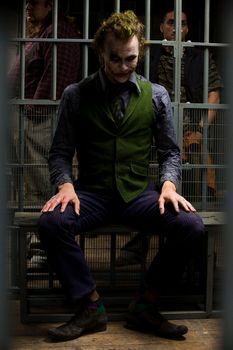
The costume designer was able to get a lot more outlandish in costuming The
Joker, modifying the character’s familiar look to reflect the generation of the actor playing
him. Hemming explains, “Once I knew The Joker was going to be played by Heath
Ledger, I wanted the costume to have a younger, trendier style than previous versions.
Basically, my research ranged from Vivienne Westwood to Johnny Rotten to Iggy Pop to
Pete Doherty to Alexander McQueen. I was collecting all sorts of images.”
Hemming ultimately designed an eclectic ensemble that she says “has a
somewhat foppish attitude to it, with a little grunge thrown in.” Staying with The Joker’s
traditional color palette, his outfit is topped by a purple coat, worn over a green
waistcoat. Changing up his look, he also wears a lighter jacket that was based on the
Carnaby Street Mod look. His shirt was patterned after a shirt that Hemming found at an
antique market.
The Joker’s shoes are from Milan and were selected by the costume designer
because they had an upward swoop at the toe, which she thought was reminiscent of
clown shoes. His tie was fashioned from a fabric that was specially woven to
Hemming’s specifications by Turnbull & Asser, a London-based clothier better known for
dressing British royalty and the like. “Heath wanted it to be thin, so it’s a ‘60s tie but in a
Turnbull & Asser fabric. I dare say it’s the weirdest tie that Turnbull & Asser has ever
18
made,” Hemming laughs. “When Heath came in and we showed him all the bits and
pieces of the costume, he thought it was fantastically original and just went for it.”
The Joker’s make-up was also a departure from past incarnations of the
character. While he retains an allusion to his familiar white-faced, sneering visage, his
make-up for “The Dark Knight” was intended to give him a more frenetic look that also
lends to its shock value. The Joker’s face is covered in a white pancake that is cracked
and runny in places. His eyes are thickly rimmed in black, and a sloppy red grin is
painted on, extending from his mouth to his cheeks but not quite masking the terrible
scars beneath. His hair is a more subtle, but still noticeable, shade of green.
Make-up and hair designer Peter Robb-King remarks, “Clearly, there was a
perception in the audience’s mind of what The Joker would look like, but we wanted to
get under the skin, so to speak, of what this character represents in this story. He is
someone who has been damaged in every sense of the word, so it was important that
we create a look that was not, forgive the pun, ‘jokey.’”
Heath Ledger’s make-up artist, John Caglione, Jr., calls the application of the
actor’s make-up “a dance.” He describes, “Heath would scrunch up his face in specific
expressions, raising his forehead and squinting his eyes, and I would paint on the white
over his facial contortions. This technique created textures and expressions that just
painting the face a flat white would not. Then I used black make-up around Heath’s
eyes while he held them closed very tight, which created consistent facial textures. After
the black was on, I sprayed water over his eyes, and he would squeeze his eyes and
shake his head, and all that black drippy, smudgy stuff would happen.”
The Joker’s make-up also represents a revolutionary advancement in the
application of prosthetics, developed and executed by prosthetic supervisor Conor
O’Sullivan and prosthetic make-up artist Robert Trenton. “They used a brand new
silicone-based process that enables the prosthetics to be laid on the skin in such a way
that it’s seamless,” Robb-King describes. “It’s absolutely amazing because you can put
a camera right up to the face—even an IMAX camera—and there are no issues.”
O’Sullivan reveals, “It took us about two years to develop the technology, but
after a few glitches, we hit on it. We are now able to produce silicone pieces that are
applied directly to the skin. And it blends with the skin perfectly; if you didn’t know it was
there, you would have a hard time seeing anything.”
In addition, the new process cut the application time to a fraction of what was
needed in the past. O’Sullivan confirms, “The Joker prosthetics would previously have
19
taken a good three to four hours. Instead they took about 25 minutes and looked far
superior, which was great.”
The clown masks for The Joker’s gang were individually sculpted and molded
and then hand-painted. Interestingly, the filmmakers learned that every clown face is
registered and owned by the person who first created it, so all of the clown masks in the
movie had to be cleared; none of them could be copied from existing clown faces.
The more graphic make-up effects for the character of Two-Face involved a
combination of prosthetics and visual effects. Robb-King and his team worked closely
with visual effect supervisor Nick Davis to depict the damage to Harvey Dent’s face,
because it is so severe that it could not be achieved entirely with prosthetics. Eckhart
recalls, “It was interesting for me in that, because of the technology, I didn’t have to
spend hours in make-up every day. The whole process was effortless…at least for me,”
he smiles.
“Using IMAX technology to shoot some of the action scenes gave us
the greatest possible canvas on which to tell the story,
and the result is an incredibly immersive experience.”
- Christopher Nolan
Production on “The Dark Knight” actually began several weeks ahead of the
official start of principal photography. The cast and crew went on location in Chicago to
shoot the opening prologue for the film: a dramatic bank heist that sets in motion the
criminal rampage of The Joker. The advance scenes also marked a milestone in
filmmaking as Christopher Nolan became the first director to use IMAX cameras to film
sequences in a traditional feature film release. “I’ve always had an interest in shooting in
IMAX,” Nolan relates. “I’ve seen IMAX presentations at museums and such and found
the format to be completely overwhelming. The clarity and crispness of the images are
unparalleled, so I thought if you could shoot a dramatic feature with IMAX cameras—not
just blow up a 35mm film to show on an IMAX screen—it would really bring the audience
into the action.”
Emma Thomas notes, “When you think about some of the IMAX films we
remember: they’ve taken these cameras up Mount Everest, they’ve taken them under
the ocean, astronauts have had them in space… So if they can do that, then surely we
can shoot on the streets of Chicago with an IMAX camera.”
20
As with any “first,” Nolan and his longtime cinematographer, Wally Pfister, knew
that filming on the streets of Chicago with IMAX cameras would come with its own set of
challenges, beginning with the size of the cameras. “The cameras are enormous and
much heavier than a 35mm camera,” Pfister confirms. “It required an entirely different
approach, but like any challenge in moviemaking, you can’t be so intimidated that you
shy away from it. You just bite off one piece at a time until you’ve tackled it.”
For Nolan and his crew, that first “bite” was shooting the film’s opening scenes.
Pfister recalls, “The week that we spent shooting the bank heist sequence was like IMAX
school for all of us.” They passed with flying colors. Filming the prologue with IMAX
cameras not only met but exceeded all expectations, so the filmmakers made the
decision to shoot several more scenes with IMAX cameras, including most of the major
action sequences.
Pfister’s team had to find a way to rig the huge cameras to not only capture but
also follow the action. They turned to the people at Ultimate Arm, the award-winning
creators of the gyrostabilized remote control camera crane. The Ultimate Arm
technicians were able to reinforce the head of the crane so it could handle the weight of
the IMAX cameras. Pfister reveals, “We shot most of the Bat-Pod sequences with the
Ultimate Arm, which allowed us to swing the camera up, down and all around the Bat-
Pod and get some really stunning footage.”
Key grip Mike Lewis also crafted sturdier rigs that enabled the camera crew to
mount the weighty IMAX cameras on the hood of a car, the side of a truck or anywhere
else, as needed. All of the regular camera mounts had to be strengthened in order to
handle the extra weight of the IMAX cameras. Nolan and Pfister also had high praise for
Steadicam operator Bob Gorelick, who, Pfister says, “did a remarkable job of keeping
that enormous camera in place.”
With advancements in technology on his side, the cinematographer assumed the
sheer weight of the IMAX camera would preclude him from doing any handheld shots,
but Nolan had other ideas. Pfister recounts, “Early in pre-production, Chris said to me,
‘You’ve got to try to handhold one of the IMAX cameras at some point just to say you did
it.’ And I said, ‘No way! I am not putting that thing on my shoulder.’ But he kept
nudging me and bugging me to try it, and finally I broke down and decided I had to give it
a go. I actually did one handheld shot with the IMAX camera, running in front of a
S.W.A.T. team into a building. More than getting the shot, I think Chris was really proud
of himself that he was able to get me to do that,” he admits.
21
“We were able to utilize the IMAX format without having to compromise the way
in which we would have filmed with smaller cameras. It didn’t slow us down in the
slightest and it was pretty exciting to see it come together,” says Nolan.
In addition to the size and heft of the cameras, however, there were other factors
that had to be addressed in incorporating the larger format film. “The composition of
shots is entirely different because the frame is so much bigger, so you need to center
things more to pull your attention to the action. And focus is much more critical because
it is a shallower depth of field,” Pfister clarifies, adding that the larger size frame also had
a direct effect on the lighting. “One of the most challenging things about filming in IMAX
is trying to hide the lights. With the expanded frame, you’re seeing so much more from
side to side and top to bottom so you can’t place lights where you normally would. You
have to put them behind objects and anywhere else you can hide them.”
The size and clarity of the IMAX footage affected other departments, as well.
Nathan Crowley notes, “Filming in IMAX is a great bonus to a production designer
because you notice things you ordinarily wouldn’t even see. The perspective is huge. I
mean, we purposely had a lot of low ceilings and beautiful shiny floors because they stay
in frame. Then again, we also had to make sure the finishes were superb because you’ll
also see every speck of dust on the floor,” he laughs.
Everyone agreed the end result was more than worth the effort of mastering the
learning curve. “You can absolutely see the difference,” Pfister attests. “It’s sharper; it
has more resolution, more contrast and a richer color saturation. It is an overall
improved image, whether you’re seeing it on an IMAX screen or on a regular screen. I
think the action will jump off the screen in any theater.”
“Continuing Batman’s story, we felt it was very important
to get outside and view Gotham as a major world city.”
- Christopher Nolan
With “The Dark Knight,” Christopher Nolan sought to expand the world of Batman
in a literal sense by moving the action from the confines of a soundstage to the expanse
of practical locations. “We were looking for ways to expand the scope of this film, so I
was determined to take the location filming much further than what we did on ‘Batman
Begins,’” the director says. “The real world is built on a scale you could never reproduce
in the studio.”
22
As it had in “Batman Begins,” the city of Chicago once again became Gotham
City. “I spent some time growing up in Chicago,” Nolan offers, “so it’s a city I know and
love. It is famous for its architecture and it is also a very film-friendly city. We shot there
for weeks on ‘Batman Begins,’ but this time we were going to be there for months and
the help and encouragement we got from the city was extraordinary.”
Chuck Roven confirms, “I can’t say enough about Mayor Daley, the Chicago Film
Office and, most importantly, the citizens of Chicago, who could not have been more
excited or more welcoming to us. They gave us total cooperation and allowed us to do
some unbelievable things on their streets, and we appreciated and always tried to
respect that privilege.”
Inarguably, the most incredible thing the city allowed the production to do was
unprecedented: flipping a 40-foot tractor-trailer, end over end, right in the heart of the
city’s banking district on LaSalle Street. When Chris Corbould saw the truck flip
described in the script, he admits, “I tried to make compromises with Chris—like maybe
the whole truck doesn’t go over or maybe we could use a smaller truck—but he wasn’t
having any of it.”
Nolan responds, “Finally I turned to him one day and said, ‘Chris, it really ought
to be an 18-wheeler. And I know you can find a way to do this because that’s just who
you are and that’s what you do.’”
The first order of business was to make sure the stunt was even possible. “After
about six weeks of calculations, we were ready to do an actual test,” Corbould recalls.
“We went out to an open space, got the truck up to speed and pressed the button, and it
just sailed over. I had to go to Chris Nolan and tell him it worked perfectly.”
Nevertheless, the filmmakers were aware that there was a vast difference
between flipping a truck in the middle of nowhere and doing it in the middle of a city
street. Before they could carry out the stunt, city engineers were called in to make sure
that the tons of force necessary to send the truck end over end would not damage the
infrastructure of LaSalle Street, including the various utility lines that run beneath it.
Once safe parameters were determined, the production was given the green light.
When the night of the stunt came, the truck flip went like clockwork, earning
applause from the assembled cast and crew. “It was an impressive thing to watch this
truck fly over and land precisely where Chris said it was going to land,” Nolan remarks.
“At the top of its arc, it looked almost like a skyscraper standing there, and then it just
continued going over very gracefully. I’ve never seen anything like it.”
23
The film’s most explosive sequence involved the implosion of an entire building,
which was staged at the now-vacant Brach’s Candy factory building. Corbould and his
crew teamed with the company Controlled Demolition, Inc., headed by Doug Loizeaux,
to create the explosion. Corbould offers, “Chris didn’t want the building to go down like a
deck of cards, like a conventional demolition. I worked with Doug, who came up with a
system to make the building go down more like a wave, in sequence. Then we added
our special effects elements to make it more spectacular.”
For the filmmakers, safety was paramount. The main concerns involved
surrounding street traffic, as well as active rail lines running nearby the building. The
production contacted the railroad companies and coordinated the train schedules to
ensure that no trains would be coming through at the time of the explosion. Adjacent
street traffic was also blocked to keep onlookers and passersby from getting anywhere
near the blast. In addition, the scene called for a bus to be in proximity to the explosion,
so polycarbonate sheeting was placed on the windows of the bus to ensure that even if
the windows broke, no glass would fly into the bus with cast members inside.
On location in Chicago, the filmmakers also took advantage of some of the city’s
defining features, including its world-renowned architecture and multi-leveled streets.
Nolan made good use of the parallel upper and lower roadways for the climactic car
chase between The Joker, the police and Batman. The breakneck chase sent a variety
of cars, armored trucks and one ill-fated 18-wheeler hurtling down such streets as Upper
and Lower Wacker Drive, Lower Lower Randolph, Lower Lower Columbus and LaSalle
Street. During the chase, the Bat-Pod even takes a side route through the newly
remodeled train station under Millennium Park.
“The Dark Knight” marks Nathan Crowley’s fourth film in the Windy City, and the
production designer observes, “The Chicago architecture is phenomenal; all of the great
architects of the last century have worked there. And it’s wonderfully cinematic.”
Crowley chose two buildings designed by famed architect Mies van der Rohe for
a variety of sets. The IBM Building was the site of the Wayne Enterprises Boardroom,
Harvey Dent’s office, the Mayor’s office and the Police Commissioner’s office, while the
lobby of One Illinois Plaza became the main living area of Bruce Wayne’s new
penthouse. Of course, utilizing the lobby level for the penthouse set meant that visual
effects would be needed to create top-floor views of the city through the floor-to-ceiling
windows. Bruce’s bedroom was built separately on the 39th floor of Hotel 71 on East
Wacker Drive.
24
Bruce and Alfred have taken up residence in the penthouse because Wayne
Manor is still under construction after it was destroyed in a fire. Nolan comments, “At the
end of ‘Batman Begins,’ Bruce says he’s going to rebuild Wayne Manor brick by brick.
That would take a long time, so it would be pretty unrealistic for him to be already moved
back in. And there was also a period in the comic books where Bruce Wayne did live
downtown in a penthouse, so we took that as a jumping-off point. We wanted to have
him in the city because this is very much a story of a city and we felt it was important to
put Bruce in the middle of that.”
The penthouse was of a decidedly more modern design than Wayne Manor.
Crowley explains, “We were given access to these great modernist floors, and we felt
that era of architecture was better suited for what we were trying to convey emotionally.
It’s cold and it’s vacant; there’s no warmth to the environment.”
Nolan adds, “Bruce is living a very lonely existence in a way, so the stark design
of the penthouse was meant to reflect his state of mind.”
Filming in Chicago also took place at such locations as the Convention Hall at
McCormick Place West, which became the vast warehouse of Wayne Enterprises’
Applied Science Division; Navy Pier, which was the site of a dramatic scene involving
the panicked citizens of Gotham City; and the Old Chicago Post Office, which was
employed for several scenes, including the opening bank robbery. In addition, the
exterior of Chicago’s Trump Tower, which was in the early construction stage at the time
of production, was used for a pivotal confrontation between Batman and The Joker. The
interior of the building framework was carefully re-created in England at Cardington—the
converted airship hangar that is now used as a soundstage—where the fight was
actually filmed.
Rising out of the Chicago skyline, the Sears Tower was the site of a soaring
exterior shot, and Christian Bale was not going to be denied an opportunity to stand atop
the tallest building in the United States. The actor recounts, “I overheard my stunt
double, Buster Reeves, saying he was heading up to the Sears Tower to do that, and I
said, ‘Sorry buddy, no way. I just have to do this one myself.’ I mean, how often do you
get to be 110 stories up, looking out over all of Chicago? But it’s a funny and probably
quite dangerous thing,” he laughs, “how quickly I felt very at home out there and how
soon I was able move around right on the edge, looking straight down.”
Far from being worried, Nolan supported his leading man’s decision to grab that
once-in-a-lifetime opportunity. “Christian likes to challenge himself and I knew we
25
weren’t putting him in any actual physical danger. It was perfectly safe; it just required
guts to stand there. I certainly wouldn’t want to do it, but he seemed to enjoy it and it
made a beautiful shot for us. And after that, standing out on a ledge on a building in
Hong Kong must have been easy.”
“The Dark Knight” sends Batman to the Far East on a mission to bring down an
international financial magnate, who is manipulating Gotham City’s most powerful crime
cartels. The scenes were filmed on location in Hong Kong, primarily at the magnificent
IFC2 Building, the tallest building in the city. “I liked the idea of sending Batman
someplace more exotic,” says Nolan. “We had done that with Bruce Wayne in the first
film, before he became Batman, but I really wanted to show the character of Batman
outside the realm of Gotham City. I had been to Hong Kong many years ago at a film
festival, and remembered it as a great location. It’s an incredibly visual place, which
makes it ideal in cinematic terms.”
For some interiors, the production returned to Cardington, where one major set
was constructed: the Bat-Bunker, which has temporarily replaced the Batcave while
Bruce and Alfred are living in the penthouse. With its ceiling of solid fluorescent lights,
the Bat-Bunker “looks like a giant light box,” describes Wally Pfister, “which obviously
made it simple for me from a lighting standpoint.”
Crowley notes that as long as his home was in the city, Batman needed a new
headquarters. “He can’t go to his Batcave, so we came up with the idea of a bunker that
ties back to the architectural theme of the penthouse in that it’s vast but very plain. It is
essentially a large concrete box where everything comes out of the walls and then goes
back. But it still had to be visually interesting. It was all about proportion and
perspective, which was actually great fun to do.”
Christopher Nolan reflects, “Every stage of making an enormous film like this
presents its own challenges, but has its own rewards. It’s very exciting to travel the
world and zoom around in helicopters and race the Batmobile around the streets of
Chicago. Every now and then, I have to consciously remind myself to take a step back
and realize that this is an extraordinary thing I am privileged to be a part of.”
Another critical design element of “The Dark Knight” is not seen but heard. “The
sound design of the film was extremely complicated,” says Nolan. “There were an
enormous number of elements encompassed in the sound mix and there are moments
where it’s hard to detect what is sound design and what is music,” he asserts. “There
are large segments of the film where we use little or no score. It was a major challenge
26
for our sound designer, Richard King, and his team to create a range of sounds that
would provoke the kind of emotional response that you would usually rely on music for.
Then the end of the film is very heavily scored with music, but it develops as the action
progresses.”
Composers Hans Zimmer and James Newton Howard, who partnered on the
music for “Batman Begins,” reunited to compose the score for “The Dark Knight.” Nolan
relates, “I like the score of the film to be an evolution that runs parallel to the editing of
the film, and Hans and James have been amazing in accommodating that. Usually
without even seeing final footage, they give me pieces of music that my editor, Lee
Smith, and I take into the edit suite. It’s a very organic process that puts a lot of unusual
demands on the composers, but they did a fantastic job with it.”
As they had on “Batman Begins,” Zimmer and Howard split duties on “The Dark
Knight,” with Zimmer composing the theme for The Joker and Howard taking on the dual
personality of Harvey Dent/Two-Face. They also made changes to the overall score,
eschewing any heroic fanfares. Zimmer says, “I don’t see Batman as a typical
superhero, so I wanted to avoid anything ‘super’ in the music. I kept thinking about the
Bat Symbol. It is the iconic representation of Batman, but at the same time, it is dark
and unadorned.”
“Batman is a very complex character,” Howard adds. “We’re still getting to know
him, so to try and attach a musical theme to him that defines him in any way would be
misleading.”
Nolan concludes, “For me, Batman has an enduring appeal and endless
fascination because he is a relatable character. He is referred to as a superhero, but
actually he is a self-invented superhero. And I think the fantasy of a man who, through
sheer will and self-discipline, has turned himself into more than just a man, into a heroic
figure…that’s just a very compelling myth.”
# # #
27
ABOUT THE CAST
CHRISTIAN BALE (Bruce Wayne/Batman) was born in Wales and grew up in
England and the USA. He made his film debut in Steven Spielberg’s World War II epic
“Empire of the Sun.”
Bale’s work to date also includes “Henry V,” “The Portrait of a Lady,” “The Secret
Agent,” “Metroland,” “Velvet Goldmine,” “All the Little Animals,” “American Psycho,”
“Shaft,” “Captain Corelli’s Mandolin,” “Reign of Fire,” “Laurel Canyon,” “The Machinist,”
“Batman Begins,” “The New World,” “The Prestige,” “Harsh Times,” “Rescue Dawn” and
“3:10 to Yuma.”
Bale just completed work on “Public Enemies” for director Michael Mann. He is
currently filming “Terminator Salvation,” under the direction of McG.
MICHAEL CAINE (Alfred) is one of the film industry’s most esteemed actors,
with a career spanning over half a century and encompassing more than 100 films and a
myriad of acting honors. A two-time Academy Award winner, Caine won his first Oscar,
for Best Supporting Actor, for his work in “Hannah and Her Sisters,” for which he also
received Golden Globe and BAFTA Award nominations. He took home his second Best
Supporting Actor Oscar for his role in “The Cider House Rules,” also winning a SAG
Award and earning Golden Globe and BAFTA Award nominations.
In addition, Caine has earned four Oscar nominations for Best Actor, the first
coming in 1966 for his performance in the title role in “Alfie,” which also brought him a
Golden Globe nomination and a New York Film Critics Award. He received his second
Oscar nod, as well as a Golden Globe nomination and an Evening Standard Award, for
the part of Milo Tindle in 1972’s “Sleuth.” His role in “Educating Rita” earned him his
third Oscar nomination, and Golden Globe and BAFTA Awards. He gained his latest
Oscar, Golden Globe and BAFTA Award nominations for his work in 2002’s “The Quiet
American,” for which he also won a London Critics Circle Award. He previously won
Golden Globe and London Critics Circle Awards, as well as a BAFTA Award nomination,
for Best Supporting Actor for “Little Voice.”
More recently, Caine won another London Critics Circle Award for his
performance in 2006’s “The Prestige,” which reunited him with director Christopher
Nolan following their collaboration on the 2005 blockbuster “Batman Begins.” Caine’s
28
most recent film work also includes Gore Verbinski’s “The Weather Man,” Alfonso
Cuaron’s “Children of Men,” and the 2007 remake of “Sleuth,” in which he turned the
tables on his 1972 role, playing Milo’s adversary, Andrew.
Caine was born Maurice Micklewhite in South London in 1933, the son of a fish
market porter and a charwoman. His interest in acting began at an early age and, at 16,
he left school and took odd jobs for local film companies, hoping to be discovered.
When he was 18, he was called to do his National Service with the Queen’s Royal
Regiment and the Royal Fusiliers. Upon his discharge in 1953, Caine began pursuing
his acting career, taking his stage name from the title “The Caine Mutiny.” Starting out
on the stage, he toured Britain in a variety of plays, and began appearing in increasingly
better roles in British films and television shows.
In 1964, Caine landed his first major film role as Lieutenant Gonville Bromhead in
“Zulu.” The following year, he starred in the hit thriller “The Ipcress File,” earning his first
BAFTA Award nomination for his portrayal of secret agent Harry Palmer. However, it
was his Oscar-nominated performance in the seminal sixties film “Alfie” that catapulted
Caine to international stardom. In the late 1960s, he went on to star in 11 films,
including “The Ipcress File” sequels, “Funeral in Berlin” and “Billion Dollar Brain”;
“Gambit,” earning a Golden Globe nomination; “Hurry Sundown”; “Woman Times
Seven”; “Deadfall”; “The Magus”; “The Italian Job”; and “Battle of Britain.”
Over the following two decades, Caine starred in more than 40 films, including
Robert Aldrich’s “Too Late the Hero”; “X, Y and Zee,” opposite Elizabeth Taylor; “Sleuth,”
with Laurence Olivier; John Huston’s “The Man Who Would Be King”; “Harry and Walter
Go to New York”; Richard Attenborough’s “A Bridge Too Far”; the Neil Simon comedy
“California Suite”; Woody Allen’s “Hannah and Her Sisters,” winning his first Oscar; Brian
De Palma’s “Dressed to Kill”; John Huston’s “Victory”; Sidney Lumet’s “Deathtrap”;
“Educating Rita”; Stanley Donen’s “Blame It on Rio”; John Frankenheimer’s “The
Holcroft Covenant”; Neil Jordan’s “Mona Lisa”; and “Dirty Rotten Scoundrels,” for which
he received a Golden Globe nomination.
Over the next 15 years, Caine starred in such films as the ensemble comedy
“Noises Off…”; “Blood and Wine”; “Little Voice”; “Quills”; “Miss Congeniality”; “Austin
Powers: Goldmember”; “The Quiet American”; and the Lasse Hallström films
“Secondhand Lions” and “The Cider House Rules,” for which he won his second Oscar.
On the small screen, Caine earned both Emmy and Golden Globe nominations
for the dual title role in the telefilm “Jekyll & Hyde” and for his portrayal of South African
29
President F.W. de Klerk in the historical drama “Mandela and de Klerk.” He also gained
a Golden Globe nomination for his work in the telefilm “Jack the Ripper” and an Emmy
nomination for the docudrama “World War II: When Lions Roared.”
Also an author, Caine wrote an autobiography entitled What’s It All About?, as
well as Acting on Film, a book based on a series of lectures he gave on BBC Television.
In the 1992 Queen’s Birthday Honours, Caine was awarded the CBE, and eight
years later received a knighthood.
HEATH LEDGER (The Joker) was honored with an Academy Award nomination
for his work in Ang Lee’s drama “Brokeback Mountain.” For his performance as Ennis
Del Mar, Ledger also earned Golden Globe, Independent Spirit, BAFTA and Screen
Actors Guild Awards nominations, and won several critics groups’ awards.
In 2007, Ledger was seen in Todd Hayne’s “I’m Not There,” for which he shared
in a Robert Altman Award at the 2008 Independent Spirit Awards.
His previous film credits include “Candy,” “Casanova,” “The Brothers Grimm,”
“Lords of Dogtown,” “The Order,” “Ned Kelly,” “The Four Feathers,” “Monster’s Ball,” “A
Knight’s Tale,” “The Patriot” and “10 Things I Hate About You,” which first introduced the
Australian-born actor to American audiences.
GARY OLDMAN (James Gordon) first played the role of Gotham Police
Lieutenant James Gordon in “Batman Begins.” He also originated the role of Sirius
Black in “Harry Potter and the Prisoner of Azkaban” and reprised the part in “Harry
Potter and the Goblet of Fire” and “Harry Potter and the Order of the Phoenix.”
Oldman began his career in 1979 on the London stage. Between 1985 and 1989
he acted exclusively at London’s Royal Court Theatre and, in 1985, was named Best
Newcomer by London’s Time Out for his work in “The Pope’s Wedding.” That same
year he shared the London Critic’s Circle Best Actor Award with Anthony Hopkins.
In 1986, Oldman made his major feature film debut in “Sid and Nancy,” winning
the Evening Standard British Film Award for Most Promising Newcomer for his portrayal
of punk rock legend Sid Vicious. The following year, he starred in Stephen Frears’ “Prick
Up Your Ears,” winning the Best Actor Award from the London Film Critics Circle for his
portrayal of doomed British playwright Joe Orton. He has since become one of the
industry’s most respected actors, appearing in both mainstream hits and acclaimed
independent films. Oldman’s early film credits also include Nicolas Roeg’s “Track 29”;
30
“Criminal Law”; “Chattahoochee”; Tom Stoppard’s “Rosencrantz & Guildenstern Are
Dead,” for which he received an Independent Spirit Award nomination for Best Actor;
“State of Grace”; “Henry & June”; Oliver Stone’s “JFK,” playing Lee Harvey Oswald; and
the title role in Francis Ford Coppola’s “Dracula.”
Oldman’s subsequent film work includes memorable roles in Tony Scott’s “True
Romance”; “Romeo is Bleeding”; the Luc Besson films “The Professional” and “The Fifth
Element”; “Immortal Beloved”; “Murder in the First”; Roland Joffe’s “The Scarlett Letter”;
Julian Schnabel’s “Basquiat”; Wolfgang Petersen’s “Air Force One”; the big screen
version of “Lost in Space”; and Ridley Scott’s “Hannibal.”
In 1995 Oldman and manager/producing partner Douglas Urbanski formed the
production company The SE8 Group, which produced Oldman’s directorial debut feature
“Nil by Mouth,” which Oldman also wrote. The film was invited to open the 1997 50th
Cannes Film Festival in the main competition, where Kathy Burke won the Best Actress
Award for her role. In addition, Oldman won two BAFTA Awards for Best British Film
and Best Screenplay; the Channel 4 Director’s Award at the 1997 Edinburgh
International Film Festival; and the Empire Award for Best Debut Film. He also
executive produced and starred in the SE8 Group film “The Contender,” which received
two Oscar nominations and brought Oldman a Screen Actors Guild Award nomination
for Best Supporting Actor.
On the small screen, Oldman earned an Emmy nomination for his guest
appearance as an alcoholic actor on the hit comedy series “Friends.” His earlier
television work includes the telefilms “Meantime,” directed by Mike Leigh, and “The
Firm,” directed by Alan Clarke.
AARON ECKHART (Harvey Dent) earned Golden Globe and Independent Spirit
Award nominations for his role as an unapologetic tobacco lobbyist in 2005’s “Thank
You for Smoking,” which marked Jason Reitman’s directorial debut. Eckhart more
recently starred in Brian De Palma’s fact-based murder mystery “The Black Dahlia”; the
romantic comedy “No Reservations,” opposite Catherine Zeta-Jones; and the
independent film “Meet Bill.” He next stars in Alan Ball’s “Towelhead,” which opens in
limited release this fall, and “Traveling,” opposite Jennifer Aniston.
Eckhart studied theater and film at Brigham Young University, where he first met
writer/director Neil LaBute and appeared in several of LaBute’s plays. In 1997, Eckhart
first gained attention from film critics and audiences when he starred in LaBute’s first
31
feature film, “In the Company of Men.” The controversial feature earned widespread
acclaim and won a number of awards, including an Independent Spirit Award for Eckhart
for Best Debut Performance.
Over the next five years, he starred in three more LaBute films: “Your Friends
and Neighbors,” with Ben Stiller and Catherine Keener; “Nurse Betty,” with Renée
Zellweger; and “Possession,” opposite Gwyneth Paltrow. During that time, Eckhart also
received praise for his memorable performance as the love interest of the title character
in Steven Soderbergh’s acclaimed 2000 biopic “Erin Brockovich,” opposite Julia Roberts.
Eckhart’s additional film credits include “Conversations with Other Women,”
opposite Helena Bonham Carter; John Woo’s action drama “Paycheck,” with Ben Affleck
and Uma Thurman; Ron Howard’s “The Missing,” with Tommy Lee Jones and Cate
Blanchett; Jon Amiel’s “The Core,” opposite Hilary Swank; Sean Penn’s “The Pledge,”
joining an all-star cast, including Jack Nicholson and Vanessa Redgrave; Oliver Stone’s
“Any Given Sunday”; and John Duigan’s “Molly,” opposite Elisabeth Shue.
On the stage, Eckhart theatrical credits include Michael Cristofer’s play “Amazing
Grace,” opposite Marsha Mason.
MAGGIE GYLLENHAAL (Rachel Dawes) has, in just the last few years,
emerged as one of the film industry’s busiest leading ladies, earning praise for her work
in both major studio releases and independent features. In 2002, she starred opposite
James Spader in the provocative film “Secretary,” which premiered to rave reviews at
the Sundance Film Festival. Gyllenhaal’s performance in the title role brought her
numerous honors, including Golden Globe and Independent Spirit Award nominations, a
Boston Film Critics Award, and a National Board of Review Award. In addition, she won
a Chicago Film Critics Award for Most Promising Performer, which also recognized her
work in two other 2002 releases: Spike Jonze’s “Adaptation” and George Clooney’s
“Confessions of a Dangerous Mind.”
Gyllenhaal received her second Golden Globe Award nomination, as well as
several international film festival awards, for her starring role in the 2006 independent
feature “SherryBaby.” That same year, she starred in Marc Forster’s acclaimed comedy
drama “Stranger Than Fiction,” with Will Ferrell, Emma Thompson, Queen Latifah and
Dustin Hoffman; Oliver Stone’s real-life drama “World Trade Center”; and a segment of
the anthology film “Paris, je t’aime.” Gyllenhaal also lent her voice to the Oscar-
nominated animated film “Monster House.”
32
Her other recent film credits include Bart Freundlich’s “Trust the Man,” with David
Duchovny and Julianne Moore; Don Roos’ “Happy Endings,” with Lisa Kudrow; John
Sayles’ “Casa de los Babys”; and “Mona Lisa Smile,” in which she starred with Julia
Roberts, Kirsten Dunst and Julia Stiles under the direction of Mike Newell.
Also an accomplished stage actress, Gyllenhaal starred in the Tony Kushner play
“Homebody/Kabul,” which ran in Los Angeles and at the Brooklyn Academy of Music.
She had previously played the role of Alice in Patrick Mauber’s award-winning play
“Closer,” first at the Berkeley Repertory Theatre and then at Los Angeles’ Mark Taper
Forum. Her other stage credits include “Antony and Cleopatra” at the Vanborough
Theatre in London.
Gyllenhaal was still in her teens when she made her feature film debut in
“Waterland,” starring Jeremy Irons and Ethan Hawke. She later appeared in John
Waters’ quirky Hollywood satire, “Cecil B. Demented,” which led to a co-starring role in
the fantasy thriller “Donnie Darko.”
In 1999, while still pursuing her acting career, Gyllenhaal graduated from
Columbia University, where she studied Literature.
MORGAN FREEMAN (Lucius Fox) won an Academy Award for Best Supporting
Actor for his role in Clint Eastwood’s “Million Dollar Baby,” for which he also won a
Screen Actors Guild (SAG) Award and received a Golden Globe nomination. He has
been honored with three additional Oscar nominations, the first coming for his chilling
performance as a homicidal pimp in the 1987 drama “Street Smart,” which also brought
him Los Angeles, New York, and National Society of Film Critics Awards, and an
Independent Spirit Award for Best Supporting Actor, as well as his first Golden Globe
Award nomination. He earned his second Oscar nomination and won Golden Globe and
National Board of Review Awards for Best Actor for the 1989 film “Driving Miss Daisy,” in
which he recreated his award-winning off-Broadway role. He gained his third Oscar nod
for his performance in Frank Darabont’s 1994 drama “The Shawshank Redemption,”
which also brought Freeman Golden Globe and SAG Award nominations.
In addition to “The Dark Knight,” Freeman also stars this summer in the action
thriller “Wanted.” He also has a wide range of films upcoming, including “The Code”;
“The Lonely Maiden,” which he is also producing; and “The Human Factor,” which he will
co-produce and star in, playing Nelson Mandela, opposite Matt Damon.
33
Freeman’s recent film work also includes starring roles in Rob Reiner’s “The
Bucket List,” opposite Jack Nicholson; Robert Benton’s “Feast of Love”; Ben Affleck’s
“Gone Baby Gone”; “Lucky Number Slevin”; Lasse Hallström’s “An Unfinished Life,” with
Robert Redford and Jennifer Lopez; Christopher Nolan’s “Batman Begins”; the Jet Li
actioner “Unleashed,” written by Luc Besson; and the comedy “Bruce Almighty” and its
sequel, “Evan Almighty.” He also lent his distinctive voice to Steven Spielberg’s “War of
the Worlds” and the Oscar-winning documentary “March of the Penguins.”
His earlier film credits include “The Sum of All Fears,” “High Crimes,” “Along
Came a Spider,” “Nurse Betty,” “Deep Impact,” “Hard Rain,” Steven Spielberg’s
“Amistad,” “Kiss the Girls,” “Se7en,” Clint Eastwood’s “Unforgiven,” “Glory,” “Lean on
Me,” “Clean and Sober,” “Marie,” “Teachers,” “Harry & Son” and “Brubaker.”
In 1993, Freeman made his film directorial debut with “Bopha!” and soon after
formed Revelations Entertainment. The company’s most recent production was the
Brad Silberling comedy “10 Items or Less,” in which Freeman starred with Paz Vega.
The Memphis-born actor began his career on New York stages in the early
1960s, following a stint as a mechanic in the Air Force. A decade later, he became a
nationally known television personality when he created the popular character Easy
Reader on the popular children’s show “The Electric Company.”
Throughout the 1970s, he continued his work on stage, winning Drama Desk and
Clarence Derwent Awards and receiving a Tony Award nomination for his performance
in “The Mighty Gents” in 1978. In 1980, he won Obie Awards for his portrayal of
Shakespearean anti-hero Coriolanus at the New York Shakespeare Festival and for his
work in “Mother Courage and Her Children.” Freeman won another Obie in 1984 for his
performance as The Messenger in the acclaimed Brooklyn Academy of Music production
of Lee Breuer’s “The Gospel at Colonus” and, in 1985, won the Drama-Logue Award for
the same role. In 1987, Freeman created the role of Hoke Coleburn in Alfred Uhry’s
Pulitzer Prize-winning play, “Driving Miss Daisy,” which brought him his fourth Obie. In
1990, Freeman starred as Petruchio in the New York Shakespeare Festival’s “The
Taming of the Shrew,” opposite Tracey Ullman.
Returning to the stage, Freeman is currently starring on Broadway with Frances
McDormand and Peter Gallagher in Clifford Odett’s drama “The Country Girl,” directed
by Mike Nichols.
34
ABOUT THE FILMMAKERS
CHRISTOPHER NOLAN (Director/Screenwriter/Producer) is an award-winning
filmmaker who has been recognized for his work as a director and screenwriter.
Nolan began making movies at an early age with his father’s Super-8mm
camera. While studying English Literature at University College London, Nolan shot
16mm films at UCL’s film society, learning the guerrilla film techniques he would later
use to make his first feature, “Following.” The “no-budget” noir thriller enjoyed great
success at a number of international film festivals, including Toronto, Rotterdam,
Slamdance, and Hong Kong, prior to being released theatrically in the U.S., U.K., France
and various other territories.
Nolan’s second film was the low-budget independent feature “Memento,” starring
Guy Pearce, Carrie-Ann Moss and Joe Pantoliano, which Nolan directed from his own
screenplay, based on a short story by his brother Jonathan. The film brought Nolan
numerous honors, including Academy Award and Golden Globe Award nominations for
Best Original Screenplay, two Independent Spirit Awards for Best Director and Best
Screenplay, and a Directors Guild of America Award nomination. In addition, he won
Best Screenplay Awards from several critics groups, including the Los Angeles, London,
Chicago and Broadcast Film Critics Associations, as well as the American Film
Institute’s Screenwriter of the Year Award, and the Waldo Salt Screenwriting Award at
the 2001 Sundance Film Festival.
Nolan followed “Memento” with the critically acclaimed psychological thriller
“Insomnia,” starring Academy Award winners Al Pacino, Robin Williams and Hilary
Swank. For that film, Nolan won the London Critics Circle Award for Best Director of the
Year.
In 2005, Nolan co-wrote and directed “Batman Begins,” starring Christian Bale,
Michael Caine, Liam Neeson, Gary Oldman and Morgan Freeman. The blockbuster
reimagined the Batman film franchise, pleasing critics and fans alike and paving the way
for “The Dark Knight.”
Nolan more recently directed, co-wrote and produced the mystery thriller “The
Prestige,” starring Hugh Jackman, Christian Bale, Scarlett Johansson and Michael
Caine. Empire Magazine named Nolan the Best Director of the Year for the film, which
also received Oscar nominations for its extraordinary art direction and cinematography.
35
Nolan currently lives in Los Angeles with his wife, producer Emma Thomas, and
their children.
CHARLES ROVEN (Producer) has enjoyed success as a distinguished producer
of both independent and major motion pictures in a career spanning more than two
decades. He is co-founder of Atlas Entertainment, which for the last 10 years was part
of Mosaic Media Group, an integrated multimedia film, television and management
company, in which he was a founding principal.
“The Dark Knight” reunites Roven with the team from the acclaimed blockbuster
“Batman Begins,” which he produced in 2005. Directed by Christopher Nolan and
starring Christian Bale, Michael Caine, Liam Neeson, Morgan Freeman and Gary
Oldman, “Batman Begins” was number one at the box office for two consecutive weeks
on its way to grossing more than $370 million worldwide.
In addition to “The Dark Knight,” Roven produced the recently released action
comedy “Get Smart,” directed by Peter Segal and teaming Steve Carell and Anne
Hathaway as Maxwell Smart and Agent 99. The film opened at #1 at the U.S. box office.
He is also a producer on the dramatic thriller “The International,” set for release in early
2009, with Clive Owen and Naomi Watts starring under the direction of Tom Tykwer.
Earlier this year, Roven produced the critically acclaimed crime thriller “The Bank
Job,” directed by Roger Donaldson and starring Jason Statham and Saffron Burrows,
which opened at the top of the UK box office. His recent film credits also include the
musical “Idlewild,” starring Outkast’s Andre Benjamin (Andre 3000) and Antwan Patton
(Big Boi); and “The Brothers Grimm,” directed by Terry Gilliam and starring Matt Damon
and Heath Ledger.
Roven previously served as a producer on a broad range of films, including the
$275-million-plus worldwide box office smash “Scooby-Doo,” followed by the sequel
“Scooby-Doo 2: Monsters Unleashed”; the highly acclaimed post-Gulf War tale “Three
Kings”; the widely praised romantic fantasy hit “City of Angels,” which earned $200
million at the worldwide box office; and Terry Gilliam’s “Twelve Monkeys,” starring Bruce
Willis and Brad Pitt in his Oscar-nominated and Golden Globe winning role.
Roven began his career as a talent manager, subsequently bringing an attuned
sensibility for working with artists to the realm of production.
In 2008, Roven was honored with the ShoWest Producer of the Year Award for
his contributions to the film industry.
36
EMMA THOMAS (Producer) is the producer behind such thought-provoking indie
hits as “Following” and “Memento,” as well as several major motion picture releases,
including the blockbuster “Batman Begins.”
Most recently, Thomas produced the critically acclaimed drama “The Prestige,”
directed by Christopher Nolan. Hugh Jackman, Christian Bale, Scarlett Johansson and
Michael Caine starred in the story about an intense rivalry between two magicians who
become obsessed with outdoing one another, leading to self-destruction and murder.
The film earned two Oscar nominations for art direction and cinematography.
Thomas and writer/director Christopher Nolan are currently developing “The
Prisoner,” based on the BBC show of the 1960s, and “The Exec,” both under the banner
of their company, Syncopy.
Thomas studied at the prestigious University College London before beginning
her career at Working Title Films in London, where she worked in physical production for
five years. While at Working Title, she gained a solid foundation in film production,
which would serve her well as she segued into producing.
The independent feature “Following” was the turning point for her career, marking
her first film as a producer. Shot on weekends over the course of a year, “Following”
was guerrilla filmmaking at its best. The film, which was shot on a shoestring budget,
went on to gain recognition at film festivals around the world and received international
distribution.
Thomas next served as an associate producer on the internationally acclaimed
independent hit “Memento.” The film went on to win a number of awards, including an
Independent Spirit Award, a British Independent Film Award, and several critics groups’
awards for Best Film. Continuing her success, Thomas co-produced her first major
studio release, the hit thriller “Insomnia,” starring Al Pacino, Robin Williams and Hilary
Swank.
In 2005, Thomas produced “Batman Begins,” starring Christian Bale, Michael
Caine, Liam Neeson, Gary Oldman and Morgan Freeman, under the direction of
Christopher Nolan. The film earned praise from both critics and audiences for its bold
reimagining of the Batman film franchise, setting the stage for “The Dark Knight.”
JONATHAN NOLAN (Screenwriter) is currently writing the screenplay for
“Interstellar,” a science fiction space adventure to be directed by Steven Spielberg.
37
Nolan was born in London and grew up in the Chicago area. His film career
began when he wrote the intriguing short story “Memento Mori,” which became the basis
for the acclaimed noir drama “Memento,” starring Guy Pearce. Directed by his brother,
Christopher Nolan, who also adapted the screenplay, “Memento” brought Jonathan an
Academy Award nomination for Best Original Screenplay, as well as the Waldo Salt
Screenwriting Award at the 2001 Sundance Film Festival, both shared with Christopher.
He more recently co-wrote the screenplay for the mystery thriller “The Prestige,”
about a bitter rivalry between two magicians with tragic consequences. Hugh Jackman,
Christian Bale and Scarlett Johansson starred in the drama, under the direction of
Christopher Nolan.
DAVID S. GOYER (Story) previously teamed with Christopher Nolan on the
screenplay for “Batman Begins,” which won a Saturn Award from the Academy of
Science Fiction, Fantasy and Horror. Goyer has earned a stellar reputation for telling
character-driven stories adapted from the otherworldly realms of superheroes, fantasy
and the supernatural for the big screen. He is currently working on the supernatural
thriller “The Unborn,” starring Gary Oldman and Odette Yustman, which he is directing
from his own screenplay.
Goyer’s breakout came in 1998 when he wrote the action hit “Blade,” starring
Wesley Snipes, based on the Marvel Comics vampire hunter who is, himself, half-
vampire. He then wrote 2002’s “Blade II,” on which he also served as an executive
producer. He directed, wrote and produced the last of the trilogy, “Blade: Trinity.” Goyer
was also an executive producer on “Blade: The Series” for Spike TV, the network’s first
original scripted series.
In 2002, Goyer made a departure from action genre films with his directorial
debut, “ZigZag,” a poignant comedy featuring Wesley Snipes, John Leguizamo, Oliver
Platt, Natasha Lyonne and Sam Jones III. In addition to “ZigZag” and “Blade: Trinity,”
Goyer directed last year’s supernatural thriller “The Invisible,” starring Justin Chatwin
and Margarita Levieva.
Growing up in Ann Arbor, Michigan, Goyer wanted to write comic books from an
early age, which eventually led to his bringing them to life for the big screen. He sold his
first action script at the age of 22 while still at USC, which became the Jean Claude Van
Damme thriller “Death Warrant.” Among his other early credits, he penned the
screenplay for the critically acclaimed film “Dark City.”
38
Goyer’s love of comic books also led to a four-year stint actually writing one for
DC Comics. He is a co-writer of The Justice Society, which was one of DC’s biggest
hits.
BENJAMIN MELNIKER (Executive Producer) has had a longstanding
relationship with DC Comics. Together with his producing partner, Michael E. Uslan, he
has been a part of all of the Batman film and direct-to-DVD projects, most recently
serving as an executive producer on Christopher Nolan’s “Batman Begins.” Earlier, he
was an executive producer on the Tim Burton-directed movies “Batman,” starring
Michael Keaton and Jack Nicholson, and “Batman Returns,” starring Keaton, Michelle
Pfieffer and Danny DeVito, followed by Joel Schumacher’s “Batman Forever,” starring
Val Kilmer, Jim Carrey and Tommy Lee Jones, and “Batman & Robin,” starring George
Clooney and Arnold Schwarzenegger. He also produced the animated “Batman: Mask
of Phantasm” and the Annie Award-winning “Batman Beyond: Return of The Joker.”
In addition, Melniker was a producer on Francis Lawrence’s thriller “Constantine,”
based on the DC Comics/Vertigo Hellblazer graphic novels and starring Keanu Reeves.
He was also an executive producer on “Catwoman” and an associate producer on
“National Treasure.”
Currently, Melniker is executive producing the action thriller “The Spirit,” based
on the comic book by Will Eisner. Directed by Frank Miller and starring Samuel L.
Jackson, Scarlett Johansson and Eva Mendes, the film is due out this holiday season.
Melniker began his film career at Metro-Goldwyn-Mayer and worked with the
esteemed studio for 30 years: he was Executive Vice President of the company, a
member of its Board of Directors and its Executive Committee, and Chairman of its Film
Selection Committee. During his tenure at MGM, he was also involved with some of the
most memorable films ever made, including “Ben-Hur,” starring Charlton Heston; David
Lean’s “Dr. Zhivago”; Stanley Kubrick’s “2001: A Space Odyssey”; and the musical
“Gigi,” directed by Vincente Minnelli.
In 1975, Melniker executive produced his first film, the action drama “Mitchell,”
followed by the 1976 thriller “Shoot,” starring Cliff Robertson and Ernest Borgnine.
Melniker has also achieved success in the world of television, with credits
including the children’s series “Where on Earth is Carmen Sandiego?,” for which he won
an Emmy Award for Outstanding Animated Children’s Program; “Harmful Intent,” based
on the book by Robin Cook; the series “Fish Police,” “Swamp Thing” and “Dinosaucers”;
39
and the acclaimed PBS miniseries “Three Sovereigns for Sister Sarah,” based on the
true story of the Salem Witch Trials.
MICHAEL E. USLAN (Executive Producer) has enjoyed a long association with
DC Comics. Together with his longtime producing partner, Benjamin Melniker, Uslan
has been involved in all of the films in the Batman franchise, as well as other film and
direct-to-DVD projects based on DC Comics titles.
He was recently an executive producer on Christopher Nolan’s hit “Batman
Begins” and produced the thriller “Constantine,” starring Keanu Reeves under the
direction of Francis Lawrence. Prior to that, he served as an executive producer on Tim
Burton’s “Batman” and “Batman Returns,” starring Michael Keaton, followed by “Batman
Forever” and “Batman & Robin,” both directed by Joel Schumacher. His other credits as
an executive producer include “Catwoman,” and the animated titles “Gotham Knight,”
“Batman: Sub-Zero,” “Batman: Mystery of The Batwoman,” “Batman v. Dracula,”
“Batman: Mask of The Phantasm,” and “Batman Beyond: Return of The Joker,” for which
he won an Annie Award. Additionally, he was an associate producer on the blockbuster
“National Treasure.”
Uslan is currently producing the upcoming action thriller “The Spirit,” based on
the comic book by Will Eisner. Due out this holiday season, the film is directed by Frank
Miller and stars Samuel L. Jackson, Scarlett Johansson and Eva Mendes.
Also a successful television producer, Uslan won an Emmy Award for the popular
children’s series “Where on Earth is Carmen Sandiego?” which he executive produced.
His additional television producing work includes “Harmful Intent,” based on Robin
Cook’s novel, and the acclaimed PBS miniseries “Three Sovereigns for Sarah,” based
on the true story of the Salem Witch Trials.
Uslan grew up on comics and actually learned to read from them. He went on to
become a renowned authority on comic book history and, at Indiana University, taught
the world’s first accredited college course on comic books, also writing the
accompanying textbook The Comic Book in America. It was not long before he received
a job offer from DC Comics, where he fulfilled his dream to write Batman comic books.
Uslan has since written for a number of comic titles, as well as dozens of books
that chronicle the history of comics, including America At War – A History of War
Comics, Mysteries in Space – A History of Science Fiction Comics, and The Pow! Zap!
Wham! Comic Book Trivia Quiz Book. His additional writing credits include the
40
internationally syndicated newspaper comic strip Terry and the Pirates; the historic
comic book project with Stan Lee, Just Imagine; the hardback Batman graphic novel,
Detective #27; Will Eisner’s The Spirit; and Dick Clark’s The First 25 Years of Rock and
Roll.
KEVIN DE LA NOY (Executive Producer) was most recently an executive
producer on “Blood Diamond,” starring Leonardo DiCaprio, Jennifer Connelly and
Djimon Hounsou, under the direction of Edward Zwick. He had earlier collaborated with
Zwick as the unit production manager on “The Last Samurai.”
His producing credits also include Richard Donner’s sci-fi thriller “Timeline,”
which he co-produced, and Steven Spielberg’s award-winning World War II drama
“Saving Private Ryan,” on which he served as the associate producer.
In addition, he has been the unit production manager on such hits as “Ali,”
“Titanic,” “Braveheart,” “Mission: Impossible” and “Mission: Impossible II.” His film work
also includes serving as the production supervisor on “The Power of One” and as the
location manager on such films as “The Ghost and the Darkness,” “Black Beauty,” “The
Secret Garden” and “1492: Conquest of Paradise.” He has also worked as an assistant
director on a wide range of features.
THOMAS TULL (Executive Producer) is the founder, Chairman and CEO of
Legendary Pictures, a private equity-backed film production company with more than
$1.5 billion in total financing. Legendary Pictures recently re-upped its five-year deal
through which it will co-produce and co-finance films with Warner Bros. Pictures. Since
its inception in 2005, Legendary has joined with Warner Bros. to make such successful
films as “Batman Begins,” “Superman Returns” and the blockbuster “300.” Their
impending projects include “Watchmen,” directed by Zack Snyder.
Tull engineered the unique private equity-backed structure of Legendary and was
presented IDD Magazine’s prestigious “Deal of the Year” Award for the entertainment
industry in 2005.
Tull is also a co-founder and Vice Chairman of the video game publisher Brash
Entertainment, for which he secured the financing by arranging a $400 million
investment. To date, the company has secured intellectual properties with five major
studios and has a current collection of over 40 licenses, including several original
properties.
41
Previously, Tull was President and served on the Board of Directors of The
Convex Group, a media and entertainment holding company headquartered in Atlanta.
In addition, he served on the Board of Directors of How Stuff Works, a company the
Convex Group acquired during his term, which was later sold to Discovery Networks.
Prior to Convex, Tull was a principal at the Southeast Interactive Technology Funds.
Tull is a member of the Board of Trustees of the American Film Institute (AFI).
He is also a board member of the San Diego Zoo and serves on their Foundation Board
for the Zoological Society of San Diego. He graduated from Hamilton College in 1992.
WALLY PFISTER (Director of Photography) has earned two consecutive
Academy Award nominations for his work with director Christopher Nolan. The first
came for 2005’s “Batman Begins,” for which he was also honored by his peers with an
American Society of Cinematographers Award nomination. The following year, he was
Oscar-nominated for his cinematography work on “The Prestige.” Pfister had earlier
received an Independent Spirit Award for his work on Nolan’s “Memento,” which marked
their first collaboration. He also served as director of photography on Nolan’s thriller
“Insomnia.”
Pfister’s additional film credits include “The Italian Job,” directed by F. Gary Gray,
and the independent features “Slow Burn,” “Laurel Canyon,” “Scotland, PA,” and “The
Hi-Line,” for which he won the Moxie! Award for Best Cinematographer at the Santa
Monica Film Festival.
For the small screen, Pfister served as the director of photographer on such
telefilms as “Sanctuary,” “Sharing the Secret,” “Breakfast with Einstein,” “Rhapsody in
Bloom” and “Sketch Artist.”
NATHAN CROWLEY (Production Designer) has been honored for his
collaborations with director Christopher Nolan. He earned an Academy Award
nomination for his design work on the period drama “The Prestige,” and previously
received a BAFTA Award nomination for “Batman Begins.” In addition, Crowley
garnered Art Directors Guild Award nominations for both films. He first teamed with
Nolan on the director’s crime thriller “Insomnia,” starring Al Pacino, Robin Williams and
Hilary Swank.
42
Crowley’s other film credits include the romantic drama “The Lake House”; the
biopic “Veronica Guerin,” directed by Joel Schumacher; the war drama “Behind Enemy
Lines”; and Barry Levinson’s Ireland-set comedy “An Everlasting Piece.”
He previously served as an art director on such films as “Mission: Impossible II,”
directed by John Woo; Richard Donner’s “Assassins”; Alan J. Pakula’s “The Devil’s
Own”; and “Braveheart,” directed by and starring Mel Gibson.
In addition to his film work, Crowley was the production designer on the BBC
television series “The Ambassador.”
LEE SMITH (Editor) reunited with director Christopher Nolan on “The Dark
Knight,” having previously edited “Batman Begins” and “The Prestige.” Smith has also
enjoyed a long association with director Peter Weir, earning an Academy Award
nomination for his editing work on Weir’s “Master and Commander: The Far Side of the
World,” for which he also received an Eddie Award nomination from the American
Cinema Editors. Smith had earlier served as editor and sound designer on Weir’s “The
Truman Show,” “Fearless” and “Green Card”; an additional editor on “Dead Poets
Society”; and an associate editor and sound designer on “The Year of Living
Dangerously,” which began their collaboration.
Hailing from Australia, Smith won an Australian Film Institute (AFI) Award for
Best Editing on Gregor Jordan’s “Two Hands,” on which he was also the sound
designer. For his work as a sound designer, he also won an AFI Award and earned a
BAFTA Award nomination for Jane Campion’s “The Piano,” and won an AFI Award for
Phillip Noyce’s “Dead Calm.”
As an editor, Smith’s additional film credits include “The Rage in Placid Lake,”
“Black and White,” “Buffalo Soldiers,” “Risk,” “Joey,” “Robocop 2,” “Communion” and
“Howling III.” He was also the sound designer on Gillian Armstrong’s “Little Women.”
LINDY HEMMING (Costume Designer) won an Academy Award for her Gilbert &
Sullivan-era costume designs for “Topsy-Turvy,” directed by Mike Leigh. She has also
been Leigh’s costume designer of choice on the films “Naked,” “Life is Sweet” and “High
Hopes.”
Hemming previously collaborated with director Christopher Nolan on “Batman
Begins.” She has also served as the costume designer on the recent James Bond films,
beginning in 1995 with “GoldenEye,” directed by Martin Campbell, and continuing with
43
Roger Spottiswoode’s “Tomorrow Never Dies,” Michael Apted’s “The World is Not
Enough,” Lee Tamahori’s “Die Another Day” and Campbell’s “Casino Royale.” She is
currently working with Campbell on the feature “Edge of Darkness,” starring Mel Gibson.
Hemming’s extensive film credits also include “Lara Croft: Tomb Raider” and its
sequel, “Lara Croft Tomb Raider: The Cradle of Life”; “Harry Potter and the Chamber of
Secrets,” directed by Chris Columbus; Sally Potter’s “The Man Who Cried”; “The
Trench,” starring Daniel Craig; Mark Herman’s “Little Voice” and “Blame It on the
Bellboy”; “The Brave,” directed by and starring Johnny Depp; Bob Rafelson’s “Blood and
Wine”; Peter Chelsom’s “Funny Bones” and “Hear My Song”; Mike Newell’s “Four
Weddings and a Funeral,” for which she was nominated for a BAFTA Award; Stephen
Gyllenhaal’s “Waterland”; Peter Medak’s “The Krays”; John Amiel’s “Queen of Hearts”;
Stephen Frears’ “My Beautiful Laundrette”; David Hare’s “Wetherby”; Richard Eyre’s
“Laughterhouse”; and Bill Forsyth’s “Comfort and Joy.”
Hemming was nominated for a BAFTA TV Award for her work on the telefilm
“Porterhouse Blue.” Her television credits also include the longform projects “Running
Late,” “Dancing Queen” and “All Things Bright and Beautiful.”
Prior to designing costumes for the screen, Hemming was a costume designer in
the theatre. She worked with the Royal Shakespeare Company, the National Theatre of
Great Britain, and on many productions in London’s West End.
HANS ZIMMER (Composer) is one of the film industry’s most influential
composers, whose career spans three decades and encompasses well over 100 films.
In 1994, he won both an Academy Award and a Golden Globe Award for his
score to the animated blockbuster “The Lion King,” which also spawned one of the most
successful soundtrack albums ever. Zimmer’s music for “The Lion King” continues to
draw applause in the award-winning stage production of the musical, which earned the
1998 Tony Award for Best Musical, as well as a Grammy Award for Best Original Cast
Album. The musical has now been running on Broadway for more than 10 years, with
productions also being staged around the world.
Zimmer has garnered six additional Academy Award nominations for his scores
for “Gladiator,” “The Thin Red Line,” “The Prince of Egypt,” “As Good as It Gets,” “The
Preacher’s Wife” and “Rain Man.” In addition, he won a Golden Globe Award and
earned a Grammy nomination for “Gladiator,” and has also received Golden Globe
44
nominations for his composing work on “The Da Vinci Code,” “Spanglish,” “The Last
Samurai,” “Spirit: Stallion of the Cimarron,” “Pearl Harbor” and “The Prince of Egypt.”
Zimmer most recently created the score for the animated feature “Kung Fu
Panda,” and is currently working on Ron Howard’s real-life drama “Frost/Nixon” and the
animated “Madagascar: Escape 2 Africa.” Zimmer’s long list of film credits goes on to
include “The Simpsons Movie,” “The Holiday,” “Pirates of the Caribbean: At World’s
End,” “Pirates of the Caribbean: Dead Man’s Chest,” “Batman Begins,” “Madagascar,”
“Matchstick Men,” “Shark Tale,” “Black Hawk Down,” “The Ring,” “Hannibal,” “Crimson
Tide,” “Thelma & Louise,” “Driving Miss Daisy,” “Mission: Impossible II,” “A League of
Their Own,” “Black Rain,” “Backdraft,” “True Romance” and “My Beautiful Launderette.”
In addition to his myriad composing credits, Zimmer has served as a music
producer or consultant on numerous films, most recently including the blockbuster “Iron
Man,” on which he was the executive music producer.
JAMES NEWTON HOWARD (Composer) is a seven-time Academy Award
nominee and one of the industry’s most prolific composers, with more than 100 motion
picture and television scores to his credit. His latest Oscar nomination came for his
score for the critically acclaimed drama “Michael Clayton,” starring George Clooney.
Howard also earned Oscar nominations for Best Original Score for M. Night
Shyamalan’s “The Village,” P.J. Hogan’s “My Best Friend’s Wedding,” Andrew Davis’
“The Fugitive” and Barbra Streisand’s “The Prince of Tides.” He gained two more Oscar
nods, as well as two Golden Globe nominations, in the category of Best Original Song,
for “Look What Love Has Done” from the movie “Junior” and “For the First Time” in “One
Fine Day.” Howard received his third Golden Globe nomination for his score for Peter
Jackson’s hit remake of “King Kong.”
Howard has scored all of M. Night Shyamalan’s films, beginning with the
director’s smash hit debut feature, “The Sixth Sense,” and subsequently including
“Unbreakable,” “Signs,” “Lady in the Water” and, most recently, “The Happening.”
He is currently scoring several upcoming films, including Edward Zwick’s
“Defiance” and P.J. Hogan’s “Confessions of a Shopaholic.” Howard’s wide range of film
credits also includes Denzel Washington’s “The Great Debaters”; Mike Nichols’ “Charlie
Wilson’s War”; Edward Zwick’s “Blood Diamond”; Christopher Nolan’s “Batman Begins”;
Sydney Pollack’s “The Interpreter”; Michael Mann’s “Collateral”; Joe Johnston’s
“Hidalgo”; P.J. Hogan’s “Peter Pan”; Joe Roth’s “America’s Sweethearts”; Garry
45
Marshall’s “Runaway Bride” and “Pretty Woman”; Gregory Hoblit’s “Primal Fear”;
Wolfgang Petersen’s “Outbreak”; Lawrence Kasdan’s “Wyatt Earp” and “Grand Canyon”;
Ivan Reitman’s “Dave”; Joel Schumacher’s “Falling Down”; and David S. Ward’s “Major
League,” to name only a portion.
Also honored for his work in television, Howard won an Emmy Award for
Outstanding Main Title Theme for the series “Gideon’s Crossing” and earned an Emmy
nomination in the same category for the long-running series “ER.”
# # #
46
WARNER BROS. PICTURES Presents
In Association with LEGENDARY PICTURES
A SYNCOPY Production
A Film by CHRISTOPHER NOLAN
CAST
Bruce Wayne..............................................................................CHRISTIAN BALE
Joker............................................................................................ HEATH LEDGER
Harvey Dent.............................................................................. AARON ECKHART
Alfred ........................................................................................... MICHAEL CAINE
Rachel............................................................................... MAGGIE GYLLENHAAL
Gordon...........................................................................................GARY OLDMAN
Lucius Fox .............................................................................MORGAN FREEMAN
Ramirez ...............................................................MONIQUE GABRIELA CURNEN
Wuertz .................................................................................................. RON DEAN
Scarecrow..................................................................................CILLIAN MURPHY
Lau..........................................................................................................CHIN HAN
Mayor..................................................................................NESTOR CARBONELL
Maroni........................................................................................... ERIC ROBERTS
Chechen ....................................................................................RITCHIE COSTER
Engel............................................................................ANTHONY MICHAEL HALL
Stephens............................................................................... KEITH SZARABAJKA
Loeb........................................................................................COLIN McFARLANE
Reese .......................................................................................... JOSHUA HARTO
Barbara Gordon...................................................................... MELINDA McGRAW
James Gordon ...........................................................................NATHAN GAMBLE
Rossi.............................................................................................MICHAEL VIEAU
Dopey ................................................................................. MICHAEL STOYANOV
Happy .........................................................................................WILLIAM SMILLIE
Grumpy....................................................................................DANNY GOLDRING
Gambol ..................................................................................MICHAEL JAI WHITE
Chuckles..................................................................................MATTHEW O’NEILL
Bank Manager ....................................................................... WILLIAM FICHTNER
Drug Dealer .............................................................................OLUMIJI OLAWUMI
Drug Buyer..........................................................................................GREG BEAM
Junkie ............................................................................................ERIK HELLMAN
Natascha...................................................................................BEATRICE ROSEN
Crime Boss...............................................................................VINCENZO NICOLI
LSI VP............................................................................................. EDISON CHEN
Judge Surrillo....................................................NYDIA RODRIGUEZ TERRACINA
Brian ............................................................................................... ANDY LUTHER
Man No. 1 ..............................................................................JAMES FARRUGGIO
Man No. 2 ...................................................................................... TOM McELROY
Assistant DA .......................................................................................WILL ZAHRN
Thug at Party.................................................................................JAMES FIERRO
Gentleman at Party...................................................................... PATRICK LEAHY
Male Guest .................................................................................... SAM DERENCE
Female Guest ..............................................................................JENNIFER KNOX
Judge Freel..................................................................................PATRICK CLEAR
Maroni’s Mistress.................................................................SARAH JAYNE DUNN
Gambol’s Bodyguards ................................................................... CHUCKY VENN
WINSTON ELLIS
Joker’s Thug .................................................................... DAVID DASTMALCHIAN
Reporter..........................................................................SOPHIA HINSHELWOOD
Heckler...................................................................................... KEITH KUPFERER
Cop Heckler...............................................................JOSEPH LUIS CABALLERO
Acting Commissioner...............................................................RICHARD DILLANE
Officer at Intersection ................................................................ DARYL SATCHER
Convoy Leader .......................................................................CHRIS PETSCHLER
Fat Thug .......................................................................................... AIDAN FEORE
Murphy........................................................................................PHILIP BULCOCK
Cop with Fat Thug ...................................................................... PAUL BIRCHARD
Medic ............................................................................................ WALTER LEWIS
Cop at 250 52nd St.................................................................... VINCENT RIOTTA
Nurse ............................................................................................. NANCY CRANE
Polk.........................................................................................K. TODD FREEMAN
Berg...............................................................................MATT SHALLENBERGER
Cop at Hospital ...................................................... MICHAEL ANDREW GORMAN
Bartender........................................................................................... LANNY LUTZ
Civilian ......................................................................................... PETER DeFARIA
First Mate............................................................................................MATT RIPPY
Prison Ferry Pilot...................................................................ANDREW BICKNELL
Guard Commander.....................................................................ARIYON BAKARE
Businessman ............................................................................... DOUG BALLARD
Mother.........................................................................................HELENE WILSON
Passengers.............................................................................TOMMY CAMPBELL
CRAIG HEANEY, LORNA GAYLE
LISA McALLISTER, PETER BROOKE
SWAT Sniper............................................................................ JOSHUA ROLLINS
SWAT Leader ...................................................................................DALE RIVERA
Prisoner on Ferry..................................................................... MATTHEW LEITCH
Tattooed Prisoner ................................................................ TOMMY TINY LISTER
Reporter #3..............................................................................THOMAS GAITSCH
Evans................................................................................WILLIAM ARMSTRONG
Honor Guard Man...................................................................ADAM KALESPERIS
Uniform Cop..................................................................................... TRISTAN TAIT
Bounty Hunters...........................................................................BRONSON WEBB
DAVID AJALA
Fox’s Secretary........................................................................GERTRUDE KYLES
Passenger Ferry Pilot ........................................................... JONATHAN RYLAND
Guardsman...................................................................................JAMES SCALES
Warden ................................................................................ NIGEL CARRINGTON
Corrections Officer................................................................................... IAN PIRIE
Prisoners........................................... LATEEF LOVEJOY, GRAHAME EDWARDS
ROGER MONK, RONAN SUMMERS
Hong Kong Detective............................................................................ WAI WONG
Honor Guard Leader...................................................MICHAEL COREY FOSTER
Gordon’s Daughter ........................................................................HANNAH GUNN
Armored Car SWAT.............................................................. BRANDON LAMBDIN
Stunt Coordinators.......................................................................PAUL JENNINGS
RICK LeFEVOUR
TOM STRUTHERS
Assistant Stunt Coordinator............................................................ SY HOLLANDS
Stunts........................................................................ WADE ALLEN, RICK AVERY
DEAN BAILEY, FRANK CALZAVARA
MARK CHADWICK, BRIAN CHRISTENSEN
GEORGE COTTLE, TOBIASZ DASKIEWICZ
MARIE FINK, JEAN-PIERRE GOY
MARK HARPER, ADAM HART
TERRY JACKSON, LUKE KEARNEY
MATT LeFEVOUR, TOM LOWELL
TONY LUCKEN, DANIEL MALDONADO
JON MALDONADO, JAMES MAMMOSER
TOM McCOMAS, TIM McHENRY
NATALIE M. MEYER, RICK MILLER
MARK MOTTRAM, CHRIS NOLTE
CARL PAOLI, LINDA PERLIN
BRIAN PETERS, SCOTT PHILYAW
BUSTER REEVES, KEN REMER
RICHARD RYAN, JEFF SHANNON
KEVIN SORENSEN, JODI STARNES
TODD ROGERS TERRY
JIM WILKEY, RICH WILKIE
Stunt Riggers..............................................JAMES HEISNER, KEVIN MATHEWS
Fight Consultants........................................... ANDY NORMAN, JUSTO DIEGUEZ
FILMMAKERS
Directed by........................................................................CHRISTOPHER NOLAN
Screenplay by..........................JONATHAN NOLAN and CHRISTOPHER NOLAN
Story by...........................................CHRISTOPHER NOLAN & DAVID S. GOYER
Produced by.................................................................................. EMMA THOMAS
Produced by...............................................................................CHARLES ROVEN
Produced by......................................................................CHRISTOPHER NOLAN
Based upon characters
appearing in comic books published by ..............................................DC COMICS
BATMAN created by..............................................................................BOB KANE
Executive Producers...........................................................BENJAMIN MELNIKER
and MICHAEL E. USLAN
Executive Producers................................................................. KEVIN DE LA NOY
THOMAS TULL
Director of Photography....................................................WALLY PFISTER, A.S.C.
Production Designer .............................................................. NATHAN CROWLEY
Editor ......................................................................................... LEE SMITH, A.C.E.
Music by.......................................................................................... HANS ZIMMER
and JAMES NEWTON HOWARD
Visual Effects Supervisor..................................................................... NICK DAVIS
Special Effects Supervisor.......................................................CHRIS CORBOULD
Costume Designer...................................................................... LINDY HEMMING
Casting by......................................................................JOHN PAPSIDERA, C.S.A.
In memory of our friends
HEATH LEDGER
&
CONWAY WICKLIFFE
Unit Production Managers........................................................ KEVIN DE LA NOY
SUSAN TOWNER
JAN FOSTER
First Assistant Director ...................................................................... NILO OTERO
Second Assistant Director .................................................... BRANDON LAMBDIN
Associate Producer ............................................................. JORDAN GOLDBERG
Visual Effects Producer .......................................................................JOYCE COX
Supervising Art Directors.......................................................KEVIN KAVANAUGH
SIMON LAMONT
Set Decorator.................................................................................. PETER LANDO
1st Assistant Editor.................................................................................JOHN LEE
Post Production Supervisor............................................................DAVID E. HALL
Sound Designer/Supervising Sound Editor...................................RICHARD KING
Re-Recording Mixers.............................................................LORA HIRSCHBERG
GARY RIZZO
Production Sound Mixer .......................................................................ED NOVICK
Script Supervisor .................................................................. STEVEN R. GEHRKE
Production Supervisors .................................................................GEOFF DIBBEN
TOM HAYSLIP
Financial Controller.............................................................DOROTHY PRECIOUS
Supervising Location Managers ...................................................... ROBIN HIGGS
JAMES McALLISTER
Chief Lighting Technicians .............................................................PERRY EVANS
CORY GERYAK
Key Grips............................................................................................ MIKE LEWIS
RYAN MONRO
IMAX Consultant........................................................................ DAVID KEIGHLEY
Art Directors..................................................................... MARK BARTHOLOMEW
JAMES HAMBIDGE, CRAIG JACKSON
STEVEN LAWRENCE, NAAMAN MARSHALL
Assistant Art Directors...................................................................TOBY BRITTON
PETER DORME, PHILLIS LEHMER
Standby Art Directors ..................................... NEAL CALLOW, ASHLEY WINTER
Art Department Coordinators.............................JENNE LEE, SARAH ROBINSON
Assistant Set Decorator.......................................................................UTE BERGK
Leadman..........................................................................................TROY BORISY
On Set Dresser...........................................................................JON NICHOLSON
Production Buyers .........................................................LISA CHUGG, MIKE KING
Concept Artists ........................................................ JAMIE RAMA, DAN WALKER
Storyboard Artist...............................................................................JIM CORNISH
Graphic Artist................................................................................JOANNA PRATT
Prop Masters ...................................KRISTOPHER E. PECK, JAMIE WILKINSON
Assistant Prop Masters................................................ MICHAEL D. GIANNESCHI
BRAD GOOD, BEN WILKINSON
Props Supervisor ................................................................................... JOHN FOX
Chargehand Stand By Props.................................................. SIMON WILKINSON
Stand By Props.......................................................................................... PIP FOX
Armourers......................................................................................... JOHN BAKER
HARRY LU, DAMIAN MITCHELL
A Camera Operator/Steadicam Operator.....................................BOB GORELICK
A Camera First Assistant........................................................................BOB HALL
A Camera Second Assistant...................................................DANIEL McFADDEN
B Camera Focus Puller ..................................................................BRAD LARNER
B Camera First Assistant.................................................................STEVE WONG
B Camera Second Assistant..........................................................DAN SCHROER
A Camera Clapper Loader...................................................................BEN PERRY
B Camera Clapper Loader.............................................................. STEVE EVANS
Camera First Assistant - IMAX ..........................................STUART MacFARLANE
Camera Technician - IMAX ...........................................................WAYNE BAKER
Ultimate Arm Camera Operators..................................................... BILL COOPER
MIKE FITZMAURICE
Ultimate Arm Technician ......................................................... LEV YEVSTRATOV
Still Photographer .................................................................STEPHEN VAUGHAN
Aerial Director of Photography .......................................................HANS BJERNO
Aerial Coordinator/Pilot............................................................... CRAIG HOSKING
Aerial Ground Coordinators.....................................................ROBERT HOSKING
RYAN HOSKING, KEII JOHNSTON
Helicopter Pilots..............................................BRUCE BENSON, RICK SHUSTER
Boom Operators...........................................KURT PETERSON, DAVID SUTTON
Video Assist Operator.................................................. MARTIN “SHARKY” WARD
Video Assist Assistant ............................................................. GUY McCORMACK
Key Video Assist/Computer Coordinator........................................... KEVIN BOYD
Additional Video Assist/Computer Operator......................................ANDY SMITH
Computer and Video Supervisor ................................................. CHRIS McBRIDE
Computer Effects Technician .....................................................ANDREW BOOTH
Production Associate...................................................................KARL McMILLAN
Production Coordinators......................................................STEPHANIE DOLKER
CANDICE CAMPOS
Production Accountants.............................. RAJESHREE PATEL, KYLE O’BRIEN
MICHAEL I. BILOG, JONIE CHAN
Location Accountant.................................................................... CAROL ROTHEL
1st Assistant Accountants........................... MICHAEL BEAUDIN, TONY CYPRES
Assistant Accountants .................................EMMA SHORT, RENEE KITTERMAN
JEREMY ROBERTS, ANDREW PYKE
Assistant Production Coordinators.........................................CLAIRE CONNELLY
HALLAM RICE EDWARDS
MATTHEW JENKINS, MARK SWENSON
Production Secretaries .............................................. TALIA LEONE, JON ROPER
DAN ZARENKIEWICZ
Second Assistant Directors .............................................RICHARD GRAYSMARK
SARAH MacFARLANE
Third Assistant Directors .................................. CLARE GLASS, ANDY MANNION
Additional 2nd Assistant Director ..............................................JESSICA FRANKS
2nd 2nd Assistant Director ............................................................. GREG PAWLIK
Key Set Production Assistants .......................................MIKEY EBERLE, JAE OH
Set Production Assistants............................... SARAH BRAND, CHRISTY BUSBY
MATTHEW EBERLE
AARON C. FITZGERALD
FIONA GERRANS, HOLLI HOPKINS
ALEX KROCHMAN, ALEX LEE
FRANKIE LINDQUIST
TOM MULBERGE, SEAN O’REILLY
LUCY PIPER, JAMES RAINER
REBECCA ROVEN
DANIELLE SOMMERFIELD
ANDY SPELLMAN, CRAIG TOPHAM
MICHAEL ZAK
Production Office Assistants............................... KAY DI REZZE, HELEN DWYER
PJ FISHWICK, CARRIE GOOCH
RYAN NEEDHAM, DARREN PRICE
JON STOW, PAUL STRAW
Assistant to Mr. Nolan ...............................................................ISABELLA HYAMS
Assistants to Ms. Thomas ..............................BEN MOREHEAD, DEREK THORN
Assistants to Mr. Roven............................... ANDY HORWITZ, JOSEPH PALMER
Assistant to Mr. Ledger............................................................. NATHAN HOLMES
Assistant to Ms. Gyllenhaal ................................................... SHELLY O’MAHONY
Assistant to Mr. Oldman..................................................................NATHAN BELL
Assistant to Mr. Eckhart................................................................PAUL RUFFOLO
Assistant to Mr. Freeman ..........................................................QUENTIN PIERRE
Make Up & Hair Designer.......................................................PETER ROBB-KING
Key Make Up Artist.................................................................SUSAN ROBB-KING
Make Up Artist to Mr. Ledger...............................................JOHN CAGLIONE, JR.
Make Up Artist to Mr. Freeman ............................NANCY WORTHEN-HANCOCK
Make Up Artists ............................................... DEBORAH DEE, JENNY SHARPE
Hair Department Head................................................................JAN ALEXANDER
Hair Stylist to Mr. Freeman..............................................................DEENA ADAIR
Hair Stylists..................................................... LARRY PARKER, LINDA RIZZUTO
KIMBERLEY SPITERI, ANNIE TOWNSEND
Prosthetic Supervisor ...........................................................CONOR O’SULLIVAN
Prosthetic Make Up Artist.......................................................ROBERT TRENTON
Costume Supervisors ................................... DANIEL GRACE, JENNIFER JOBST
1st Assistant Costume Designer ................................................ ANDREA CRIPPS
Assistant Costume Designers ....................................EMILY-ROSE DA SILVEIRA
GUY SPERANZA
Christian Bale’s Bruce Wayne
Tailored Wardrobe Handmade by .............................................GIORGIO ARMANI
Aaron Eckhart’s Wardrobe Supplied by .......................... ERMENEGILDO ZEGNA
Costume Set Supervisor.........................................................HELEN O’DONNELL
Wardrobe Mistress – Crowd.......................................................JENNY HAWKINS
Key Costumer.........................................................................STELLA C. COTTINI
Costumer - Batman/Wayne ................................... NICHOLAS ROCHE-GORDON
Costumer - Michael Caine................................................................JIMMY SMITH
Costumer - Morgan Freeman ............................................... CATHIE VALDOVINO
Set Costumers...................................................PATRICK CAULFIELD, LEE FINN
BRENDAN HANDSCOMBE
GINA PANNO
ESTHER ST. JOHN GRAY
Costumers .................................................JOHN DARMOUR, KARAN DOHERTY
NADIA SALAMEH, MARYANN SCINTO
ANDREW STEIN, NANCY TAKEHARA
Costume Coordinator ..............................................................SHEENA WICHARY
Key Breakdown/Dyer..........................................................TIMOTHY SHANAHAN
Assistant Breakdown/Dyer .................................................................. STEVE KILL
Costume Maker ...................................................................... JENNIFER ALFORD
Costume Concept Artist........................................................................ ROB BLISS
Costume FX Supervisor ................................................GRAHAM CHURCHYARD
Bat Suit Shop
PIERRE BOHANNA
TRACEY CURTIS
CHRIS ELDRIDGE
BRIGITTA FREDLUND
ADRIAN GETLEY
PATRICK GRIFFIN
HARRIET LYONS
WHITAKER MALEM
DAY MURCH
JULIAN MURRAY
JOHN WELLER
DANIEL WOODLEY
Unit Publicists .................................. … CLAUDIA KALINDJIAN, MIRA HUSSEINI
Production Manager - Cardington ...........................................MICHAEL MURRAY
Location Managers ..................................................NICK FULTON, STEVE HART
PATRICK MULDOON, APRIL TAYLOR
Assistant Location Managers ...................................................LINZI BALTRUNAS
JO BECKETT, MARTHA LaFAGE
FINLAY PILE, MONO WILBORN
Unit Manager ......................................................................... EDDIE FOLCARELLI
Unit Manager - Cardington ........................................................... JOHN WITHERS
Assistant Chief Lighting Technician .................................................. TONY LULLO
Best Boy/Rigging Gaffer.....................................................................OSSA MILLS
Rigging Gaffer..........................................................................LARRY SUSHINSKI
Chargehand Electrician ..........................................................RICKY PATTENDEN
HOD Electrical Rigger ...........................................................................IAIN LOWE
Supervising Electrical Rigger....................................................... PAUL HARFORD
Best Boy Rigging Electrician ..............................................................BILL WAUER
Standby Electrical Rigger..............................................................MARK LOOKER
Chargehand Rigging Electrician.......................................................MARK EVANS
Best Boy Grip..................................................................... ROBERT KRZEMINSKI
Dolly Grip.................................................................................JASON STORANDT
Special Effects Coordinators..................................................LYNNE CORBOULD
DON PARSONS
Floor Supervisor ........................................................................... PETER NOTLEY
Prep Supervisor......................................................................................IAN LOWE
Workshop Supervisors ...................................................................... KEVIN HERD
PAUL KNOWLES, ROY QUINN
Wire SFX Supervisor ............................................................STEPHEN CRAWLEY
Animatronic Designers .........................................................RICHARD GREGORY
CHRISTOPHER HOWES
JASON REED, ANDY SIMM
Special Effects Foremen ................................................................BILL KENNEDY
F.R. KRENMULLER
Senior Special Effects Technicians ................................................ PAUL CLANCY
GEORGE DISALVO, DAVID ELTHAM
NICK FINLAYSON, JOE GILMARTIN
DARRELL GUYON, EDWIN HAST
STEVEN LEWIS, JIM MACHIN
TOM MURTAGH, JOHN RIGDEN
DAN SOKOLOWSKI
BRUCE STRONG, RICHARD TODD
JOHN VAN DER POOL, LEE WINTER
Special Effects Technicians............................. ANDREW AITKEN, JOHN ARNITT
STEVE BENELISHA, GORDON CAVE
MICHAEL FOX, DANIEL HOMEWOOD
ALEX MacBRIDE, BRUCE MAYHEW
IAN MITCHELL, ANDREW SMITH
ANDY WARNER, BARRY WHITE
CONWAY WICKLIFFE
Special Effects Engineer ......................................................... VINCENT GILBERT
SFX Storeman...................................................................................DAVID COOK
SFX Wireman .............................................................................. DAVE WILLIAMS
Modellers ................................................................................... NICK BONATHON
VIOLA COLDITZ, STUART LEACH
Post Production Coordinator ............................................................SUSAN MAAS
Assistant Editors.........................................................................LAURA RINDNER
JANE WINKLES, SCOTT WESLEY ROSS
DONALD LIKOVICH, JAMES WINNIFRITH
IVAN MARTIN DEL CAMPO, MARK CULLIS
Additional Re-Recording Mixer......................................................D.M. HEMPHILL
1st Assistant Sound Editors..............................ANDREW BOCK, LINDA YEANEY
Dialogue Editors ............................................... HUGO WENG, MICHAEL MAGILL
ADR Supervisor.................................................................................. LINDA FOLK
Sound Effects Recording Mixers .................. JOHN PAUL FASAL, ERIC POTTER
Sound Effects Editors ...................................................... MICHAEL W. MITCHELL
MICHAEL BABCOCK
Additional Sound Design ....................................................HAMILTON STERLING
Foley Supervisor.................................................................CHRISTOPHER FLICK
Foley Artists........................................... JOHN ROESCH, ALYSON DEE MOORE
Foley Mixer .....................................................................................MARYJO LANG
ADR Mixer .......................................................................THOMAS J. O’CONNELL
Music Editors ..................................................... ALEX GIBSON, DANIEL PINDER
Assistant Music Editor ....................................................................... RYAN RUBIN
Additional Music by..........................................................................LORNE BALFE
Ambient Music Design.....................................................................MEL WESSON
Technical Score Engineers..................... CHRIS BACON, THOMAS BRODERICK
JACOB SHEA, PETER OSO SNELL
STUART MICHAEL THOMAS
Digital Instrument Design .............................................................MARK WHERRY
Synth Programming........................................................................HANS ZIMMER
HENRY JACKMAN, HOWARD SCARR
Orchestrators.................................................BRUCE FOWLER, JEFF ATMAJIAN
BRAD DECHTER, ELIZABETH FINCH
KEVIN KASKA, RANDY KERBER
SUZETTE MORIARTY, WALTER FOWLER
Orchestra Conducted by...............................................................MATT DUNKLEY
BRUCE FOWLER, GAVIN GREENAWAY
Supervising Score Coordinator.................................................. STEVEN KOFSKY
Score Coordinator .....................................................................BECKY BENTHAM
Score Recorded by...................................................................... GEOFF FOSTER
Score Mixed by......................................................................... ALAN MEYERSON
Construction Manager .................................................................. LEIGH GILBERT
Assistant Construction Manager......................................................... MIKE SMITH
Construction Coordinators..........................................................GAYNOR MAHER
JOE ONDREJKO, JOHN SLOVE
HOD Carpenter...................................................................................WAYNE DAY
Supervising Carpenter.................................................................TOM McCARTHY
Stand-By Carpenter...................................................................... GARRY FISHER
HOD Painter .................................................................................... ALAN GOOCH
Paint Supervisor ............................................................................. LARRY CLARK
Stand-By Painter ......................................................................KEVIN McCARTHY
HOD Plasterer ..................................................................................DOUG ALLAM
Stand-By Plasterer .......................................................................... MARK RIDING
HOD Rigger ............................................................................STEPHEN SANSOM
Stand-By Rigger ...............................................................WOLFGANG WALTHER
HOD Stagehand ................................................................... MICHAEL DRISCOLL
Stand-By Stagehand ......................................................................... NIGEL ROSS
Location Foreman...................................................................JOHN FORWALTER
Transportation Coordinators................................BILL HOGAN, GERRY TURNER
Transportation Captains .................................................................. WALLY FRICK
DAN MAXWELL, JOE VANIS
Picture Vehicles Coordinators..................................................TYLER GAISFORD
GARY WEEKES
Marine Coordinator...........................................................................BRUCE ROSS
Casting Associate.......................................................................JENNIFER CRAM
US Casting Assistant.........................................................................DYLAN JURY
UK Casting.....................................................................LUCINDA SYSON, C.D.G.
UK Casting Associate............................................................. ELAINE GRAINGER
UK Casting Assistant...................................................................NICHOLAS GALL
Unit Nurse.......................................................................................... RUTH NICOL
Medic...........................................................................................KATHY MADDEN
Birds and Animals.....................................TOM GUNDERSON, PHIL HOELCHER
ALLAN CASTILLO, GWEN GRIFFITHS
MARY JOHNSON, DENNIS POSEY
TONY SUFFREDINI, JULIE TOTTMAN
Dialect Coach ......................................................................... GERRY GRENNELL
Catering .............................................................................HAT TRICK CATERING
FIRST UNIT CATERERS
Craft Service.........................................................................KENNETH CABRERA
Production Services in
Hong Kong Provided by...................................... OCTOBER PICTURES, LIMITED
Line Producer (Hong Kong)..................................................................PHILIP LEE
Production Manager (Hong Kong).................................................. CHU CHEN ON
Senior Visual Effects Editor............................................................TOM BARRETT
Visual Effects Editor .......................................................................STEVE MILLER
Visual Effects Assistant Editor..............................................................ERIC LEWY
Visual Effects Production Supervisor .............................................. LAYA ARMIAN
Visual Effects Coordinators ..............................................SHELLY LLOYD-JAMES
GINA DEUTERS, TOBY WHITE
Visual Effects Digital Coordinators ............................................ANA MARIE CRUZ
KERRY JOSEPH, JR., KINGSLEY COOK
Visual Effects Matchmover.........................................................HOLLY GOSNELL
Visual Effects Director of Photography, US Plate Unit......MARK WEINGARTNER
Visual Effects First Assistant Camera, US Plate Unit .............ANDREW BORHAM
Visual Effects Locations Supervisor .................................... RAUL R. ESPARZA III
Visual Effects Additional 2nd Assistant Director..............................STEFAN RAND
Visual Effects Key Grip, US Plate Unit..............................................JIM ROORDA
Visual Effects by DOUBLE NEGATIVE LTD
Visual Effects Supervisor
PAUL FRANKLIN
Visual Effects Producers
MATTHEW PLUMMER MATTHEW HOLBEN
CG Supervisors
PETER BEBB DAVID VICKERY PHILIPPE LEPRINCE
Compositing Supervisor
ANDREW LOCKLEY
Visual Effects Associate Producers
CLAUDIA DEHMEL TRACEY LEADBETTER
VFX Coordinator
WILLIAM SKELLORN
CG Sequence Supervisors
JORDAN KIRK STUART FARLEY ALEXANDER PEJIC
DAN NEAL TRINA ROY
Lead CG Lighting Artists
BRUNO BARON ANTOINE MOULINEAU DAVID BASALLA
MAXX LEONG PIETRO PONTI
CG Lighting Artists
PAUL DUCKER ZOE CRANLEY PETER OCAMPO
KRISTIN STOLPE LUKE BAILEY ABRAHAM KAMBANOPOULOS
ANDY WARREN JAMES GUY JAMES TOMLINSON
JENNI EYNON JEREMY HARDIN LUCY SALTER
TOM RICHARDSON TOM STEADMAN JAMIE STEWART
JUAN LUIS SANCHEZ DONNA LANASA ANDRE BRAITHWAITE
Lead CG Effects Artists
MIKE NIXON JOHN KILSHAW NICOLA HOYLE
CG Effects Artists
KARI BROWN DAN WOOD SCOTT COOPER
CHRIS UNG GIA SADHWANI VIKTOR RIETVELD
Animators
ROB HEMMINGS NICOLA BRODIE STEWART ASH
DORIAN KNAPP DARREN RODRIGUEZ CRAIG CRANE
BRENDAN BODY INA HURST HUW EVANS
Character Riggers
TOM BRACHT DANIUS KVEDARAS ROBERT HELMS
Matchmove Artists
ANDREW TULLOCH OLEG TROY EUGENE LIPKIN
CHRISTOPHER ANCIAUME CHRISTOPHER SWEET EFFANDI BIN MOHAMED
ERIK TVEDT JOEL PRAGER KEN FANNING
MARCELLO DA SILVA SAM CARTER TERENCE LAM
TOM BURTON AZZARD GORDON PEREGRINE McCAFFERTY
Compositing Sequence Supervisors
BRIDGET TAYLOR BRONWYN EDWARDS CIARAN CROWLEY
GEORGE ZWIER GRUFF OWEN ROBIN BEARD
Compositors
ADAM PASCHKE CHARLOTTE MERRILL DANIEL SNAPE
DAVI STEIN GRAHAM PAGE JAMES ETHERINGTON
JO BELEN LUKE LETKEY MIKE FOYLE
NIK BROWNLEE PHILIPP DANNER SANGITA MISTRY
SANJU TRAVIS SERGIO AYROSA SIMON TINGELL
TILMAN PAULIN ANA MESTRE ED WILKIE
YASMINE EL GHAMRAWY SHAHIN TOOSI NAVEEN MEDARAM
CHARLIE NOBLE SERENA LAM JAN MAROSKE
RICHARD REED SUSANNE BECKER MARTIN MUELLER
SIMON HASLETT MARKUS SCHNEIDER HENRY JEFFERSON
LIONEL HEATH
Rotoscope Artists
ADAM HAMMOND ANDI DORFAN GEMMA COOPER
JONATHAN GALLAGHER
Matte Painters
GUREL MEHMET DICCON ALEXANDER DIMITRI DELACOVIAS
LIZZIE BENTLEY
Software Development
JEFF CLIFFORD JONATHAN STROUD OLIVER JAMES
TED WAINE DAN KRIPAC JENNIFER WOOD
MATTHIAS SCHARFENBERG PAUL HOGBIN AL CRATE
MICHAEL JONES SAM HARE ROY STELZER
Visual Effects Editors
STUART NELHAMS LEANNE YOUNG
Technical Support
PETER HANSON MILES DRAKE
Visual Effects by FRAMESTORE
Visual Effects Supervisor...................................................................TIM WEBBER
Visual Effects Producer .......................................................... LORNA PATERSON
CG Supervisor ..................................................................................... BEN WHITE
Compositing Supervisor ....................................................JONATHAN FAWKNER
Digital Artists
JAN ADAMCZYK JASON GALEON TALLI PELED
ROB ALLMAN DANNY GEURTSEN STUART PENN
JASON BAKER JULIEN GOLDSBROUGH IAN PLUMB
HARRY BARDAK EMMET GRIFFIN MARINE POIRSON
JARNAIL BHACHU AMELIE GUYOT MELVYN POLAYAH
ALESSANDRO BONORA DAREN HORLEY SEBASTIEN POTET
MICHAEL BORHI CARL JACKSON SIRIO QUINTAVALLE
STEPHEN BORNEMAN CHRISTIAN KAESTNER ROB RICHARDSON
DANIEL BUHIGAS VOLODYMYR KAZANTSEV JAMES ROBERTS
ROSS BURGESS GERARD KEATING DARREN RODRIGUEZ
MATHIEU BURRI CHRIS KING JUSTIN ROTOLO
ANDREW BUTLER JAMES LIU AMIR SHACHAR
SIMON CARLILE PATRICIA LLAGUNO MAX SOLOMON
JEREN CHEN DANIEL LLOYD-WOOD SANDY SUTHERLAND
STEVE CHO REBECCA MANNING GUILLAUME TERRIEN
ALEX CUMMING DAN McRAE CHRIS THOMAS
GORDON CURTIS ADRIAN METZELAAR MICHAEL THOMPSON
SEAN DANISCHEVSKY IVAN MORAN MARK TUDOR-WILLIAMS
ROBERT DEAS TOMAS MORTIMER GIULIANO VIGANO
ADAM DEWHIRST DIDIER MUANZA NEIL WEATHERLEY
JEROME DEWHURST EPHRAIM MWAKANDU TOBY WINDER
LUKE DRUMMOND CONOR O'MARA KATE WINDIBANK
KATHERINE DURANT SAM OSBORNE TIM YOUNG
DAVID FEUILLATRE JOHN PECK CHRIS ZEH
Visual Effects Editors
TABITHA DEAN RICHARD 'IPANEMA' POET KUMAR RAMALINGAM
Visual Effects Coordinators
JENNIFER LOUGHNAN DANIELLE MORLEY PAULINE PIPER
Visual Effects by BUF COMPAGNIE
Visual Effects Supervisors PIERRE BUFFIN DOMINIQUE VIDAL
Visual Effects Producers FRANCOIS-XAVIER AUBAGUE ALAIN LALANNE
Visual Effects Coordinator JULIE VERWEIJ
Lead CG Effects Artists JULIEN BUISSERET DJELLOUL BEKRI
NICOLAS CHEVALLIER CEDRIC LEDRU
Digital Artists
THIBAULT BUNOUST MARC-ANTOINE BRESSAND NICOLAS CANDIDO
DAMIEN DELRUE ANAIS LACOSTE AUDREY LIMET
THIERRY NOGUERA MATHIEU MALARD ANNE-SOPHIE PALERMO
Visual Effects by CINESITE (EUROPE) LIMITED
Miniature Effects and Photography by NEW DEAL STUDIOS, INC.
Visual Effects Supervisor................................................................... IAN HUNTER
VFX Producer ............................................................................... DAVID SANGER
VFX Production Coordinator.............................................................. E.M. BOWEN
Miniature Effects Supervisor.................................................FOREST P. FISCHER
Mechanical Effects Supervisors SCOTT BEVERLY ROBERT SPURLOCK
Model Makers ENRICO ALTMANN ADAM GELBART
LEIGH-ALEXANDRA JACOB JON WARREN
ARTHUR D. LINDFIELD BRANDEN W. SEIFERT
BRIAN KELLY HAHN RAYMOND MOORE
Director of Photography.......................................................TIMOTHY E. ANGULO
Camera Operator................................................................................. TIM DRNEC
Photography Crew JAMES THIBO VICTOR ABBENE
DON McCALL BRIAN MARIS
Previsualization by NVIZAGE
NIC HATCH MARTIN CHAMNEY MICHELLE BLOK
FARAZ HAMEED ISABEL CODY HASRAF DULULL
Titles and Opticals by ..................................................................... PACIFIC TITLE
Negative Cutter..................................................................................... MO HENRY
Color Timer.......................................................................................... DAVID ORR
Soundtrack Album On Warner Sunset Records/Warner Bros. Records, Inc.
"Balmoral"
Performed by The Pipes and Drums of The Chicago Police Department
"Scatterin' Monkey"
"4 A Moment Of Silence"
Written by Masayuki Nakano and Michiyuki Kawashima
Performed by Boom Boom Satellites
Courtesy of Epic Records & Sony Music Entertainment (Japan) Inc.
By arrangement with SONY BMG MUSIC ENTERTAINMENT
The Producers Would Like To Thank:
Mayor Richard M. Daley and the Citizens of Chicago
The Government and Citizens of Hong Kong
Filmed on location in Chicago, London, Hong Kong, Cardington and
Pinewood Studios, England
Camera & Lenses by PANAVISION ® and IMAX ®
Camera Cranes by CHAPMAN/LEONARD STUDIO EQUIPMENT, INC.
Avids by DIGITAL VORTECHS
Corbis
Mr. Bruce Wayne’s Car Provided by Automobili Lamborghini S.P.A.
International Finance Buildings, Hong Kong
The Peninsula, Hong Kong
The Image and Likeness of Elvis Presley appear courtesy of Elvis Presley
Enterprises, Inc.
Getty Images
Color and Prints by TECHNICOLOR ®
American Humane Association monitored the animal action.
No animal was harmed in the making of this film. AHA01797
KODAK Motion Picture Products
DOLBY Digital DTS Digital SDDS
Approved #44427
Motion Picture Association of America
This motion picture
© 2008 Warner Bros. Entertainment Inc.
Story and Screenplay
© 2008 Warner Bros. Entertainment Inc.
Original Score
© 2008 Warner-Olive Music, LLC
THE DARK KNIGHT
Syncopy
Warner Bros. Distribution
“The Dark Knight” es la continuación de exitoso filme de acción “Batman
Begins”, y vuelve a reunir al director Christopher Nolan con la estrella Christian Bale,
quien retoma su doble papel de Bruce Wayne/ Batman.
Con la ayuda del Comisario Jim Gordon y del nuevo y dedicado Fiscal de Distrito
Harvey Dent, Batman se propone acabar de una vez por todas, con el crimen organizado
de Ciudad Gótica. Al principio ese triunvirato resultó efectivo, pero una creciente ola de
crímenes - provocada por un cerebro criminal conocido como El Joker - cada vez es peor,
hasta llegar al punto en que Ciudad Gótica queda sumida en la anarquía. Eso fuerza más
que nunca al Caballero de la Noche, a estar al borde de que sus acciones crucen el
delicado límite de ser las de un héroe o las de un justiciero.
Heath Ledger (“Brokeback Mountain”), actor postulado para el premio de la
Academia; interpreta al malhechor El Joker, y Aaron Eckhart hace las veces del Fiscal
Harvey Dent. Maggie Gyllenhaal se une al reparto en el rol de Rachel Dawes. También
retornan los actores de “Batman Begins”: Gary Oldman como el Comisario Jim Gordon;
Michael Caine (“The Cider House Rules”), actor ganador del Oscar, como Alfred; y
Morgan Freeman (“Million Dollar Baby”) también ganador del Oscar, como Lucius Fox.
Warner Bros. Pictures en sociedad con Legendary Pictures, presenta una
producción de Syncopy, la película de Christopher Nolan, “The Dark Knight”. Nolan
dirigió la película, a partir de un guión escrito por Jonathan Nolan y Christopher Nolan,
historia de Christopher Nolan & David S. Goyer. Charles Roven, Emma Thomas y
Christopher Nolan fueron los productores. Benjamin Melniker, Michael E. Uslan, Kevin
De La Noy y Thomas Tull fueron los productores ejecutivos. “The Dark Knight” está
basada en los personajes que aparecen en los libros de cómics publicados por DC
Cómics. Batman fue creado por Bob Kane.
Tras las imágenes el equipo creativo estuvo compuesto por el director de
fotografía dos veces nominado para el Oscar, Wally Pfister (“The Prestige”, “Batman
Begins”); el diseñador de producción postulado para el Oscar, Nathan Crowley (“The
Prestige”); el editor nominado al Oscar, Lee Smith (“Master and Commander: The Far
Side of the World”); y la diseñadora de vestuario ganadora de Oscar Lindy Hemming
(“Topsy-Turvy”). La música fue compuesta por el compositor ganador del Oscar, Hans
Zimmer (“The Lion King”, “Gladiator”); y James Newton Howard (“Michael Clayton”,
“The Fugitive”) siete veces candidato al Oscar, quienes ya habían trabajado juntos en la
música de “Batman Begins”.
Seis escenas de “The Dark Knight” fueron filmadas con cámaras IMAX®, entre
ellas los seis primeros minutos de apertura. Esta es la primera vez que una película de
grandes estudios se filma parcialmente con cámaras IMAX, y marca la revolucionaria
integración de los dos formatos de filmación. The IMAX Experience® aparecerá en
IMAX DMR (tamaño carta), y las escenas filmadas con cámaras IMAX de 15/70mm, se
expandirán verticalmente, hasta llenar completamente la pantalla IMAX. Dichas pantallas
pueden llegar a tener la altura de un edificio de ocho pisos, lo cual permite a los
espectadores, una experiencia de cine sin igual.
“The Dark Knight” será distribuida en los cines comunes y en los cines IMAX de
todo el mundo por Warner Bros. Pictures, una compañía Warner Bros. Entertainment.
La asociación MPAA (Motion Picture Association of America) ha clasificado a
“The Dark Knight” PG-13 - Parents Strongly Cautioned= Advertencia Especial para
Padres = Parte del material puede ser poco adecuado para menores de 13 años, dadas sus
“escenas de intensa violencia y algunas amenazas”.
www.thedarkknight.com
Para descargar información general de prensa y fotos de
“The Dark Knight” del Internet, por favor visite:
press.warnerbros.com
SOBRE LA PRODUCCIÓN
“Algunos hombres no buscan nada lógico, como dinero.
No se los puede comprar ni amenazar, no razonan y no se puede negociar con ellos.
Hay hombres que sólo quieren ver al mundo en llamas”.
Cuando realizó “Batman Begins”, el escritor/ director Christopher Nolan abrió un
nuevo capítulo en las películas de la franquicia Batman. Llevó al personaje a sus
orígenes, re-inventó porqué y cómo el industrial multimillonario Bruce Wayne se
convirtió en el enigmático personaje que combate el crimen, al cual el mundo entero
conoce como Batman. En “The Dark Knight” Nolan vuelve a la saga de Batman, y
según las palabras del propio director, ahora el personaje “está completamente formado”.
Nolan continua diciendo: -“Pienso que con la primera película dejamos el mundo
de Batman en un lugar interesante. En el final, el film sugería la fascinante dirección en
que la historia continuaría”. Nolan desarrolló la historia junto con David S. Goyer, con
quien ya había trabajado para el guión de “Batman Begins”. Nolan y su hermano
Jonathan, luego escribieron juntos el guión de “The Dark Knight”.
Nolan dice que al hacer “The Dark Knight”, se enfocó más en cómo la existencia
de Batman había cambiado a Ciudad Gótica… y en realidad, al principio, no había sido
para bien. -“Al final de “Batman Begins”, dimos algunos indicios de las consecuencias y
del peligro que las acciones del Hombre Murciélago habían causado: es que al combatir
los carteles criminales, y al atacar sus intereses, Batman podía provocar una retaliación
aún mayor por parte de los criminales; y justamente eso es lo que sucede ahora. Surgen
las consecuencias negativas de su cruzada en Ciudad Gótica”.
El productor Charles Roven detalla que las cosas ya no se limitan a los criminales
residentes de Ciudad Gótica. -“Por un lado, Batman comenzó a sanear el crimen y la
corrupción que infectaban Ciudad Gótica, pero irónicamente, el vacío que eso creó,
comenzó a atraer a criminales mucho más poderosos, porque veían una fantástica
oportunidad para copar la ciudad que ahora estaba tranquila”.
La productora Emma Thomas agrega: -“En la película “Batman Begins” nos
enfocamos especialmente en los orígenes del personaje, o de cómo Bruce Wayne, por sus
propios traumas, miedos y furia, se convirtió en Batman y decidió combatir el crimen y la
corrupción. En “The Dark Knight”, la policía y los ciudadanos de Ciudad Gótica ya
están familiarizados con Batman, y si bien muchos lo consideran un héroe, otros piensan
que causa más mal que bien. Pero de pronto, un nuevo criminal llega a la ciudad, y
entonces eso queda por verse”.
-“Es muy interesante que el playboy multimillonario Bruce Wayne – con todos
sus fabulosos autos, hermosas mujeres en cada brazo y una vida completamente
despreocupada – en realidad no es lo que muestra”- agrega la productora Thomas - “Si
bien es Bruce Wayne quien usa una máscara al convertirse en Batman, para esconder su
verdadera identidad, en realidad es Batman quien define la identidad de Bruce. El
personaje público que es Bruce Wayne, en realidad “es la máscara” que usa Batman para
poder co-existir en este mundo”.
No había empezado de esa manera. Christian Bale - que vuelve a interpretar el
doble papel de Bruce Wayne y de Batman, dice: - “Creo que Bruce pensó que lo de
Batman iba ser algo que iba a comenzar y a terminar. Tal vez pensó que el Hombre
Murciélago iba a servir de inspiración a Ciudad Gótica, y que eventualmente iba a poder
dejar de lado el personaje que había inventado. Pero ahora, cada vez más se da cuenta,
que no va a ser fácil dejarlo. No por el momento… y tal vez ya nunca. Siempre hay
nuevos enemigos para combatir y proteger la ciudad”.
Uno de los más peligrosos enemigos de Batman, es el maníaco, infame y
despiadado criminal conocido como El Joker. -“El Joker es el malhechor máximo de la
pantalla” – asegura Nolan -“A su manera, El Joker es un ícono, tanto como lo es El
Caballero de la Noche, y eso, si bien nos dio oportunidades, también ofreció sus
dificultades, en el sentido que tuvimos que explorar los distorsionados puntos de vista del
personaje. Queríamos crear un malhechor colorido y escandaloso, pero que tuviera una
base de realidad. Manteniendo el mismo tono que habíamos dado a “Batman Begins”,
quedó determinado que El Joker, pese a que es un bufón, es un tipo muy serio.
Comenzamos con la premisa de que El Joker es una forma extrema de anarquismo – es
puro caos, un criminal sin sentido, que en realidad no busca nada en particular, y por eso
no es posible entenderlo. El Joker no sólo es una persona destructiva, sino que se deleita
en su naturaleza asesina, lo cual es un espectáculo aterrador”.
-“A medida que desarrollábamos el guión”- continúa diciendo Nolan –
“comenzamos a pensar en el efecto que un tipo podría tener sobre toda una población, las
maneras en las que él podría romper el equilibrio entre la gente, cómo podría quitarles sus
reglas de vida, su ética, sus creencias, su humanidad, y poner todo en su contra. Podemos
decir que hallamos ecos de todo eso en nuestro propio mundo, lo que me llevó a pensar
que la anarquía y el caos – o inclusive la amenaza de anarquía y caos, son las cosas más
atemorizantes que puede enfrentar una sociedad. Especialmente hoy, en esta época”.
-“El Joker no se rige por ninguna regla”- dice Bale -“¿Cómo se debe pelear contra
alguien completamente destructivo, y que puede llegar a ser hasta auto-destructivo? Eso
es un terrible enemigo”. El actor continúa diciendo que la total falta de moralidad de El
Joker, es su arma más poderosa en su guerra contra Batman, porque: -“Batman tiene
estrictos principios morales, especialmente sobre las cosas que él haría o no haría, y El
Joker usa eso en su contra. Batman guarda en él gran ira y dolor, y sabe que fácilmente
podría traspasar sus propios límites morales si se dejara llevar por sus sentimientos. Por
eso mismo, se cuida mucho de no llegar a ese extremo. No quiere convertirse en un
monstruo al perseguir a otro monstruo”. Con esto, Chris Nolan propone interesantes
preguntas éticas en esta película, sobre las complicaciones de tener poder versus aspirar
a tenerlo”.
Contando “The Dark Knight”, Bale ya actuó en tres de las películas de Nolan, y
sobre ello comenta: -“Creo que Chris tiene mucho talento para satisfacer la necesidad de
emoción en las películas, y para hacerlas entretenidas sin renunciar a momentos de gran
conflicto personal y dualidad en los personajes. Baraja ambas cosas sin tener que transigir
con ninguna de ellas”.
Cuando El Joker comienza a causar una ola de caos y terror en Ciudad Gótica, el
Fiscal de Distrito comienza a su vez una cruzada de orden y justicia. -“Harvey es un
hombre que comprende a la gente. Él es un héroe norteamericano, de manera
completamente distinta que Batman”- dice Nolan -“Entonces ahora existe un triunvirato
formado por Batman, Harvey Dent y el Comisario Gordon: el sistema judicial, la policía
y el justiciero, y entre ellos forman una alianza para terminar con el crimen. Al contar con
Batman, tienen cierta ventaja sobre los criminales, sin embargo es la policía la que de
verdad los arresta, para que luego sean juzgados por el poder judicial. Pero la cuestión en
realidad es, ¿hasta dónde puede el triunvirato acomodar las leyes a su conveniencia, sin
llegar al extremo de romperlas? Y ese es el tema subyacente en esta historia”.
La dinámica entre los tres combatientes del crimen cambia abruptamente cuando
el inconmovible Fiscal del Distrito, Harvey Dent, es destruido, y se convierte en el
vengativo malhechor Two-Face. Sobre él Nolan dice: -“Harvey representaba la esperanza
para Ciudad Gótica, pero tras lo que le sucede, se transforma en Two-Face…y esa, es una
historia extraordinaria”.
El director explica: -“El Joker es el bandido más extravagante, y llama la
atención. Pero de alguna manera, Harvey Dent/ Two Face es un personaje más atrayente,
porque tiene muchas facetas. Nuestro Joker no es así; es alguien completamente loco. El
Joker y Harvey Dent—son dos de los personajes más fascinantes de los cómics de
“Batman”. Son casi míticos, y fue muy emocionante poder verlos a través del prisma del
mundo que creamos”.
En una movida revolucionaria, Nolan amplió la visión del mundo de su historia,
utilizando innovadoras técnicas de filmación. Filmó las seis más importantes escenas de
la película con cámaras IMAX. Así, se convirtió en el primer director en usar el formato
grande de las cámaras, para filmar algunas de las escenas, en un largometraje filmado en
formato tradicional. -“Al continuar la historia de Batman, fue todo un desafío hacer las
cosas aún mejores y más grandes. Debimos expandir el mundo que creamos en la primera
película, tanto a través de la historia como en la manera de presentarla”- comenta el
director - “Quedé encantado con el resultado de nuestra filmación en IMAX. Mete al
público dentro de la acción, en una manera que ningún otro formato de filmación puede
lograr. Me hace acordar a cuando yo era niño y salió el sistema panorámico, y la
impresión que entonces causó la escala y la amplitud que ofrecía. Como cineasta, creo
que uno siempre quiere volver a crear el mismo efecto, y expandir la visión de las
imágenes a través de las cámaras IMAX, fue una gran manera de lograrlo”.
Los cineastas hicieron varios cambios al mundo de Batman: La casa de la familia
de Bruce Wayne, la mansión Wayne, se quemó totalmente en el filme de “Batman
Begins”, por lo cual ahora Bruce vive en un moderno apartamento penthouse con vista a
toda la ciudad. El traje de Batman, también fue nuevamente diseñado, para darle mayor
movimiento y mayor campo de visión. –“Ahora puedo girar la cabeza” – dice Bale
sonriendo. Además Batman tiene un nuevo medio de transporte, el ágil y poderoso Bat-
Pod. Esta especie de motocicleta hace su muy anticipado debut en “The Dark Knight”, y
viborea a través del tráfico de Ciudad Gótica, en una escena de inquietante persecución
que se filmó en las calles de Chicago.
El afán de justicia de Batman lo lleva en una odisea casi del otro lado del mundo,
hasta Hong Kong, siendo esta la primera vez que El Caballero de la Noche deja los
confines de Ciudad Gótica en la pantalla.
-“Chris tenía una maravillosa visión general de lo que quería lograr con este
filme, y pudo hacerlo y sobrepasarlo” – dice el productor Roven -“Él es uno de los pocos
directores que cuando dicen lo que quieren lograr, aunque sea casi un imposible, de
seguro lo logra, y casi siempre mucho mejor de los que uno hubiese esperado”.
“Muere como héroe…
O vive el tiempo suficiente para poder ver que te conviertes en el malhechor”.
“The Dark Knight” vuelve a reunir varios de los actores del grupo que filmó
“Batman Begins”, con Christian Bale en el papel principal. Bale estaba muy
entusiasmado de poder encarnar una vez más, a la solitaria figura que dejó de lado gran
parte de su identidad personal para hacer el bien. El actor comenta: -“A consecuencia de
encarnar a la figura de Batman, Bruce tiene que hacer un gran sacrificio, tanto mental
como físico, pues Batman es un personaje al que dio rienda suelta y ahora no lo puede
parar. Bruce creó un símbolo más que una persona, y ese símbolo no puede tener límites.
Batman no puede ser frágil, jamás. Entonces siempre existe el conflicto entre lo que es
bueno para Bruce Wayne, y qué es lo que es correcto para Batman. Ellos dos no siempre
son compatibles”.
-“Trabajar con Christian es un placer y además es muy divertido. Es muy
simpático y es agradable tenerlo en el escenario”- dice Nolan sobre el actor -“Además es
una persona intensa, increíblemente enfocado en llegar a mostrar la realidad psicológica
de cualquier personaje que interpreta. Aplica ese mismo sistema disciplinado para
mostrar la verdad del personaje, y se atiene a ello. Eso me ayuda mucho a mí como
cineasta, porque sé que él está preparado y que sabe cómo va a manejar a su personaje a
través de la historia. De hecho, él tiene muchas de las cualidades a las que Bruce Wayne
se atiene cuando cambia de ser un hombre común, a ser la extraordinaria figura que
combate el crimen”.
-“Christian brindó a esta actuación todo lo que uno quisiera que tenga su
personaje: la estatura, la emoción, la complejidad”- comenta Roven -“Era increíble estar
en el set y verlo actuar. Llevó a su personaje a un nivel aún más alto que antes en esta
película”.
Nolan aclara que, aunque Bale encarnó al mismo personaje en “The Dark
Knight” y en “Batman Begins”, las dos películas supusieron diferentes esfuerzos de parte
del actor. -“En “Batman Begins”, era mucho esfuerzo físico. Él tuvo que ponerse en
excelente estado físico y aprender un montón de técnicas para moverse en el estilo en que
Batman peleaba. En esta nueva película, yo diría que el esfuerzo que hizo fue interno,
porque Bruce comienza a darse cuenta del verdadero precio de llevar una vida doble, y se
pregunta si lo que hizo está bien. Christian transmite perfectamente esa lucha interna sin
decir una sola palabra”.
Claro que para desempeñar el papel de Batman hubo trabajo físico también. Para
ello Bale se dedicó a hacer un curso de método de lucha Keysi, para refrescar su memoria
sobre las técnicas que Batman usa contra sus enemigos. El método Keysi, es un arte
marcial relativamente nuevo, un método de lucha intuitiva con gran énfasis en foco
mental. Bale tenía que estar en perfecto estado físico. Se entrenó con los coordinadores
de lucha Keysi, Andy Norman y Justo Dieguez, de dos a tres horas por día. -“Con el
método Keysi uno aprende a desarrollar cada parte de su cuerpo para usarla como arma, y
eso no es fácil” – explica el entrenador Norman -“Trabajamos duro con Christian, y fue
fantástica la rapidez con la que aprendió todo. Sin duda alguna, su entrenamiento
progresó mucho desde su primera película. Ahora él entiende más el método Keysi, por
lo que se lo vé más poderoso, y sus movimientos son increíbles”.
-“Es un método fascinante”- dice Bale -“porque utiliza la adrenalina que todos
sienten al estar en una situación de peligro o violenta. Entonces las reacciones le salen a
uno de adentro. En vez de basarse en la calma Zen con la que funcionan muchas artes
marciales, el método Keysi se basa en el instinto animal, y pule esos instintos para
hacerlos letales. Lo que es perfecto para Batman”.
Sin embargo, The Dark Knight pronto tendrá que enfrentarse a un criminal muy
singular, llamado El Joker, a quien le importa muy poco el Keysi o cualquier otro método
de lucha. –“En una lucha limpia, Batman lo eliminaría” – comenta Bale - “pero El Joker
no pelea limpio. Siempre guarda trucos en su manga, y la pelea se convierte en una lucha
mental. Batman es un oponente digno de enfrentar, y El Joker disfruta sus encuentros con
él”.
Heath Ledger hace el papel de El Joker, el muy conocido malévolo payaso
archienemigo de Batman. Nolan comenta las cualidades que buscaba en el actor que
desempeñaría el papel: - “Quería a alguien sin miedo. Necesitaba un excelente actor, que
al mismo tiempo no tuviera miedo de interpretar un papel tan icónico. Heath creó algo
original. Es impresionante, cautivante… a la gente le va a encantar”.
El director recuerda el primer encuentro que tuvo con Ledger para discutir su
personaje, aún antes de que existiera un guión. -“Hablamos de cómo veíamos al
personaje, y ambos teníamos exactamente los mismos conceptos: pensábamos que El
Joker representaba una amenaza de anarquía, y que se deleitaba creando caos y miedo en
gran escala. Parecía que Heath instintivamente sabía cómo hacer al personaje diferente de
cualquier otra representación que se hubiera visto antes”.
Roven explica que: -“El Joker es uno de los grandes villanos del mundo de los
cómics: es un psicópata, enigmático, inteligente, diabólico, encantador, gracioso, y es un
placer observarlo. Sabíamos que íbamos a necesitar un actor extraordinario para
interpretarlo, y Heath sobrepasó toda expectativa. Desde sus movimientos, hasta los tonos
de voz de usó, su interpretación fue inolvidable”.
En “The Dark Knight”, El Joker llega a escena sin aviso, y va trepando sin
piedad hasta llegar al tope de la cadena criminal de Ciudad Gótica. -“La idea no era dar la
historia del origen de El Joker en este film, sino la historia de cómo llegó a donde llegó” explica
Nolan -“De alguna manera, El Joker es la respuesta lógica a Batman, pues él
instigó este tipo de conducta extrema en Ciudad Gótica”.
Bale agrega: -“El Joker quiere quebrantar a Batman, para probar que todas las
personas tienen un precio, y que hasta Batman puede actuar de manera de infringir sus
propios principios. Pienso que a él le encanta darse cuenta de que Batman no piensa
llegar a ese punto, lo que lo convierte en un enemigo aún más formidable para el juego
que juega El Joker. Es un personaje fascinante, y Heath realizó un trabajo extraordinario.
No creo que la película hubiese funcionado bien si no hubiese tenido un actor del calibre
de Heath Ledger, quien actuó a la medida de su personaje, en la misma forma que El
Joker lo hizo en Ciudad Gótica”.
Resumiendo, Nolan dice: -“Queríamos que El Joker representara la maldad pura,
sin disfraces, que fuera un ser malvado sin ningún tipo de motivo lógico para sus
acciones. Eso es lo que queríamos desatar en la Ciudad Gótica. Y Heath lo logró”.
Por su lado, Emma Thomas se apura para aclarar:-“El Joker es muy gracioso. Yo
sé que suena raro, porque ¿cómo puede uno decir que alguien tan deplorable es gracioso?
Sin embargo, Heath logró que su personaje lo fuera, físicamente y de manera un tanto
sardónica, pero sin ningún tipo de afectaciones. Pienso que El Joker horroriza y da
miedo, pero a la vez divierte a quien lo mira”.
Del lado de la ley, ahora otra figura comienza a destacarse en Ciudad Gótica:
Harvey Dent, el flamante Fiscal de Distrito recientemente nombrado, y que se ha
propuesto la misión de terminar con el crimen organizado en la infectada ciudad. Harvey
Dent es interpretado por Aaron Eckhart, quien dice sobre su personaje:-“Harvey quiere
hacerse cargo de limpiar el crimen en las calles. Él es la esperanza de Ciudad Gótica, el
“Caballero Blanco”, como lo llaman. Comienza a hacerse cargo lleno de optimismo y
entusiasmo… pero termina de manera completamente distinta” –señala el actor -“Es un
gran papel y soy un gran fanático de Chris Nolan, así que cuando me propuso hacer esta
película no tuve ninguna duda si lo iba a aceptar o no”.
Nolan dice que si bien Eckhart está muy bien en el papel del buen mozo y
carismático Fiscal del Distrito, la razón por la que lo eligió para la película fueron otras
mucho más profundas. -“Buscábamos a alguien que tuviera el aspecto del norteamericano
súper encantador, porque debíamos mostrar su atractivo y su figura heroica, al principio
de la película. Pero el actor debía también tener la capacidad de mostrar un costado
oscuro, amargo, lleno de ira, que más tarde Harvey Dent iba a mostrar, para que la
historia fuera creíble. Uno no puede presentar un personaje simplemente como una
persona heroica, sin defectos, o sin un costado oscuro. Aaron pudo reflejar todas esas
cualidades perfectamente”.
Cuando es nombrado nuevo Fiscal de Distrito, Harvey Dent no sólo debe
enfrentarse a un incremento de crimen en la ciudad, sino además a un justiciero de
nombre Batman. -“Es una situación interesante” - comenta Eckhart -“porque Harvey
considera que la manera en que Batman combate el crimen, es la manera en la que a él le
gustaría hacerlo, pero no puede. Harvey debe actuar dentro de los límites de la ley. Debe
hacer abiertamente lo que Batman hace sin que nadie lo vea. Él admira las intenciones de
Batman, inclusive si públicamente no puede aceptar sus métodos. Irónicamente su
opinión sobre Bruce Wayne es muy diferente. Lo vé a Bruce como a un playboy sin
verdadera credibilidad”.
-“Harvey piensa que Bruce es un snob de clase alta” - afirma Nolan -“Si supiera
que el hombre tras la máscara de Batman es él, seguramente no podría creerlo”.
Al margen de la opinión personal que Dent tiene sobre su identidad pública,
Bruce Wayne está feliz de los esfuerzos que hace el nuevo Fiscal de Distrito por la
ciudad. Nolan dice: -“Nos pareció lógico que Bruce al principio, pensara que su identidad
de Batman actuaría sólo por un breve tiempo, como símbolo para inspirar a la gente
buena de Ciudad Gótica a recuperar su ciudad. Para Bruce, Harvey Dent es la respuesta
que él esperaba. Harvey es el héroe que Ciudad Gótica necesita: un héroe con cara y que
no usa máscaras”.
La productora Thomas agrega: -“En realidad, hay cierta proporción de
oportunismo en juego, porque si Harvey Dent logra tener éxito, entonces Bruce puede
dejar de ser Batman. Tal vez haya un mundo en el que Bruce pueda llevar un vida
normal. Una parte de él desea no usar más la capa. Si es verdad que en este punto a Bruce
le gustaría dejar de ser Batman, no lo sé. Pienso que ni siquiera él lo sabe. Creo que de
cierta forma, Bruce se da cuenta que comenzó algo que se le fue de las manos. Ahora
Harvey Dent es su única esperanza para poder ponerle fin”.
Para Bruce Wayne, poder llevar una vida común también significa la oportunidad
de un futuro con el amor de su vida, Rachel Dawes, quien ahora trabaja para Dent como
asistente. En ese sentido, el Fiscal de Distrito es un rival para Bruce, porque Rachel tiene
una relación con él no sólo profesional sino romántica. -“Bruce tiene sentimientos
contradictorios sobre Dent al tratarse de Rachel. Si bien hay una parte de Bruce que
admira a Dent, hay otra parte que tan solo quiere pegarle una trompada” – comenta Bale
medio en broma- “Por lo tanto la ideología y la parte humana de Bruce constantemente se
contradicen”.
Maggie Gyllenhaal, que interpreta el papel de Rachel, comenta: -“Rachel llegó a
la difícil decisión que es imposible estar con Bruce mientras que él sea Batman. De
pronto Harvey Dent aparece en su vida, y ella se vuelve loca por él. Creo que lo que ella
en realidad admira de Harvey, al contrario de lo que pasaba en su relación con Batman –
o mejor dicho, con lo que Bruce Wayne hacía como Batman – es que Harvey no es un
justiciero. Él no se pone por encima de la ley, para hacer lo que piensa que es lo mejor
para la gente de Ciudad Gótica. Todo lo contrario, Harvey cree en el sistema de justicia,
inclusive si ahora está viciado, y él va a trabajar dentro del sistema legal para terminar
con esa corrupción. Creo que esa es la razón por la cual Rachel lo ama, y piensa que es
un héroe. Al mismo tiempo, todavía ella ama a Bruce, y obviamente sabe que él todavía
la ama a ella. Está en un verdadero aprieto”.
-“Para mí como actriz, vamos, se trata de Christian Bale y Aaron Eckhart, y los
dos son espectaculares, así que es fácil vivir en ese aprieto”- dice Gyllenhaal riendo - “Yo
quería estar en esta película especialmente por Chris Nolan y el resto del reparto. Desde
el principio Chris me apoyaba y estaba interesado en mis ideas sobre mi papel. Era claro
que él quería que Rachel fuera inteligente, y no una damisela que necesita que la
rescaten, si bien varias veces se encuentra en esa situación. Como yo pensaba de la
misma forma, todo fue muy fácil, y mutuamente nos dábamos ideas todo el tiempo para
formar la Rachel que terminé siendo”.
-“Maggie es una actriz fantástica”- dice Nolan -“siempre me gustó como actuaba,
y quería tener la oportunidad de poder trabajar con ella. El papel de Rachel en esta
película era la oportunidad perfecta. Maggie es muy inteligente y madura, y a la vez muy
cálida y amorosa. Uno cree en su actuación. Creo que ella logró traslucir el conflicto
interno de Rachel entre estos dos hombres perfectamente, y se puede notar el porqué los
dos están naturalmente atraídos por ella. Rachel tiene tanta historia con Bruce, que él
siempre va a estar en su corazón. Al mismo tiempo, Rachel también ama a Harvey, y se
puede ver a sí misma en el futuro viviendo con él”.
Sin embargo, todo cambia en un instante cuando, en un espantoso giro de las
cosas, el temible Harvey Dent se transforma en el horrible Two-Face, quien ahora no
busca otra cosa más que venganza. -“Pasa algo horrible que cambia todo en su vida, y el
odio lo ahoga”- dice Eckhart sobre su personaje -“Saca fuerza de su dolor y sufrimiento,
y se dispone a matar a los tipos malos… o al menos a los que él piensa que son los tipos
malos. Todavía quiere justicia, pero ahora la busca fuera de la ley, esa ley que antes regía
su vida” – continúa diciendo el actor - -“Pienso que él no es un malhechor a la manera
que lo es El Joker. Pero cuando Harvey se transforma en Two-Face, su visión de las cosas
también cambia, a una muy torcida, y comienza a ver al Joker como a alguien como él…
El Joker ahora sabe que tiene a Harvey de su lado. Es una gran escena, y Heath hizo un
trabajo excepcional. Fue estimulante trabajar con él como actor. Su actuación convirtió al
Joker en un personaje indeleble en la pantalla. Heath era todo lo que uno podía desear
que fuera un súper villano tan despreciable como El Joker, y a la vez, fue completamente
original”.
Nolan dice: -“El Joker da miedo porque pareciera no haber razón para que haga lo
que hace. Es sólo un loco destructivo. Con Two-Face en cambio, uno puede ver la
transformación, y entonces comprende de dónde sale tanto odio y tanto dolor. Aaron hizo
un trabajo extraordinario en su interpretación de la transformación trágica de Harvey
Dent en Two-Face; y hace que uno se adentre en sus emociones”.
Además del ejemplo obvio que presenta Harvey Dent/ Two-Face, el director hace
notar que: -“Hay muchas dualidades en este film, y también hay varias relaciones
parecidas. La relación entre Batman y El Joker es una muy interesante, lo mismo que la
relación de Harvey Dent/ Two-Face y el Comisario Gordon”.
Gary Oldman vuelve a tomar el papel que ya había interpretado en “Batman
Begins”, haciendo las veces del Comisario Jim Gordon, Jefe de la División de Grandes
Crímenes de la Policía de Ciudad Gótica. -“Gary es un actor distinguido”- dice Roven“
Jim Gordon podría haber sido un personaje simple, especialmente si se lo compara con
los personajes extraños, exóticos y hasta bizarros que lo rodean. Sin embargo Gary le dio
color con su actuación”.
Nolan comenta sobre el actor: -“En esta película, Gordon era un personaje muy
reservado. Necesitábamos un actor que pudiera actuar un papel importante, pero de
manera medida y sutil. Me encantó volver a tener a Gary una vez más en el papel de
Gordon, en una historia que pide mucho más del personaje, y Gary mostró que él era
perfecto para interpretarlo”.
En “The Dark Knight”, el Comisario Gordon está presionado por todos lados
para actuar contra la nueva y creciente ola de crimen que ahoga a la ciudad. Como policía
de carrera, sabe que su mejor opción es dejarse llevar por su instinto, el cual le dice que
debe confiar en Batman. El sabe que Batman presenta cierto riesgo para Ciudad Gótica,
pero cree que es la salvación al problema, especialmente desde la llegada del Joker. -“La
policía nunca se enfrentó a nadie como El Joker” - dice Oldman -“A él no le interesa el
dinero ni el poder, en el sentido común de la palabra. El Joker es caos, hace lo que hace
por pura diversión. ¿Cómo se lleva al orden a alguien así?”
Thomas agrega que: -“Además de sentirse presionado porque las acciones de
Batman tienen efectos negativos en la ciudad, Gordon no confía en Harvey Dent, porque
hasta entonces en Ciudad Gótica nunca había habido un político que no fuera corrupto de
una u otra manera. Sabe que deben hacer algo, y Batman es su mejor jugada, porque él
conoce las intenciones de Batman, y piensa que a la larga las cosas van a salir bien”.
Por su lado, Bruce Wayne tiene otros dos aliados de su lado: uno es su leal
mayordomo, Alfred Pennyworth, quien desde que los padres de Bruce murieron, se
convirtió en el único padre que Bruce conoció; y el otro aliado es el brillante Lucius Fox,
quien ahora es el Jefe de Operaciones de las Empresas Wayne. Además Lucius es el que
fabrica todo el arsenal de alta tecnología que usa Batman. Los actores ganadores del
Oscar, Michael Caine y Morgan Freeman, vuelven una vez más la pantalla como Alfred y
Lucius respectivamente, papeles que ya habían interpretado en “Batman Begins”.
Alfred y Lucius son las personas de confianza de Bruce Wayne, y por eso saben
que él es Batman. Pero al tener ese conocimiento, llevan sobre sus hombros mucha
responsabilidad. Cada uno de ellos a su manera apoya y defiende a Bruce, y a veces
llegan al punto de actuar como su consciencia. –“La unión entre ellos es clara, pero uno
puede notar la diferencia entre las relaciones que tienen respectivamente”- dice Nolan “
Lucius Fox sabe perfectamente qué hace Bruce como Batman y lo aprueba en su gran
mayoría. Pero a lo largo de la historia, se puede ver el límite de lo que Lucius aprueba
que Bruce haga como Batman”.
Freeman comenta: -“Para mí, Lucius tiene una mente práctica para hacer lo
necesario y facilitar la misión de Batman. El Hombre Murciélago se ha propuesto ser un
paladín de la justicia, y una vez que la gente lo conoce y el mundo espera contar con su
ayuda, él tiene que actuar y cumplir con su palabra. Entonces Lucius se pregunta si él
mismo tiene límites en las cosas que hace para ayudar a Bruce a cumplir su objetivo”.
Por otro lado Nolan dice: -“Alfred cree profundamente en lo que Bruce hace, y lo
alienta a seguir cada vez más adelante si fuera necesario. Es que Alfred cree que es la
cosa correcta para hacer. Claro que a Alfred le importa mucho el costado humano de
Bruce, ya que él lo crió desde niño. Pero rata de que sus miedos personales en cuanto a la
seguridad de Bruce, no influyan en su dedicación de acabar con el mal”.
Bruce Wayne le dice a Alfred que como símbolo, Batman no puede tener límites,
pero: - “Para Alfred, Bruce es una persona real, y para él, de hecho sí hay límites”- dice
Caine -“Bruce es como un chico, y uno siempre vé a sus hijos como chicos, inclusive si
ya crecieron. Entonces claro, es natural que Alfred se preocupe por las cosas que hace.
Yo veo a Alfred como un ángel guardián de Bruce, no físicamente, sino psicológica y
moralmente. Hay problemas y Alfred siempre le dice su opinión al respecto. Su relación
con Bruce es muy humana, y a la vez muy graciosa”- dice Caine sonriendo.
El director comenta que el humor de Alfred le sale naturalmente. -“Michael es un
tipo muy gracioso. Nunca trabajé con un actor que tuviera tan buenos tiempos para la
comedia, y le saliera tan naturalmente. Sabe exactamente qué hacer para sacar la mayor
cantidad de risas de cada línea”.
-“Al trabajar con actores veteranos como Michael Caine y Morgan Freeman, me
beneficié grandemente con su experiencia” – continúa diciendo Nolan -“Tienen una
presencia calma en el set a la que todos responden, además, inspiran a todo el mundo a su
alrededor, y todos quieren dar lo mejor de sí mismos. Para mí fue un honor trabajar con
ellos en la primera película, y un nuevo honor el tenerlos aquí de vuelta para “The Dark
Knight””.
El reparto principal de la película también incluía a: Eric Roberts como Maroni,
una de las cabezas del cartel criminal de Ciudad Gótica; Chin Han en el papel de Lau, un
empresario asiático millonario, que hace una oferta a los criminales de Ciudad Gótica
imposible de rechazar; Nestor Carbonell interpretando al Alcalde de Ciudad Gótica; y
Anthony Michael Hall como el reportero de televisión. Cillian Murphy vuelve en una
aparición Cameo, encarnando a Scarecrow.
Nolan concluye diciendo: -“Hemos tenido un excelente grupo de actores, que
estuvo compuesto por algunos de los más talentosos actores de cine de hoy, lo cual fue
muy atractivo para todos los que intervinieron en la película. Ellos lograron una increíble
atmósfera dentro del set, y fue casi mágico ver a un grupo de actores con tan distintas
perspectivas, a partir de sus personajes, trabajando juntos para lograr el mismo objetivo”.
“¿El señor va a usar el Bat-Pod?”
“¿En el medio del día Alfred? No, no es muy fino”.
En la película, Lucius Fox es el responsable de proveer a Batman con armas e
instrumentos de avanzada tecnología, desde su nuevo y mejorado traje hasta sus
diferentes y novedosos medios de transporte. En la realidad sin embargo, el crédito de
todo ello es de Chris Nolan y su equipo de diseñadores tras la pantalla. Ellos estuvieron
liderados por: el diseñador de producción Nathan Crowley, la diseñadora de vestuario
Lindy Hemming, y el supervisor de efectos especiales Chris Corbould y su equipo,
quienes convirtieron los diseños en cosas usables o que funcionaban.
Nolan comenta: -“En “Batman Begins”, mostramos cómo cosas como el
Batimóvil o el traje de Batman habían sido creados. Sin embargo, no mostrábamos en
detalle todas las funciones que tenían. Ahora, continuando la historia, mostramos cómo
se vuelven todavía más de avanzada, pero de manera creíble. Lo que a mí me gusta de
Batman es que no tiene súper poderes, sino una riqueza extraordinaria. Partiendo de ello,
nos pusimos a pensar, si uno tuviera recursos ilimitados – y poder en el sentido material –
¿Qué tipo de artefactos increíbles y técnicas de lucha contra el crimen podría crear, que
estuvieran basados en cosas reales, ciencia real y lógica real?”
Nolan y Crowley previamente habían re-diseñado el legendario Batimóvil del
Caballero de la Noche para “Batman Begins”. Entonces era una mezcla de autos
Lamborghini y Humvee. El nuevo Batimóvil, es el auto deportivo por excelencia-
apodado Tumbler -y es muy divertido. Combina fuerza y el manejo de un auto deportivo,
pero tiene una estructura parecida a la de un tanque blindado. Este Batimóvil va sobre
seis monstruosas ruedas de camión y no tiene ejes en el frente, lo cual le permite dar
curvas más cerradas. Aunque pesa dos toneladas y media, puede saltar hasta casi dos
metros en el aire, y a una distancia de hasta casi 20 metros hacia adelante, y aún así, en
cuanto toca el piso puede arrancar a toda velocidad. Además el Batimóvil puede ir a 0 a
100 Km. por hora en cinco segundos.
Si bien en “The Dark Knight” el Batimóvil tiene formidable presencia, ahora
Batman tiene otro nuevo transporte más, el Bat-Pod, una máquina de dos ruedas de gran
poder, y fuertemente armada. -“Por supuesto que el Batimóvil tenía que volver” – dice
Nolan - “pero quisimos darle algo nuevo a Batman, un nuevo medio de transporte, algo
exótico y de aspecto muy poderoso. Si bien es un vehículo de dos ruedas, no es una
motocicleta. Pero en esencia, el Bat-Pod es para los motociclistas lo que el Tumbler es
para los fanáticos de autos”.
El Bat-Pod es rápido y maniobrable al ir a través de las calles de Ciudad Gótica, y
además es todo terreno. Tiene el mismo tipo de ruedas de camión que el Batimóvil, y se
mantiene parado solo, es decir, no necesita una pata de apoyo. El vehículo está preparado
para situaciones hostiles, pues está equipado con todo tipo de armas de ambos lados:
cañones explosivos de 40 mm, ametralladoras calibre 50, y lanza garfios.
El diseño original del Bat-Pod fue creación de Crowley y Nolan. Con sólo el
concepto del diseño básico en mente, los dos se encerraron en su sede central, es decir el
garaje de Nolan, para dedicarse a los detalles. Crowley dice recordando: - “Pensamos que
sería buena idea construirlo en tamaño real. Y eso hicimos. Conseguimos herramientas, y
armamos un modelo tamaño normal con cualquier cosa que encontráramos y pudiera ir”.
Entonces Nolan y Crowley no sabían si su invención podría en realidad andar y
funcionar. Es ahí donde el equipo de efectos especiales, encabezado por Chris Corbould,
se hizo cargo del modelo. Corbould cuenta: -“Recuerdo la primera vez que Chris Nolan
me mostró su idea para el Batimóvil. Yo no tenía idea cómo lo íbamos a construir
entonces, aún si al final fue todo un éxito. Por eso, esta vez, cuando me llamó para que
vaya a ver una cosa nueva que él llamaba “el Bat-Pod”, me pregunté ¿Qué habrá estado
soñando esta vez?”
Corbould voló a Los Ángeles, y fue al garaje de Nolan, y la primera vez que vio
el modelo de Bat-Pod de Nolan y Crowley - -relata Crowley riendo - “Creo que casi le
salían lágrimas de los ojos. Al principio se veía horrorizado con la idea de tener que
“maquinizar” esa cosa. Pero nosotros seguíamos trayéndole tazas de té, y él seguía
sentado mirándolo, quizá pensando: “¡Dios mío! ¿A qué hora saldrá el siguiente vuelo?”
Era el típico choque entre lo que uno diseña versus ingeniería”.
Resultó que la apreciación de Crowley sobre el pensamiento de Corbould, no
estaba muy lejos de la verdad. -“Me había quedado anonadado” – confiesa Corbould “
Me quedé allí mirando en silencio, haciendo como que estaba pensando, cuando en
realidad me parecía que los dos se habían vuelto completamente locos. ¿Dónde había
lugar para poner el tren transmisor de potencia? Además, al tener esas ruedas gigantes,
¿cómo iba a poder maniobrarse ese artefacto? Había demasiadas cosas a considerar”.
Pese a todo, Corbould volvió a Londres, donde él y su equipo comenzaron a
pensar en cómo harían para crear el Bat-Pod. Tras muchos intentos prueba-error,
finalmente lograron construir un Bat-Pod que funcionara, que se parecía mucho al burdo
modelo que Nolan y Crowley habían construido originalmente. Nolan confiesa: -“En
realidad no debería haber funcionado, pero Chris y su equipo, de alguna manera lo
lograron”.
-“Lo más gracioso de todo” – dice Corbould - “es que yo pienso que ni Chris ni
Nathan jamás montaron una motocicleta en su vida. Por lo que no tenían la más remota
idea de la mecánica necesaria para hacer funcionar esa cosa. De cierta forma, eso fue
beneficioso, porque ellos no se inclinaban a tener como resultado una motocicleta
ortodoxa, ni siquiera en el subconsciente. Como no tenían ningún conocimiento de
mecánica, eso ayudó a que crearan este raro y maravilloso vehículo”.
Manejar el Bat-Pod era algo totalmente distinto. Nolan lo confirma diciendo: -“El
producto final que crearon Chris y su equipo era impresionante, muy efectivo y
funcionaba bien. Pero era muy difícil de montar y maniobrar”.
Para conducir el Bat-Pod, el conductor debe inclinarse sobre el vehículo y hacia
delante, hasta quedar casi en posición horizontal. Debe maniobrarlo con sus codos, más
que con sus muñecas. De hecho, la única persona que podía conducir el Bat-Pod, era el
piloto de pruebas profesional Jean-Pierre Goy. Corbould explica: -“Yo ya había trabajado
con Jean-Pierre otras veces. El es uno de los mejores pilotos de motos del mundo, sino El
Mejor. Inmediatamente se puso a investigar de qué manera iba a poder maniobrar la
máquina. Jean-Pierre dijo: -“No voy a manejar otra moto hasta terminar esta escena”,
porque debía concentrarse en la especial manera de manejar el Bat-Pod. Mentiría si dijera
que para él fue fácil hacerlo, pero cuando lo logró se veía espectacular. Así que el
esfuerzo valió la pena”.
“Necesito un traje nuevo. Y no me refiero a la moda Sr. Fox, sino al modo en
que funciona”.
“Quiere poder girar la cabeza…”
La silueta de Batman es una imagen indeleble, y el observador más desprevenido
la reconoce inmediatamente. Chris Nolan y la diseñadora de vestuario Lindy Hemming,
sabían que al realizar un nuevo vestuario para “The Dark Knight”, mantener esa imagen
era primordial.
Se enfocaron entonces en la comodidad y flexibilidad del traje. Entre Hemming y
su equipo, ensayaron distintas cosas con trajes utilizados por corredores de motocross, y
trajes de protección utilizados por militares. -“Queríamos un nuevo vestuario que no
fuera tan rígido, sino más maniobrable, un equipo que dejara respirar, al estilo de una
moderna armadura, en vez de un traje de goma” - dice Hemming comparando las ideas
con el material de neopreno que se había utilizado para confeccionar el traje usado en
“Batman Begins”.
El nuevo traje de Batman se compone de 100 partes distintas. La base del traje fue
hecha de malla poliéster, la misma que utilizan los militares y fabricantes de ropa
deportiva de alta tecnología, ya que se mantiene seca pese a la transpiración. Luego, a esa
malla flexible se adhirieron piezas de uretano para darle forma a la armadura. Para
agregar protección, se pusieron paneles de fibra carbónica - los cuales son livianos pero
increíblemente fuertes y resistentes – adentro de algunos de los paneles de uretano
alrededor de las piernas, el pecho y el abdomen.
Para ilustrar la evolución de la ropa de Batman desde “Batman Begins” a “The
Dark Knight”, el supervisor de efectos especiales para vestuario Graham Churchyard,
dice: -“El traje de Batman de “Batman Begins”, tenía en esencia tres elementos
principales. En esta película el traje tiene más de 100. Es un traje muy complicado. A eso
hay que agregar todas las piezas individuales que tuvieron que se modeladas, para luego
sacarles un molde y fabricarlas. Además hubo que hacer docenas de copias de esas
piezas, para los múltiples trajes de Batman que se necesitarían a lo largo de la filmación.
Fue un inmenso trabajo”.
A pedido especial de Nolan y de Bale, la misión principal de Hemming era lograr
que el traje de Batman le permitiera girar la cabeza y el cuello. -“Antes, Batman siempre
debía girar los hombros para girar la cabeza, así que ese era un cambio prioritario” -
afirma Bale. La repuesta de lo que aparentemente era simple, fue separar el cuello del
resto del traje, pero no debía notarse, para que no afectara a la imponente silueta del
Hombre Murciélago.
Los cambios que se hicieron al traje estuvieron muy bien para Christian Bale. “
Este nuevo traje era mucho más cómodo y no me daba la claustrofobia que me daba el
primero. Me permitía ser más ágil y hacer más movimientos, lo cual se nota en las
escenas de acción y de lucha. A la vez, me daba la sensación de ser invencible”- reconoce
el actor -“Cuando uno se pone el traje de Batman se siente protegido, poderoso. En
verdad funciona así”.
Con respecto a lucha y protección, el nuevo y mejorado traje ofreció mucho más
que simple flexibilidad. Tenía instalados una cantidad de artefactos que Batman podía
utilizar en su lucha contra el crimen. Entre esos dispositivos estaban: unas aletas casi
filosas que podían extenderse y ser disparadas desde sus guantes y antebrazos; y unas
gafas de imágenes sonar, que salían del cuello del traje, y le permitían a Batman ver
imágenes tridimensionales, siendo a la vez protectoras de resplandeciente luz blanca.
El único elemento del traje que no se cambió desde “Batman Begins” a “The
Dark Knight” fue la capa del héroe. Hemming explica: “En la primera película nos tomó
un montón de tiempo lograr la capa perfecta, y no quisimos cambiarla”. La capa además
tiene una característica especial: se dobla sola y se mete en una especie de mochila y
luego se despliega cuando Batman la necesita, y eso se logró a través de efectos digitales.
Si bien la imagen de Bruce Wayne no es el ícono que es la de su alter ego, tiene
su propia y distinguida imagen elegante, que muestra su nivel social y financiero. Para
vestir al hombre detrás la máscara, Hemming trabajó junto al diseñador de modas Giorgio
Armani. -“Chris Nolan y yo, queríamos que Bruce Wayne tuviera un estilo altamente
elegante” –detalla Hemming -“A nuestro parecer, la marca Giorgio Armani daba el look
clásico contemporáneo que buscábamos. Elegimos las telas y trabajamos directamente
con el señor Armani y su gente, para hacer todo un guardarropa hecho a medida para el
personaje”. Encarnando a Bruce Wayne, Bale usa toda la nueva línea de ropa Armani,
“Giorgio Armani Hecho a Mano, Hecho a Medida”. Cada traje lleva la tradicional
etiqueta de la ropa hecha por pedido especial, en este caso “Giorgio Armani para Bruce
Wayne”.
Harvey Dent obviamente no tiene los recursos financieros de Bruce Wayne, pero
como su vestuario debía mostrar autoridad y confianza, -“Lo vestimos con estilo simple
pero impecable, en trajes de Ermenegildo Zegna” – detalla Hemming.
La vestuarista tuvo más libertad para hacer los trajes estrafalarios del Joker,
cambiando el aspecto familiar que siempre tenía el personaje y reflejando más a la
generación del actor que lo interpretaba. Hemming explica: -“Cuando me enteré de que
El Joker iba a ser interpretado por Heath Ledger, quise que su ropa tuviera un estilo más
joven que en versiones anteriores. Investigué el look de los estilos de Vivienne
Westwood, Johnny Rotten, desde Iggy Pop a Pete Doherty y Alexander McQueen. Fui
juntando todo tipo de imágenes”.
Hemming finalmente diseñó un vestuario diverso del cual ella dice: - “Tiene una
actitud cursi, y un poco de aspecto sucio”. Los colores tradicionales de la ropa del Joker
permanecieron iguales, con un saco color violeta, y una chaqueta verde. Lo que cambia
en su vestuario es el uso de una chaqueta más liviana, basada en un modelo de la famosa
casa de ropa para hombres londinense, Carnaby Street Mod. El diseño de su camisa se
realizó copiando el de una camisa que Hemming encontró en un mercado de
antigüedades.
Los zapatos del Joker vinieron desde Milán elegidos especialmente por la
diseñadora de vestuario, porque tenían la punta levantada. Ella pensó que eso se parecía
mucho a los zapatos de payaso. Su corbata se confeccionó con una tela hecha por
Turnbull & Asser, que seguía estrictas especificaciones de Hemming. Turnbull & Asser
es una casa de camisas londinense, que confecciona ropa para la realeza. -“Heath quería
que la corbata fuera angosta, así que es una corbata de los años ’60 hecha en tela de
Turnbull & Asser. Me arriesgo a decir que esta debe ser la corbata más rara que ellos
hicieron jamás” - dice Hemming sonriendo -“Cuando Heath vino y vio todas las partes de
su traje, pensó que era completa y fantásticamente original, y lo usó con gusto”.
El maquillaje del Joker también era distinto, comparado con antiguas
encarnaciones del personaje. Si bien se mantuvo su cara blanca y su sonrisa ya familiares,
en “The Dark Knight” se le dio un aspecto más exaltado e impresionante. La cara del
Joker está cubierta con una capa de maquillaje blanco, que se resquebraja en varios
lugares y se corre por su cara. Sus ojos están rodeados de sombra negra, y su sonrisa de
pintura corrida se extiende desde la boca a sus mejillas, sin poder ocultar las terribles
cicatrices bajo ellas. Su cabello es de un color verde más suave, pero aún notable.
El estilista y maquillador Peter Robb-King comenta: “Claramente, en la mente de
los espectadores existe una idea de cómo debería verse El Joker, pero nuestra idea era
adentrarnos lo más posible en lo que el personaje representa en esta historia. El Joker es
una persona que fue dañada en todos los aspectos posibles. Por eso era importante darle
un aspecto que no fuera gracioso”.
El maquillador de Heath Ledger, John Caglione Jr., llama “una danza” a la
aplicación del maquillaje del actor. Él cuenta detallando: -“Heath fruncía su cara de
determinada manera, levantando las cejas y apretando los ojos. Entonces yo aplicaba el
maquillaje blanco sobre su cara contorsionada. Esta técnica creaba texturas y expresiones
que no se hubieran logrado pintando la cara lisa. Tras ello, aplicaba sombra negra
alrededor de los ojos de Heath, mientras que él los mantenía cerrados bien fuerte y
sacudía la cabeza. Así creábamos el efecto borroso, corrido, chorreado”.
El maquillaje del Joker también muestra el avance de la tecnología en aplicación
de prótesis, el cual fue desarrollado y ejecutado por el supervisor de prótesis Conor
O’Sullivan, y el maquillador de prótesis Robert Trenton. -“Utilizaron un nuevo proceso a
base de siliconas, que permite que las prótesis se pongan directamente sobre la piel, de
manera imperceptible”- explica Robb-King -“Es increíble, porque uno puede poner la
cámara y tomar el primer plano de la cara más cercano posible – inclusive con las cámara
IMAX – y el trucaje no se puede ver”.
O’Sullivan confiesa que: -“Nos llevó dos años desarrollar esa tecnología, y
después de algunas equivocaciones lo logramos. Pudimos hacer piezas de silicona que se
pusieran directamente sobre la piel. Se mezclan con la piel tan perfectamente, que no se
sabe si están allí, es muy difícil notar nada”.
Además el nuevo proceso, acorta el tiempo de aplicación que usualmente se
necesitaba en el pasado. O’Sullivan lo confirma diciendo: -“Aplicarle las prótesis al Joker
antes nos llevaba unas tres o cuatro horas. Esta vez fueron 25 minutos y se veía mucho
mejor, lo que fue fantástico”.
Las máscaras de payaso para los miembros de la banda del Joker, fueron
esculpidas, modeladas y pintadas a mano, una por una. Los cineastas descubrieron el
interesante dato que, cada cara de payaso tiene un dueño y está registrada por la persona
que primero la creó, por lo cual, todas las máscaras de payaso de la película debieron
pasar una inspección para aclarar si estaban registradas, pues no podían ser copiadas de
otras ya existentes.
Los efectos de maquillaje que necesitaba el personaje Two-Face eran más
gráficos, y necesitaron de una combinación de prótesis y efectos visuales. Robb-King y
su equipo, trabajó junto con el supervisor de efectos visuales Nick Davis, para representar
el daño en la cara de Harvey Dent. Su deformidad era tan severa que no podía lograrse
tan solo con prótesis. Eckhart dice recordando: -“Para mí fue muy interesante, porque
dada la tecnología que utilizaron, no tuve que pasarme horas en la sala de maquillaje cada
día. Fue un proceso que no necesitó de esfuerzo… no para mí”- dice el actor sonriendo.
“Al usar la tecnología IMAX para filmar algunas de las escenas de acción,
tuvimos la mejor tela para contar la historia. El resultado es una experiencia en la que
uno se sumerge increíblemente en la película”
-Christopher Nolan
El trabajo de producción de “The Dark Knight” comenzó varias semanas antes
que la filmación principal. Tanto los actores como los miembros del equipo de
producción, fueron al lugar en Chicago en donde iban a trabajar. Allí se filmaría la
apretura de la historia: un robo de un banco a mano armada, con el cual comienzan las
andanzas criminales del Joker. Estas escenas filmadas por adelantado, fueron un hecho
memorable para el cineasta Christopher Nolan, quien se convirtió en el primer director en
filmar algunas escenas con cámaras IMAX, en una película filmada en formato
tradicional. -“Siempre estuve interesado en filmar con cámaras IMAX” - confiesa Nolan “
Había visto presentaciones IMAX en museos y otras instituciones, y el formato era
arrasador. La claridad de las imágenes no tiene paralelo. Eso me dio la idea de filmar una
película dramática con cámaras IMAX – no simplemente acercar la película de 35mm y
mostrarla en las pantallas IMAX- así podría llevar a los espectadores adentro de la
acción”.
Emma Thomas detalla: -“Al recordar las películas filmadas en cámaras IMAX,
nos dimos cuenta que dichas cámaras se llevaron al Everest, debajo de las aguas del
océano, y hasta los astronautas las llevaron al espacio… Si se puede hacer eso, sin duda
también se puede filmar en las calles de Chicago con cámaras IMAX”.
Tal como sucede con todas las “primeras veces”, Nolan y su camarógrafo de
largos años, Wally Pfister, sabían que filmar con cámaras IMAX en Chicago, presentaría
problemas. El primero, el tamaño de las cámaras. -“Las cámaras son de tamaño enorme, y
mucho más pesadas que una cámara de 35mm” - explica Pfister -“Se necesitaba encarar
todo de manera distinta, y al igual que con cualquier otro problema que se presenta al
realizar una película, uno no debe sentirse intimidado por ello, o dejar todo de lado, y no
usar el sistema por ello. Hay que hacer una cosa por vez, para tomar el toro por las astas”.
Para Nolan y su equipo, el primer paso era filmar las escenas de apertura del film.
El camarógrafo Pfister recuerda: -“La semana que pasamos filmando las escenas del robo
a mano armada en el banco, fueron como asistir a una escuela de filmación de IMAX
para nosotros”. Y lo hicieron muy bien. La filmación del prólogo de la película con
cámaras IMAX sobrepasó todas las expectativas. Entonces los cineastas decidieron filmar
varias escenas con ellas, incluyendo las de mayor acción”.
La gente del equipo de Pfister debió encontrar una manera de dar una plataforma
a las enormes cámaras no sólo para capturar las escenas, sino también para seguir la
acción. Para ello contaron con la ayuda de Ultimate Arm, premiados creadores de la grúa
para cámaras con giro-estabilizador a control remoto. Los técnicos de Ultimate Arm
debieron reforzar la cabeza de la grúa para que pudiera sostener el peso de las cámaras
IMAX. Pfister dice detallando: -“Filmamos la mayoría de las escenas del Bat-Pod
utilizando Ultimate Arm, lo que nos permitió mover la cámara de arriba - abajo y
alrededor del Bat-Pod y obtener algunas imágenes impresionantes”.
Asimismo el jefe de trucaje Mike Lewis, también construyó resistentes
plataformas, que permitieron montar las cámaras IMAX encima del techo de un auto, al
costado de un camión, o en cualquier otro lugar que fuera necesario. Todos los pies
normales para montar cámaras tuvieron que ser reforzados, para que pudieran soportar el
peso de las cámaras IMAX. Nolan y Pfister tuvieron grandes elogios para el operador del
Steadicam, Bob Gorelick, de quien Pfister dice: -“Realizó un trabajo extraordinario para
mantener las enormes cámaras en su lugar”.
Aún teniendo de su lado los avances tecnológicos, el director de fotografía pensó
que iba a ser imposible hacer tomas de cámara en mano, debido al peso de las cámaras
IMAX. Pero Nolan tenía otras ideas. Pfister cuenta, recordando: -“Al principio, durante la
pre-producción, Chris me dijo: -“En algún momento vas a tener que levantar una cámara
IMAX con las manos, para poder decir que lo hiciste”. A eso yo contesté “¡Ni loco! ¡No
pienso colgarme eso al hombro!”. Pero me lo seguía diciendo, insistiendo en que al
menos debería probar. Finalmente me cansé de escucharlo, y decidí hacerlo, y terminé
filmando toda una escena con la cámara IMAX, corriendo en frente del equipo S.W.A.T.
hasta un edificio. Creo que Chris no sólo estaba contento de haber obtenido esa escena,
sino que se sentía orgulloso de haber logrado que yo haga eso” – confiesa Pfister.
-“Pudimos utilizar el formato IMAX inclusive en las maneras en que hubiéramos
utilizado el equipo de cámaras más pequeñas. El que las cámaras hayan sido más grandes,
no nos detuvo en lo más mínimo, y fue emocionante ver cómo iba quedando todo al
ponerlo junto” – dice Nolan.
Además del peso y del problema para levantar las cámaras, hubo otros factores a
considerar al incorporar el formato de filmación más grande. -“La composición de las
escenas es totalmente diferente, porque el cuadro es tanto mas grande. Entonces, uno
necesita hacer centro en las cosas, y no dirigir la atención hacia una cosa. El foco es
mucho más importante porque la profundidad de campo es menor”- explica Pfister, y
explica que el trabajar con formato de cuadro más grande, tiene incidencia sobre la luz. “
Una de las cosas más difíciles al filmar con IMAX es esconder las fuentes de luz. Al
trabajar con un cuadro tan grande, se ven más cosas de arriba -abajo, y de lado a lado, por
eso no se pueden poner cosas en los lugares en los que uno normalmente las pone. Se
deben poner los focos tras los objetos y cualquier otra cosa que los esconda”.
El tamaño y la claridad de la filmación con IMAX afectaron a otros
departamentos también. Nathan Crowley explica: -“Filmar con IMAX tiene gran ventaja
para un diseñador de producción, porque se pueden ver cosas que usualmente no se ven,
porque no entran en el cuadro. La perspectiva es enorme. Digo que, a propósito teníamos
un montón de cielorrasos bajos y pisos brillantes, pues ahora se podían ver. Pero claro
que, también debíamos cuidar que las terminaciones fueran espléndidas, porque uno
puede hasta los puntitos de polvo en el piso” – dice riendo.
Todos estaban de acuerdo en que el resultado fina de la película valió el esfuerzo
realizado, y todo el aprendizaje que debieron hacer. –“La diferencia es obvia”- dice
Pfister -“Todo es más claro, tiene más resolución, más contraste, y mejor y más rica
saturación. Mejora la imagen en general, ya se mire en pantalla IMAX o en un cine
común. Pienso que la acción salta fuera de la pantalla en cualquier cine que se vea”.
“Al continuar la historia de Batman, sentimos que era importante salir y ver a
Ciudad Gótica como una gran ciudad del mundo”
-Christopher Nolan
Con “The Dark Knight”, Christopher Nolan se propuso expander el mundo de
Batman de manera literal, moviendo la acción fuera de los galpones de filmación, a
verdaderos exteriores. -“Buscábamos la manera de expander el panorama de la película,
por eso quise tener muchos más escenarios verdaderos que los que habíamos usado en
“Batman Begins”- explica el director -“El mundo real está construido en una escala que
uno no puede reproducir en un estudio.
Chicago hizo las veces de Ciudad Gótica una vez más, anteriormente lo había sido
en “Batman Begins”. -“Yo viví parte de mi vida en Chicago, crecí allí” – cuenta Nolan “
Conozco la ciudad y la amo. Es famosa por su arquitectura, y además es fácil filmar allí.
Allí filmamos “Batman Begins” durante varias semanas, pero esta vez íbamos a estar por
varios meses, y el apoyo y aliento que nos dio la ciudad para todo fue extraordinario”.
Chuck Roven lo confirma diciendo: “No tengo más que agradecimiento para el
Alcalde Daley, la oficina de Filmaciones de Chicago, y sobre todo para los habitantes de
Chicago, que no podían estar más contentos de tenernos y lo demostraron con tantas
bienvenidas. Nos dieron su completa cooperación, y nos permitieron hacer cosas
increíbles en sus calles. Realmente lo apreciamos mucho, y trabajamos siempre
respetando el privilegio que nos dieron”.
Sin duda alguna, la cosa más increíble que la ciudad permitió hacer, fue que el
equipo de producción volcara patas para arriba un camión de transporte de tractores, con
un acoplado de unos 12.5 metros de largo, el cual en la escena sale volando y se da vuelta
en el corazón de la ciudad, en el barrio bancario de la calle LaSalle. Cuando Chris
Corbould vio que el guión pedía un camión dado vuelta, admite que dijo: -“Trate de
convencer a Chris de que tal vez no debía ser un camión tan grande, que podríamos usar
uno más pequeño, pero él no cambiaba de idea”.
Nolan dice respondiendo: -“Un día al final le dije:”Chris, tiene que ser un camión
de 18 ruedas. Y sé que encontrarás una forma de hacerlo, porque tú eres tú, y eso es lo
que haces”.
El primer paso para ello fue asegurarse de que era algo posible de llevar a cabo. “
Tras unas seis semanas de hacer cálculos, necesitábamos hacer una prueba” - dice
Corbould recordando - “Nos fuimos a un especio abierto, pusimos el camión a toda
velocidad, apretamos un botón, y el camión salió volando. Tenía que decirle a Chris
Nolan que todo había funcionado perfectamente”.
Pese a todo, los cineastas sabían que había una gran diferencia entre volcar un
camión en el medio de la nada, y hacerlo en una calle en medio de una gran ciudad. Antes
de llevar a cabo el acto, se llamaron a ingenieros de la ciudad para estar seguros que las
toneladas de fuerza necesaria para lograr que el camión se diera vuelta, no dañarían la
estructura de la calle LaSalle, o los cables de distintos servicios que pasan por debajo de
ella. Una vez determinados los parámetros para trabajar a salvo, se dio luz verde al
equipo de filmación.
La noche en que se llevó a cabo el accidente, el camión se dio vuelta con la
exactitud de un reloj suizo, recogiendo el estrenduoso aplauso del equipo de filmación y
del público que se había reunido para verlo. -“Fue muy impresionante ver al camión salir
volando y caer exactamente en donde Chris dijo que iba a caer” - cuenta Nolan -“Se veía
como si se levantara un edificio, en el tope del movimiento de su vuelo, para después
seguir de largo y caerse. Nunca vi nada igual”.
La parte más impresionante de la película, es la explosión de un edificio entero, lo
cual se realizó en el edificio ahora desocupado de la fábrica de dulces Brach. Corbould y
su equipo, trabajaron en conjunto con la compañía de demoliciones Controlled
Demolition Inc., cuyo jefe Doug Loizeaux, creó la explosión. Corbould cuenta: -“Chris
no quería que el edificio se cayera como un castillo de cartas, como ocurre generalmente
en las demoliciones convencionales. Trabajé junto con Doug, para inventar un sistema
con el cual el edificio se cayera con la secuencia de movimientos de una ola. Luego le
agregamos efectos especiales, para hacerlo aún más espectacular”.
Para los realizadores del film, el tema seguridad era prioridad número uno. El
primer riesgo era el tráfico de los alrededores, y las vías de tren activas cerca del edificio.
Miembros del equipo de producción, se pusieron en contacto con las compañías
de tren para coordinar los tiempos y asegurarse que ningún tren iba a pasar durante la
explosión. También se bloqueó el tráfico de las calles adyacentes, y a la gente, para que
no hubiera gente pasando, ni público mirando cerca de la explosión.
La escena también pedía que hubiera un autobús cerca de la explosión. Entonces
se pusieron láminas de policarbonato en las ventanas del bus para asegurar que si se
rompían, ningún vidrio iba a saltar y herir a un actor.
Al filmar los exteriores en Chicago, los cineastas aprovecharon algunas de las
imágenes que definen la ciudad, como su mundialmente conocida arquitectura y los
múltiples niveles de sus calles. Nolan también utilizó los niveles superiores e inferiores
de carreteras construidas paralelas, para la intensa escena en que la policía y Batman
persiguen al Joker. Varios vehículos de distinto tipo, y el gran camión con remolque de
18 ruedas, iban volando por las calles Upper y Lower Wacker Drive, Lower Lower
Randolph, Lower Lower Columbus y LaSalle, durante la persecución sin tregua. En la
misma, el Bat-Pod va por una ruta de costado a través de la recientemente renovada
estación de tren bajo Millennium Park.
“The Dark Knight” es la cuarta película que Nathan Crowley realiza en La
Ciudad Ventosa. El diseñador de producción comenta al respecto:-“La arquitectura de
Chicago es fenomenal. Todos los grandes arquitectos del siglo pasado trabajaron allí. Y
las vistas que permite son impresionantes”.
Crowley eligió dos de los edificios construidos por el arquitecto Mies van der
Rohe, como fondo para varias escenas. En el edificio IBM estaban las Empresas Wayne,
la oficina de Harvey Dent, la oficina del Alcalde y la Oficina de Policía. Además, la
entrada de recepción de One Illinois Plaza se transformó en la gran sala del nuevo
departamento de Bruce Wayne. Utilizar una entrada de edificio como escenario para el
penthouse significó tener que usar muchos efectos visuales luego, para crear vistas
espectaculares de la ciudad y ventanales del piso al techo, que en realidad no existían allí.
El dormitorio de Bruce se construyó separadamente en el piso 39avo del Hotel 71 en East
Wacker Drive.
Bruce y Alfred vivían en el penthouse, porque la mansión Wayne todavía estaba
en construcción tras haber sido destruida por el fuego. Nolan comenta: -“Al final de
“Batman Begins”, Bruce dice que va a volver construir la Mansión Wayne, ladrillo a
ladrillo. Eso debe tomar mucho tiempo, por eso, es más real que él todavía no viva ahí.
En los libros de cómics hay un momento en el que Bruce Wayne vive en el centro de la
ciudad, y decidimos comenzar desde allí. Queríamos que estuviera en una ciudad, porque
esta es una historia de ciudad, y era importante que Bruce estuviera en el centro de ello”.
Comparado, el penthouse era decididamente más moderno que la mansión
Wayne. Crowley explica: -“Tuvimos acceso a estos pisos modernos y pensamos que era
la arquitectura más adecuada para las emociones que queríamos transmitir. El piso está
vacío y es frío. El lugar no tiene calidez alguna”.
Nolan agrega: -“De cierto modo, Bruce vive una vida muy solitaria, y el austero
aspecto del penthouse refleja su estado mental”.
En Chicago, también se filmaron los exteriores de: el Convention Hall y
McCormick Place West, que pasó a convertirse en un lugar de abasto de la División de
Ciencias Aplicadas de las Empresas Wayne; el muelle naval, lugar donde tiene lugar una
escena dramática en donde los habitantes de Ciudad Gótica están aterrorizados; y la Vieja
Oficina de Correos de Chicago, que se utilizó en varias escenas, incluyendo la del robo
del banco. Además, se usó el exterior de la Torre Trump de Chicago - que durante el
período de filmación se encontraba en los primeros pasos de su construcción- y fue el
escenario para un gran enfrentamiento entre Batman y El Joker. Más tarde, en Inglaterra,
en un hangar de aviones que ahora se utiliza como galpón de filmación, conocido como
Cardington, se creó un set que hacía las veces del interior del edificio, y allí se filmó la
pelea.
Entre el perfil de la ciudad de Chicago, se eligió la Torre Sears para filmar
exteriores aéreos. Allí Christian Bale tuvo la oportunidad de pararse en el tope del
edificio más alto de todos los Estados Unidos. El actor relata: -“Yo escuché a mi doble de
acción Buster Reeves, decir que se iba a la Torre Sears para hacer la toma, entonces yo
dije: “Lo siento amigo, voy a hacer esta escena yo mismo”. Digo, ¿cuántas oportunidades
tiene uno de estar a una altura de 110 pisos, mirando hacia abajo, a la ciudad de Chicago?
Iba a ser muy divertido, y también muy peligroso”– dice riendo -“pero me sentí cómodo
muy rápido y pronto puede caminar por ahí mirando por las cornisas, directamente hacia
abajo”.
Nolan no estaba preocupado por ello, y en vez apoyaba a su primer actor a
realizar él mismo la acción de una escena inolvidable. -“Christian se exige a sí mismo, y
yo sabía que en realidad no iba a estar en verdadero peligro físico. Estaba perfectamente a
salvo; y aún así se necesitan agallas para poder hacerlo. Yo no lo haría ni loco, pero
pareció que él disfrutaba de hacer la escena, y con ello logramos hacer unas tomas
magníficas. Supongo que después de ello, pararse en las cornisas del edificio de Hong
Kong le habrá parecido fácil”.
“The Dark Knight” envía a Batman al Lejano Oriente, con el fin de atrapar al
magnate financiero internacional que financia al más poderoso cartel criminal de Ciudad
Gótica. Las escenas fueron filmadas en los exteriores de Hong Kong, especialmente en el
magnífico edificio IFC2, el más alto de la ciudad. -“Me gusta la idea de enviar a Batman
a un lugar exótico” - dice Nolan - “Habíamos hecho eso con Bruce Wayne en la primera
película, antes de que se convirtiera en Batman. Pero yo quería mostrar al personaje de
Batman fuera de su entorno de Ciudad Gótica. Yo visité Hong Kong hace muchos años
atrás durante un festival de cine, y recuerdo que era un gran lugar para filmar. Tiene
vistas increíbles, lo cual lo hace ideal en términos cinematográficos”.
Para algunas de las escenas de interiores, la filmación se realizó en Cardington,
donde se construyó uno de los escenarios más grandes: El Bat-Búnker, que
temporalmente reemplazaba a la Baticueva, mientras que Bruce y Alfred vivían en el
penthouse. El Bat-Búnker tiene todo un techo de luces fluorescentes, por lo que: -“Parece
una caja gigante de luz” - detalla Wally Pfister -“eso hizo que la iluminación fuera muy
fácil para mí”.
Crowley comenta que mientras Batman vivía en la ciudad, necesitaba un nuevo
cuartel desde donde moverse. -“No puede ir a su Baticueva, así que se nos ocurrió la idea
de un refugio anti-aéreo o búnker, cuya arquitectura se parece a la de su departamento en
el sentido de que es muy simple. En esencia es como gran caja de cemento armado, en la
cual todo sale de las paredes y luego se vuelve a meter. Pero igual tenía que ser
visualmente interesante. Las proporciones y las perspectivas crearon todo, y fue muy
divertido hacerlo”.
Christopher Nolan dice reflexionando: -“Al hacer una película de esta
envergadura, cada paso presenta sus problemas, pero también grandes satisfacciones. Es
fantástico poder viajar alrededor del mundo, usar el zoom de la cámara volando en
helicóptero, y hacer una persecución en Batimóvil por las calles de Chicago. Por eso cada
tanto, me tomo el tiempo de parar y darme cuenta que del privilegio que tengo de poder
hacer esto”.
Otro elemento de diseño de gran importancia en “The Dark Knight” no se vé,
pero se escucha. -“El diseño de sonido de la película fue extremadamente complicado”cuenta
Nolan -“Había una gran cantidad de elementos a incluir en la mezcla de sonidos, y
hay momentos en los que es difícil decir qué es sonido y qué es música”- dice detallando
-“Hay largas escenas de la películas que no tienen música, o tienen muy poca. Fue un
gran desafío para nuestro sonidista Richard King y para su equipo, crear la variedad de
sonidos que provocan la respuesta emocional en el público, que normalmente es
provocada por la música. Hacia el final, la película tiene mucha música, pero va
incrementándose según progresa la acción”.
Los compositores Hans Zimmer y James Newton Howard, que ya habían
trabajado juntos en la música de “Batman Begins”, volvieron a juntarse para componer la
música de “The Dark Knight”. Nolan relata: -“Me gusta que la música de una película
vaya evolucionando, que vaya paralela al montaje del film, y Hans y James fueron
fantásticos para acomodarse a ello. Generalmente, aún sin haber visto el corte final de la
película, me iban dando piezas para mi editor, Lee Smith, y la poníamos en el cuarto de
edición. Es un proceso orgánico que exige cosas inusuales a los compositores, pero ellos
hicieron un trabajo magnífico”.
Al igual que lo habían hecho para “Batman Begins”, Zimmer y Howard se
repartieron entre los dos el trabajo para “The Dark Knight”. Zimmer compuso el tema
para El Joker y Howard, el tema para la doble personalidad de Harvey Dent/Two-Face.
Hicieron cambios a lo largo de la música original, dejando de lado heroicas fanfarrias.
Zimmer dice: -“Para mí Batman no es un súper héroe típico, por eso quise evitar
cualquier cosa súper en la música. Me la pasaba pensando en la Batiseñal. Es el ícono
que representa a Batman, y al mismo tiempo es oscura y sin adornos”.
-“Batman es un personaje muy complejo” - agrega Howard -“Todavía estamos
conociéndolo, por lo cual tratar de identificarlo con una tema musical no estaría bien”.
Nolan concluye diciendo: -“Para mí, Batman tiene un atractivo que perdura en el
tiempo. Es fascinante porque es un personaje con el cual uno se puede identificar.
Aunque es llamado súper héroe, en realidad es un súper héroe auto-inventado, es la
fantasía de un hombre que a través de la auto-disciplina pasó a ser más que un hombre,
una figura heroica…y eso es una idea irresistible”.
SOBRE LOS ACTORES
CHRISTIAN BALE (Bruce Wayne/ Batman) nació en Gales y se crió entre
Inglaterra y los Estados Unidos. Debutó en el cine con la película de Steven Spielberg
“Empire of the Sun”, épica de la Segunda Guerra Mundial.
Entre los trabajos de Bale hasta el día de la fecha, están las películas: “Henry V”,
“The Portrait of a Lady”, “The Secret Agent”, “Metroland”, “Velvet Goldmine”, “All the
Little Animals”, “American Psycho”, “Shaft”, “Captain Corelli’s Mandolin”, “Reign of
Fire”, “Laurel Canyon”, “The Machinist”, “Batman Begins”, “The New World”, “The
Prestige”, “Harsh Times”, “Rescue Dawn” y “3:10 to Yuma”.
El actor acaba de terminar de filmar “Public Enemies”, para el director Michael
Mann. Ahora está filmando “Terminator Salvation”, bajo la dirección de McG.
MICHAEL CAINE (Alfred) es uno de los más estimados actores de la industria
del cine. Su carrera se extiende a lo largo de medio siglo de cine, años en los que actuó en
más de 100 películas, y recibió una enorme, cantidad de honores. Ganó el Premio de la
Academia dos veces. Su primer Oscar fue como Mejor Actor Secundario por su trabajo
en “Hannah and Her Sisters”. Por ese mismo papel también fue postulado a los premios
Globo de Oro, y al de la Academia Británica de Artes de Cine y Televisión (BAFTA).
Volvió a ganar su segundo Oscar al Mejor Actor Secundario, por su interpretación de
“The Cider House Rules”, película que también le valió ganar el Premio del Gremio de
Actores de Cine (SAG) y le valió postulaciones a los premios Globo de Oro, y al de la
BAFTA.
Caine también fue postulado cuatro veces al Oscar al Mejor Actor. La primera vez
fue en 1966, por su actuación en el papel protagónico de “Alfie”, que también le valió su
candidatura al Globo de Oro, y el Premio de los Críticos de Cine de Nueva York. Su
segunda vez en las listas de candidatos al Oscar, y a los Globos de Oro, fue en 1972, por
su actuación como Milo Tindle en “Sleuth”, actuación por la que recibió el premio de la
publicación Evening Standard. Su trabajo en “Educating Rita”, lo puso por tercera vez en
las listas de candidatos al Oscar, le hizo ganar el Premio Globo de Oro, y otro de la
Academia Británica de Artes de Cine y Televisión (BAFTA). En el año 2002, estuvo
entre los seleccionados para los premios Oscar, Globo de Oro y el de la BAFTA, por su
trabajo en “The Quiet American”, y ganó el Premio otorgado por el Círculo de Críticos
de Londres. Antes de ello, había ganado otro Globo de Oro y el Premio del Círculo de
Críticos de Londres, más la candidatura al premio de la BAFTA como Mejor Actor
Secundario, por “Little Voice”.
Más recientemente, en el 2006, Caine ganó otro Premio del Círculo de Críticos de
Londres, por su trabajo en “The Prestige”. El film, volvía a juntar al actor con el director
Christopher Nolan, con quien ya había trabajado en el año 2005, en la muy taquillera
“Batman Begins”. Entre las películas más recientes de Caine, se encuentran: “The
Weather Man” de Gore Verbinski, “Children of Men” de Alfonso Cuarón, y la nueva
versión del 2007 de “Sleuth”, y esta vez actúa en el papel opuesto de su rol original,
haciendo
A los 18 años, fue llamado a servir en el Servicio Nacional de Fusileros Reales y
el Regimiento Real de la Reina. En 1953 al salir del servicio, intentó comenzar una
carrera en actuación. Inventó su nombre artístico a partir de la película “The Caine
Mutiny”. Comenzó a trabajar en una variedad de obras de teatro, con las que realizó giras
por Inglaterra. Cada vez fue logrando mejores papeles en las obras, y comenzó a
interpretar papeles más importantes en las películas de cine y televisión británicas.
En 1964, Caine obtuvo el papel del Comisario Gonville Bromhead en el film
“Zulu”. Al año siguiente, fue protagonista de la exitosa película policial “The Ipcress
File”. Por su actuación como el agente secreto Harry Palmer, fue postulado por primera
vez al premio de la BAFTA. Sin embargo, fue su actuación en “Alfie” – por la cual fue
postulado al Oscar – película de la década del sesenta, lo que lo catapultó al estrellato
internacional. Hacia los últimos años de los ‘60, protagonizó 11 películas, entre ellas: las
secuelas de “The Ipcress File”, “Funeral in Berlin” y “Billion Dollar Brain”; “Gambit”,
con la cual fue candidato a los Globos de Oro; “Hurry Sundown”; “Woman Times
Seven”; “Deadfall”; “The Magus”; “The Italian Job”; y “Battle of Britain”.
A lo largo de las siguientes dos décadas, Caine protagonizó más de 40 filmes,
entre los que están: “Too Late the Hero” de Robert Aldrich; “X, Y and Zee”, donde actuó
junto a Elizabeth Taylor; “Sleuth”, con Laurence Olivier; “The Man Who Would Be
King” de John Huston; “Harry and Walter Go to New York”; “A Bridge Too Far” de
Richard Attenborough; la comedia de Neil Simon “California Suite”; “Hannah and Her
Sisters” de Woody Allen, con la que ganó su primer Oscar; “Dressed to Kill” de Brian De
Palma; “Victory” de John Huston; “Deathtrap” de Sidney Lumet; “Educating Rita”;
“Blame It on Rio” de Stanley Donen; “The Holcroft Covenant” de John Frankenheimer;
“Mona Lisa” de Neil Jordan; y “Dirty Rotten Scoundrels”, con la cual formó parte de las
listas de candidatos a los Globos de Oro.
Durante los siguientes 15 años, Caine actuó en películas como: la comedia
“Noises Off…”; “Blood and Wine”; “Little Voice”; “Quills”; “Miss Congeniality”;
“Austin Powers: Goldmember”; “The Quiet American”; y los filmes de Lasse Hallström
“Secondhand Lions” y “The Cider House Rules”, con los cuales ganó su segundo Oscar.
Por sus trabajos en la pantalla chica, Caine fue postulado a los Emmy y Globo de
Oro, por el papel protagónico del telefilme “Jekyll & Hyde”, y por su interpretación del
Presidente Sudafricano F.W. de Klerk, en el drama histórico “Mandela and de Klerk”.
También fue nominado a un Globo de Oro por su trabajo en el telefilme “Jack the
Ripper”, y al premio Emmy por el documental dramático “World War II: When Lions
Roared”.
Caine es también autor de la autobiografía “What’s It All About?”, y del libro
“Acting on Film”, que se basa en un curso de enseñanzas que realizó a través de BBC
Television.
En la entrega de Premios de Honor del Cumpleaños de la Reina de 1992, Caine
recibió la distinción CBE (Companion of the Order of the British Empire~ Compañero de
la Orden del Imperio Británico). Ocho años más tarde fue armado Caballero por la Reina.
HEATH LEDGER (El Joker) fue honrado con una nominación al premio de la
Academia, por su trabajo en el drama “Brokeback Mountain” de Ang Lee. Su
interpretación de Ennis Del Mar, también le valió a Ledger ser postulado a los premios
Globo de Oro, Independent Spirit, el de la Academia Británica de Artes de Cine y
Televisión (BAFTA) y al otorgado por el Gremio de Actores de Cine. Asimismo ganó
varios premios otorgados por grupos de críticos.
En el año 2007, se pudo ver a Ledger en “I’m Not There”, de Todd Hayne,
película por la cual compartió el Premio Robert Altman de los Premios Independent
Spirit 2008.
Otras películas en las que trabajó previamente fueron: “Candy”, “Casanova”,
“The Brothers Grimm”, “Lords of Dogtown”, “The Order”, “Ned Kelly”, “The Four
Feathers”, “Monster’s Ball”, “A Knight’s Tale”, “The Patriot” y “10 Things I Hate About
You”, esta última fue la película con la cual el artista australiano fue presentado al
público norteamericano.
GARY OLDMAN (James Gordon) anteriormente actuó en el papel del
Comisario James Gordon de Ciudad Gótica en “Batman Begins”. También interpretó el
papel original de Sirius Black en “Harry Potter and the Prisoner of Azkaban”, y luego
volvió a interpretar el mismo personaje en las secuelas “Harry Potter and the Goblet of
Fire” y “Harry Potter and the Order of the Phoenix”.
Oldman comenzó su carrera actoral en 1979 sobre los escenarios de Londres.
Entre 1985 y 1989 actuó exclusivamente en el teatro londinense Royal Court y en 1985,
fue nombrado Mejor Nuevo Actor por la revista londinense “Time Out” por su actuación
en “The Pope’s Wedding”. Ese mismo año compartió con Sir Anthony Hopkins, el título
de Mejor Actor otorgado por el Círculo de Críticos de Londres. En 1986, Oldman debutó
en el cine con la película “Sid and Nancy”. Su interpretación del legendario cantante de
rock punk Sid Vicious, le valió el premio Actor Revelación Más Prometedor, otorgado a
las películas británicas por la publicación Evening Standard.
Al año siguiente, fue protagonista en la obra de Stephen Frears “Prick Up Your
Ears”, con la cual ganó al Premio al Mejor Actor del Círculo de Críticos de Londres, por
su retrato del desventurado escritor teatral británico Joe Orton.
Desde entonces, se ha transformado en uno de los actores más talentosos y
respetados de la industria del cine, y trabajó en aclamadas e importantes películas, así
también como en exitosos filmes independientes. Entre sus primeros trabajos figuran:
“Track 29” de Nicolas Roeg; “Criminal Law”; “Chattahoochee”; “Rosencrantz &
Guildenstern Are Dead” de Tom Stoppard, por cuya actuación fue candidato al premio
Independent Spirit al Mejor Actor; “State of Grace”; “Henry & June”; “JFK” de Oliver
Stone, en la cual interpretaba el papel de Lee Harvey Oswald; y “Dracula” de Francis
Ford Coppola, en la que era el actor principal.
Entre otras actuaciones subsiguientes de Oldman, se lo pudo ver en las
memorables películas: “True Romance” de Tony Scott; “Romeo is Bleeding”; las
películas de Luc Besson “The Professional” y “The Fifth Element”; “Immortal Beloved”;
“Murder in the First”; “The Scarlett Letter” de Roland Joffe; “Basquiat” de Julian
Schnabel; “Air Force One” de Wolfgang Petersen; la versión para la pantalla grande de
“Lost in Space”; y “Hannibal” de Ridley Scott.
En 1995 Oldman y su manager y socio productor Douglas Urbanski, formaron la
compañía productora The SE8 Group, con la cual produjeron la primera película de
Oldman como director “Nil by Mouth”, la cual Oldman también escribió. La película fue
invitada para abrir la 50ava competencia principal del Festival de Cine de Cannes 1997.
Allí Kathy Burke ganó el Premio a la Mejor Actriz por su interpretación. Además,
Oldman ganó dos premios de la Academia Británica de Artes de Cine y Televisión
(BAFTA), a la Mejor Película Británica y al Mejor Guión, también ganó el Premio al
Director del británico Canal 4 durante el Festival de Cine Internacional de Edinburgo
1997; más el Premio Empire a la Mejor Película Debutante. Oldman fue productor
ejecutivo y protagonista en la película de su compañía SE8 Group, “The Contender”, la
cual tuvo dos nominaciones para el Oscar, y la candidatura de Oldman al Mejor Actor
Secundario para los premios de Gremio de Actores de Cine (SAG).
En la pantalla chica, Oldman fue postulado al premio Emmy por su papel como
estrella invitada, y encarnaba a un actor alcohólico, en la popular serie cómica “Friends”.
Otros de sus trabajos anteriores en televisión se vieron en los telefimes: “Meantime”,
dirigido por Mike Leigh, y “The Firm”, dirigido por Alan Clarke.
AARON ECKHART (Harvey Dent) fue postulado para los premios Globo de
Oro e Independent Spirit, por su papel en la película del 2005, “Thank You for
Smoking”, en la cual encarnaba a un lobbista sin remordimiento, que trabajaba a favor de
la industria del tabaco. El film fue el debut como director de Jason Reitman. Hace poco,
Eckhart actuó en: la película de Brian De Palma, sobre un crimen de la vida real, “The
Black Dahlia”; también en la comedia romántica “No Reservations”, junto a Catherine
Zeta-Jones; y en los filmes independientes “Meet Bill”. Próximamente actuará en
“Towelhead”, de Alan Ball, película que tendrá un estreno limitado este otoño; y en
“Traveling”, junto a Jennifer Aniston.
Eckhart estudió teatro y cine en la Universidad Brigham Young, en donde
conoció al escritor/ director Neil LaBute. Actuó en varias de las obras de LaBute. En
1997, Eckhart comenzó a llamar la atención de los críticos de cine y de los espectadores,
por su actuación en la primera película para cine de LaBute, “In the Company of Men”.
El controvertido film obtuvo grandes loas y ganó numerosos premios, entre ellos el
Independent Spirit, al Mejor Actor Debutante, por Eckhart.
Durante los siguientes cinco años, actuó en más películas de LaBute: “Your
Friends and Neighbors”, con Ben Stiller y Catherine Keener; “Nurse Betty”, con Renée
Zellweger; y “Possession”, con Gwyneth Paltrow. Durante ese tiempo, Eckhart también
recibió grandes aplausos por su actuación memorable como el hombre de quien se
enamora “Erin Brockovich”, película biográfica de Steven Soderbergh del año 2000,
protagonizada por Julia Roberts.
Entre otros de los trabajos de Eckhart, cabe mencionar las películas:
“Conversations with Other Women”, con Helena Bonham Carter; el drama de acción de
John Woo,“Paycheck”, con Ben Affleck y Uma Thurman; “The Missing”, de Ron
Howard, con Tommy Lee Jones y Cate Blanchett; “The Core”, de Jon Amiel junto a
Hilary Swank; “The Pledge”, de Sean Penn, donde actuó junto a un reparto que incluía a
Jack Nicholson y Vanessa Redgrave; “Any Given Sunday” de Oliver Stone; y “Molly”,
de John Duigan, donde actuó junto a Elisabeth Shue.
En teatro, Eckhart actuó en la obra “Amazing Grace”, de Michael Cristofer junto
a Marsha Mason.
MAGGIE GYLLENHAAL (Rachel Dawes) en muy pocos años de carrera,
logró ubicarse como una de las actrices más ocupadas de la industria. Ha recibido loas
por su trabajo no sólo en las películas de grandes estudios, sino también en filmes
independientes. En el año 2002, actuó junto a James Spader en el provocativo filme
“Secretary”, el cual tuvo muy buenas críticas ni bien se estrenó en el Festival de Cine de
Sundance. El trabajo de Gyllenhaal en la misma le valió varios honores, entre ellos el ser
postulada a los Globos de Oro, y al premio Independent Spirit, y ganó los Premios de los
Críticos de Cine de Boston, y el de la Junta Nacional de Críticos. Asimismo ganó el
Premio de Los Críticos de Cine de Chicago y la Actriz Más Prometedora, quienes
volvieron a reconocer su trabajo en dos otras películas del 2002: “Adaptation” de Spike
Jonze y “Confessions of a Dangerous Mind” de George Clooney.
Gyllenhaal fue candidata al Globo de Oro por segunda vez, y a varios premios de
festivales de cine internacionales, por su papel en la película independiente del año 2006,
“SherryBaby”. Ese mismo año, protagonizó la aclamada comedia-dramática de Marc
Forster, “Stranger Than Fiction”, junto a Will Ferrell, Emma Thompson, Queen Latifah y
Dustin Hoffman; también en “World Trade Center”, el drama basado en hechos de la
vida real, de Oliver Stone; y en un segmento de la antología “Paris, je t’aime”. Gyllenhaal
también prestó su voz para un personaje de la película animada “Monster House”, la cual
fue postulada para el Oscar.
Entre las películas en las que trabajó recientemente, cabe mencionar: “Trust the
Man”, de Bart Freundlich, donde también actuaba David Duchovny y Julianne Moore;
“Happy Endings” de Don Roos, con Lisa Kudrow; “Criminal”, con John C. Reilly y
Diego Luna; “Casa de los Babys” de John Sayles; y “Mona Lisa Smile”, en la cual
actuaba con Julia Roberts, Kirsten Dunst y Julia Stiles, bajo la dirección de Mike Newell.
Gyllenhaal es también una lograda actriz teatral. Ella actuó en la obra de Tony
Kushner, “Homebody/Kabul”, la cual pudo verse en Los Angeles y en la Academia de
Música de Brooklyn. Antes de ello hizo el papel de Alice en la muy premiada obra de
Patrick Mauber “Closer”, que se ofreció primero en el teatro Berkeley Repertory y luego
en el Mark Taper Forum de Los Angeles. También se la pudo ver en “Antony and
Cleopatra” en el teatro Vanborough de Londres.
Gyllenhaal era una adolescente cuando debutó en la pantalla grande en el filme
“Waterland”, protagonizada por Jeremy Irons y Ethan Hawke. Más tarde apareció en la
satírica película de John Waters sobre Hollywood, “Cecil B. Demented”, lo que luego le
valió un papel de co-protagonista en el film de suspenso y fantasía “Donnie Darko”.
En 1999, aún continuando su carrera de actuación, Gyllenhaal se graduó de la
Universidad Columbia, en donde estudiaba Literatura.
MORGAN FREEMAN (Lucius Fox) ganó el Premio de la Academia, al Mejor
Actor Secundario, por su papel en la película de Clint Eastwood, “Million Dollar Baby”.
Por ese trabajo también recibió el Premio del Gremio de Actores de Cine (SAG) y fue
postulado para el Globo de Oro. Luego, fue honrado en tres otras ocasiones con
candidaturas al Oscar. La primera fue por su escalofriante actuación como el homicida
del drama “Street Smart”, en 1987, por el cual también ganó los Premios de la Sociedad
de Críticos de Cine de Los Ángeles, de Nueva York y el de la Asociación Nacional de
Críticos de Cine al Mejor Actor de Reparto, además de las candidaturas a los premios
Independent Spirit y Globo de Oro. Su segunda postulación al Oscar fue en 1989, al
recrear el premiado personaje que ya había interpretado en teatros regionales, en “Driving
Miss Daisy”, actuación por la que ganó un Globo de Oro y el Premio de la Junta Nacional
de Críticos. Su tercera postulación fue por su trabajo en el drama de Frank Darabont de
1994, “The Shawshank Redemption”, actuación que también le valió candidaturas a los
premios Globo de Oro, y al otorgado por la SAG.
Además de en “The Dark Knight”, este verano Freeman también actúa en la
película de acción y suspenso “Wanted”. Entre otras películas por venir en las que él
actúa, están: “The Code”; “The Lonely Maiden”, la cual él también produce; y “The
Human Factor”, la cual él co- produce y protagoniza, haciendo el papel de Nelson
Mandela, y en la cual también actúa Matt Damon.
Entre los papeles más recientes que Freeman desempeñó, cabe mencionar los
filmes: “The Bucket List” de Rob Reiner, junto a Jack Nicholson; “Feast of Love” de
Robert Benton; “Gone Baby Gone” de Ben Affleck; “Lucky Number Slevin”; “An
Unfinished Life” de Lasse Hallström, con Robert Redford y Jennifer Lopez; “Batman
Begins” de Christopher Nolan; la película de acción de Jet Li “Unleashed”, escrita por
Luc Besson; y la comedia “Bruce Almighty” y su secuela, “Evan Almighty”. Freeman
prestó el especial tono de su voz para la película de Steven Spielberg “War of the
Worlds”, y para el documental ganador del Oscar, “March of the Penguins”.
Entre sus película anteriores cabe mencionar: “The Sum of All Fears”, “High
Crimes”, “Along Came a Spider”, “Nurse Betty”, “Deep Impact”, “Hard Rain”,
“Amistad” de Steven Spielberg, “Kiss the Girls”, “Se7en”, “Unforgiven” de Clint
Eastwood, “Glory”, “Lean on Me”, “Clean and Sober”, “Marie”, “Teachers”, “Harry &
Son” y “Brubaker”.
En 1993, Freeman debutó como director con “Bopha!”. Poco después fundó su
compañía productora Revelations Entertainment. Su producción más reciente fue la
comedia “10 Items or Less” de Brad Silberling, en la cual actuaba junto a Paz Vega.
Freeman nació en Memphis, y comenzó su carrera en teatros de Nueva York, a
comienzos de 1960, tras haber trabajado brevemente como mecánico en la Fuerza Aérea.
Una década más tarde era una personalidad conocida en la televisión, cuando él creó el
popular personaje Easy Reader en el exitoso programa para niños “The Electric
Company”.
A lo largo de la década de 1970 continuó actuando en teatro, ganando los premios
Drama Desk y Clarence Derwent. Además fue candidato al premio Tony, por su
actuación sobresaliente en “The Mighty Gents” en 1978. En 1980, ganó Premios Obie,
por su interpretación del antihéroe shakespereano, Coriolanus, en el Festival Shakespeare
de Nueva York, y por su trabajo en “Mother Courage and Her Children”. En 1984,
Freeman ganó otro Obie por su papel como el mensajero, en la aclamada producción de
“Gospel at Colonus” de Lee Breuer; que se ofreció en la Academia de Música de
Brooklyn. En 1985, ese mismo papel le valió el Premio Drama-Logue. En 1987, Freeman
creó el personaje de Hoke Colburn, en la pieza de Alfred Uhry, “Driving Miss Daisy”,
ganadora de un Premio Pulitzer, el cual le hizo merecedor de su cuarto Premio Obie. En
1990, Freeman actuó como Petruchio en “The Taming of the Shrew”, junto a Tracey
Ullman en el Festival Shakespeare de Nueva York.
Ahora el actor vuelve a los escenarios teatrales, junto a Frances McDormand y
Peter Gallagher, en el drama “The Country Girl” de Clifford Odett, dirigida por Mike
Nichols, ofrecida en Broadway.
SOBRE LOS REALIZADORES
CHRISTOPHER NOLAN (Director/ Guionista/ Productor) es un cineasta
premiado, que ha sido reconocido por su trabajo como director y como guionista.
Nolan comenzó a hacer películas desde temprana edad, con la cámara Súper 8
mm de su papá. Mientras que estudiaba Literatura Inglesa en el University College
London, Nolan filmaba películas de 16 mm, dentro de la sociedad peliculera de la
universidad. Aprendió a hacerlo con técnicas de muy bajo presupuesto, que más tarde
utilizaría para filmar su primer largometraje, “Following”. Este “film noir” de suspenso,
realizado sin grandes gastos tuvo gran éxito en varios festivales internacionales,
incluyendo el de Toronto, Rótterdam, Slamdance de Utah y el de Hong Kong. Luego se
estrenó en los cines norteamericanos, en el Reino Unido, en Francia y otros territorios.
Nolan realizó su segunda película independiente de bajo presupuesto,
“Memento”, de la misma forma. En ella actuaban: Guy Pearce, Carrie-Ann Moss y Joe
Pantoliano. El guión, escrito por Nolan mismo, se basaba en una historia escrita por su
hermano Jonathan. El filme le valió a Nolan varios reconocimientos, entre ellos: las
nominaciones al Premio de la Academia y al Globo de Oro al Mejor Guión, dos Premios
Independent Spirit: al Mejor Director y al Mejor Guión; y la postulación al premio
otorgado por el Gremio de Directores de América (DGA). Además, ganó el Premio al
Mejor Guión otorgado por varios círculos de críticos de cine, entre ellos el de Los
Angeles, el de Londres y el de Chicago; los premios de varias de Asociaciones de
Críticos de Cine de Radiodifusión; el premio al Mejor Guionista del Año del Instituto de
Cine Americano; y el Premio Waldo Salt al Mejor Guión en el 2001, en el Festival de
Cine de Sundance.
Tras “Memento” Nolan realizó “Insomnia”, inquietante film policial de tema
psicológico que tenía como estrellas a los artistas ganadores del Premio de la Academia:
Al Pacino, Hilary Swank y Robin Williams. La crítica lo vivó, y Nolan ganó el Premio
otorgado por el Círculo de Críticos de Londres al Mejor Director del Año.
En el año 2005, Nolan co-escribió y dirigió “Batman Begins”, protagonizada por
Christian Bale, Michael Caine, Liam Neeson, Gary Oldman y Morgan Freeman. El
popular filme, daba nueva imagen a la franquicia de películas de Batman, y los críticos y
el público le dieron sus palmas, lo que abrió camino a la secuela “The Dark Knight”.
No hace mucho Nolan dirigió, co-escribió y produjo la película de misterio “The
Prestige”, con la actuación de las estrellas Hugh Jackman, Christian Bale, Scarlett
Johansson y Michael Caine. La revista “Empire” nombró a Nolan Mejor Director del
Año por se filme, el cual también fue postulado para el Oscar por su extraordinaria
dirección de arte y filmación.
Nolan ahora vive en Los Angeles con su esposa, la productora Emma Thomas, y
sus hijos.
CHARLES ROVEN (Productor) ha disfrutado del éxito de ser un distinguido
productor de cine independiente tanto como de películas de grandes estudios, por más de
dos décadas. Es co-fundador de Atlas Entertainment, compañía que por los últimos diez
años ha sido parte de Mosaic Media Group, empresa que integra administración de
producciones para películas multimedia y de televisión, de la cual él era socio fundador
principal.
“The Dark Knight” vuelve a reunir a Roven con el equipo de gente de la muy
exitosa “Batman Begins”, la cual él produjo en el año 2005. “Batman Begins” estuvo
dirigida por Christopher Nolan, y protagonizada por Christian Bale, Michael Caine, Liam
Neeson, Morgan Freeman y Gary Oldman. El filme fue número uno en taquillas por dos
semanas consecutivas, y ahora casi llega a más de $370 millones de dólares en
recaudaciones mundiales.
Además del filme “The Dark Knight”, Roven produjo la recientemente estrenada
comedia de acción “Get Smart”, dirigida por Peter Segal, en la cual actúan Steve Carell y
Anne Hathaway respectivamente como Maxwell Smart y la Agente 99. La película abrió
en el puesto número 1 en taquillas en los Estados Unidos. Roven también produjo el
filme de suspenso y drama “The International”, programado para estrenarse al principio
del 2009, con Clive Owen y Naomi Watts como protagonistas, bajo la dirección de Tom
Tykwer.
A principios de este año, Roven produjo el muy aclamado film “The Bank Job”,
dirigida por Roger Donaldson, con los artistas Jason Statham y Saffron Burrows. La
película estuvo en el primer puesto en taquillas en su semana de apertura en los cines
británicos.
Otras de sus recientes producciones fueron: el musical “Idlewild”, con los actores
Andre Benjamin (Andre 3000) parte del dúo de hip hop Outkast y Antwan Patton (Big
Boi); y la película de Terry Gilliam “The Brothers Grimm”, con las actuaciones de Matt
Damon y Heath Ledger.
Anteriormente a ello, Roven produjo una gran variedad de películas, entre ellas la
muy exitosa “Scooby-Doo”, que vendió más de $275 millones de dólares alrededor del
mundo. A ello siguió la secuela “Scooby-Doo 2: Monsters Unleashed”; la muy aclamada
película de posguerra de la Guerra del Golfo, “Three Kings”; “City of Angels”, la popular
fantasía romántica que recaudó más de 200 millones en taquillas mundiales; y “Twelve
Monkeys”, de Terry Gilliam, protagonizada por Bruce Willis y Brad Pitt, quien por ese
papel fue postulado para el Oscar.
Roven comenzó su carrera como administrador en una empresa de casting, con la
cual obtuvo gran experiencia para trabajar con artistas, y dentro del mundo de la
producción.
En este 2008, fue galardonado con el Premio al Productor del Año en el ShoWest,
por sus prolíficas contribuciones al mundo del cine.
EMMA THOMAS (Productora) es productora de obras independientes
desafiantes y provocadoras como “Following” y “Memento”. Thomas también produce
filmes para grandes estudios, entre ellos la muy exitosa “Batman Begins”.
Hace poco, ella produjo el drama “The Prestige”, loado por los críticos, dirigido
por Christopher Nolan. En el film, Hugh Jackman, Christian Bale, Scarlett Johansson y
Michael Caine, eran los protagonistas. La historia trataba sobre la acérrima rivalidad
entre dos magos, obsesionados por ser uno mejor que el otro. Eso los lleva a autodestruirse
y a convertirse en asesinos. La película fue candidata a dos premios Oscar, en
las categorías Mejor Dirección de Arte y Mejor Fotografía.
Thomas y el escritor/director Christopher Nolan, estás desarrollando ahora “The
Prisoner”, basado en el show de 1960 del canal BBC; y también “The Exec”, ambas a
través de la compañía productora de ambos, Syncopy.
Thomas estudió en el prestigioso University College London. Comenzó su carrera
en Working Title Films en la misma ciudad, en donde trabajó como productora activa
durante cinco años. Allí aprendió sólidamente los tejes y manejes del ramo, y utilizó estos
conocimientos para hacer carrera en producción.
Su primera película para cine como productora fue “Following”, a partir de la cual
hizo un giro en su carrera. “Following” se filmó durante los fines de semana. La película
no tenía casi presupuesto, y sin embargo, ganó reconocimiento en festivales de cine
alrededor del mundo, y obtuvo distribución mundial.
Su siguiente película, fue “Memento”, un film independiente reconocido
internacionalmente. Thomas fue productora asociada en ella, y la película ganó gran
cantidad de premios, entre ellos: el Independent Spirit, el Premio Británico a Independent
Film, y varios a la Mejor Película, otorgados por grupos de críticos. Su racha de éxitos
continuó, y Thomas co-produjo su primera película para un gran estudio, el policial
“Insomnia”, protagonizado por Al Pacino, Robin Williams y Hilary Swank.
En el año 2005, Thomas produjo “Batman Begins”, con las estrellas Christian
Bale, Michael Caine, Liam Neeson, Gary Oldman y Morgan Freeman, bajo la dirección
de Christopher Nolan. El film recibió el reconocimiento de la crítica y el público, por la
nueva y audaz imagen que daba a la franquicia Batman, lo que llevo a la secuela “The
Dark Knight”.
JONATHAN NOLAN (Guionista) en este momento está escribiendo el guión de
“Interstellar”, una aventura espacial de ciencia-ficción que estará dirigida por Steven
Spielberg.
Nolan nació en Londres y se crió en el área de Chicago en los Estados Unidos. Su
carrera en cine comenzó con la fascinante historia corta “Memento Mori”, que luego se
convertiría en la famosa película de cine negro “Memento”, protagonizada por Guy
Pearce. Su hermano, Christopher Nolan dirigió la película y adaptó la historia para el
guión. Jonathan fue postulado para el premio de la Academia al Mejor Guión Original,
por “Memento”. Asimismo ganó el Premio al Guión Waldo Salt, en el Festival de Cine
de Sundance 2001, ambos cuales compartió con su hermano Christopher.
Recientemente también co-escribió el guión para el filme de suspenso y misterio
“The Prestige”, sobre la amarga rivalidad entre dos magos, y su trágica consecuencia. Los
protagonistas del drama fueron Hugh Jackman, Christian Bale y Scarlett Johansson
quienes actuaron bajo la dirección de Christopher Nolan
DAVID S. GOYER (Historia) ya había formado equipo anteriormente con
Christopher Nolan, para escribir el guión de ”Batman Begins”, el cual ganó el Premio
Saturn otorgado por la Academia de Ciencia Ficción, Fantasía y Horror.
Goyer cobró fama estelar por contar historias para la pantalla grande, con
personajes adaptados de historias de otros mundos, de súper héroes, fantasías y temas
sobrenaturales. En este momento está trabajando en el filme de suspenso sobrenatural
“The Unborn”, protagonizada por Gary Oldman y Odette Yustman, la cual dirige él
mismo a partir de su propio guión.
El éxito de Goyer comienza en 1998, a partir de escribir la exitosa película de
acción “Blade”, protagonizada por Wesley Snipes, que encarnaba al personaje caza
vampiros de los Cómics Marvel, que es semi-vampiro él mismo.
Luego, en el 2002, escribió y fue productor ejecutivo de “Blade II”. Más tarde,
Goyer escribió, dirigió y produjo la última entrega de la trilogía, “Blade: Trinity”.
Asimismo fue productor ejecutivo de “Blade: The Series” para Spike TV, la primera serie
con guión original de dicha cadena.
Abriéndose del campo del género de acción, en el año 2002, Goyer debutó como
director, con la mordaz comedia “ZigZag”, en la que actuaban Wesley Snipes, John
Leguizamo, Oliver Platt, Natasha Lyonne y Sam Jones III.
Además de “ZigZag” y de “Blade: Trinity”, el año pasado Goyer dirigió la
película de terror de tema sobrenatural, “The Invisible”, con los actores Justin Chatwin y
Margarita Levieva.
Goyer se crió en Ann Arbor, Michigan, y desde pequeño quería escribir
historietas de cómics, lo que luego derivó en que las lleve a la gran pantalla. Vendió su
primer guión para películas de acción a los 22 años, cuando todavía estudiaba en la
Universidad de California del Sur. Su libreto pasó a ser la película de Jean Claude Van
Damme, “Death Warrant”. Entre otros de sus trabajos en el principio de su carrera, está
también el guión del filme aclamado por la crítica, “Dark City”.
La pasión de Goyer por los libros de cómic, lo llevó a escribir para DC Cómics
durante cuatro años. El co-escribió “The Justice Society”, que fue uno de los grandes
éxitos de DC Cómics.
BENJAMIN MELNIKER (Productor Ejecutivo) tiene una relación de hace
mucho tiempo con DC Cómics. Él y Michael Uslan, su socio en producciones, han
formado parte de toda la saga de Batman en cine y trabajos de directo-a-DVD.
Recientemente Melniker fue productor ejecutivo en “Batman Begins” de Christopher
Nolan. Antes de ello, había sido productor ejecutivo de las películas de “Batman”,
dirigidas por Tim Burton y protagonizadas por Michael Keaton y Jack Nicholson; luego
“Batman Returns”, también dirigida por Burton, y con un reparto encabezado por Keaton,
Michelle Pfieffer y Danny DeVito. A ello le siguió “Batman Forever”, bajo la dirección
de Joel Schumacher, que tenía las actuaciones de Val Kilmer, Jim Carrey y Tommy Lee
Jones; y más tarde “Batman & Robin”, en la que trabajaban George Clooney y Arnold
Schwarzenegger. Melniker también produjo la película animada “Batman: Mask of
Phantasm”, y la ganadora del Premio Annie “Batman Beyond: Return of El Joker”.
Además Melniker fue productor del film de suspenso de Francis Lawrence
“Constantine”, que estaba basada en las historietas gráficas del personaje Hellblazer de
las revistas de DC Cómics/Vértigo, y en la que actúa Keanu Reeves. También fue
productor ejecutivo de “Catwoman”, y productor asociado en la película de Disney,
“National Treasure”.
En este momento Melniker es productor ejecutivo de la película de suspenso y
acción “The Spirit”, basada en un libro de cómics de Will Eisner. La misma está dirigida
por Frank Miller, y en ella actúan Samuel L. Jackson, Scarlett Johansson y Eva Mendes.
Se espera su estreno en estas próximas fiestas.
Melniker comenzó su carrera en cine en la Metro-Goldwyn-Mayer, y trabajó en la
respetable compañía durante treinta años ocupando varios cargos, el último, como
Vicepresidente Ejecutivo de la empresa, y antes como miembro de la Junta Directiva y su
Comité Ejecutivo y como Presidente del Comité de Selección de Películas. Durante su
época en MGM, trabajó en algunos de los más memorables largometrajes que alguna vez
se han hecho, incluyendo “Ben-Hur”, protagonizado por Charlton Heston; la película de
David Lean, “Dr. Zhivago”, “2001: A Space Odyssey” de Stanley Kubrick, y el musical
“Gigi”, dirigido por Vincente Minnelli.
En 1975 Melniker fue productor ejecutivo de su primera película, el drama de
acción “Mitchell”, a lo que siguió con el film de suspenso del año 1976 “Shoot”,
interpretada por Cliff Robertson y Ernest Borgnine.
El prolífico productor también ha conseguido grandes éxitos en el mundo de la
televisión. Sus créditos en la pequeña pantalla incluyen series infantiles como “Where on
Earth is Carmen Sandiego”, por la cual ganó el Premio Emmy al Programa Animado para
Niños Sobresaliente; “Harmful Intent”, basado en el libro de Robin Cook, la serie “Fish
Police”, “Swamp Thing”, “Dinosaucers” y la aclamada miniserie del canal PBS, “Three
Sovereigns for Sister Sarah”, basada en la historia real de los juicios a las brujas de
Salem.
MICHAEL USLAN (Productor Ejecutivo) desde hace mucho tiempo está
asociado a DC Comics. Junto con Benjamin Melniker, son socios en producciones desde
hace mucho tiempo, y han hecho posibles todas las películas de la franquicia Batman, y
muchas otras películas de cine y trabajos de directo- a-DVD basados en títulos de DC
Cómics.
Recientemente Uslan fue productor ejecutivo para la exitosa película de
Christopher Nolan, “Batman Begins”. También produjo la película de suspenso
“Constantine”, con Keanu Reeves como primer actor, bajo la dirección de Francis
Lawrence. Antes de todo ello, Uslan había sido productor ejecutivo para las películas de
Tim Burton “Batman” y “Batman Returns” protagonizadas por Michael Keaton; y tras
ello “Batman Forever” y “Batman & Robin”, ambas dirigidas por Joel Schumacher. Otros
de los trabajos de Uslan como productor ejecutivo, fueron los siguientes títulos:
“Catwoman”; y los filmes animados “Gotham Knight”; “Batman: Sub-Zero”; “Batman:
Mystery of The Batwoman”; “Batman y Dracula”; “Batman: Mask of The Phantasm” y
“Batman Beyond: Return of El Joker”, por el cual ganó el Premio Annie. Además, fue
productor asociado para la arrasadoramente exitosa “National Treasure”.
Uslan ahora está produciendo el inminente filme de acción y suspenso “The
Spirit”, basado en el libro de cómics de Will Eisner. Allí son protagonistas Samuel L.
Jackson, Scarlett Johansson y Eva Mendes, dirigidos por Frank Miller. “The Spirit” podrá
verse en las próximas fiestas.
Uslan es también un exitoso productor de televisión. El ganó un Premio Emmy
por la popular serie de televisión “Where on Earth is Carmen Sandiego”, para la cual fue
productor ejecutivo. Otros de sus trabajos como productor de televisión fueron: “Harmful
Intent”, basada en la novela de Robin Cook, y la aclamada mini serie del canal PBS,
“Three Sovereigns for Sarah”, basada en la historia real de los juicios de las brujas de
Salem.
Uslan creció devorando cómics y, en realidad, aprendió a leer con ellos. Pasó a
ser una renombrada autoridad en cuanto a la historia de las historietas y, en la
Universidad de Indiana, dio clases del primer curso universitario acreditado en libros de
historietas, escribiendo un manual complementario, “The Comic Book in America”. Poco
después, recibió una llamada de DC Cómics ofreciéndole un trabajo. El talentoso escritor
tuvo la oportunidad de convertir su sueño en realidad y escribir historietas de cómic de
“Batman”. Desde entonces Uslan escribió para varios títulos de cómics, y docenas de
crónicas sobre la historia de los cómics, entre sus obras están: “America At War – A
History of War Comics”, “Mysteries in Space – A History of Science Fiction Comics”, y
“The Pow! Zap! Wham! Comic Book Trivia Quiz Book”.
Entre otros muchos trabajos, Uslan escribió tiras de historietas para varios diarios
internacionales, como: “Terry and the Pirates”; “Just Imagine” libro de cómics con el
legendario Stan Lee; la edición tapa dura de las historietas de “Batman”, “Detective
#27”; “The Spirit” de Will Eisner y “Dick Clark’s The First 25 Years of Rock and Roll”.
KEVIN DE LA NOY (Productor Ejecutivo) recientemente fue productor
ejecutivo del drama “Blood Diamond”, protagonizado por Leonardo DiCaprio, Jennifer
Connelly y Djimon Hounsou, bajo la dirección de Edward Zwick. Ya había trabajado
antes con Zwick, como jefe de unidad de producción, en “The Last Samurai”.
Entre sus trabajos como productor están: el drama de ciencia-ficción “Timeline”,
de Richard Donner el cual co-produjo, y la premiada película dramática sobre la Segunda
Guerra Mundial, del director Steven Spielberg, “Saving Private Ryan”, en la cual él fue
productor asociado.
De La Noy también fue jefe de unidad de producción para las películas: “Ali”,
“Titanic”, “Braveheart”, “Mission: Impossible” y “Mission: Impossible II”. Sus trabajos
en películas también incluyen el de supervisor de producción de la película “The Power
of One”; y como jefe de supervisión de lugares para la películas “The Ghost and the
Darkness”; “Black Beauty”, “The Secret Garden” y “1492: Conquest of Paradise”. De La
Noy fue asimismo asistente de director para una gran variedad de películas.
THOMAS TULL (Productor Ejecutivo) es el fundador, Presidente y Director
Ejecutivo de Legendary Pictures, una compañía de producción de películas de capitales
privados, que financia un total de más de $1.500 millones de dólares. Legendary Pictures
recientemente renovó su contrato de 5 años para co-producir y co-financiar películas con
Warner Bros. Pictures. Desde el año 2005, Legendary trabaja junto con Warner Bros., y
juntos realizaron películas como: “Batman Begins”, “Superman Returns”, y la súper
exitosa “300”. Aún por estrenarse está “Watchmen” dirigida por Zack Snyder.
Tull fue quien ingenió la estructura única de capitales privados de Legendary,
trato por el cual la revista Investment Dealer’s Digest (IDD) otorgó a Legendary Pictures
su prestigioso premio Contrato del Año 2005, dentro del mundo de entretenimiento.
Tull es también co-fundador y Vice-Presidente de la flamante compañía de juegos
de vídeo Brash Entertainment, para la cual arregló el financiamiento a través de
inversiones por $400 millones de dólares. Al día de la fecha, la compañía tiene asegurada
la propiedad intelectual de cinco de los más importantes estudios, y tiene una colección
de más de 40 licencias, lo que incluye varias propiedades originales.
Tull previamente fue presidente y miembro de la Junta de Directores de la
compañía de acciones The Convex Group, para medios y entretenimiento, ubicada en
Atlanta. Asimismo fue miembro de la Junta Directiva de How Stuff Works, compañía de
The Convex Group, que fue adquirida bajo su patrocinio. Luego dicha compañía fue
vendida a Discovery Networks. Antes de trabajar en Convex, Tull era una de las cabezas
principales en Southeast Interactive Technology Funds.
Tull es miembro de la Junta de Directivos del Instituto de Cine Americano (AFI).
También es miembro de la Junta del Zoológico de San Diego, donde participa en la Junta
de la Fundación de la Sociedad Zoológica de San Diego. Tull estudió en el Hamilton
College, de done se graduó in 1992.
WALLY PFISTER (Director of Fotografía) por dos veces consecutivas fue
postulado al premio de la Academia, por su trabajo para el director Christopher Nolan. La
primera vez fue en el año 2005, por “Batman Begins”, filmación por la cual fue también
vivado por sus pares, al ser candidato al premio otorgado por la Sociedad Americana de
Camarógrafos. Al año siguiente, volvió a ser nominado para el Oscar por su trabajo al
filmar “The Prestige”. Antes, Pfister había recibido un Premio Independent Spirit por las
imágenes que brindó a la película “Memento”, la primera que realizaron juntos con
Nolan. Volvió a formar equipo con Nolan en el filme policial “Insomnia”.
Entre otros trabajos de Pfister, cabe mencionar: “The Italian Job”, dirigida por F.
Gary Gray, y las películas independientes “Slow Burn”, “Laurel Canyon”, “Scotland,
PA”, y “The Hi-Line”, por la cual ganó el Premio Moxie! a la Mejor Fotografía, en el
Festival de Cine de Santa Monica.
En la pantalla chica, se pudo ver el trabajo de Pfister como director de fotografía
en los telefilmes: “Sanctuary”, “Sharing the Secret”, “Breakfast with Einstein”,
“Rhapsody in Bloom” y “Sketch Artist”.
NATHAN CROWLEY (Diseñador de Producción) ha sido honrado por sus
trabajos para el director Christopher Nolan. Fue candidato al premio de la Academia por
sus diseños para el drama de época “The Prestige”. Antes de ello, fue candidato al premio
de la Academia Británica de Artes de Cine y Televisión (BAFTA) por “Batman Begins”.
Crowley fue también nominado para el premio del Gremio de Directores de Arte por
ambas películas. La primera vez que trabajó con Nolan, fue para el filme policial
“Insomnia”, protagonizado por Al Pacino, Robin Williams e Hilary Swank.
Otros de los trabajos de Crowley fueron: el drama romántico “The Lake House”;
la película biográfica “Veronica Guerin”, dirigida por Joel Schumacher; el drama de
guerra “Behind Enemy Lines”; y la comedia de Barry Levinson, que sucede en Irlanda,
“An Everlasting Piece”.
Antes de ello, había trabajado como director de arte en las películas: “Mission:
Impossible II”, dirigida por John Woo; “Assassins” de Richard Donner; “The Devil’s
Own” de Alan J. Pakula; y “Braveheart”, dirigida y protagonizada por Mel Gibson.
Además de su trabajo en filmación, Crowley fue diseñador de producción para la
serie de televisión de la BBC, “The Ambassador”.
LINDY HEMMING (Diseñadora de Vestuario) ganó el Premio de la Academia
por sus diseños de vestidos de la era Gilbert & Sullivan, para el filme “Topsy-Turvy”,
dirigido por Mike Leigh. Leigh volvió a elegirla como diseñadora de vestuario para sus
películas “Naked”, “Life is Sweet” y “High Hopes”.
Antes de ello, Hemming había trabajado con el director Christopher Nolan en
“Batman Begins”. Asimismo fue la diseñadora de vestuario en las película recientes de
James Bond, comenzando en 1995 con “GoldenEye”, dirigido por Martin Campbell, a lo
que siguió “Tomorrow Never Dies” de Roger Spottiswoode, “The World is Not Enough”
de Michael Apted, “Die Another Day” de Lee Tamahori y “Casino Royale” de Campbell.
Ahora está trabajando junto con Campbell en la película “Edge of Darkness”,
protagonizada por Mel Gibson.
Entre las muchas películas para las que trabajó Hemming, están: “Lara Croft:
Tomb Raider” y su secuela, “Lara Croft Tomb Raider: The Cradle of Life”; “Harry Potter
and the Chamber of Secrets”, dirigida por Chris Columbus; “The Man Who Cried” de
Sally Potter; “The Trench”, con la actuación de Daniel Craig; “Little Voice” y “Blame It
on the Bellboy” de Mark Herman; “The Brave”, dirigida y protagonizada por Johnny
Depp; “Blood and Wine” de Bob Rafelson; “Funny Bones” y “Hear My Song” de Peter
Chelsom; “Four Weddings and a Funeral” de Mike Newell, por la cual fue candidata al
premio de la Academia Británica de Artes de Cine y Televisión (BAFTA); “Waterland”
de Stephen Gyllenhaal; “The Krays” de Peter Medak; “Queen of Hearts” de John Amiel;
“My Beautiful Laundrette” de Stephen Frears; “Wetherby” de David Hare;
“Laughterhouse” de Richard Eyre; y “Comfort and Joy” de Bill Forsyth.
Hemming fue postulada al premio BAFTA TV por su trabajo en el telefilme
“Porterhouse Blue”. Entre sus trabajos en televisión, están las películas “Running Late”,
“Dancing Queen” y “All Things Bright and Beautiful”.
Antes de diseñar vestuarios para cine, Hemming hacía vestuarios teatrales. Ella
trabajó para obras de la Royal Shakespeare Company, del Teatro Nacional de Gran
Bretaña, y muchas otras producciones teatrales del londinense West End.
LEE SMITH (Montaje) vuelve a trabajar con el director Christopher Nolan en
“The Dark Knight”, para el cual ya había realizado el montaje de “Batman Begins” y de
“The Prestige”. Smith también trabajó largamente con el director Peter Weir, y fue
candidato al premio de la Academia por el montaje que realizó para “Master and
Commander: The Far Side of the World” de Weir, por la cual también fue postulado para
el premio Eddie otorgado por los Editores de Cine Americanos. Previamente, Smith había
trabajado como editor y diseñador de sonido para “The Truman Show”, “Fearless” y
“Green Card” de Weir; como editor adicional para “Dead Poets Society”; y como editor
asociado y diseñador de sonido para “The Year of Living Dangerously”, película con la
cual comenzó su trabajo juntos.
Smith viene de Australia, en donde ganó el Premio del Instituto de Cine
Australiano (AFI) al Mejor Montaje, por el film “Two Hands” de Gregor Jordan, para el
cual también había sido diseñador de sonido. Por su trabajo como sonidista ganó el
Premio de la AFI, y fue postulado para el premio de la Academia Británica de Artes de
Cine y Televisión (BAFTA) por “The Piano” de Jane Campion, y ganó el Premio de la
por “Dead Calm” de Phillip Noyce.
Otros trabajos de Smith en el montaje, se pudieron ver en las películas: “The Rage
in Placid Lake”, “Black and White”, “Buffalo Soldiers”, “Risk”, “Joey”, “Robocop 2”,
“Communion” y “Howling III”. Asimismo fue diseñador de sonido para “Little Women”
de Gillian Armstrong.
HANS ZIMMER (Compositor) es uno de los compositores más influyentes de la
industria del cine, campo donde realizó una carrera a lo largo de tres décadas, y compuso
más de cien obras.
En 1994, Zimmer ganó tanto el Premio de la Academia como el Globo de Oro,
por la música de la película de dibujos animados “The Lion King”. El álbum musical de
película pasó a ser uno de los más exitosos en su categoría, de todos los tiempos. La
música realizada por Zimmer para “The Lion King” continúa recibiendo aplausos, ahora
con la obra musical teatral, que ganó el Premio Tony a la Mejor Obra Musical en 1998, y
también el Premio Grammy al Mejor Álbum con Artistas Originales. Hace ya diez años
que dicha obra musical se ofrece en Broadway, y en producciones teatrales alrededor del
mundo.
Zimmer tuvo otras seis nominaciones al Premio de la Academia por: la música de
la película “Gladiator”, “The Thin Red Line”, “The Prince of Egypt”, “As Good as It
Gets”, “The Preacher’s Wife” y por “Rain Man”. Además también recibió el Premio
Globo de Oro y una nominación al Premio Grammy por “Gladiator”, y recibió otras
nominaciones al Premio Globo de Oro: por su trabajo como compositor de la música de
las películas: “The Da Vinci Code”, “Spanglish”, “The Last Samurai”, “Spirit: Stallion of
the Cimarron”, “Pearl Harbor” y “The Prince of Egypt”.
Su música más reciente se pudo escuchar en la película animada “Kung Fu
Panda”. Ahora, el compositor se encuentra trabajando para el drama de la vida real de
Ron Howard, “Frost/Nixon”; y para la película animada “Madagascar: Escape 2 Africa”.
Entre la larga lista de filmes para los que Zimmer trabajó, están: “The Simpsons
Movie”, “The Holiday”, “Pirates of the Caribbean: At World’s End”, “Pirates of the
Caribbean: Dead Man’s Chest”, “Batman Begins”, “Madagascar”, “Matchstick Men”,
“Shark Tale”, “Black Hawk Down”, “The Ring”, “Hannibal”, “Crimson Tide”, “Thelma
& Louise”, “Driving Miss Daisy”, “Mission: Impossible II”, “A League of Their Own”,
“Black Rain”, “Backdraft”, “True Romance” y “My Beautiful Launderette”.
Además de la miríada de obras que realizó como compositor, Zimmer es también
productor musical y consultor para varias películas, incluyendo la muy exitosa y reciente
“Iron Man”, para la cual trabajó como productor musical ejecutivo
JAMES NEWTON HOWARD (Compositor) ha sido nominado siete veces para
al premio de la Academia, y es uno de los compositores más prolíficos de la industria del
cine. Newton Howard compuso más de cien piezas para películas de cine y televisión. Su
más reciente candidatura al Oscar, fue por su trabajo para el drama que la crítica tanto
aclamó, Michael Clayton”, protagonizada por George Clooney. Howard también formó
parte de las listas al premio Oscar a la Mejor Música Original, por su trabajo en las
películas: “The Village”, de M. Night Shyamalan; “My Best Friend’s Wedding”, de P.J.
Hogan; “The Fugitive” de Andrew Davis y “The Prince of Tides” de Barbra Streisand.
Howard volvió a ser postulado al Oscar, y también a dos Globos de Oro, en la categoría
Mejor Canción Original, por “Look What Love Has Done” del film “Junior” y por “For
the First Time” de “One Fine Day”. El tercer Globo de Oro, fue por la música que creó
para la exitosa nueva versión de “King Kong” de Peter Jackson.
Howard compuso la música de todas las películas de M. Night Shyamalan,
comenzando con el exitoso film debut del director, “The Sixth Sense”, al que luego
siguieron “Unbreakable”, “Signs”, “Lady in the Water” y más recientemente “The
Happening”.
Ahora, Howard está componiendo la música para varias películas por venir, entre
las que se encuentran: “Defiance” de Edward Zwick y “Confessions of a Shopaholic”, de
P.J. Hogan.
Entre el variado género de películas para las que Howard trabajó, están: “The
Great Debaters”, de Denzel Washington; “Charlie Wilson’s War” de Mike Nichols;
“Blood Diamond” de Edward Zwick; “Batman Begins” de Christopher Nolan; “The
Interpreter” de Sydney Pollack; “Collateral” de Michael Mann; “Hidalgo” de Joe
Johnston; “Peter Pan” de P.J. Hogan; “America’s Sweethearts” de Joe Roth; “Runaway
Bride” y “Pretty Woman”; de Garry Marshall; “Primal Fear” de Gregory Hoblit;
“Outbreak” de Wolfgang Petersen; “Wyatt Earp” y “Grand Canyon” de Lawrence
Kasdan; “Dave” de Ivan Reitman; “Falling Down” de Joel Schumacher; y “Major
League” de David S. Ward, por nombrar algunas.
Howard fue también galardonado por su trabajo para televisión, pues recibió un
Premio Emmy al Tema Musical Central Sobresaliente en la serie “Gideon’s Crossing”, y
una nominación en la misma categoría por la duradera serie “ER”.
(C) MBN 2008