
PONYO

PONYO
Walt Disney PicturesVOICE TALENT: Cate Blanchett, Noah Cyrus, Matt Damon, Tina Fey, Frankie Jonas, Cloris Leachman,
Liam Neeson, Lily Tomlin, Betty White
DIRECTOR: Hayao Miyazaki
DIRECTORS—ENGLISH VOICE TALENT: John Lasseter, Brad Lewis, Peter Sohn
PRODUCER: Toshio Suzuki
PRODUCERS—ENGLISH VERSION: Kathleen Kennedy, Frank Marshall, Steve Alpert
EXECUTIVE PRODUCERS—ENGLISH VERSION: John Lasseter, Hayao Miyazaki
ENGLISH SCREENPLAY BY: Melissa Mathison
GENRE: Animation/Adventure
RATING: TBD
RELEASE DATE: August 14, 2009
Notes:
• Hayao Miyazaki is one of the most influential and admired directors working in animation today and is a major figure in
the Japanese cinematic landscape. His films have inspired moviegoers and colleagues around the world, from Pixar's
John Lasseter to fantasist Guillermo del Toro to Chinese director Tsui Hark, and consistently top the box office in his
native Japan.
• Kathleen Kennedy and Frank Marshall are highly successful producing partners whose films, separately and together,
include “The Curious Case of Benjamin Button,” “E.T.,” “Who Framed Roger Rabbit?,” the Indiana Jones films and the
Jurassic Park films. In total, Kennedy and Marshall have earned 11 Oscar® nominations. Oscar® winner John Lasseter is
the chief creative officer of Walt Disney and Pixar Animation Studios. His directing credits include “Cars,” “Toy Story”
and “Toy Story 2,” while his executive producing credits include “Monsters, Inc.,” “Finding Nemo,” “WALL•E” and Hayao
Miyazaki’s “Spirited Away” and “Howl’s Moving Castle.”
• Tina Fey recently took home three Emmy Awards® for her work on the critically acclaimed comedy “30 Rock.”
• Collectively, comedy icons Cloris Leachman, Lilly Tomlin and Betty White have earned a staggering 56 Emmy®
nominations, taking home the statue 19 times. Leachman is also an Oscar®-winner, Tomlin a nominee. The trio will voice
the characters of three elderly women who live in the retirement home where Sosuke’s mother (FEY) works.
F
rom the Academy Award®-winning director and world-renowned Japanese animation legend Hayao Miyazaki comesPONYO, a story inspired by Hans Christian Andersen's fairy tale “The Little Mermaid.” Already a box-office success in Japan,
the story of a young and overeager goldfish named Ponyo (voiced by NOAH CYRUS) and her quest to become human
features an outstanding roster of voice talent, including CATE BLANCHETT, MATT DAMON, TINA FEY, CLORIS LEACHMAN,
LIAM NEESON, LILY TOMLIN, BETTY WHITE and FRANKIE JONAS as Sosuke, a young boy who befriends Ponyo.
From world-renowned Japanese animation legend Hayao
Miyazaki comes PONYO, the story of a young and
overeager goldfish (voiced by NOAH CYRUS) and her
quest to become human. It features an outstanding roster
of voice talent, including CATE BLANCHETT, MATT
DAMON, TINA FEY, FRANKIE JONAS,
CLORIS LEACHMAN, LIAM NEESON, LILY TOMLIN
and BETTY WHITE.
Ponyo and Sosuke

Distributed by WALT DISNEY STUDIOS MOTION PICTURES
© 2009 Nibariki-GNDHDDT. All Rights Reserved. disney.com/ponyo
STUDIO GHIBLI
NIPPON TELEVISION NETWORK
DENTSU
HAKUHODO DYMP
WALT DISNEY STUDIOS
HOME ENTERTAINMENT
MITSUBISHI
TOHO
Present
PONYO
©2008 Nibariki-GNDHDDT
Written and Directed by . . HAYAO MIYAZAKI
Producer . . . . . . . . . . . . . . . . TOSHIO SUZUKI
Music . . . . . . . . . . . . . . . . . . . . . JOE HISAISHI
Imaging . . . . . . . . . . . . . . . . . . ATSUSHI OKUI
Color Design . . . . . . . . . . . MICHIYO YASUDA
Backgrounds. . . . . . . . . . . NOBORU YOSHIDA
Animation . . . . . . . . . . . . . KATSUYA KONDO
Cast
Gran Mamare . . . . . . . . . . CATE BLANCHETT
Ponyo . . . . . . . . . . . . . . . . . . . . . NOAH CYRUS
Koichi. . . . . . . . . . . . . . . . . . . . MATT DAMON
Lisa . . . . . . . . . . . . . . . . . . . . . . . . . . TINA FEY
Sosuke. . . . . . . . . . . . . . . . . . FRANKIE JONAS
The Newscaster . . . . . . . . . KURT KNUTSSON
Yoshie . . . . . . . . . . . . . . . . . . . . BETTY WHITE
Fujimoto. . . . . . . . . . . . . . . . . . LIAM NEESON
Kumiko. . . . . . . . . . . . . . . . . JENNESSA ROSE
Toki. . . . . . . . . . . . . . . . . . . . . . . LILY TOMLIN
Noriko . . . . . . . . . . . . . . CLORIS LEACHMAN
Additional Voices
CARLOS ALAZRAQUI BOB BERGEN
JOHANNA BRADDY MARSHA CLARKE
JOHN CYGAN JENNIFER DARLING
MADISON DAVENPORT COURTNEE DRAPER
CRISPIN FREEMAN JESS HARNELL
ELLA DALE LEWIS SHERRY LYNN
DANNY MANN MONA MARSHALL
MICKIE MCGOWAN LARAINE NEWMAN
COLLEEN O’SHAUGHNESSEY JAN RABSON
U.S. Production
Directors. . . . . . . . . . . . . . . . JOHN LASSETER
BRAD LEWIS
PETER SOHN
Executive Producers . . . . . . . JOHN LASSETER
KATHLEEN KENNEDY
FRANK MARSHALL
English Language
Screenplay . . . . . . . . . . MELISSA MATHISON
Translated from the
Original Japanese by . . . . . . . . . JIM HUBBERT
Associate Producers . . . . . . . PAUL CICHOCKI
KEVIN REHER
Voice Casting. . . . . . . . . . . . . . NATALIE LYON
Post Production Coordinator . . ERIC ZIEGLER
Production Finance. . . MARC S. GREENBERG
CHRISTOPHER “STU” STEWART
Business & Legal
Affairs . . . . . JODY WEINBERG SILVERMAN
Director’s Assistants . . . . . . . HEATHER FENG
LAUREL STOUT
Producer’s Assistant. . . . . . . . . JIM RODERICK
Sound Services
Provided by . . . . . . . . . SKYWALKER SOUND
Re-Recording Mixer . . MICHAEL SEMANICK
ADR Supervisor . . . . . . . . MICHAEL SILVERS
ADR Editor. . . . . . . . . . . . . . . . . . MAC SMITH
Supervising Assistant Editor. CHRIS GRIDLEY
Mix Technician . . . . . . . . . . . . TONY SERENO
Dialogue Recording . . . . . . . . . . . . DOC KANE
BOBBY JOHANSON
ANDY WRIGHT
Prints by. . . . . . . . . . . . . . . . . . DELUXE LABS
CREDITS
1
CREDITS
Studio Teachers . . . . . . . . . . RHONA GORDON
ELISE GANZ
HONORE SATO
ADRIA AUGUST
RHODA FINE
Kono Eiga wo Tsukutta Hito
(We Made This Movie)
ATSUSHI AIKAWA KOICHI ASANO
SEIKO AZUMA NAOMI ATSUTA
YUKI AMAMI NAO AMISAKI
SHOKICHI ARAI KINO ARAI
KAKU ARAKAWA ALEXANDRA WEIHRAUCH
TSUTOMU AWADA KUNITOSHI ISHII
HIROAKI ISHII ASAMI ISHIKADO
MINAMI ICHIKAWA AKIHIKO ISHIZUMI
SHIMPEI ISE FUMIKO ISOMAE
KEIICHI ITAGAKI TORU ITABASHI
AKIO ICHIMURA SHUNTARO ICHIMURA
KAORI ITO KYOHEI ITO
TAKAYASU ITO NOZOMU ITO
HISAYO ITO JUNKO ITO
KEIKO ITOGAWA KAZUMI INAKI
TAKESHI INAMURA RYOKO INA
SHUJI INOUE MASAFUMI INOUE
YOKO IHIRA TAKESHI IMAIZUMI
TOMOMI IMAI KENJI IMURA
YOSHITAKE IWAKAMI SHUN IWASAWA
EMIKO IWAYANAGI FUTOSHI UEDA
YUHEI UEDA YOSHIHIRO UENO
SEIICHIRO UJIIE SAORI UCHIDA
NOBUMASA UCHIDA HISANORI UNOKI
YUKARI UMEBAYASHI EVAN MA
NATSUKI EBISAWA KUMIKO OTA
AKANE OTANI KUMIKO OTANI
SHINJI OTSUKA YASUKO OTOMO
NOZOMI OHASHI MINORU OHASHI
MAKOTO OHARA MAYUMI OMURA
TAKASHI OMORI KAZUO OGA
KEN OKADA TOMOKO OKADA
HIROFUMI OKITA ATSUSHI OKUI
SEIJI OKUDA RENA OKUYAMA
SHO OGOSHI MASAKO OSADA
KAZUYOSHI ONODA HIKARU ONODA
AKIKO OMI HIROYUKI ORIHARA
MEGUMI KAGAWA YUKIKO KAKITA
WAKAKO KAKU KOJI KASAMATSU
NAOMI KASUGAI TOMIE KATAOKA
MASATAKA KATO EIKO KANAZAWA
YUKIE KANEKO ASUKA KANAZAWA
TAKUMI KANENO YUKI KAMETA
TOSHIYUKI KAWABATA TSUTOMU KAWAHIGASHI
KENICHI KAWAHITO KUNIHIRO KAWABE
TAKEHISA KAWAMATA FUMIE KAWAMATA
KOJI KISHIMOTO TAKU KISHIMOTO
NORIYUKI KITAKAWACHI SATOKO KITAZAWA
YASUYUKI KITAZAWA ERIKO KIMURA
RYOSUKE KIYOKAWA HARUNA KIRYU
OSAMU KUGE HIROKO KUNISHIMA
AYA KUBOTA AKANE KUMAKURA
SATOSHI KUMAKURA SETSUKO KURIHARA
YUTAKA KUROKOCHI KITARO KOSAKA
MISA KOKUBO TOMOYUKI KOJIMA
TAMAKI KOJO RIE KOJO
YOSHINOBU KOSUGI SHINJI GOTO
KENICHI KONISHI KAZUMI KOBAYASHI
SHINJI KOYASU MICHIYO KOYANAGI
MASAKIYO KOYAMA MARIKO KONTA
KATSUYA KONDO RIE KONDO
FUMIE KONNO JUNYA SAITO
SHIRO SAITO SUMIKO SAITO
CHIKASHI SAITO HIROYUKI SAITO
MASANORI SAITO MASAYA SAITO
MIYUKI SAITO YUKA SAITO
YOSHIMI SAGAWA SATOMI SASAKI
HIROMI SASAKI MUTSUMI SASAKI
MIHO SATA AYUMI SATO
SHIHO SATO TAKASHI SATO
TOSHIKAZU SATO MASAKO SATO
MIKI SATO MITSUO SATO
YURIKO SATO FUYUKI SAWADA
RITSUKO SHIINA TETSU SHINAGAWA
YUKIO SHINOHARA YOSHIMI SHIBATA
HIDENORI SHIBAHARA YUMIKO SHIBUSAWA
HARUKA SHIBUYA MINE SHIBUYA
YOSHISHIGE SHIMATANI MIYUKI SHIMAMIYA
YUJI SHIMAMOTO AKIKO SHIMIZU
TOICHIRO SHIRAISHI NOBUKO SHIRAKI
YUICHIRO SUEYOSHI TAKAHITO SUGAWARA
SACHIKO SUGINO KOTARO SUGIYAMA
KAZUNE SUZUKI DAIZO SUZUKI
TOSHIO SUZUKI YASUHIRO SUZUKI
MAKIKO SUZUKI MARIKO SUZUKI
RISA SUZUKI STEVE ALPERT
SHINTARO SEKI TAKESHI SEYAMA
YUKARI TAI SHINICHI TAKAI
HIDEYUKI TAKAI TOSHIYA TAKASAKI
TAKAHIRO TAKASHIMA TATSUYOSHI TAKASHIMA
YUNA TAKASE KENTARO TAKAHASHI
NOZOMU TAKAHASHI HIROMI TAKAHASHI
2
MOYO TAKAHASHI YOHEI TAKAMATSU
NORIKO TAKAMI KAZUHIRO TAKAMURA
NOBUYUKI TAKEUCHI AKIKO TAKEGUCHI
YOJI TAKESHIGE MIKIKO TAKEDA
HIROMI TAKENO HITOMI TATENO
AKIO TANAKA ATSUKO TANAKA
KAZUYOSHI TANAKA NAOYA TANAKA
HIDEO TANAKA HIROOMI TANAKA
SETSUYA TANABE KAORI TANI
KUMIKO TANIHIRA YURI TABATA
NORIYOSHI TAMAGAWA ATSUSHI TAMURA
ATSUSHI TAMURA CHIEKO TAMURA
YUKIE TAMURA SATOSHI CHIDA
KAYO CHIBA TAKAYUKI TSUKAGOSHI
KEIKO TSUKAMOTO CHIHIRO TSUKUE
KIYOKO TSUGE NORIKO TSUSHI
DAISUKE TSUCHIYA MASARU TSUCHIYA
RYOKO TSUTSUI KEIKO TSUNOKAWA
AKIKO TESHIMA YUSUKE TEZUKA
KUMIKO TERADA MASAKO TERADA
HIROKI DOI MAKIKO DOI
YUKO DOZONO YAYOI TOKI
GEORGE TOKORO KEIKO TOMIZAWA
MAYU NAITO TAKASHI NAGAI
HIROTAKA NAKAO RIE NAKAGOME
YOSHIKO NAGASAKI MAI NAKAZATO
SHINTARO NAKAZAWA MINAKO NAGASAWA
KAZUSHIGE NAGASHIMA AI NAKANISHI
MASAMI NAKANISHI YOHEI NAKANO
KATSUTOSHI NAKAMURA MEGUMI NAKAMURA
TOMOKO NARAOKA YURIA NARA
KUMI NANJO JUNICHI NISHIOKA
NOBORU NISHIO DAISUKE NISHIKATA
TAKASHI NISHIKAWA HIROMI NISHIKAWA
YOICHI NISHIKAWA SOICHI NISHIZAKI
NOBUTAKA NISHIDA SUMIE NISHIDO
AYAKA NISHIHARA YUMIKO NISHIMURA
YOSHIAKI NISHIMURA SUEKO NUMAZAWA
SHINSUKE NONAKA SHIN HASHIDA
TAKASHI HASHIMOTO NAOTO HATAKEYAMA
MOTOHIRO HATANAKA JUN HATTORI
SHINICHI HATORI HIDEKI HAMASU
SUMINOBU HAMADA MIWAKO HAMADA
MASAKO HAYASHI RYUJI HAYASHI
YASUHISA HARADA MIEKO HARA
MEGUMI HIGAKI YUKO HIGASHI
JOE HISAISHI TOKIE HIDARI
EIMI HIRAOKA MAYUMI HIRAKATA
MAIKO HIRANO KYOKO HIRABAYASHI
HIROAKI HIRABAYASHI SAYAKA HIRAHARA
HARUNA HIROSE SHUNSUKE HIROTA
SOONHA HWANG RIE FUKUI
KEIJI FUKUDA NOBUHIRO FUKUDA
YOSHIKAZU FUKUTOME RYOICHI FUKUYAMA
KAORI FUJII TAKAAKI FUJIOKA
MASAKO FUJITA YASUAKI FUJITA
EIKO FUJITSU NAOYA FUJIMAKI
SUZUKO FUJIMOTO MAYA FUJIMORI
MAKIKO FUTAKI SHOGO FURUYA
KO HOSAKA TADAHIRO HOSHI
KOJI HOSHINO NORITADA HOSOKAWA
TOMOKO HOSOKAWA TAKESHI HONDA
KIYOKO MAKITA SHOJI MAKIHARA
AYA MAJIMA TOMOYO MASUDA
OSAMU MASUYAMA MARIKO MATSUO
RIEKO MATSUKI MIWA MATSUKUMA
ATSUKO MATSUSHITA YASUSHI MATSUSHITA
EIKO MATSUSHIMA YOSHIKI MATSUNAGA
RIE MATSUBARA MAIKO MATSUMURA
MEGUMI MATSUMOTO WATARU MATSUMOTO
REIKO MANO SATOKO MIURA
YUTA MIZUKI NOBUYUKI MITANI
HIROKO MINOWA YUKIKO MIYASAKA
HAYAO MIYAZAKI TOMOKO MIYATA
KAN MIYOSHI NORIHIKO MIYOSHI
YUMIKO MIYOSHI YUKO MURANAKA
HARUHISA MUROKAWA YUICHIRO MOCHIZUKI
YOKO MOTOYA MASAKI MORITA
NAOMI MORI MIKIO MORI
NAOYA MORITANI HIROSHI YAJIMA
MIKA YASUDA MICHIYO YASUDA
YOSHIRO YASUNAGA HISAKO YAJI
SAORI YANAGA TOMONORI YANAGIBASHI
AKIKO YANO KIKUYO YANO
MAIKO YAHATA JUNJI YABUTA
MASATSUGU YABE MASARU YABE
AKIHIRO YAMAUCHI YUKARI YAMAURA
HIROOMI YAMAKAWA TOMOKO YAMAGUCHI
MIKA YAMAGUCHI FUMIO YAMAZAKI
MAI AKIHIKO YAMASHITA
YUKIO YAMASHITA KAZUKO YAMADA
KENICHI YAMADA SHINICHIRO YAMADA
IKUKO YAMAMOTO TAMAMI YAMAMOTO
TETSUYA YAMAMOTO MICHIKO YAMAMOTO
YOSHIE YAMAMOTO EIJI YAMAMORI
MASAFUMI YOKOTA RUMI HIIRAGI
CHIE YOSHIIKE HIDEAKI YOSHIO
KAZUYOSHI YOSHIKAWA NOBORU YOSHIDA
MEGUMI YOSHIDA MITSUO YOSHINO
KAZUKO YOSHIYUKI KENICHI YODA
CREDITS
3
CREDITS
RYUTA YONEZAWA HIROMASA YONEBAYASHI
ITSUMA WAKASUGI SHIGERU WAKITA
KASUMI WADA KEIKO WATANABE
NATSUMI WATANABE HIROYUKI WATANABE
YOICHI WATANABE USHIKO SHACHI & MAGURO
AI TSUKAMOTO YASUHIRO MAEDA
ANIME TOROTORO
IMAGICA
GONZO
CONTINENTAL FAR EAST INC.
NEW JAPAN PHILHARMONIC
STUDIO KHARA
STUDIO COCKPIT
SUMIDA TRIPHONY HALL
STUDIO TAKURANKE
TATSUNOKO PRODUCTION
T2 STUDIO
DIGITALCIRCUS
DOGA KOBO
TOKYO T.V. CENTER
TOHOKUSHINSHA FILM
TOKUMA JAPAN COMMUNICATIONS
NAKAMURA PRODUCTION
NATS NIHON AUTOMOBILE COLLEGE
PUG POINT · JAPAN
FUJIOKA FUJIMAKI
BRAIN’S · BASE
YAMAHA MUSIC COMMUNICATIONS
THE YOMIURI SHIMBUN
RITSUYUKAI CHOIR
LAWSON
WONDER CITY
Music . . . . . . . . . . . . . . . . . . . . . JOE HISAISHI
“Mother Sea”
Lyrics by Wakako Kaku and Hayao Miyazaki
Based on the Poem “Sakana” by Wakako Kaku
Music Composition and Arrangement
by Joe Hisaishi
Performed by Masako Hayashi
“Ponyo On The Cliff By The Sea”
Lyrics by Katsuya Kondo
Additional Lyrics by Hayao Miyazaki
Music Composition and Arrangement
by Joe Hisaishi
Vocals Produced by Ali Dee
Performed by Noah Cyrus and Frankie Jonas
“Ponyo On The Cliff By The Sea” (Remix)
Lyrics by Katsuya Kondo
Additional Lyrics by Hayao Miyazaki
Music Composition and Arrangement
by Joe Hisaishi
Produced by Ali Dee
Performed by Noah Cyrus and Frankie Jonas
Special Thanks to
Brett Dicker, Evan Golden, Flo Grace,
Katelin Holloway, Rieko Izutsu-Vajirasarn,
Elyse Klaits, Tania Oskanian, Cindy Pecuch,
Jerry Schmitz, John Swartz, Jill Woods
MPAA # 45429
Distributed by
WALT DISNEY STUDIOS
MOTION PICTURES
4
PONYO
“A little boy and a little girl, love and responsibility,
the ocean and life—these things, and that which is most elemental to them,
are depicted in the most basic way in ‘PONYO.’”
~ Hayao Miyazaki, Director
ABOUT THE PRODUCTION
Academy Award®-winning director Hayao Miyazaki (“Spirited Away”) takes moviegoers
on a magical new adventure that celebrates the power of innocent love and the beauty of the
natural world in his latest animated triumph, “PONYO.” Inspired by Hans Christian
Andersen’s fairy tale “The Little
Mermaid,” “PONYO” tells the
story of a young and overeager
goldfish named Ponyo and her
quest to become human. An
enchanting and visually stunning
blend of imagination, humor,
action, mystery and romance,
“PONYO” was the top film in
Japan in 2008 and is the eighthhighest-
grossing film in Japanese history. To date, the film has grossed more than $165
million worldwide. Walt Disney Studios presents a Studio Ghibli film: “PONYO” comes to
U.S. theaters on August 14, 2009, featuring an all-star English-language voice cast.
In addition to newcomers NOAH CYRUS and FRANKIE JONAS, the vocal cast of
“PONYO” includes Academy Award®-winning actors CATE BLANCHETT and CLORIS
LEACHMAN; Oscar®-nominated actors MATT DAMON, LIAM NEESON and LILY
TOMLIN, Emmy® Award winners TINA FEY and BETTY WHITE. Collectively, White,
Leachman and Tomlin have earned a staggering 56 Emmy® nominations, taking home the
statuette 19 times.
Miyazaki, whose “Spirited Away” captured the Oscar® for Best Animated Film in 2003,
helmed the Academy Award®-nominated film “Howl’s Moving Castle,” and the acclaimed
films “My Neighbor Totoro,” “Princess Mononoke,” “Kiki’s Delivery Service” and “Castle in
the Sky.” The director describes his newest film simply: “A little boy and a little girl, love and
responsibility, the ocean and life—these things, and that which is most elemental to them, are
depicted in the most basic way in ‘PONYO.’”
ABOUT THE PRODUCTION
5
A GOLDFISH FINDS HER WAY
“PONYO” was produced by Toshio Suzuki (“Spirited Away”), a longtime friend and
associate of Miyazaki. Chief creative officer for Walt Disney and Pixar Animation Studios
John Lasseter (“Toy Story,” “Toy Story 2,” “Cars”) directed the English-language voice talent,
along with Brad Lewis (producer of “Ratatouille”) and Peter Sohn (director of “Partly
Cloudy,” story/animation “The
Incredibles”). Joining Lasseter
as executive producers of the
English-language version are
Kathleen Kennedy and Frank
Marshall. The celebrated team’s
work includes “The Curious
Case of Benjamin Button,”
“Indiana Jones and the Kingdom
of the Crystal Skull,”
“Seabiscuit,” “The Sixth Sense,” “Schindler’s List,” the “Back to the Future” trilogy and the
three “Jurassic Park” films. Melissa Mathison, who wrote the screenplay for “E.T., the Extra-
Terrestrial,” adapted Miyazaki’s script for the English-language version of “PONYO.” Joe
Hisaishi, a frequent Miyazaki collaborator, composed the film’s atmospheric score.
A TALE OF MISCHIEF, FUN AND FRIENDSHIP
A Goldfish Finds Her Way
Memorable characters, imaginative visuals and irresistible charm make this latest
masterpiece from the visionary Miyazaki an unforgettable film-going experience.
Ponyo (voiced by Noah Cyrus) is a mischievous and adventurous little goldfish, who drifts
away from the undersea home she shares with her father, the wizard Fujimoto (voiced by Liam
Neeson), and hundreds of little sisters. Far from her home, she meets Sosuke (voiced by
Frankie Jonas), a 5-year-old boy who lives by the sea with his mother Lisa (voiced by Tina
Fey). Sosuke gently cares for his new pet and quickly wins Ponyo’s heart.
Ponyo’s father, desperate for
his daughter to return to their
undersea home, uses his magic
to bring her back, much to
Ponyo’s dismay. But Ponyo, ever
the stubborn little goldfish,
longs to return to her special
friend. She magically transforms
herself into a little girl and finds
her way back to Sosuke’s house
where she and her friend embark on a series of adventures.
“In one of my favorite scenes, Ponyo arrives at Sosuke’s house as a girl while a storm
rages,” says Lasseter. “Sosuke’s mother makes noodles for her—which she discovers she
loves. It’s so special, because Ponyo is a little girl but she’s a brand-new little girl and
everything is brand new to her.”
But Ponyo’s desire to be human upsets the delicate balance of nature and triggers a gigantic
6
storm. Only Ponyo’s mother, a beautiful sea goddess (voiced by Cate Blanchett), can restore
nature’s balance and perhaps make Ponyo’s dreams come true.
“‘PONYO’ transcends age groups: everybody enjoys this film,” says Lasseter. “I’ve
watched it with many audiences and people are truly entertained by it. There’s a depth and a
beauty to the film; it really works for all ages.”
A FILM WITH CHARACTER
Who’s Who in “PONYO”
PONYO (voiced by Noah Cyrus)
The cute appearance of the little goldfish-girl belies her formidable powers. Inquisitive and
self-assured, Ponyo has carefully planned her escape from the Coral Tower where her father
Fujimoto lives, but she isn’t sure where she’ll end up. “She likes to explore and she’s a very
happy fish,” says Cyrus of her
character. When Ponyo meets
Sosuke, she quickly learns to
love him. She delights in the
newness of the human world,
which is completely alien to her
with such wonders as ham,
instant noodles and a flashlight.
Ponyo uses her magical powers
calmly and casually; they’re
nothing special to her. The balance of nature hinges on her decision to venture beyond the
limits her father has set for her. Cyrus says “PONYO”—the character and the movie—has
something for everyone. “Ponyo loves Sosuke and she is very funny. It’s a very funny movie
and there’s a lot of adventure.”
SOSUKE (voiced by Frankie Jonas)
Five-year-old Sosuke is a kind-hearted, well-mannered little boy who’s unusually mature
for his age. When he finds a little goldfish while playing with his toy boat on the beach below
his house, he names her Ponyo.
He treats her with a gentle
affection that quickly wins her
heart. “Sosuke—what a sweet
child!” says Melissa Mathison,
who adapted Miyazaki’s
screenplay for the English-
language version. “I made every
attempt to solidify it as Sosuke’s
story. His bewilderment, his
maturity, his humor and his taciturn methods of communicating were quite sweet.” Sosuke is
a brave, serious child, although he has a minor mischievous streak: he giggles when Ponyo
spits water all over his fussy classmate. The respect and consideration he shows the elderly
ladies at the senior center reveal his good heart. Says Jonas: “‘PONYO’ is very humorous, and
7
A FILM WITH CHARACTER
A FILM WITH CHARACTER
so is Sosuke. There’s a lot of adventure and action and some insane parts that are really funny.
Kids’ll love it. Adults will like it because it’s about bringing the family together. Don’t be mad
at each other, always be together. Always, always love each other.”
LISA (voiced by Tina Fey)
Sosuke’s mother Lisa is hard-working and affectionate, but perpetually short of time.
Working at the senior center and caring for her son leave her tired and impatient with her
husband Koichi. Sosuke’s father
often spends days at sea, leaving
all the work at home for her.
“Here is an independent woman,
not a single mother, technically,
but perhaps a de facto one,” says
Brad Lewis, co-director of the
English-language version.
“Because of her independent
spirit, she feels contemporary.
And she was funny in bold ways.” Lisa juggles her obligations ably: when Ponyo appears at
her doorstep, she cares for the little girl, serving her warm milk and honey and ramen noodles;
she struggles with her home generator, looks after Sosuke and goes to check on the elderly
women in the supernatural storm Ponyo inadvertently generates. No wonder she’s tired.
FUJIMOTO (voiced by Liam Neeson)
The put-upon alchemist Fujimoto commands formidable powers, but he realizes he can’t
stop his daughter Ponyo from doing what she chooses. His red hair and flamboyant costumes
make him look like an older version of Howl, from “Howl’s Moving Castle.” An
environmentalist at heart,
Fujimoto is deeply affected by
the trash that has been cast into
the sea. He creates magic
potions that help keep the sea
healthy and dreams of restoring
the seas to extraordinary vitality.
“My character journeys under
water in a strange support craft,”
says Neeson. “He and the
audience see garbage littering the ocean floors. It packs a very visual message into the
animation of some of the horrors we’re doing to the oceans of the world.”
8
KOICHI (voiced by Matt Damon)
The captain of a large, sea-going vessel, Koichi often has to break his promise to be home
for dinner, which gets him in
trouble with Lisa. Sosuke finds
himself in the role of referee
between them. Koichi is clearly
proud of his son, boasting of his
ability to flash signals to the ship
from a mechanical beacon, and
he loves his wife. But his work
often takes him away from his
family.
TOKI (voiced by Lily Tomlin), NORIKO (voiced by Cloris Leachman) and YOSHIE
(voiced by Betty White)
The three elderly ladies at the senior center know and like Lisa and her son. Sosuke is
obviously their pet: he speaks to them politely and brings them small presents. When he finds
Ponyo, he eagerly shows her to
them. Toki is often crabby in a
comic way, complaining about
her joints. Noriko is the quietest
member of the trio, while Yoshie
is the most maternal. Says
actress Betty White: “The little
boy and I have a great rapport.
We really love each other.
Someone doesn’t have to be your
real grandmother—you can love somebody enough to think of her as your grandmother.”
GRAN MAMARE (voiced by Cate Blanchett)
Miyazaki describes Ponyo’s goddess-mother as “Mother of the Sea.” A beautiful apparition,
she commands the power to grant Ponyo’s wish to become a human. But first she confers with
Lisa, to see if she’s ready to care
for a rambunctious new
daughter, and she asks Sosuke if
he’s willing to accept Ponyo for
who she is and who she will
become. “The character was
gorgeously animated,” says
Lewis. “And Cate has one of the
most beautiful voices you’ll ever
hear in your life. It was so
powerful when she started reading the beautiful prose.”
ARTIST, STORYTELLER, LEGEND
9
ARTIST, STORYTELLER, LEGEND
THE FANTASTIC VISIONS OF HAYAO MIYAZAKI
Artist, Storyteller, Legend
One of the most respected and admired filmmakers working today, Hayao Miyazaki
consistently transports moviegoers into worlds of fantasy unlike anything they’ve experienced.
The only foreign director to win the Oscar® for Best Animated Feature, Miyazaki is a hero to
animators, animation fans and audiences around the world.
“He is one of the great
filmmakers of our time and has
been a tremendous inspiration to
our generation of animators,”
says Lasseter. “At Pixar, when
we have a problem that we can’t
seem to solve, we often look at
one of Miyazaki’s films.”
Miyazaki says the look of the
ocean in “PONYO” was
significant. “If a child looks at the sea, it could look like a living creature,” says the director.
“I made the film with the idea that the ocean is a living thing.”
“It reminded me of when I was on holiday at the beach with my boys,” says Lasseter. “The
waves were very different—coming up out of the water and smashing right on the boys. They
were scared, so I started giving the waves personality—like they’re hiding from the kids and
waiting for them to come close and then they’d reach up and get them.
“In ‘PONYO,’ Miyazaki actually made the ocean a character,” Lasseter continues. “The
waves become creatures and the style of the water is actually very believable for the world that
he created.”
“A little seaside town and a house at the top of a cliff. A small cast of characters. The ocean
as a living presence,” says Miyazaki. “It’s a world where magic and alchemy are accepted as
part of the ordinary. The sea below, like our subconscious mind, intersects with the wave-
tossed surface above. By
distorting normal space and
contorting normal shapes, the
sea is animated not as a
backdrop to the story, but as one
of its principal characters.”
Miyazaki’s treatment of the
natural world in his films
reflects his commitment to
preserving the Earth. Much of
“PONYO” takes place underwater, featuring a beautiful, awe-inspiring ocean that’s startling in
its majesty. But it is also under assault. Early in the film, Ponyo is actually trapped in an old
jar tumbling through the ocean; she’s ultimately rescued by her future friend Sosuke.
“‘PONYO’ can be seen on lots of different levels,” says Liam Neeson, the voice of Ponyo’s
environmentalist father. “There’s an ecological side to the film that’s painted in very graphic
detail.”
10
“That speaks to the kind of stories Miyazaki always tells: he forces us to look at what
human beings are doing to the Earth,” says Kathleen Kennedy, executive producer of the
English-language version. “There’s an underlying message in all of his movies that has to do
with conservation and the environment and taking care of the place we live in.”
Of course, Miyazaki’s passion extends to the visuals his team creates. Animated features
have become increasingly realistic as filmmakers employ computer graphics for life-like,
three-dimensional settings and characters. Yet Miyazaki showcases the power of drawn
animation to create fantasies, offering a personal vision of an alternate reality. Instead of
rendering thousands of individual blades of grass bending in the wind, he suggests a breeze
passing over a grassy hillside by moving a rippling line of color over a painted background.
The results suggest the difference between poetry and prose. Miyazaki’s philosophy was
summed up in a sign he once
posted for his animation team:
“Do everything by hand, even
when using a computer.”
Music is an essential element
in all of Miyazaki’s films. For
“PONYO,” the director called on
Joe Hisaishi, a frequent
Miyazaki collaborator, to
compose the film’s distinctive
score. “When Mr. Hisaishi heard about Ponyo’s story he said the melody came to him right
away,” says Miyazaki. “He ran back home and started working on it, then played me the tune
on the piano in the studio.
“Katsuya Kondo, our supervising animator, has a daughter a little younger than Ponyo,”
continues Miyazaki. “They helped create the lyrics for the title song when they sang together
at bath time.”
“PONYO” HEADS OVERSEAS
Creating the English-Language Version
Kathleen Kennedy and Frank Marshall were tapped by Studio Ghibli to bring “PONYO” to
American audiences. “There is such a legacy that Miyazaki has contributed to the world of
animation that I think everybody who came to the project considered it a privilege to be a part
of it,” says Marshall. “We want to introduce this movie to the family film-going audience
because it is a movie that is for all ages. Adults will really enjoy taking their kids because
there’s something there for them as well. It really is an amazing ride when you experience a
Miyazaki film.”
“Miyazaki’s producer in Japan, Toshio Suzuki, contacted us and asked if we would consider
working with them to bring Miyazaki’s work to North America,” explains Kennedy. “It was an
interesting question because we usually have the conversation in reverse: How will our movies
work in Japan?
“The amazing thing with Miyazaki’s movies, and we can attest to this with our own
children, is that kids will even watch them in Japanese,” Kennedy continues. “The visuals in
his work are so extraordinary, and his ability to communicate story and emotion and character
CREATING THE ENGLISH VERSION
11
CREATING THE ENGLISH VERSION
are so specific that the visuals tell you the story. Add to that an outstanding English-language
voice cast. We felt very strongly that there was an opportunity to take ‘PONYO’ and showcase
Miyazaki’s work as a global experience.”
“‘PONYO’ is just stunning visually and tells a wonderful story. The magic in the film, the
adventure itself are beyond
description,” says co-executive
producer John Lasseter. “It’s so
beautiful and full of heart and it
features great characters. I want
people all over the country to see
it, fall in love with it, and
discover Miyazaki’s whole
library.”
Headed by Lasseter, a team of
creative talent was assembled to help make Miyazaki’s newest animated masterpiece
accessible to English speaking audiences throughout the world. Lasseter called on Pixar
veterans Peter Sohn and Brad Lewis to share with him the directing duties of the English-
language voice cast.
“It’s an English translation of Japanese poetry,” says Lewis. “We’re interpreting the spirit
of what Miyazaki created. The first task was getting a translation of the overall story to help
us understand the character motivations so we could properly cast the voices. What’s
interesting is that sometimes a Japanese voice may not be the same vocal tone we want to use
for the English-language version. There’s no literal translation for the story points, the
character motivations, the vocal tones or vocal performances.”
The filmmakers also needed an English-language version of Miyazaki’s script. The job
called for someone who would not only understand Miyazaki’s vision, but could make it work
in English and within the confines of existing animation. “It was a challenge to figure out who
should do the English script,” says Kennedy. “Melissa Mathison did the screenplay for ‘E.T.,’
and the minute she was introduced to Miyazaki’s films, she was captivated. She said, ‘I
absolutely want to do this.’”
“‘Miyazaki’ was all I needed to hear when asked if I would tackle this adaptation. He is a
great artist and any association with him would be an honor,” says Mathison. “It was an
exciting and unusual assignment—quick, down and dirty—something I had never done
before. Definitely an interesting challenge: ‘adapt the Japanese translation to English, fit the
words to the mouths, and please do it in four days!’ And, the project being handed to me was
nothing less than the latest film of an artistic genius.
“I have long been a dabbler in Japanese culture: literature, movie, art, religions. I am an
admirer of the culture,” Mathison continues. “I wanted to clarify—crystallize—a Japanese
story for a Western audience. I was to adapt while retaining the social touches that make the
story particularly Japanese in nature. I did not want to underestimate the power of the original
aspiration—a fairy tale told within the world of a small fishing village in Japan. I wanted the
emotions and the humor of the language to match that inherent in the drawings.”
“Obviously, we couldn’t do a literal translation, which made it a little more difficult, but
Melissa wrote the script in a relatively short time,” says Kennedy. “When we showed it to
Miyazaki and Suzuki, they were amazed at how she managed to bridge the translation so that
12
Miyazaki’s story came through.”
Traditionally, when animated films are created, the voices are recorded first, followed by
the visuals, so synchronization is achieved during the animation process. When a Japanese
animated film like “PONYO” is prepared for American release, the actors must try to match
the “lip flaps” of their characters while giving a convincing reading. The differences in the
cadence, word order, sound and grammar of English and Japanese only add to the difficulty
of assembling a satisfactory translation.
“Doing a voice for animation is hard work, but John [Lasseter] was there and Melissa
[Mathison] was there,” says Liam Neeson, who provides the voice of Ponyo’s father, Fujimoto.
“Sometimes we’d have to change words, if they didn’t quite fit the Japanese phrasing, and
Melissa would come up with an alternate word. The script was not set in concrete.”
Filmmakers recruited top talent when it came to casting the English-language version. “The
casting was incredibly fun,” says Kennedy. “People who already knew Miyazaki’s work gave
us an immediate ‘yes’ on the telephone. For anyone who didn’t know his work, they felt like
they’d made an exciting discovery. In the end, we put together a pretty phenomenal cast.”
“There are three generations of actors in the cast—from Noah Cyrus to Tina Fey to Cloris
Leachman,” adds Marshall. “It was kind of fun to call Cloris, who I worked with back in 1970,
and say, ‘Hey, you wanna be in a Miyazaki film?’ She was thrilled.”
With a roster of characters that includes children, elderly ladies, an alchemist, a goldfish
and a goddess, “PONYO” demanded an unusual array of voice actors. Fortunately, Kennedy
and Marshall had an “in-house” assistant to help them select the younger talent. Kennedy
explains: “Our daughter, Meghan, who’s 10 years old, said, ‘Miley Cyrus has a sister: she’s
really talented, and her name is Noah. And there’s also a Bonus Jonas—the Jonas Brothers
have a brother named Frankie. Frankie and Noah Cyrus are the same age.’ We looked at each
other and said, ‘Oh my God, this is perfect!’ And when we went to their families, they were
immediately interested.”
The young duo even recorded a song for the English-language version of “PONYO.” But
the movie itself remains the highlight for Jonas. He recalls the day he got a DVD of the
original “PONYO” to review. “I took it home that night and watched it on my computer and
thought, ‘Wow! I’m gonna be in
this movie, this is gonna be
awesome!’” says the 8-year-old.
“I got all of the Miyazaki films
and they were all really good.
Anime is cooler because it has
more color and it has a different
vibe—I like that about it.”
Jonas was even more excited
to see the finished version of the
English-language “PONYO.” “You hear your voice and you think, ‘Wow! People are gonna
like this,’” he says.
“Frankie is one of the sweetest kids in the world,” says co-director Brad Lewis. “He’s a cool
little guy. His voice, his attitude, how hard he wanted to work—it was instantly clear to us all.
And Noah has this lightning personality—Ponyo has it too, a self-assured little girl, so Noah
was perfect for the role. Together with the help of [co-director] Pete Sohn, they did a
CREATING THE ENGLISH VERSION
13
TRADITIONAL ANIMATION
phenomenal job.”
But Cyrus says it wasn’t easy to provide the English voice to a goldfish who’s animated to
speak in Japanese. “It’s hard, because you have to make your words go exactly with the words
in the animation, so it’s kind of
weird, but it’s really cool to be
Ponyo.”
Lisa, Sosuke’s mother, called
for an actress who could capture
the character’s humor. “When we
started tossing out names we
thought instantly of Tina Fey,”
says Lewis. “She brings a
naturally funny quality to any
situation and has a real strength in her voice. We all had to smile when we heard Tina as Lisa.”
Filmmakers were similarly pleased with the casting of Liam Neeson as the voice of Ponyo’s
father. “He has such a dramatic ability to make minute changes in his vocal range and he so
beautifully walks the line between authority and caretaking that you get a perfect sense of a
nurturing father who just has some foibles,” says Lewis. “Liam did a beautiful job.”
Neeson was a fan of Miyazaki’s work: “Miyazaki has the ability to draw you into the story
from the first frame of this magical world,” he says. “I know ‘PONYO’ is partly inspired by
‘The Little Mermaid,’ but there are other legends and mythological stories in there, too, I think.
I certainly saw some ‘King Arthur’ as well.”
Betty White shared similar affection for “PONYO”—and the experience. “Voiceover is
akin to stealing,” laughs Betty White. “You don’t have to memorize your lines: You’re reading
them. And you don’t have to put your eyelashes on, so it’s a lovely way to go. But you do have
to convey a character, using just your voice. I was captivated by the film from the word go.
Within five minutes, these characters literally come to life. You know them. The little boy is
wonderful. And little red-headed Ponyo is so cute, you just want to pick her up and hold her!
I can’t remember seeing anything quite like it. I use the word genius for Hayao Miyazaki. His
film takes on a reality for you in no time at all. Oh, it’s lovely!”
HAYAO MIYAZAKI AND STUDIO GHIBLI
Embracing Traditional Animation
In recent years, Japanese animation or anime has emerged as an increasingly popular and
influential art form in the United States—and around the world. Universities, colleges and
even high schools have large anime clubs, and every week, fan conventions are held across
North America.
Modern Japanese animation began in the late 1950s, as the country rebuilt from the
devastation of World War II. Among the first postwar-Japanese features were Taiji Yabushita’s
“White Snake Enchantress” (1958) and Toei Animation’s adaptation of Wu Chen En’s 16thcentury
novel, “The Journey to the West—The adventures of the Monkey King” (1960). The
latter was released in America in 1961 as “Alakazam the Great.” To date, Japanese studios
have produced more than 4,000 animated features, television series and direct-to-video
projects.
14
Born in Tokyo in 1941, Miyazaki became interested in animation after seeing “White
Snake Enchantress.” After studying political science and economics at prestigious Gakushuin
University, Miyazaki turned his back on a conventional business career to become an
animator.
As an in-betweener at Toei, Miyazaki worked with assistant director and mentor Isao
Takahata. Takahata was later made director of the 1968 feature “Little Norse Prince Valiant,”
with Miyazaki serving as scene designer and key animator. They were given considerable
freedom to emphasize strong characterizations and character interaction and the result was
Toei’s most critically acclaimed movie at the time.
Miyazaki made his feature directorial debut in 1979 with “Lupin III: The Castle of
Cagliostro.” With an already-recognizable cinematic style, Miyazaki breathed new life into
Lupin, a thief and James Bond parody created by manga (graphic novel) artist Monkey Punch
years earlier. He followed “Cagliostro” with “Nausicaä of the Valley of the Wind” (1984), an
ecological fable based on his popular manga series. In 1985, Miyazaki and Takahata founded
Studio Ghibli in conjunction with Tokuma Shoten Co., Ltd. The name comes from a scorching
wind that blows across the Sahara desert, as the artists hoped to breathe a hot wind of
excitement into the world of Japanese animation.
At Ghibli, Miyazaki established himself as one of the world’s foremost animation directors
with the rollicking adventure “Castle in the Sky” (1986) and “My Neighbor Totoro” (1988), a
charming environmental tale. “Kiki's Delivery Service” (1989), an engaging story about an
adolescent witch’s coming of age, ushered in a series of box-office hits for Miyazaki,
including “Porco Rosso” (1992), a bittersweet romance about a dashing pilot in the 1930s who
gets turned into a pig. Miyazaki followed “Porco Rosso” with the powerful ecological saga
“Princess Mononoke” (1997). The brilliant “Spirited Away” (2001) became the top-grossing
movie in Japanese history, while “Howl’s Moving Castle” (2004) occupies the No. 4 spot.
Disney began its association with Studio Ghibli in 1996 when it agreed to distribute
“Princess Mononoke” and all the earlier Ghibli films. “Kiki’s Delivery Service,” the first
video title released, entered the Top Ten on Billboard’s sales chart and sold more than a million
copies. In 1999, Miramax Films offered a theatrical release of an English-language version of
“Princess Mononoke.” The film received critical acclaim and was released on home video the
following year. Walt Disney Studios presented a theatrical release of Miyazaki’s masterpiece,
“Spirited Away,” in 2002, which won the Oscar® for Best Animated Feature. Walt Disney
Studios Home Entertainment has subsequently released other prestigious Miyazaki and Studio
Ghibli titles in English-language versions for the DVD and video markets.
TRADITIONAL ANIMATION
15
ABOUT THE VOICE CAST
ABOUT THE VOICE CAST
At the age of 8, NOAH CYRUS (Ponyo) is already making her
mark on film and television. Born on January 8, 2000, in Franklin,
Tenn., Cyrus hails from a family of entertainers and is the youngest
daughter of country superstar Billy Ray Cyrus.
Cyrus began acting at the age of 3, playing Gracie Hebert in her
father’s television series “Doc.” Since then, she has made several
guest appearances on Disney Channel’s hit series “Hannah
Montana,” as well as “The Emperor’s New School.” She also
appeared in “Mostly Ghostly,” based on the popular book by R.L.
Stine. Cyrus makes her feature-film debut in “PONYO,” an
animated motion picture by acclaimed Japanese director Hayao Miyazaki. Cyrus is the voice
of Ponyo, a goldfish who longs to be human. She recorded a song for the film, along with co
star Frankie Jonas.
In addition, Cyrus is co-host of the popular YouTube show “The Noah & Em’s Show,” along
with best friend Emily Grace Reaves.
FRANKIE JONAS (Sosuke) is often referred to as “The Bonus
Jonas” by the fans of the Jonas Brothers, his older brothers’ musical
act. Although the talented 8-year-old actor and singer enjoys
performing with his brothers, he is already actively pursuing his
own career. In May, Jonas began his starring role in the hit Disney
Channel series “Jonas.” His break-out performance as the
mischievous younger brother earned him a Teen Choice Award
nomination. Son to Denise and Kevin Jonas Sr., Frankie Jonas is the
youngest brother of Kevin, Joe and Nick. He was born on September
28, 2000, in Ridgewood, N.J.
TINA FEY (Lisa) writes, executive produces and stars as Liz
Lemon in NBC’s two-time Emmy® Award-winning comedy series
“30 Rock.” Her performance as Liz Lemon has earned Fey an
Emmy®, Golden Globe® and SAG Award®. This year, “30 Rock” was
nominated for a record 22 Emmy Awards, the most nominations of
any comedy series in television history.
Prior to “30 Rock,” Fey completed nine seasons as head writer, cast
member and co-anchor of the “Weekend Update” segment on NBC’s
“Saturday Night Live.” Fey is an Emmy® winner and two-time
Writers Guild Award winner for her work on “Saturday Night Live,”
and Fey also received an Emmy nomination for her portrayal of Sarah Palin during the 2008
2009 SNL season.
In 2008, “30 Rock” earned Fey a Producers Guild Award and a Writers Guild Award for
Outstanding Comedy Series. She began work in feature films in 2004 as both a screenwriter
and an actress opposite Lindsay Lohan in the hit comedy “Mean Girls,” which earned her a
16
nomination for a Writers Guild Award for Best Adapted Screenplay. Fey most recently starred
alongside “Saturday Night Live” alumna Amy Poehler in the film “Baby Mama” for Universal
Pictures. In the fall, Fey has a cameo appearance in the Ricky Gervais comedy “The Invention
of Lying,” and she just completed production on the 20th Century Fox feature film “Date
Night,” starring with Steve Carell and directed by Shawn Levy, due for release on April 9,
2010. Fey is also a featured voice along with Ben Stiller and Robert Downey Jr. in the
DreamWorks animated film “Oobermind,” currently in production.
Since his motion picture debut in the Arthurian saga “Excalibur,”
LIAM NEESON (Fujimoto) has received numerous awards,
including an Oscar® nomination for the role of Oskar Schindler in
Steven Spielberg’s “Schindler’s List” (1993), and his portrayals of
Irish Republican hero “Michael Collins” (1996) and the
controversial sex therapist Alfred Kinsey in “Kinsey” (2004).
Neeson’s most recent film: Pierre Morel’s “Taken,” was No. 1 at
the box office. Following, Neeson received rave reviews at the 2009
Sundance Festival for “Five Minutes of Heaven.”
Neeson’s portrayal of Alfred Kinsey in Bill Condon’s “Kinsey,” co
starring Laura Linney, garnered him a Best Actor award from the Los Angeles Film Critics
Association. Neeson also starred in the box-office phenomenon “Star Wars: Episode I – The
Phantom Menace” (1999) as Qui-Gon Jinn, the Jedi Master who trains Obi-Wan Kenobi and
young Anakin Skywalker. That same year, he starred opposite Catherine Zeta-Jones in Jan De
Bont’s “The Haunting” (1999).
Neeson also received Best Actor honors at the Venice Film Festival, a Golden Globe® Best
Actor nomination, and London’s prestigious Evening Standard Award for Best Actor for the
title role in Neil Jordan’s “Michael Collins” (1996), which won the Golden Lion at the Venice
Film Festival.
His other credits include Woody Allen’s “Husbands and Wives” (1992), “Ethan Frome”
(1993) with Joan Allen, Michael Apted’s “Nell” (1994), “Before and After” (1996) with Meryl
Streep, and the title role in Michael Canton-Jones’ “Rob Roy” (1995). Neeson appears in the
upcoming Warner Bros. remake of “Clash of the Titans,” slated for release in 2010.
CLORIS LEACHMAN (Noriko) is an Emmy®- and Oscar®winning
actress best known for her roles as the self-involved
neighbor Phyllis on “The Mary Tyler Moore Show” and Frau
Blücher in Mel Brooks’ “Young Frankenstein.” She recently joined
dancer Corky Ballas as a contestant on season seven of “Dancing
with the Stars.” Leachman has received eight Primetime Emmy
Awards®—more than any other female performer—and one
Daytime Emmy® out of more than 20 nominations. She won the
Oscar® for Best Supporting Actress for “The Last Picture Show.”
Leachman made her feature-film debut in RobertAldrich’s “Kiss
Me Deadly” in 1955, and one year later appeared opposite Paul Newman and Lee Marvin in
“The Rack.” In television, her work includes “The Twilight Zone,” “Rawhide,” “Alfred
Hitchcock Presents” and “Lassie.” Her nosy landlady Phyllis Lindstrom was a fixture on “The
17
ABOUT THE VOICE CAST
ABOUT THE VOICE CAST
Mary Tyler Moore Show” for five years and later featured in the spinoff “Phyllis,” for which
Leachman won a Golden Globe®.
She earned an Emmy® and a SAG Award® nomination for her performance in the HBO
special “Mrs. Harris.” Earlier this year, Leachman began touring “Cloris: The One Woman
Show” and released “Cloris: My Autobiography” (Kensington Books). This year, Leachman
launched a successful new clothing line www.clorisline.com.
Leachman voiced the role of Dola the Pirate in the English-language version of Miyazaki’s
“Castle in the Sky.”
One of America’s foremost comediennes, LILY TOMLIN
(Toki) has received six Emmys®, two Tonys®, a Drama Desk Award,
an Outer Critics’ Circle Award, a CableAce Award, a Grammy®, two
Peabody Awards, and the Mark Twain Prize for American Humor.
Tomlin made her television debut in 1966 on “The Garry Moore
Show,” followed by appearances on “The Merv Griffin Show.” In
1969, Tomlin joined the cast of “Laugh-In” where her characters of
Ernestine and Edith Ann brought her to national prominence.
Tomlin went on to co-write, with Jane Wagner, and star in six
comedy television specials; she also starred in the HBO special
“And the Band Played On.” Tomlin is also heard as the voice of the science teacher Ms. Frizzle
on the children’s animated series “The Magic School Bus.”
Tomlin appeared on Broadway in 1977 in “Appearing Nitely,” which she followed in 1985
with Wagner’s “The Search for Signs of Intelligent Life in the Universe.”
She made her film debut as Linnea, a gospel singer and mother of two deaf children in
Robert Altman’s “Nashville” (1975), which earned her an Academy Award® nomination for
Supporting Actress. Other notable performances followed, including “The Late Show,” “9 to
5,” “The Incredible Shrinking Woman,” “All of Me,” “Big Business,” “Shadows and Fog,”
“Short Cuts,” “Tea with Mussolini,” “I Heart Huckabees,” “A Prairie Home Companion” and
“The Walker,” as well as the film adaptation of “The Search for Signs of Intelligent Life in the
Universe.” Tomlin has received the Crystal Award from Women in Film.
Tomlin played President Bartlett’s assistant, Debbie Fiderer, in the hit NBC series “The
West Wing” from 2002 through 2006. She appeared in the most recent season of “Desperate
Housewives.”
BETTY WHITE (Yoshie) began her career in radio before
moving into local television in Los Angeles at its very beginning on
the West Coast in 1950. After hosting a local television show, she
formed her own production company in partnership with producer
Don Fedderson and writer George Tibbles and produced her first
comedy series: “Life with Elizabeth,” for which she received an
Emmy® in 1952; “The Betty White Show,” a daily NBC network
talk/variety show; and a network situation comedy, “A Date with the
Angels.” She appeared frequently on major variety and game shows,
and was a recurring regular with Jack Paar (over 70 appearances),
Merv Griffin and Johnny Carson (including many with the Mighty Carson Art Players). She
18
also subbed as host on all three shows. She was a regular on “Mama’s Family” as sister Ellen,
a role she created with the rest of the company on “The Carol Burnett Show.”
White’s first appearance on “The Mary Tyler Moore Show” in the show’s fourth season led
to her becoming a recurring cast member. Her portrayal of Sue Ann Nivens, the Happy
Homemaker, brought two Emmys® for supporting actress in 1974-75 and 1975-76.
In 1970-71 she created, wrote and hosted her syndicated TV animal series, “The Pet Set.”
In 1976, she was awarded the Pacific Pioneers in Broadcasting “Golden Ike” award and the
Genii Award from American Women in Radio and TV. White received her fourth Emmy® for
best daytime game-show host for “Just Men.” Nominated seven times for best actress in a
comedy series for “The Golden Girls,” she won the Emmy the first season in 1985. She then
appeared in the spin-off “The Golden Palace” for one season. Her Emmy for best guest actress
in a comedy series on “The John Larroquette Show” brought her total Emmys to six. In 1997
she was nominated as guest actress for “Suddenly Susan.” The American Comedy Awards
gave her the Funniest Female Award in 1987 and the Lifetime Achievement Award in 1990. In
1995 she was inducted into the Television Academy’s Hall of Fame. Also in 2000 she received
the American Comedy Award for the funniest female guest appearance in a television series
for “Ally McBeal.” In 2002 she made recurring appearances on “That ’70s Show.” White also
has a recurring role on “Boston Legal” and on the daytime drama “The Bold and the
Beautiful.”
White has appeared in several movies for television: starring with Leslie Nielsen in
“Chance of a Lifetime,” “The Retrievers” for Animal Planet, “Stealing Christmas” with Tony
Danza and Lea Thompson and, in 2005 for the Hallmark Channel, a movie called “Annie’s
Point” with Richard Thomas and Amy Davidson.
Her endeavors on the big screen include “Hard Rain” with Morgan Freeman and Christian
Slater, “Dennis the Menace Strikes Again!” as Mrs. Wilson opposite Don Rickles, “Lake
Placid,” “The Story of Us,” and “Bringing Down the House,” with Steve Martin. White
appeared in the recent smash comedy “The Proposal,” opposite Sandra Bullock and Ryan
Reynolds.
She is the author of five books, including “Betty White’s Pet Love,” “Betty White in
Person” and “Here We Go Again: My Life in Television.” Two books were co-authored with
Tom Sullivan, including “The Leading Lady: Dinah’s Story” and “Together.” In February 2006
White was honored by the City of Los Angeles at the Los Angeles Zoo as “Ambassador to the
Animals” for her life-long work for animal welfare.
Since graduating from Australia’s National Institute of Dramatic
Art, CATE BLANCHETT (Gran Mamare) has worked
extensively in the theater, including Company B, a loose ensemble
of actors including Geoffrey Rush, Gillian Jones and Richard
Roxburgh, based at Belvoir St. under the direction of Neil Armfield.
Her roles include Miranda (“The Tempest”), Ophelia (“Hamlet,” for
which she was nominated for a Green Room Award), Nina (“The
Seagull”) and Rose (“The Blind Giant Is Dancing”).
For the Sydney Theater Company, she appeared in Caryl
Churchill’s “Top Girls,” David Mamet’s “Oleanna” (awarded the
Sydney Theater Critics award for Best Actress), Michael Gow’s “Sweet Phoebe” (also for the
19
ABOUT THE VOICE CAST
ABOUT THE VOICE CAST
Croyden Wearhouse, London) and Timothy Dalys “Kafka Dances” (also for the Griffin
Theatre Company), for which she received the Critics Circle award for best newcomer.
For the Almeida Theatre in 1999, Blanchett played Susan Traheren in David Hare’s
“Plenty” on London’s West End.
Her television credits include lead roles in “Bordertown” and “Heartland,” both for the
Australian Broadcasting Commission.
Her film roles include Susan Macarthy in Bruce Beresford’s “Paradise Road,” Lizzie in
“Thank God He Met Lizzie,” an anti-romantic comedy directed by Cherie Nowlan for which
Blanchett was awarded both the Australian Film Institute (AFI) and the Sydney Film Critics
awards for Best Supporting Actress, and Lucinda in “Oscar and Lucinda” opposite Ralph
Fiennes and directed by Gillian Armstrong, a role that earned an AFI nomination for Best
Actress.
In 1998, Blanchett portrayed Queen Elizabeth I in the critically acclaimed “Elizabeth,”
directed by Shekhar Kapur, for which she received a Golden Globe Award® for Best Actress
in a Drama and a BAFTA for Best Actress in a Leading Role as well as Best Actress awards
from the Chicago Film Critics Association, the London Film Critics Association, the Toronto
Film Critics Association, On-line Film Critics, Variety Critics and UK Empire Award. She also
received a Best Actress nomination from the Screen Actors Guild® and the Academy of Motion
Picture Arts and Sciences.
In 1999, Blanchett appeared in Mike Newell’s “Pushing Tin,” Oliver Parker’s “An Ideal
Husband” and Anthony Minghella’s “The Talented Mr. Ripley,” for which she received a
BAFTA nomination for Best Supporting Actress. Blanchett also starred in Sam Raimi’s “The
Gift,” and in Sally Potter’s “The Man Who Cried,” which premiered at the Venice Film Festival
and for which Blanchett was awarded Best Supporting Actress by the National Board of
Review and the Florida Critics Circle.
In 200l, Blanchett appeared in Barry Levinson’s “Bandits” with Bruce Willis and Billy Bob
Thornton, for which she received a Golden Globe® nomination and a Screen Actors Guild
Award® nomination for Outstanding Supporting Actress. Blanchett also appeared in Lasse
Hallstrom’s “The Shipping News,” alongside Kevin Spacey, based on the 1994 Pulitzer Prizewinning
novel by Annie Proulx. Blanchett portrayed Galadriel, Queen of the Elves, in “Lord
of the Rings: Fellowship of the Ring,” the first installment of Peter Jackson’s trilogy based on
J.R.R. Tolkien’s fantasy novels. Blanchett was honored by the National Board of Review as the
2001 Best Supporting Actress for her outstanding supporting performances in “Bandits,” “The
Lord of the Rings: Fellowship of the Ring,” and “The Shipping News.” She reprised her role
as Galadriel in 2002 for “The Lord of the Rings: The Two Towers” and “The Lord of the Rings:
The Return of the King.”
In 2002, Blanchett was seen in the title role of Gillian Armstrong’s “Charlotte Gray,” based
on Sebastian Faulks’ best-selling novel. Blanchett appeared opposite Giovanni Ribisi in Tom
Tykwer’s “Heaven,” which premiered at the Berlin Film Festival and was awarded the Golden
Camera Award.
In 2003, Blanchett was seen in Joel Schumacher’s “Veronica Guerin,” the fact-based story
of the Irish journalist who was slain by drug dealers in 1996. Her performance earned her a
Golden Globe® nomination for Best Performance by an Actress in a Motion Picture – Drama
and a nomination by the Washington, D.C. Area Film Critics Association for Best Actress.
Blanchett starred in Columbia Pictures’ 2003 thriller “The Missing,” opposite Tommy Lee
20
Jones for director Ron Howard. In early 2004, Blanchett appeared in the film “Coffee &
Cigarettes” for director Jim Jarmusch, portraying two roles opposite each other – herself and
the role of her cousin. Her performances earned her a Best Supporting Female nomination for
the 2005 Independent Spirit Awards.
In July 2004, Blanchett returned to the Sydney Theatre Company to play the title role in
Andrew Upton’s adaptation of “Hedda Gabler.” The play was a critical success earning her the
prestigious Helpmann Award for Best Female Actor in a Play. She also starred in her first
Australian film in several years, “Little Fish,” directed by Rowan Woods, for which she was
awarded Best Actress by the Australian Film Institute.
Blanchett received an Academy Award®, a BAFTA and a SAG Award® for her portrayal of
Katharine Hepburn in Martin Scorsese’s “The Aviator.” Recognized by several critics’
organizations, Blanchett also received a Golden Globe® nomination.
In 2006 Blanchett was seen in “Babel,” opposite Brad Pitt, directed by Alejandro Gonzalez
Inarritu. The film received a Golden Globe® and was nominated for numerous awards
including an Academy Award® and a SAG Ensemble Award®. Blanchett was also seen in “The
Good German,” costarring with George Clooney, directed by Steven Soderbergh. She was
nominated for Golden Globe, SAG and Academy Awards for “Notes on a Scandal,” opposite
Judi Dench. Also in 2006, Blanchett and her husband, Andrew Upton, were named codirectors
of the Sydney Theatre Company. Their debut season began in 2009.
In 2007, Blanchett reprised her role as Queen Elizabeth in Shekhar Kapur’s “Elizabeth: The
Golden Age.” She was recognized with several award nominations for Best Actress by the
Broadcast Film Critics Association, SAG®, BAFTA and AMPAS. She is one of only five actors
to be nominated for both portrayals of the same character in two different films. Also in 2007,
Blanchett co-starred with Christian Bale, Richard Gere and Heath Ledger in Todd Haynes’
“I’m Not There,” for which she was awarded Best Actress at the Venice International Film
Festival. Additionally, Blanchett received a Golden Globe Award® for Best Supporting
Actress, an Independent Spirit Award for Best Actress and nominations by the Broadcast Film
Critics Association, British Academy of Film, SAG and AMPAS. She was also recognized
with the Modern Master Award at the Santa Barbara International Film Festival.
Blanchett appeared alongside Harrison Ford and Shia LaBeouf in the fourth installment of
the “Indiana Jones” franchise, directed by Steven Spielberg. Blanchett next starred opposite
Brad Pitt in the Academy Award®-nominated film “The Curious Case of Benjamin Button,”
directed by David Fincher.
Blanchett recently wrapped production in England on Ridley Scott’s telling of “The Robin
Hood Adventure” starring opposite Russell Crowe.
This fall, Blanchett will perform on stage as Blanche Dubois in “A Streetcar Named
Desire” at the Kennedy Center in Washington, D.C. (Oct. 30-Nov. 21) and at the Brooklyn
Academy of Music (Dec. 1-20). The Sydney Theatre Company production will be performed
in September in Sydney before moving to the U.S.
21
ABOUT THE VOICE CAST
ABOUT THE FILMMAKERS
MATT DAMON (Koichi) won an Academy Award® for Best
Original Screenplay with longtime friend Ben Affleck for “Good
Will Hunting.” Damon also earned an Oscar® nomination for Best
Actor for the title role. In addition, he and Affleck received a Golden
Globe Award® for their screenplay, and Damon a Golden Globe®
nomination for his performance. He also received a Golden Globe®
nomination for his work in Anthony Minghella’s “The Talented Mr.
Ripley.”
Recently, Damon reprised his role as Jason Bourne in “The
Bourne Ultimatum,” having previously starred in “The Bourne
Supremacy” and “The Bourne Identity.” He also reprised his role as Linus Caldwell in
“Ocean’s Thirteen,” after making “Ocean’s Twelve” and “Ocean’s Eleven.” His previous film
work includes “The Departed,” “The Good Shepherd,” “Syriana,” “The Brothers Grimm,”
“Gerry,” “All the Pretty Horses,” “The Legend of Bagger Vance” and Steven Spielberg’s
“Saving Private Ryan” for Academy Award®-winning director Steven Spielberg, and in John
Dahl’s “Rounders.” The young actor made his feature-film debut in 1988 in “Mystic Pizza.”
Damon recently completed filming “The Informant” for Stephen Soderbergh and
“Invictus” for Clint Eastwood. Both films are due for release this fall. He will also star in the
upcoming film “The Green Zone” for director Paul Greengrass, and is slated to shoot “The
Adjustment Bureau” this fall.
ABOUT THE FILMMAKERS
HAYAO MIYAZAKI (Director/Original Screenplay by) was born in 1941 in Tokyo.
After graduating from the Gakushuin University in 1963 with a Political Science and
Economics degree, he joined Toei Animation Company. As in the case of his mentor Isao
Takahata, this was seen as an unusual choice of careers for someone with his academic
credentials. Miyazaki became deeply interested in children’s literature. He is also a superb
draftsman.
As an animator, Miyazaki was involved in the creation of many TV series and feature films
at Toei Animation and after he joined other studios; series included “Panda! Go Panda!”
(1972). Miyazaki also directed a TV series “The Future Boy Conan” in 1978 and feature films
such as “The Castle of Cagliostro” in 1979. In the early 1980s, Miyazaki spent time in Los
Angeles and had the opportunity to participate in a lecture given by Frank Thomas and Ollie
Johnston, two of Walt Disney Studios’ famous core animators known as the “Nine Old Men.”
One of his friends from those days was John Lasseter, currently the chief creative officer of
Walt Disney and Pixar Animation Studios and the director of “Toy Story,” “A Bug’s Life,”
“Toy Story 2” and “Cars.” During this period, Miyazaki started to write and illustrate a
critically acclaimed epic, the serial graphic novel “Nausicaä of the Valley of the Wind.”
Miyazaki co-founded Studio Ghibli in 1985 with Takahata, and has directed eight feature
films since. His film “Spirited Away” has broken every box-office record in Japan, and
garnered a very long list of awards and prizes, including the Golden Bear at the 2002 Berlin
Film Festival and the Oscar® for Best Animated Feature Film at the 2003 U.S. Academy
Awards®. His feature film “Howl’s Moving Castle,” based on the book of the same name by
British author Diana Wynne Jones, received the Osella award at the 2004 Venice Film Festival.
22
Miyazaki was awarded with the Golden Lion Lifetime Achievement Award at the 2005 Venice
Film Festival.
He has also published several books of his poems, essays and drawings, and designed
several highly praised and unique buildings, including the Ghibli Museum, Mitaka in Tokyo’s
Inokashira Park.
TOSHIO SUZUKI (Producer) has been one of the leading figures in Japanese animation
for more than two decades. Born in 1948 in Nagoya, Japan, he attended Keio University and
studied literature. After graduating, he joined Tokuma Shoten Co., Ltd. and began working at
their weekly magazine Asahi Geino. In 1978, he helped found the monthly animation
magazine Animage, beginning as an associate editor and later becoming editor-in-chief. In the
mid-1980s Suzuki became increasingly involved in the productions of Miyazaki and Takahata,
and in 1985, he helped found Studio Ghibli. During the second half of the decade, Suzuki
worked in publishing and helped produce the Studio Ghibli features, including “Nausicaä of
the Valley of the Wind” (1984), “Castle in the Sky” (1986), “Grave of the Fireflies” (1988),
“My Neighbor Totoro” (1988) and “Kiki’s Delivery Service” (1989). He went to work full
time for Studio Ghibli in 1989. Since then, Suzuki has produced “Only Yesterday” (1991),
“Porco Rosso” (1992), “Pom Poko” (1994), “Whisper of the Heart” (1995), “Princess
Mononoke” (1997), “My Neighbors the Yamadas” (1999), “Spirited Away” (2001), “The Cat
Returns” (2002), “Howl’s Moving Castle” (2004) and “Tales from Earthsea” (2006). He also
served as co-producer of Mamoru Oshii’s “Innocence: Ghost in the Shell 2” (2004), and coexecutive
producer of Hideaki Anno’s “Ritual” (2000).
JOE HISAISHI (Composer) was born in Nagano, Japan in 1950 and studied composition
at the Kunitachi College of Music, where he began composing contemporary music. His first
film score for Hayao Miyazaki was for “Nausicaä of the Valley of the Wind,” which garnered
wide acclaim. Hisaishi’s scores for movies directed by Miyazaki include “Castle in the Sky”
(1986), “My Neighbor Totoro” (1988), “Kiki’s Delivery Service” (1989), “Porco Rosso”
(1992), “Princess Mononoke” (1997) and “Spirited Away” (2001). He has also contributed
haunting original scores to many of the films of maverick director “Beat” Takeshi Kitano,
including “A Scene at the Sea” (1992), “Sonatine” (1993), “Fireworks” (1998), “Kikujiro”
(1999) and “Brother” (2001). The veteran composer has won the award for Best Music at the
Japan Academy Awards ceremonies in 1992, 1993, 1994, 1999, 2000 and 2009, as well as
numerous critics’ award in America. Hisaishi is an active concert pianist and has released
numerous CDs of his own work. He is credited as a producer of the 1998 Nagano Winter
Paralympics.
PRODUCTION TEAM – ENGLISH LANGUAGE VERSION:
JOHN LASSETER (Executive Producer/Co-Director, Voice Talent–English-language
version) is chief creative officer of Walt Disney and Pixar Animation Studios and principal
creative advisor, Walt Disney Imagineering. He is a two-time Academy Award® winning
director and oversees all films and associated projects from Walt Disney and Pixar Animation
Studios. Lasseter made motion picture history in 1995 as the director of the first feature-
length computer animated film, “Toy Story” (for which he received a special achievement
ABOUT THE FILMMAKERS
23
ABOUT THE FILMMAKERS
Academy Award®). He also directed the groundbreaking and critically acclaimed films “A
Bug’s Life,” “Toy Story 2” and “Cars.” Additionally, he executive produced “Monsters, Inc.,”
“Finding Nemo” and “The Incredibles.”
In 2004, Lasseter was honored by the Art Directors Guild with its prestigious Outstanding
Contribution to Cinematic Imagery award, and received an honorary degree from the
American Film Institute. Lasseter received the 2008 Winsor McCay Award from ASIFA-
Hollywood for career achievement and contribution to the art of animation.
Under Lasseter’s supervision, Pixar’s animated feature and short films have received a
multitude of critical accolades and film industry honors. His work on “Toy Story” resulted in
an Academy Award®-nomination for Best Original Screenplay, the first time an animated
feature had been recognized in that category. “Finding Nemo,” released spring 2003, became
the highest-grossing animated feature of all time, and won the Oscar® for Best Animated
Feature Film.
As creative director of Pixar, Lasseter enjoyed the critical acclaim and box-office success
of “The Incredibles” in 2004. The film was recognized with a record-breaking 16 Annie Award
nominations and several “Best Of ” awards by The Wall Street Journal, American Film
Institute, National Board of Review and many others.
Lasseter also has written, directed and animated a number of highly renowned short films
and television commercials for Pixar, including “Luxo Jr.” (1986 Academy Award® nominee),
“Red’s Dream” (1987), “Tin Toy” (1988 Academy Award winner), and “Knickknack” (1989),
which was produced as a 3D stereoscopic film. Pixar’s “Tin Toy” became the first computer-
animated film to win an Oscar® when it received the 1988 Academy Award for Best Animated
Short Film.
BRAD LEWIS (Co-Director, voice talent–English-language version) was the producer
of Disney•Pixar’s Academy Award®-winning film “Ratatouille.”
Lewis spent 13 years as a producer, executive producer, and executive vice-president of
production at Pacific Data Images, now a wholly owned subsidiary of DreamWorks
Animation SKG. He was a producer on the animated feature “ANTZ.” His other feature
production credits include “Forces of Nature,” “The Peacemaker” and “Broken Arrow.” Lewis
produced the first 3D episode of “The Simpsons” and won an Emmy® for Hanna-Barbera’s
“The Last Halloween.” He received a second Emmy for graphic design on ABC’s “Monday
Night Football®” and two Clios for his commercial work.
Lewis lives in San Carlos, Calif., where he served as mayor in 2008. He is currently directing
“Cars 2,” scheduled for release in summer 2011.
PETER SOHN (Co-Director, voice talent–English-language version) worked in both
the art and story departments for “Finding Nemo,” then moved on to do art, story and
animation work on “The Incredibles.” On the Academy Award®-winning feature “Ratatouille,”
Sohn worked as a story artist and animator for the film—and provided the voice of Emile. He
also worked as a story artist on the Oscar®-winning feature “WALL-E.” Sohn recently made
his directorial debut on “Partly Cloudy,” a short film released with Disney•Pixar’s feature
“Up.”
MELISSA MATHISON (Screenplay Adaptation - English language version) was born
24
and raised in Los Angeles. Her film credits as screenwriter include “The Black Stallion,”
“E.T.,” “The Indian in the Cupboard” and “Kundun.” She has worked as an associate or coproducer
on several of these movies.
A six-time Academy Award® nominee, KATHLEEN KENNEDY (Executive
Producer–English-language version) ranks as one of the most successful and respected
producers and executives in the film industry today. Among her credits are three of the
highest-grossing films in motion picture history: “E.T.: The Extra-Terrestrial,” “Jurassic Park”
and “The Sixth Sense.” She heads The Kennedy/Marshall Company, which she founded in
1992 with director/producer Frank Marshall. Most recently, the Company produced “The
Curious Case of Benjamin Button,” which received three Academy Awards® and was
nominated for five Golden Globes® and 13 Academy Awards, including Best Motion Picture.
Kennedy is currently serving as executive producer of “The Last Airbender,” for director M.
Night Shyamalan.
Last year, Kennedy executive produced “Indiana Jones and the Kingdom of the Crystal
Skull,” directed by Steven Spielberg and produced by Frank Marshall. The Kennedy/ Marshall
Company has produced such films as “The Sixth Sense” (six Academy Award® nominations
including Best Picture), “Seabiscuit” (seven Academy Award nominations including Best
Picture), “Snow Falling on Cedars,” “The Bourne Identity,” “The Bourne Supremacy” and
“The Bourne Ultimatum.” Also in 2007, The Kennedy/Marshall Company produced the indie
hits “Persepolis” (Oscar® nomination for Best Animated Feature) and “The Diving Bell and
the Butterfly.”
In 1982, Kennedy co-founded Amblin Entertainment with Spielberg and Marshall, where
she produced two of the most successful franchises in film history: “Jurassic Park” and “Back
to the Future.” In addition, Kennedy produced or executive produced such critical and box-
office hits as “The Bridges of Madison County,” “Schindler’s List,” “Noises Off,” “Cape Fear,”
“Joe Versus the Volcano,” “Always,” “Gremlins,” “The Land Before Time,” “Who Framed
Roger Rabbit,” “Empire of the Sun,” “An American Tail,” “The Money Pit,” “The Color
Purple” and “Young Sherlock Holmes,” as well as Frank Marshall’s 1990 directorial debut
“Arachnophobia.” Other collaborations with Spielberg include “Munich,” “War of the Worlds”
and “A.I. Artificial Intelligence.”
Kennedy is on the Academy of Motion Pictures’ Producers Branch Executive Committee
and is a member of the Academy’s Board of Governors. She recently completed her tenure as
President of the Producers Guild of America, which bestowed upon her its highest honor, the
Charles Fitzsimons Service Award, in 2006. In 2008, she and Marshall received the Producers
Guild of America’s David O. Selznick Award for Career Achievement.
A five-time Academy Award® nominee with more than 50 films to his credit, FRANK
MARSHALL (Executive Producer–English-language version) is co-founder of the The
Kennedy/ Marshall Company with producer Kathleen Kennedy. Marshall is currently
producing “The Last Airbender,” for M. Night Shyamalan.
Last summer, Marshall continued his long-standing collaboration with George Lucas and
Steven Spielberg, producing “Indiana Jones and the Kingdom of the Crystal Skull.” Also in
2008, The Kennedy/Marshall Company produced “The Spiderwick Chronicles,” based on the
popular children’s books. Marshall is a driving force behind the “Bourne” series, which
ABOUT THE FILMMAKERS
25
ABOUT THE FILMMAKERS
includes “The Bourne Identity,” “The Bourne Supremacy” and “The Bourne Ultimatum.”
Additional credits as a producer include some of the most successful films of all time,
including Academy Award® Best Picture nominees “Seabiscuit” (seven Oscar® nominations),
“The Sixth Sense” (six Oscar nominations), “The Color Purple” and “Raiders of the Lost
Ark.” Other credits as producer include “The Land before Time,” “Who Framed Roger
Rabbit,” “Empire of the Sun,” “An American Tail,” the “Back to the Future” trilogy, “The
Goonies” and “Gremlins.”
As a director, Marshall helmed the critically acclaimed box-office smash “Eight Below,” as
well as the thriller “Arachnophobia,” the true-life drama “Alive,” the 1995 hit adventure
“Congo,” and an episode of the Emmy Award®-winning HBO miniseries “From the Earth to
the Moon.”
Marshall began his motion picture career as assistant to Peter Bogdanovich on the director’s
cult classic “Targets.” He served as location manager for “The Last Picture Show” and
“What’s Up, Doc?,” and associate producer on “Paper Moon” and “Nickelodeon.” His
collaboration with Steven Spielberg and Kennedy began in 1981 with “Raiders of the Lost
Ark,” “E.T.: the Extra-Terrestrial” and “Poltergeist.” In 1981, the trio formed Amblin
Entertainment. Marshall left Amblin in the fall of 1991 to pursue his directing career, and
formed the Kennedy/Marshall Company with Kennedy.
For over a decade, Marshall has been a board member of the United States Olympic
Committee and is the 2005 recipient of the Olympic Shield, awarded in recognition of his
outstanding contributions. He serves on the board of the Los Angeles Sports Council, Athletes
for Hope and The Governor’s Council on Physical Fitness, as well as Co-Chairman of Mentor
LA and a member of the UCLA Foundation Board of Governors. Marshall is a recipient of the
American Academy of Achievement Award, the UCLA Alumni Professional Achievement
Award and the California Mentor Initiative’s Leadership Award.
Information contained within as of July 29, 2009.
OSCAR® and ACADEMY AWARD® are the registered trademarks and service marks of the Academy of Motion Picture Arts and
Sciences.
SCREEN ACTORS GUILD AWARD® and SAG AWARD® are the registered trademarks and service marks of Screen Actors
Guild.
26
property of Walt Disney Studios Motion Pictures and must not be sold or transferred. ©2009 Nibariki-
GNDHDDT. All rights reserved.
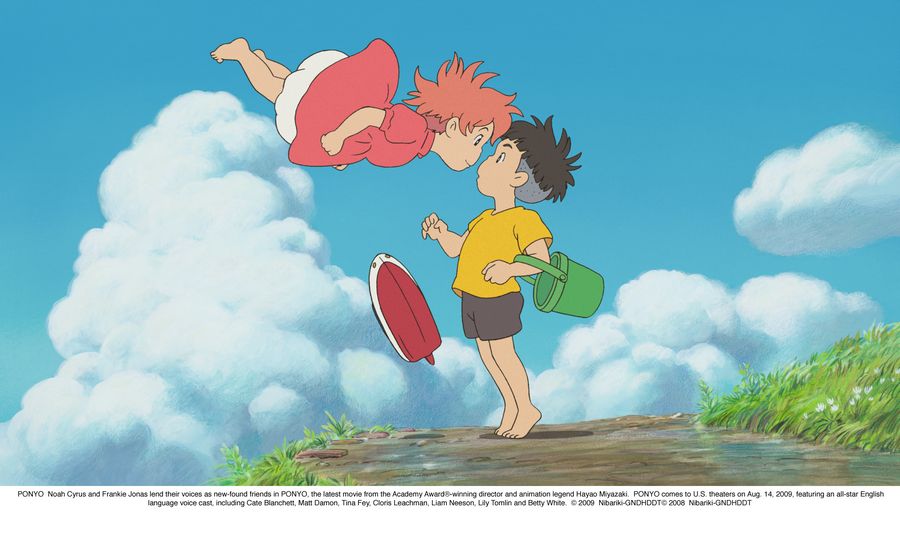


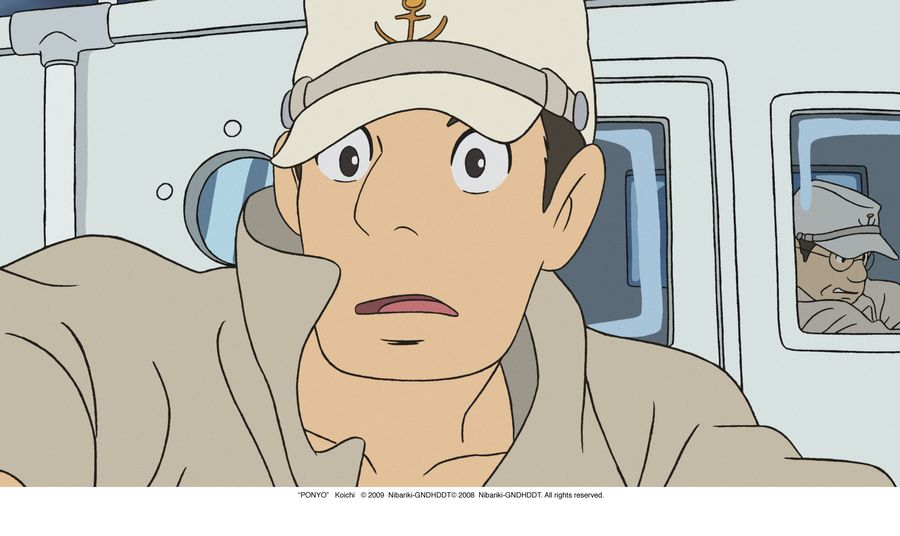
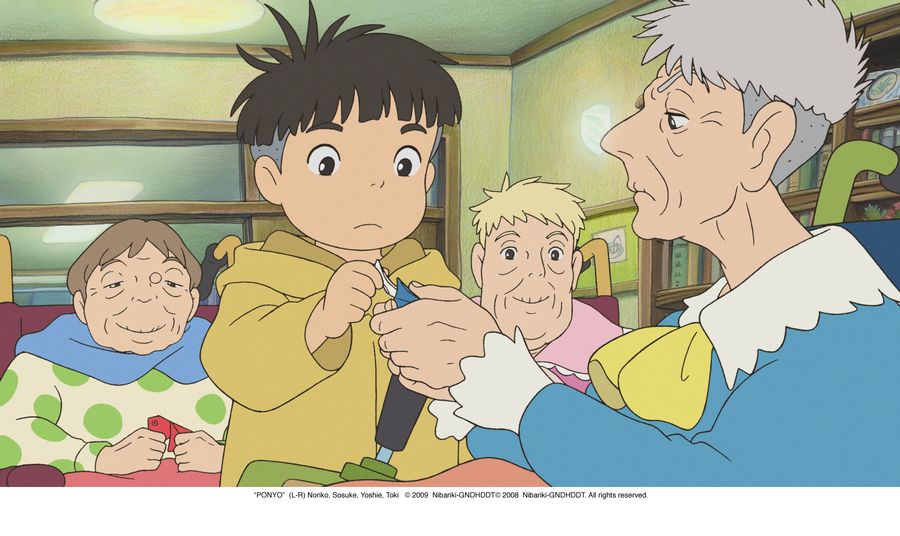
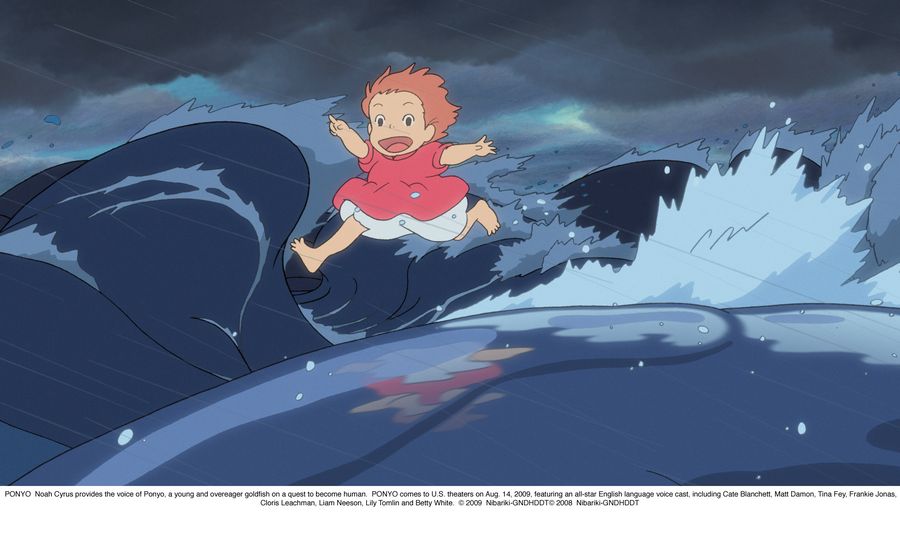
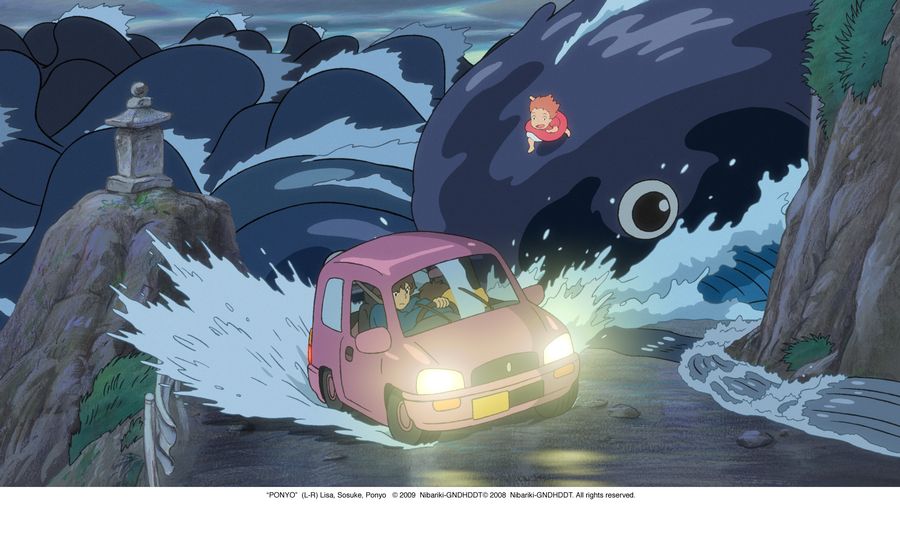
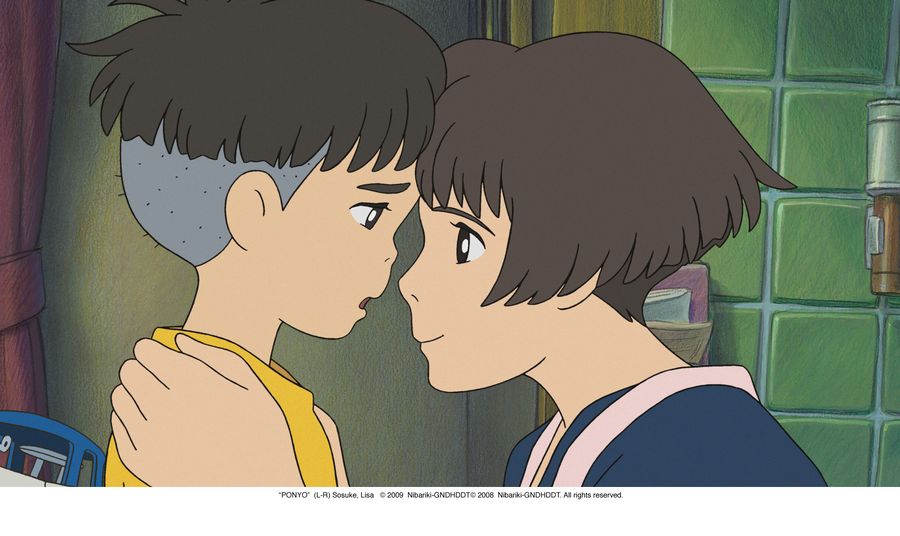
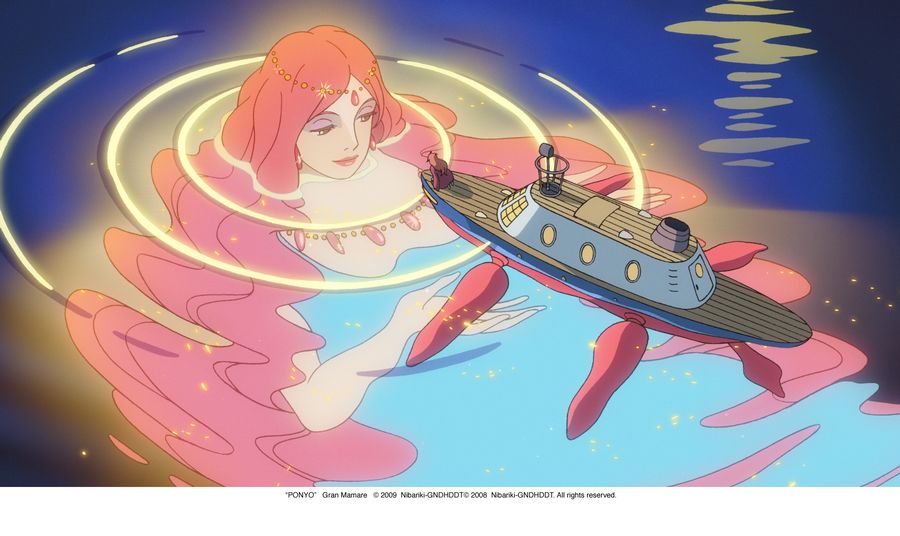


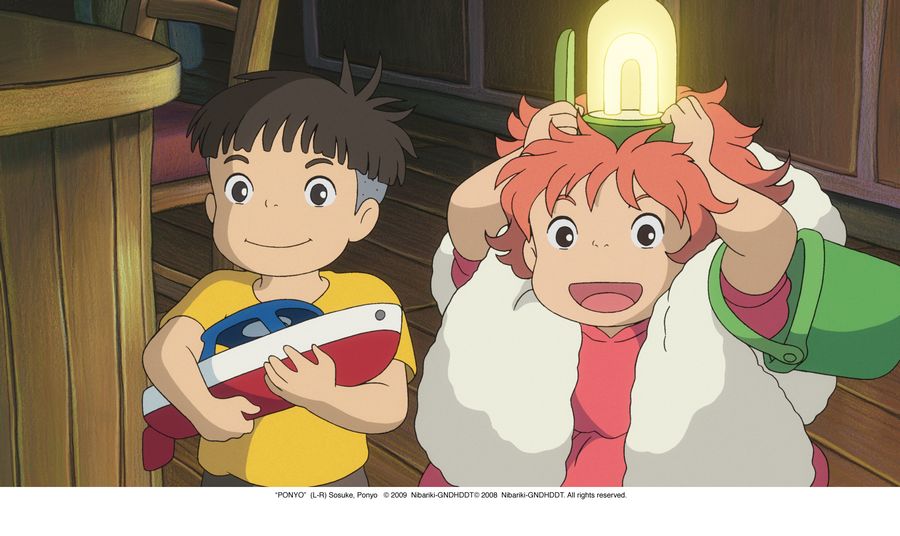
(C) MBN 2009